

Virtual escape rooms पिछले चार वर्षों में People Ops के standard line item बन चुके हैं — इतनी तेज़ी से कि अधिकतर HR Leaders को इन्हें सही तरीक़े से ख़रीदना सीखने का वक़्त ही नहीं मिला। Category "जिस team event के बारे में कोई निश्चित नहीं था" से निकलकर एक recognized corporate format बन गई। लेकिन buying behavior अभी भी वही पुराना है: HR teams "virtual escape room corporate" सर्च करती हैं, vendors की shortlist बनाती हैं, और लगभग पूरी तरह game title और theme के आधार पर evaluate करती हैं। यह पहले optimize करने का ग़लत variable है। हमारा portfolio: 1,500+ live virtual team events, 300+ companies, 50+ देश, 2020 से पांच साल का operating data। किसी event की सफलता का सबसे भरोसेमंद predictor game नहीं है — यह है कि format, team की actual situation से मेल खाता है या नहीं।
Corporate team event के लिए virtual escape room कैसे चुनें?
Corporate Virtual Escape Room वास्तव में क्या देता है
अच्छे तरीक़े से चलाया गया corporate virtual escape room, Trivia game को "experience" का नया नाम देकर नहीं परोसता। इस format में एक professional Game Host होता है जो session को शुरू से अंत तक चलाता है, जबकि आपकी team players की भूमिका में होती है — co-facilitators की नहीं। 4-8 लोगों की teams breakout rooms में बंट जाती हैं, narrative-driven puzzles एक साथ solve करती हैं, real time में shared leaderboard देखती हैं, और एक ऐसी story के साथ आगे बढ़ती हैं जो game के हर stage को अगले से जोड़ती है। Event की संरचना ही competitive pull बनाती है — किसी को ऊर्जा कृत्रिम रूप से बनानी नहीं पड़ती।
अच्छे तरीक़े से design किए गए session में players वास्तव में जो करते हैं, वह बाहर से दिखने से कहीं ज़्यादा विविध होता है। वे clues के लिए detailed environments को ध्यान से देखते हैं, ऐसी logic puzzles decode करते हैं जिनका कोई Wikipedia answer नहीं है, ऐसे choices submit करते हैं जो game की routing को affect करती हैं, और competing teams को leaderboard पर देखते हुए अपने team channels में coordinate करते हैं। Browser-based platform को किसी install की ज़रूरत नहीं और कोई account भी नहीं बनाना पड़ता — यह corporate scale पर मायने रखता है, क्योंकि unknown software पर IT restrictions और install friction मिलकर event शुरू होने से पहले ही 10-15% registered attendance को ख़त्म कर देते हैं।
Last Temple Mystery इस format का scale पर सबसे स्पष्ट उदाहरण है। एक Mayan temple के चार floors, हर एक पर अलग puzzle style: observation, timing, trust-based coordination, और एक final synthesis जहां पिछले सभी floors की चीज़ें एक साथ आती हैं। जो teams कभी in-person साथ काम नहीं करतीं, वे Floor 2 पर एक clue की interpretation पर 20 मिनट तक genuinely बहस करती हैं। यह competitive structure थोपा नहीं जाता — यह game mechanics से खुद उभरता है। यही इसे "team activity" की broad category से अलग करता है, जहां facilitator वह engagement pressure बनाने की कोशिश करता है जो room में हो भी सकती है और नहीं भी।
जिन teams की culture high-stakes adventure से ज़्यादा workplace humor की तरफ़ झुकती है, उनके लिए Bureau of Magical Affairs वही engagement mechanics एक बिल्कुल अलग अंदाज़ में देता है: चार magical bureaucratic cases, अपना काम करने से मना करने वाला sentient furniture, और इतनी whimsy कि engineering team का "मैं Team Building में नहीं आता" वाला तबक़ा भी game के अंत तक टिका रहता है। हमने इसे उन companies के Onboarding cohorts के लिए चलाया है जो हर तिमाही 100+ नए लोगों को hire करती हैं; "एक साथ बहुत कुछ आग पर है, और फिर भी paperwork बाकी है" — यह premise game से परे एक deeper level पर resonates करती है।
Mission 8-Bit game arc को directly quarterly work structure पर map करता है: hijacked office से बाहर निकलना, एक retro machine rebuild करना, killcode ship करना। तीन-stage का metaphor (setup, build, launch) engineering managers के लिए सिर्फ़ एक framing device से कहीं ज़्यादा है। यह हमारे catalog में सबसे ज़्यादा book होने वाला kickoff event बन गया है — precisely इसलिए कि इसका arc तिमाही की actual narrative को mirror करता है, न कि उसे किसी disconnected चीज़ से interrupt करता है।
एक operational reality पहले से बता देना ज़रूरी है: इनमें से किसी भी game के लिए players को account बनाना या software install करना नहीं पड़ता। Players को एक link मिलती है, वे browser app में पहुंचते हैं, और उन्हें एक team assign हो जाती है। 200 लोगों के corporate event में join flow को "link click करो, team चुनो" तक सीमित रखना उस variable को हटा देता है जो आमतौर पर किसी भी puzzle से पहले आपके एक-चौथाई registrations को ले डूबता है।
Big Game बनाम Marathon — और यह सवाल game selection से पहले क्यों आता है
Format का फ़ैसला सब कुछ तय करता है — game का चुनाव नहीं, customization tier नहीं, और न ही उस दिन host कितना अच्छा था। Format। और यही वह सवाल है जो buying conversation में सबसे पहले छूटता है — इसी वजह से teams कभी-कभी सही game ग़लत format में run करती हैं और फिर यह नहीं समझ पातीं कि ग़लती कहां हुई।
Big Game एक single live 60-90 मिनट का synchronous session है। सभी एक ही समय join करते हैं, Game Host शुरू से अंत तक चलाता है, और real-time leaderboard की ऊर्जा पूरे room को एक साथ जोड़ती है। यह format तब सबसे अच्छा काम करता है जब participants छह घंटे के time zone spread के भीतर हों। इससे ज़्यादा फैलाव पर किसी को genuinely असंगत समय पर join करना पड़ता है — जो company perk को scheduling का बोझ बना देता है। One-off corporate events (kickoffs, holiday parties, milestone celebrations) के लिए Big Game आमतौर पर स्वाभाविक विकल्प है। वह contained window, वह shared moment, अंत में leaderboard का climax — ये वो चीज़ें हैं जिन्हें async format approximate तो कर सकता है, पूरी तरह replicate नहीं।
Marathon 1-5 दिनों में चलता है, जिसमें daily episodes unlock होते हैं जिन्हें participants अपने schedule के अनुसार complete करते हैं। Tokyo team 3pm local time पर खेलती है। San Francisco team 3pm local time पर खेलती है। Shared leaderboard किसी scheduling pressure के बिना pull बनाता है। हमारे data में, distributed companies में Marathon events, forced-synchronous alternatives की तुलना में लगभग 35% ज़्यादा participants तक पहुंचते हैं — specifically वे लोग जो mandatory live events में routinely नहीं आते, Marathon rounds complete करते हैं क्योंकि async design उस coercion signal को हटा देता है जिसे वे avoid करते हैं।
500+ company events के हमारे data में Marathon completion rates पूरे event में 65-78% तक रहती हैं। इसका मतलब है कि 65-78% eligible participants सभी episodes voluntarily complete करते हैं — यह उस Zoom का attendance count नहीं है जिसमें उन्हें calendar-block करके धकेला गया था। उन People Ops teams के लिए जिन्हें Finance को participation-rate number दिखाना है, यह comparison मायने रखता है।
एक fintech team के साथ हमारा अनुभव — लगभग 600 employees, चार time zones में फैले, mandatory Zoom events से ऊब जाने की जानी-मानी culture। उन्होंने अपने quarterly engagement program के लिए Big Game की जगह 3-day Marathon चुना। एक भी reminder push के बिना 73% completion। People Ops lead ने बाद में बताया कि async format ही वह specific कारण था जिसकी वजह से engineering org ने भाग लिया। यह pattern बार-बार दोहराता है: format friction हटाता है, leaderboard pull देता है, और completion rate खुद-ब-खुद आती है।
एक बार inputs पता हों तो यह decision table खुद-ब-खुद बन जाती है:
- एक ही timezone या 1-3 timezone spread, one-off event, shared moment की ऊर्जा चाहिए → Big Game
- 4+ timezone spread, distributed culture, attendance rate से ज़्यादा participation breadth चाहिए → Marathon
- Holiday party, kickoff, quarterly all-hands → Big Game
- Spirit Week, ongoing quarterly engagement program, retention push → Marathon
- जो teams mandatory live events में नहीं आतीं → Marathon, persuasion नहीं
अपनी Corporate Team की Culture के अनुसार Game का चुनाव

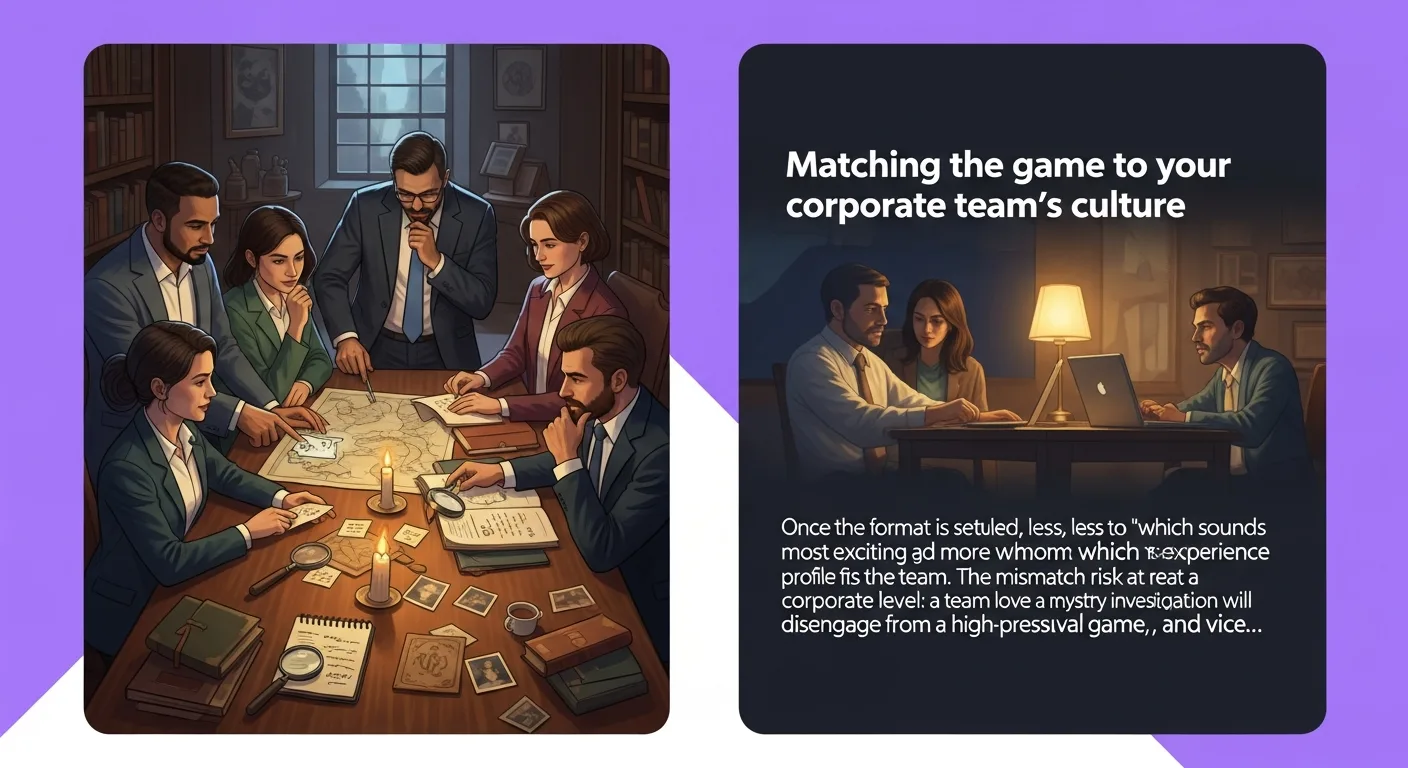
Format तय होने के बाद, game selection का सवाल "कौन सा सबसे exciting लगता है" से ज़्यादा यह है कि कौन सा experience profile team के लिए सही है। Corporate level पर mismatch का risk real है: जो team mystery investigation से प्यार करेगी, वह high-pressure survival game से disengage हो जाएगी — और उल्टा भी। "हमने Team Building try किया, काम नहीं आया" — यह बात आमतौर पर structural category problem नहीं, बल्कि game-culture mismatch की तरफ़ इशारा करती है। और एक बुरा अनुभव पूरे साल का program budget बंद कर देता है।
High-energy tech और engineering cultures के लिए जो urgency mechanics पर respond करती हैं, Apocalypse अक्सर सही चुनाव होता है। यह game एक 80-मिनट की race है — आख़िरी research lab गिरने से पहले vaccine develop करना — चार locations पर, stages के बीच meaningful routing decisions के साथ। Time pressure थकाने वाला नहीं, energizing है; teams आमतौर पर इसे तुरंत फिर से खेलना चाहती हैं। Stylized 2D art किसी horror जैसा बिल्कुल नहीं लगता — हमने इसे 12+ देशों में run किया है, near-zero comfort feedback के साथ। यह हमारा सबसे ज़्यादा book होने वाला Halloween event है, लेकिन "pressure में साथ" का narrative इसे "हम कठिन चीज़ें handle कर सकते हैं" frame के साथ kickoffs और Q3 launches के लिए भी उतना ही effective बनाता है।
Enterprise, legal, या finance-function audiences के लिए — जहां "हम एक mystery कर रहे हैं" "हम survival game कर रहे हैं" से बेहतर लगता है — Wintervald Hotel Mystery consistently सही choice है। एक isolated hotel, बर्फ़ीला तूफ़ान, private dinner में क़त्ल, initial evidence से suspect interview और crime-scene reconstruction तक deduction के तीन stages। Tone Knives Out के क़रीब है, किसी डरावनी चीज़ के नहीं। Deduction mechanic action games जैसा ही competitive leaderboard pull बनाता है — बस धीमे और सोच-समझकर। Enterprise legal teams, C-suite events, finance functions: यही groups इसे book करती हैं, और बाद में confirm करती हैं कि यह सही फ़ैसला था।
Book of Awakened Nightmares action और structured mystery के बीच की जगह भरता है — atmospheric, folkloric, Tim-Burton-adjacent लेकिन horror नहीं। हम इसे उन companies के लिए standard Halloween alternative के रूप में recommend करते हैं जहां Apocalypse audience के लिए ज़्यादा intense लग सकता है और Wintervald ज़्यादा formal। इसका composite folklore design — जो कई cultural traditions से लेता है बिना किसी एक पर पूरी तरह निर्भर हुए — international teams में ठीक इसलिए अच्छा perform करता है क्योंकि किसी एक culture की iconography dominant नहीं होती।
Under the Big Top mystery format का सबसे warm tone है — एक गायब circus performer, suspects का एक अजीब और मज़ेदार cast, तीन-stage investigation जहां speed से ज़्यादा deduction मायने रखती है। Summer aesthetic इसे June-August events के लिए natural pick बनाती है जब offices शांत होते हैं और मौसम कुछ हल्का-फुल्का मांगता है। "हम सालों से एक साथ सफ़र पर हैं" का traveling-troupe frame milestone और anniversary events के लिए विशेष रूप से resonates करता है।
December के लिए, Stolen Hours standard holiday-party formats का एक अलग विकल्प है। Postapocalyptic, cyberpunk, steampunk, और biopunk worlds में Santa की चुराई हुई clock hands वापस लाने के लिए एक genre-bending chase। Premise खेलने में उतनी unusual नहीं जितनी सुनने में लगती है — Pixar-style art इसे genuinely warm रखता है, और genre shifts अलग-अलग stages पर अलग-अलग player strengths को surface करते हैं। "Sci-fi genre play" culture वाली teams इसे office-parody Christmas format से consistently prefer करती हैं। हमारे पास ऐसी teams रही हैं जो पिछले हर December event में नहीं आई थीं, लेकिन इसमें voluntarily participate किया क्योंकि premise उनके देखे-भाले से काफ़ी अलग था।
Customize कब करें: NPC, Logo, और Story tiers
HeySparko के लगभग 15% events में कम से कम एक customization tier शामिल होता है। तीन options — NPC, Logo, और Story — हर एक "हमने एक vendor event ख़रीदा" और "हमने अपना event चलाया, थोड़ी बाहरी मदद से" के बीच के एक अलग gap को address करते हैं।
NPC tier character dialogue को आपकी company की actual voice में rewrite करता है: internal references, naming conventions, वह industry language जो आपकी team बिना explanation के use करती है। Logo tier आपके brand को पूरे game environment में integrate करता है — leaderboard, intro screens, completion certificates, team-naming conventions। Story tier game की पूरी narrative को आपकी company की situation के अनुसार rewrite करता है: कोई आने वाला launch, कोई milestone जिसे mark करना हो, कोई ऐसा chapter जो अपनी ceremony deserve करता हो।
BGaming की multi-year anniversary के लिए, हमने तीनों tiers के साथ एक fully customized Big Game चलाया — real team members हर stage के historical guides बने, BGaming का brand era-appropriate UI में integrate हुआ, और एक hidden fifth chapter ने game के conclusion के रूप में company का actual founding moment reveal किया। 75% target के विरुद्ध 89% participation। अगले महीने के engagement survey में 23% engineering team members ने belonging और cross-functional connection के बारे में free-response comments में इस event का specifically ज़िक्र किया।
अपनी team के लिए customize करें
TYPE 1
आपकी team in-game characters के रूप में
असली team members, mascots, या आपके games के characters NPCs के रूप में।
TYPE 2
आपकी brand natively integrated
Logo और brand elements game environments के लिए native — locations, items, UI।
TYPE 3
आपकी story game में बुनी गई
Company milestones, products, और internal references puzzles, dialogues, और tasks में बुनी गईं।
Customization tier pricing हमारे pricing page पर उपलब्ध है। Lead time requirements वह चीज़ है जो अधिकतर teams बहुत देर से पता करती हैं: NPC के लिए कम से कम 14 दिन, Story के लिए 21 दिन, Logo के लिए 7 दिन। अगर plan में customized event है, तो production timeline को booking के साथ ही calendar में डालना होगा।
Engagement Research वास्तव में क्या कहती है
Virtual team events के लिए vendor claims को dismiss करना आसान है। Independent research को नहीं।
Atlassian की State of Teams 2024 report का अनुमान है कि Fortune 500 में ineffective collaboration से सालाना 25 billion work hours बर्बाद होते हैं, और 93% executives का कहना है कि teams ज़्यादा effectively collaborate करें तो आधे समय में वही results दे सकती हैं। दोनों numbers executive opinion के extrapolations हैं, stopwatch के नहीं — लेकिन framing मायने रखती है: corporate scale पर team performance की bottleneck headcount या tooling नहीं, collaboration quality है। HR teams कभी-कभी इसे "team events कोई number नहीं बदलते" पढ़ती हैं — बेहतर reading यह है कि events उन कुछ interventions में से एक हैं जो directly इस पर act करते हैं कि team कैसे coordinate करती है — जब उन्हें standalone perk की बजाय tuning mechanism की तरह treat किया जाए। Follow-up surveys में well-perform करने वाले events लगभग हमेशा वे होते हैं जहां manager event से पहले, दौरान, और बाद में engaged था — सिर्फ़ attendance में नहीं।
Microsoft का 2024 Work Trend Index — 31 देशों में 31,000+ workers का survey — पाया कि 57% distributed workers live options की तुलना में async-engagement options prefer करते हैं। Corporate scale पर यह majority preference standard live-event data में invisible होती है। आप attendance number देखते हैं; जो लोग नहीं आए उनका preference gap नहीं देखते। Marathon format exactly इसी dynamic को address करता है — design से async, calendar obligation की जगह leaderboard pull, और ऐसी participation जो reported नहीं, genuine लगती है।
Deloitte की 2023 Human Capital Trends report ने पाया कि 46% employees pandemic से पहले की तुलना में अपने colleagues से कम connected महसूस करते हैं। यहां "connected" का मतलब "सहकर्मियों को पसंद करना" नहीं है — इसका मतलब है वह working familiarity जो cross-functional Slack message को natural बनाती है, जो किसी को दो हफ़्ते तक problem पर चुप बैठे रहने की बजाय सवाल पूछने के लिए प्रोत्साहित करती है। Structured events उस familiarity को जल्दी बनने का context देते हैं — बिना purely informal bonding attempts के social cost के, जो corporate scale पर uncomfortable हो जाते हैं।
SSRN पर published Anog et al. की 2023 systematic review ने 60+ team-building studies की जांच की और पाया कि structured activities consistently satisfaction बढ़ाती हैं और turnover घटाती हैं — जब events एक broader development strategy में integrate होते हैं न कि isolated one-offs के रूप में चलते हैं, तो effects और बढ़ जाते हैं। इस recurring-versus-one-off distinction का direct budget implication है: एक single Big Game एक connection spike देता है; quarterly चलाया गया Marathon एक ऐसा pattern बनाता है जो survey score movement में दिखता है।
CultureAmp की 2024-2025 State of Culture report — 5,000+ HR practitioners के data से — पाया कि above-median engagement scores वाली companies में below-median companies की तुलना में 31% कम voluntary turnover है। SHRM के 2024 data के अनुसार ज़्यादातर non-executive roles के लिए per-departure replacement cost low five-figures में है — इस पर recurring engagement programming का retention math, soft-spend justification की बजाय conservative business case जैसा दिखने लगता है।
हमारे अपने event data में जो हम देखते हैं वह इसे आगे ले जाता है: distributed companies जो one-off की बजाय Marathon format quarterly run करती हैं, उनमें by-team participation analytics वह manager-performance variance surface करने लगती है जो annual engagement surveys पूरी तरह miss करते हैं। कौन सी teams तीनों episodes complete करती हैं? कौन सी Day 2 तक छोड़ देती हैं? Participation map consistently उस collaboration-quality variance जैसा दिखता है जो executives अपनी teams में describe करते हैं — बस यह real time में observable है, manager pod के हिसाब से, हर episode बंद होने के 48 घंटे बाद।
अक्सर पूछे जाने वाले सवाल
एक corporate virtual escape room में एक साथ कितने लोग join कर सकते हैं?
HeySparko events एक single session में 5 players से 10,000 तक scale होते हैं। छोटे groups (15-50) को close-knit adventure की dynamic मिलती है; बड़े groups (500-10,000) एक unified leaderboard पर competing squads में बंट जाते हैं। 4-8 players की breakout teams overall headcount चाहे जो हो, consistent रहती हैं — यह वह mechanics-design choice है जो large scales पर engagement को cratering से बचाती है। 400+ players वाले groups के लिए, Marathon format participation breadth पर Big Game से बेहतर perform करता है, क्योंकि single-time-window की requirement हटाने से distributed companies में आमतौर पर 35% ज़्यादा participants तक पहुंचा जा सकता है।
Corporate event के लिए Big Game और Marathon में क्या फ़र्क़ है?
Big Game एक single live 60-90 मिनट का session है जहां सभी एक ही समय participate करते हैं — shared leaderboard energy, एक contained experience जिसकी clear शुरुआत और अंत होता है। Marathon 1-5 दिनों में चलता है जिसमें daily episodes होते हैं जिन्हें players अपने schedule पर complete करते हैं। अगर आपकी team 4+ time zones में फैली है, या mandatory live events से बचने की culture है, तो Marathon आमतौर पर ज़्यादा participation देता है — हम distributed companies में 65-78% completion rates देखते हैं, जबकि ऐसे ही organizations में mandatory synchronous events के लिए 40-60% typical है।
क्या players को कुछ download करना होगा या account बनाना होगा?
नहीं। HeySparko events पूरी तरह browser-based हैं — players को एक link मिलती है, वे directly browser tab में join करते हैं, और उन्हें automatically team assign हो जाती है। कोई download नहीं, कोई account creation नहीं, new software के लिए कोई IT approval process नहीं। Corporate scale पर यह practically मायने रखता है: install friction, live attendance को ख़त्म करने वाले सबसे reliable कारणों में से एक है। 200 लोगों के event में join flow को "link click करो, अपनी team देखो" तक सीमित रखना उस variable को हटा देता है जो आमतौर पर पहली puzzle load होने से पहले 10-15% registrations को ले जाता है।
Corporate virtual escape room कितने समय तक चलता है?
Big Game format ज़्यादातर games के लिए 75-90 मिनट चलता है; Apocalypse और Mission 8-Bit जैसे multi-stage adventures 90 मिनट के क़रीब चलते हैं क्योंकि stage-to-stage routing decisions के लिए समय चाहिए। Marathon format 3-5 दिनों में प्रतिदिन 30-45 मिनट engagement के लिए design किया गया है — कम daily commitment, ज़्यादा total touchpoints। One-time corporate event के लिए pre-game setup window सहित 90 मिनट का budget रखें। Marathon के लिए पूरे week plus Day+1 analytics review call की planning calendar बनाएं।
Corporate virtual escape room के बाद सफलता कैसे मापें?
HeySparko 24 घंटे के भीतर post-event analytics report देता है: participation rate, team-by-team engagement scores, coordination heat maps, और एक NPS pulse। Marathon के लिए आपको daily episode completion rates और team और time zone के हिसाब से full post-event breakdown मिलती है। अगर event को engagement survey movement से जोड़ना हो, तो 3-question pre/post pulse सबसे defensible method है। McKinsey की 2024 research measurable retention impact के लिए typical re-engagement window 6-9 महीने बताती है — leadership के साथ यह expectation event से पहले set करें, बाद में नहीं।
Formal enterprise audience के लिए कौन सा virtual escape room सबसे अच्छा काम करता है?
Enterprise audiences (legal functions, finance teams, C-suite events) के लिए हम Wintervald Hotel Mystery recommend करते हैं। Deduction-based mystery action games जैसी competitive engagement देती है — बिना उस survival-game aesthetic के जो formal cultures में कभी-कभी misread होती है। Bureau of Magical Affairs dry sense of humor वाली enterprise teams के लिए close second है; bureaucratic-whimsy premise pitch में जितनी अजीब लगती है, room में उससे कहीं बेहतर land करती है। दोनों Big Game या Marathon format में run होती हैं और full customization support करती हैं अगर event को आपका brand carry करना हो।