
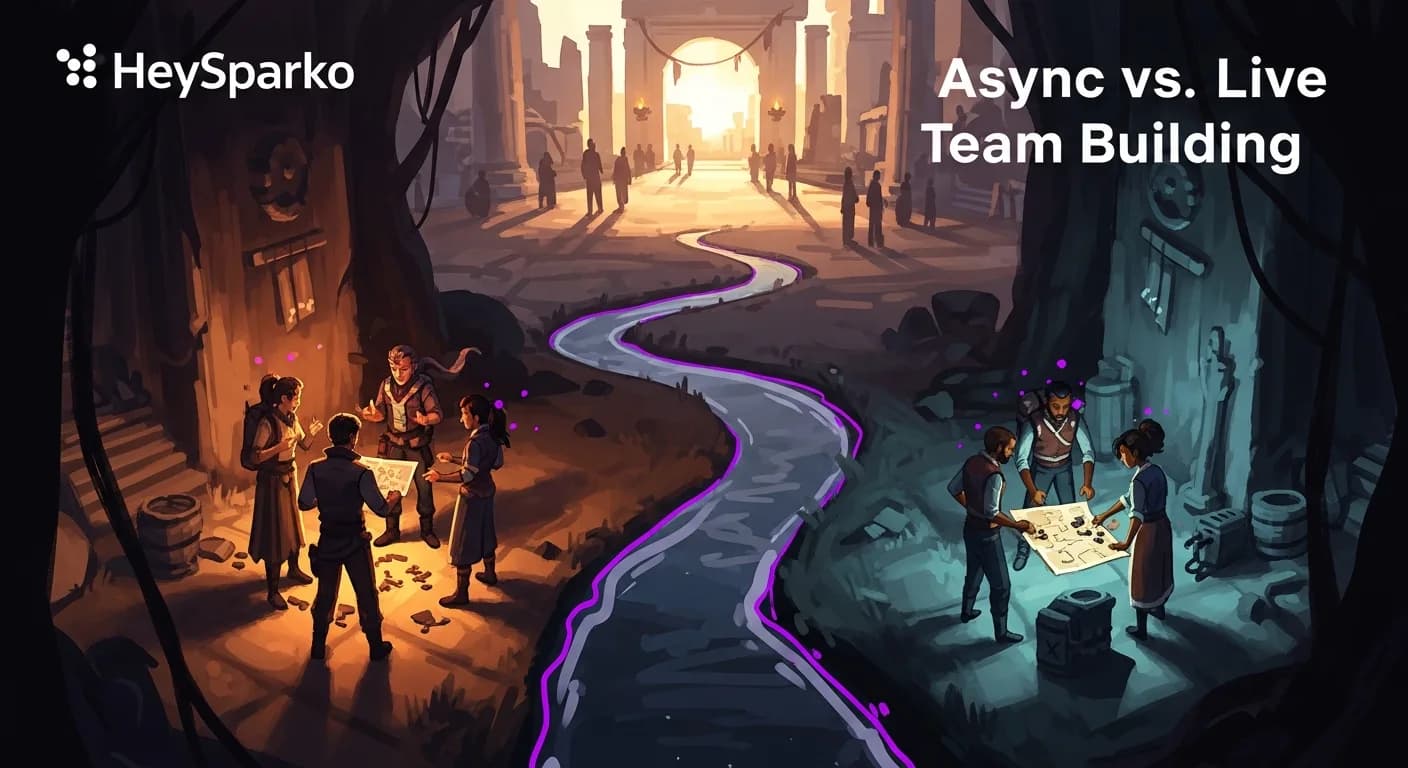

The question of sync vs. async has settled into every People Ops planning cycle since 2020, and most teams still answer it wrong in the same direction. They default to live events because live is familiar, not because live is right for their team. Five years into running virtual team building as a category — 1,500+ events for 300+ companies across 50+ countries — we've watched the failure modes repeat enough to predict most of them. Pick the wrong format and you've either scheduled a mandatory 10pm Zoom for your Auckland colleagues or built a multi-day async program for a 40-person team that loses momentum by Tuesday afternoon.
Neither format is universally better. The right call depends on four inputs, and most of them are objective once you know what to look for.
Should your team's next event be async (letting everyone engage on their own schedule) or live, with the full company sharing the same room at the same time?
What "live" and "async" actually mean at the operational level
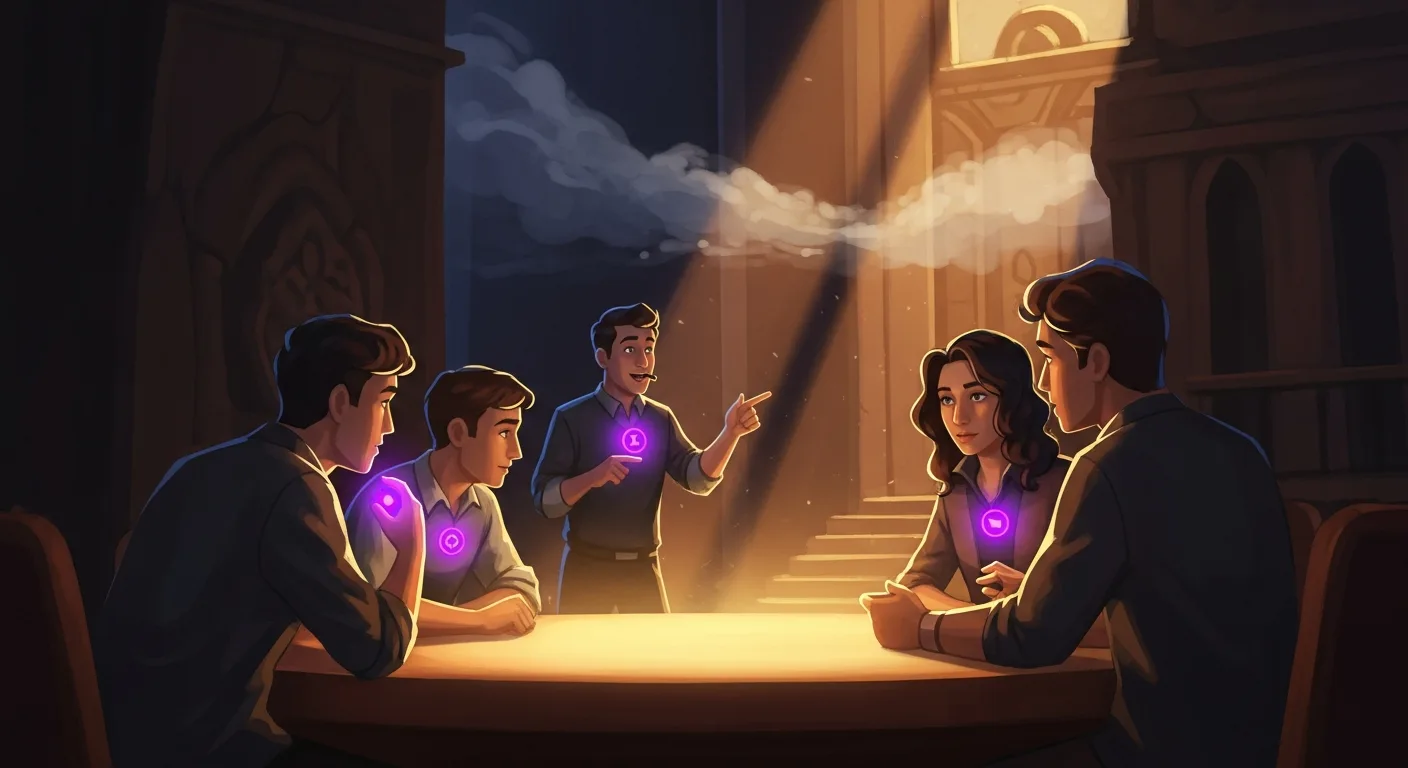
In HeySparko's Big Game format, "live" means one hosted event of 60-90 minutes, everyone in the same video session, a Game Host running the experience from the moment the first player joins. Teams break into groups of 4-8 players, work through a shared narrative together, and watch a live leaderboard update in real time as scores come in. The social energy is the entire point: the whole company seeing the same moment, reacting to the same plot twist, celebrating the same winner. Big Game handles groups from a handful of players up to 10,000 in a single session, with no software install required: browser link, corporate laptop, done.
In Marathon format, "async" means a 1-5 day arc with daily content drops. Each day, a new episode unlocks. Players engage when it fits their schedule: morning coffee in Berlin, afternoon break in Singapore, evening wind-down in Buenos Aires. A shared leaderboard runs across the full event, giving teams the same competitive pull as a live session without forcing anyone into a 6am or 10pm slot. No MC presence is required for day-to-day play, though many Marathon events include a short optional wrap call at the close.
The operational difference matters more than it appears at first. In a Big Game, if someone misses the start window, they miss it. There's no catch-up mechanism by design. In a Marathon, players who come late can engage earlier episodes within a grace period, and the leaderboard adjusts for relative completion. This design difference is why Marathon completion rates in our portfolio run 65-78% for opt-in events, compared to 50-60% live attendance for events where the time window was geographically inconvenient.
A fintech team we worked with last year — roughly 550 people spread across North America, London, and Singapore — switched from a Big Game to a Marathon after two consecutive annual events showed "strong" participation that, on closer analysis, was 85% North America and under 55% everyone else. The Marathon version posted 71% globally. That shift didn't happen because the content was better. It happened because the format stopped excluding people by default.
How to read the format signal before you book anything
The decision almost always comes down to four questions. Get these right and the format makes itself clear.
Time zone spread. If 90% of your team lives within a 6-hour window, Big Game is the default: one session that everyone attends at a workday hour. Once your spread hits 8 hours or more, even two parallel sessions leave someone in an inconvenient window. That's when Marathon earns its place.
Group culture around opt-in vs. mandatory. Live events work best when attendance is either genuinely excited or genuinely expected. A mandatory Big Game with low cultural buy-in produces the most dispiriting participation data we see: people who join, mute themselves, and process email for 75 minutes. Marathon is better for cultures that have moved away from required-synchronous norms, because the leaderboard creates pull without coercion. People come back because they want to see if their team is winning, not because the calendar sent a reminder.
Group size and shared-moment value. Big Game has a compression problem above ~400 players. You can run it for 1,000 people with squad-split leaderboards, but it starts to feel like parallel events rather than a unified one. Marathon scales more naturally at large headcounts because the daily leaderboard update is the social glue, not the shared video room.
One-off vs. recurring. A company anniversary, a quarterly kickoff, an end-of-year celebration. These are moments where Big Game's live energy delivers something Marathon fundamentally cannot: a shared experience the whole company had at the same time. For quarterly engagement cadences running month after month, Marathon's lower operational lift makes it sustainable in ways a recurring Big Game is not.
When we ran BGaming's anniversary event, the group size (~400 employees) and time zone spread both pointed clearly to Big Game. Full NPC, Logo, and Story customization with a shared narrative tied to the company's founding story. 89% participation, 8.7 NPS on the post-event pulse. The format matched the moment.
Structuring a live event that actually lands

When Big Game is the right call, the variable that kills live events isn't the game itself — it's the setup. A few patterns that come up across the Big Game events we've run:
Start the calendar invite earlier than you think necessary. Ten days of lead time is workable for groups under 200; for anything above that, three weeks is the practical minimum if you want time zone logistics and reminder cadence sorted before the event is a week out. Game Host briefing, platform link testing, and the standard "does this work on a corporate-locked laptop" check all need breathing room.
Hold breakout teams to 5-7 players. The canonical failure mode in live virtual events is groups of 12-15 where four people drive and everyone else watches. The puzzle mechanics in narrative adventure games — Apocalypse, Mission 8-Bit, Bureau of Magical Affairs — are designed specifically for teams where every player has a role to fill. Double the team size and individual engagement roughly halves.
The initial 10 minutes of a Big Game are crucial for building connections, not just jumping into the action. Teams that rush past this warm-up phase often end up with disjointed performances, lacking a cohesive rhythm. In fact, that warm-up session is as important as the game itself. It sets the stage for everything that follows.
Plan the post-event data window. The analytics dashboard — participation rate, team scores, coordination heat by stage, NPS pulse — goes out within 24 hours of the event. Someone needs to be ready to use it. An event that doesn't connect to any reporting workflow loses half its organizational value before the following Monday.
For game selection: Mission 8-Bit works well for quarterly kickoffs because its three-act structure (escape → rebuild → ship) mirrors the project rhythm those audiences live in. Apocalypse is the high-energy choice for engineering and fintech teams that thrive under pressure. The vaccine-race premise and timed coordination mechanics have a specific appeal for people who debug production incidents for a living. For buttoned-up enterprise audiences or mixed-culture groups, Wintervald Hotel Mystery spans personality types without the intensity curve.
Structuring an async event that holds momentum across days
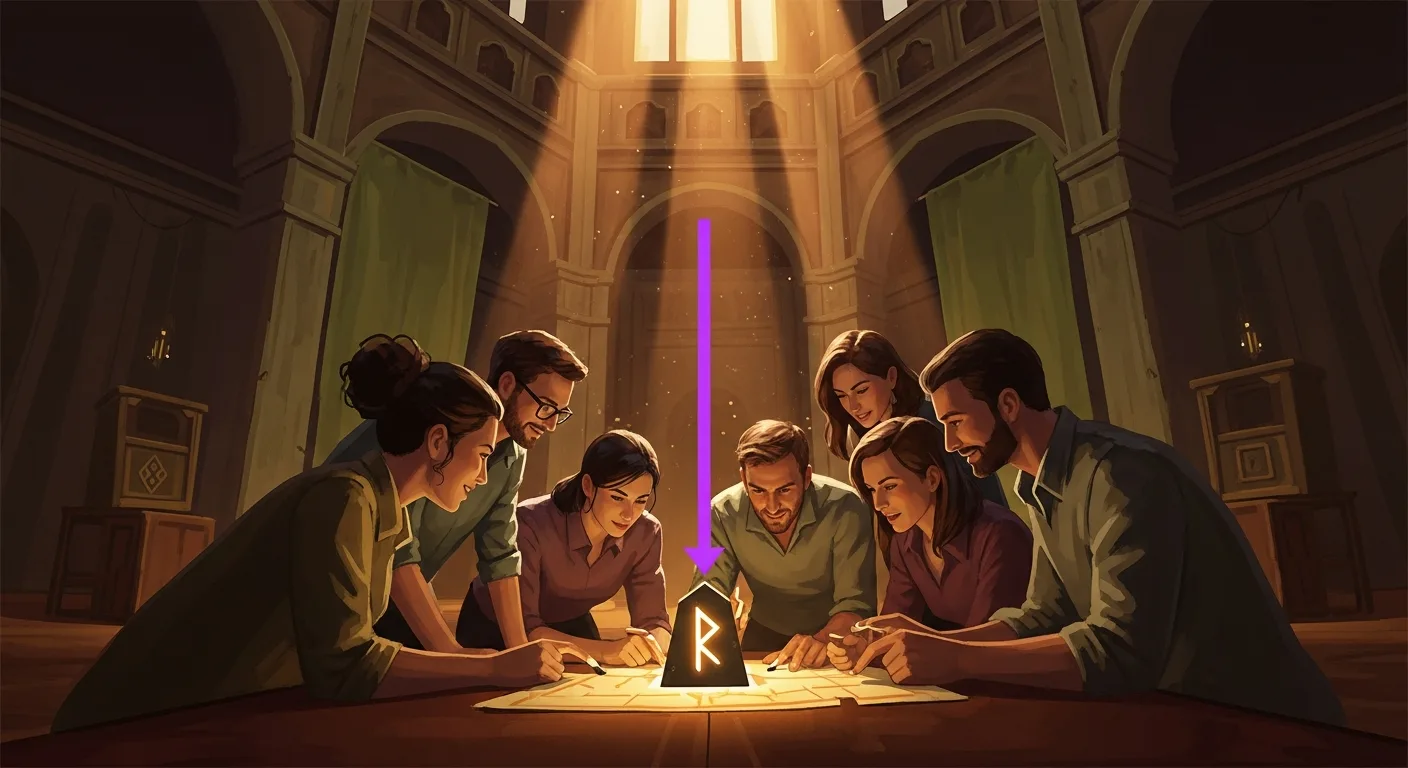
The most common Marathon failure isn't a bad format choice — it's assuming that async means passive. A Marathon without active communications management loses 30-40% of its potential completion rate before day three.
The pre-event window matters more for Marathon than for Big Game. A single calendar invite is not enough. You need a pre-roll email that explains the daily structure (what unlocks, when, how the leaderboard works), a Slack message from a senior leader or the People team, and ideally a teaser for Episode 1 that generates anticipation rather than just logistics. We've seen companies skip this for efficiency and post Day 1 engagement at 35% when the comparable baseline is 60%+. The leaderboard creates pull, but only if players know it exists before they start.
Day 2 is where Marathons lose momentum. Day 1 has novelty. Day 3 has the finale energy. Day 2 is the quiet middle where people intend to come back but don't. A single mid-event nudge — a Slack message showing the top teams, a short "Episode 2 is live" email — is the operational move that separates 65% completion from 78%. It takes 10 minutes to send and most teams skip it.
Choose games that have natural daily cliffhangers. Last Temple Mystery works well across time zones in Marathon format because the floor-by-floor arc earns its episodic reveals. Teams come back for each day because the story has earned their curiosity by the episode before. Under the Big Top has a similar quality: the multi-day deduction rhythm suits async because you benefit from overnight thinking time between suspect interviews. Stolen Hours runs particularly well as a pre-holiday Marathon because the genre-world arc keeps daily content feeling genuinely fresh rather than repetitive. Bureau of Magical Affairs is our top recommendation for onboarding cohorts that run across multiple weeks. The bureaucratic chaos premise mirrors the new-hire experience in a way that improves with time rather than losing it.
For large distributed teams (500+ across 8+ time zones), Marathon is frequently the only format that doesn't create second-class participants by structural design.
What could go wrong — and how to avoid it
The failure modes for both formats are well-documented at this point. We've seen them often enough to describe them precisely.
Live: scheduling the wrong window and calling it a global event. The most common Big Game failure is a US-favorable time slot presented as "company-wide." EMEA and APAC colleagues join at 7am or 9pm, complete the game, give polite NPS feedback, and then mention in the next engagement survey that culture "feels better for headquarters." Two parallel Big Game sessions at genuinely different time windows — same game, two runs, separate leaderboards — is operationally heavier but substantially fairer. It's a real tradeoff, not a simple upgrade.
Live: underestimating the host. A well-run Game Host carries approximately 60% of what makes a live event land. A mediocre one doesn't kill the experience, but it does flatten the peaks. This is specifically why we don't offer a self-hosted version of Big Game. The host is load-bearing infrastructure, not decoration.
Async: treating the leaderboard as optional infrastructure. Some teams run their Marathon without prominently surfacing the leaderboard in pre-event and mid-event communications, assuming players will find it organically. They don't, consistently. The leaderboard is the social engine of a Marathon. Burying it in the event FAQ is like putting the live score at the bottom of a sports broadcast. Make it the headline in every communication from announcement to finale.
Async: choosing a seasonally-flavored game for the wrong season. Running a December-themed game like Stolen Hours during a July culture week creates a mild but persistent tone dissonance. Players notice. It doesn't tank engagement, but it's a friction point that's entirely avoidable by matching the game's aesthetic to the calendar context.
Both formats: skipping the post-event data step. The analytics dashboard is only useful if it connects to someone's reporting workflow. We've seen companies run strong events, collect the participation data, and then open the dashboard three months later when engagement survey scores showed declining connection results. The causal connection was there. It just wasn't captured when it was fresh. Assign someone in People Ops to turn the event data into a slide before the next leadership review. It takes 20 minutes and it's the difference between a line-item expense and a program that gets renewed.
Both formats: no follow-up mechanism. Engagement isn't won at the event — it's built in the two weeks before it (anticipation) and the manager's Slack message after (recognition). An event that ends with the host's sign-off and nothing else is a missed opportunity. Recognize the winning team publicly. Share the completion data with their managers. The event is the moment; the surrounding work is what makes it land.
What the data says
Atlassian's 2024 Teamwork Lab research on Intentional Togetherness found that intentional team gatherings boost team-connection scores by an average 27%; for new graduates the lift is from 74% pre-gathering to 96% post (+22 points); the effect decays to baseline over ~4 months, implying ~3 gatherings per year is optimal. The decay curve is the part most People Ops teams miss. A single annual Big Game produces a measurable connection spike that fades by month four, which is exactly why the rhythm matters more than the ambition of any one event. The format choice — Big Game for the milestone, Marathon for the quarterly cadence in between — determines whether you're chasing the spike or sustaining the lift across the calendar year.
Microsoft's 2024 Work Trend Index found that 57% of distributed workers prefer asynchronous engagement options over live ones. That doesn't mean async is categorically better. It means the assumption that everyone wants a live shared room is wrong for more than half the distributed workforce. When an event is positioned as an opt-in Marathon rather than a mandatory video call, the psychology shifts. We see this in our completion data: the same company running a mandatory Big Game posts 55-60% live attendance; switching that company to an opt-in Marathon typically posts 70%+ completion across all three episodes. The change isn't in the content — it's in who gets to choose their moment.
Anog et al.'s 2023 systematic review of 60+ team-building studies, published on SSRN, found that structured activities increase satisfaction and reduce turnover, with effects amplified when the activity is integrated into a broader development strategy rather than treated as a one-off event. This is the academic backing for why format cadence matters: one Big Game per year doesn't compound the way quarterly Marathon programs do. The research shows the lift is real; it just needs repetition to be measurable in retention data.
Deloitte's 2024 Burnout in the Workplace report found that workers attending two or more company-sponsored events per quarter report 23% lower burnout symptoms than those who don't. The operative number is "two or more." A single annual event doesn't move this metric. Teams running Marathon each quarter alongside one Big Game for major milestones get the compounding effect Deloitte measured. In our portfolio, the teams that see the most sustained engagement lift aren't the ones that ran the most ambitious single event. They're the ones that established a reliable rhythm and used the post-event analytics to show leadership what was moving.
Frequently asked questions
What's the real difference between async and live team building?
The mechanical difference: live (Big Game) means everyone in the same video session for 60-90 minutes with a real-time leaderboard and a hosted narrative. Async (Marathon) means a 1-5 day event where daily content drops and players engage on their own schedule. The deeper difference is who gets to participate fully: live events structurally favor the majority time zone, while async levels the field. In our experience, switching a globally distributed team from a single-window live event to Marathon typically increases total participation by 10-15 percentage points, not because the content changed, but because the format stopped excluding people by default.
How do we decide between async and live for a team across multiple time zones?
The decision point is time zone spread. If your team sits within a 6-hour window, a single Big Game session is the right call — you can pick a time that's workday-reasonable for everyone. Once your spread hits 8+ hours, you're forcing someone into early morning or late evening, which quietly depresses participation and shows up as "the event felt like it was for HQ" in the next survey. Marathon was built specifically for that situation. Owl Labs' 2024 State of Hybrid Work data found 44% of distributed workers already collaborate across 3+ time zones with their direct team. Those teams almost always belong in Marathon format.
What if employees don't want to join an async event either?
Opt-in async events consistently outperform mandatory live events once the leaderboard is surfaced prominently in pre-event communications. The leaderboard creates competitive pull that works differently from a calendar obligation — people check it between episodes because they want to know where their team stands. In our Marathon data, roughly 35% of typical live-event non-attendees participate in the async version of a comparable event. These are people who don't come to mandatory live Zooms on principle but will engage on their own terms when the structure respects their schedule. The opt-in design is a feature, not a concession to low expectations.
Can we run both a live and async event in the same year?
Yes, and this is how most of our recurring-program clients structure their annual calendar. Big Game for a major milestone (Q1 kickoff, company anniversary, end-of-year celebration), Marathon for the quarterly connection cadence in between. Last Temple Mystery and Mission 8-Bit both run in either format, so you can use the same world in Big Game mode for the milestone and Marathon mode for the quarterly: different experience, familiar context. CultureAmp's 2024-2025 State of Culture data found companies with consistent engagement rhythms post 31% lower voluntary turnover than those without. The rhythm is the mechanism; the specific event is the vehicle.
How much lead time does each format need to set up properly?
Big Game setup requires about 10 days for groups under 200, and three weeks for anything larger, primarily to solve time zone logistics and build a proper reminder sequence. Marathon setup typically needs 2-3 weeks regardless of group size, because the pre-event communications campaign is more involved: you're building day-by-day anticipation across a week, not sending a single calendar invite. If your event involves NPC or Story customization, add another week for the production briefing cycle. The platform setup itself is fast; the lead time is almost entirely about communications, not configuration.
What does the post-event data from each format actually tell us?
Big Game analytics include real-time participation rate, team-by-team scores, engagement heat by game stage, and an NPS pulse delivered within 24 hours. Marathon analytics add a time dimension: which day drove the highest engagement, how completion rate held across episodes, and by-team breakdowns that show manager-pod variance clearly. The by-day data in Marathon often surfaces the manager-impact story better than any single-event measurement can. Teams whose managers posted the mid-event Slack message consistently outperform those whose managers didn't. That's useful intelligence for the next engagement review, and it's part of what makes the format decision a strategic choice rather than a scheduling preference.