








VIRTUAL MYSTERY GAMES

Whodunit games where your team cracks the case

Interrogate suspects, weigh the alibis, name the culprit. Three mystery cases — a snowed-in hotel, a circus after hours, a stolen relic in a medieval city.

700+ companies · Pay by card at booking · Confirmed in 2 hours

Trusted by teams worldwide

  • Aviatrix
  • BGaming
  • Semrush
  • Exely
  • Planner5D
  • Colvir
  • Owlcat Games
  • Enterra Soft
  • Humbleteam

Two formats, one case

Pick how your team experiences the mystery.

LIVE FORMAT

Big Game

Pick this if your team has a single moment to gather and you want a host to keep tension high.

Length
70–90 minutes
Players
Up to 10,000 in one live session
Setup
Single Zoom + live host + in-game chat

Best for

Whodunit nights · Holiday parties · Quarterly all-hands
ASYNC FORMAT

Game Marathon

Pick this if your team is across time zones and the case can unfold over days.

Length
1–5 days window
Players
Up to 10,000 — team or solo play
Setup
Self-onboarded via platform + in-game chat

Best for

Distributed teams · Onboarding cohorts · Multi-region offices

All mystery cases

  • MYSTERIESFEATURED

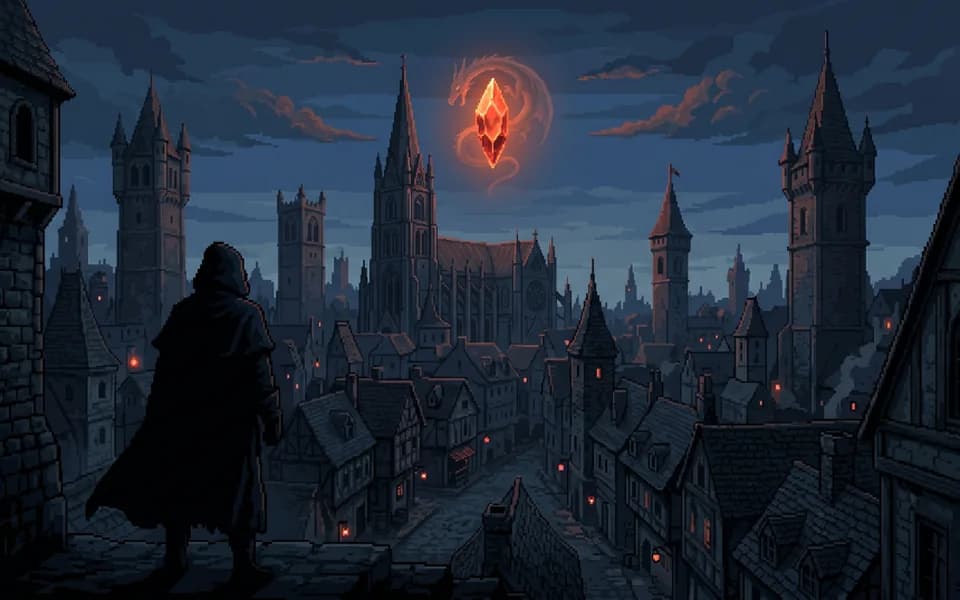
    The Dragon's Tear

    An ancient relic is stolen. Your team runs the investigation

  • MYSTERIES

    Wintervald Hotel Mystery

    A snowed-in hotel. A guest gone missing. Your team investigates

  • MYSTERIES

    Under the Big Top

    Murder behind the curtain. The circus must go on

MAKE IT YOURS

Customize for your team

Three add-ons: $1,000, $2,500 and $5,000. Take one, take all three for $7,500.

  • TYPE 1

    Your team as in-game characters

    Real team members, mascots, or characters from your games as NPCs.

  • TYPE 2

    Your brand integrated natively

    Logo and brand elements native to game environments — locations, items, UI.

  • TYPE 3

    Your story woven into the game

    Company milestones, products, and inside references woven into puzzles, dialogues, and tasks.

Most popular for: company anniversaries · Christmas corporate · major team celebrations

Quick answers about mysteries

How a whodunit actually plays out — format, difficulty, prep, fairness.

Escape rooms are puzzle-driven — solve a sequence of locks to escape. Mysteries are deduction-driven — your team gathers evidence, interrogates suspects, weighs motives, then accuses someone at the end. Less mechanical puzzle-solving, more reading the room. Tends to land better with non-gamers and analytical teams (legal, finance, ops).

Tuned so a coordinating team usually gets the right culprit by the final act. Roughly 60-70% of teams pick correctly on the first try; the rest learn the answer in the wrap-up reveal. Difficulty scales by how much evidence the team digs into — passive teams miss it, active teams crack it.

Yes — each case has its own suspects, setting, and resolution. Teams who play more get faster at interrogation strategy and evidence-weighing. Several customers run a mystery per quarter as a recurring ritual.

Both work, with different shape. Small groups (15–20) play as one detective unit — more discussion, more debate. Larger groups (20+) split into competing detective teams who race to the right accusation. Big Game format scales to 10,000 players in parallel teams.

No. Players join via a link, pick an avatar, and the case briefing happens in the first 5 minutes. No notes to read, no character sheets to memorize. The mystery introduces evidence as players uncover it.

They won't find anything — every mystery is original to HeySparko. Suspects, motives, evidence, the resolution — all written by our writers. No real-world overlap means search engines are useless and the team has to actually do the work.

Ready to crack a case?

Browse 3 mysteries or talk to us — we'll match the right whodunit to your team.

Pay by card at booking · Confirmation within 2 business hours · 3-day lead time