
Virtual team-building with a real story
TRUSTED BY 700+ COMPANIES IN 50+ COUNTRIES
A real adventure your team plays together in the browser.
Not a quiz, not cards on a Zoom call.
No signup, no install. Plays in the browser, takes about 10 minutes.
Trusted by teams worldwide








THE CATALOG
Every way your team can play
From quick icebreakers to full-day adventures — there's an activity for every team event.
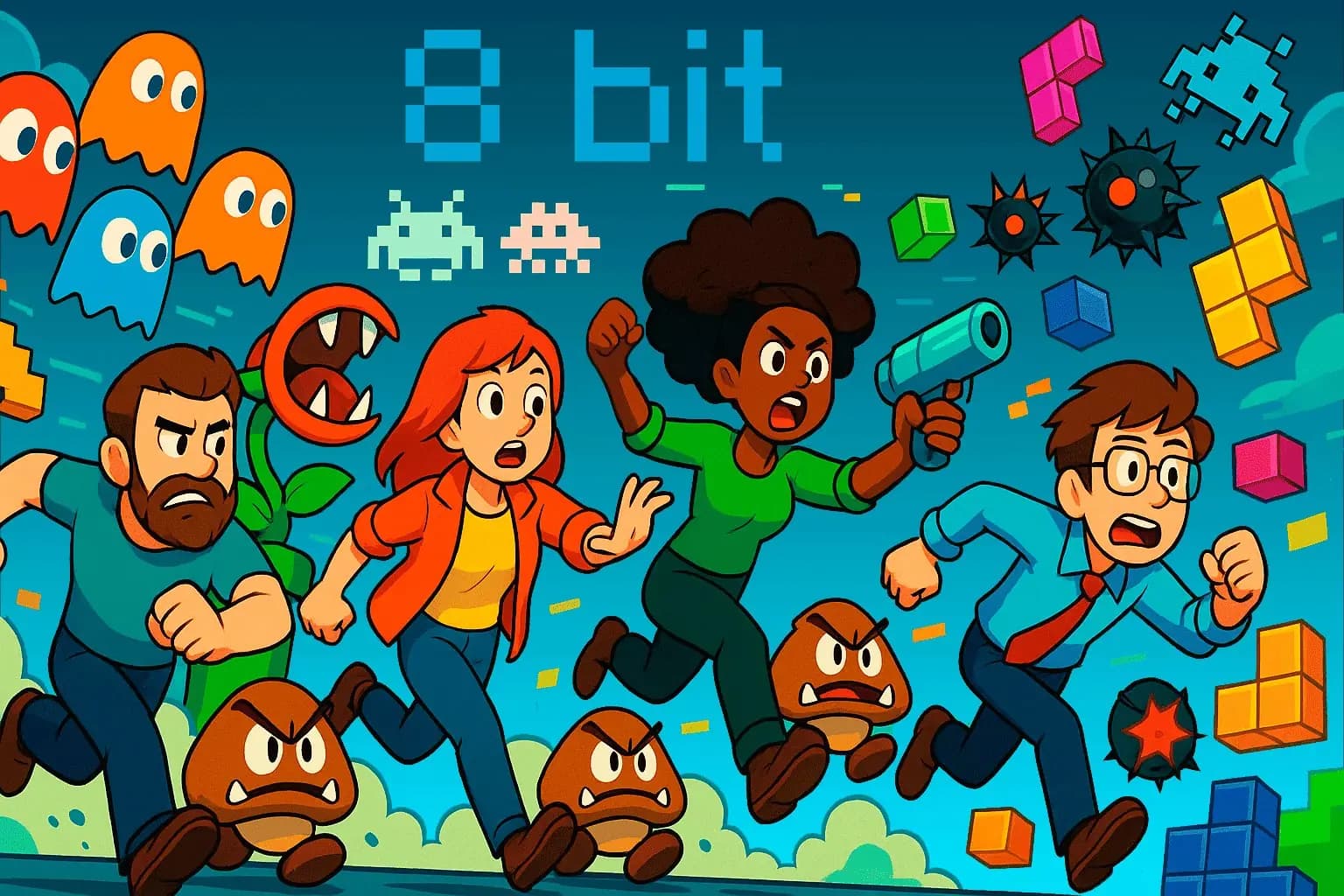
Escape Rooms & Adventures
Solve mysteries, escape traps, save worlds.

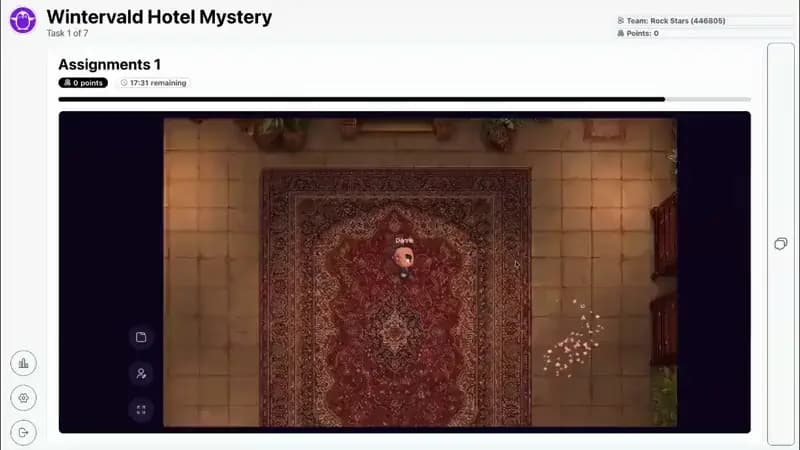
Detective & Mystery Games
Crime scenes, suspects, deductions.



CUSTOMIZATION
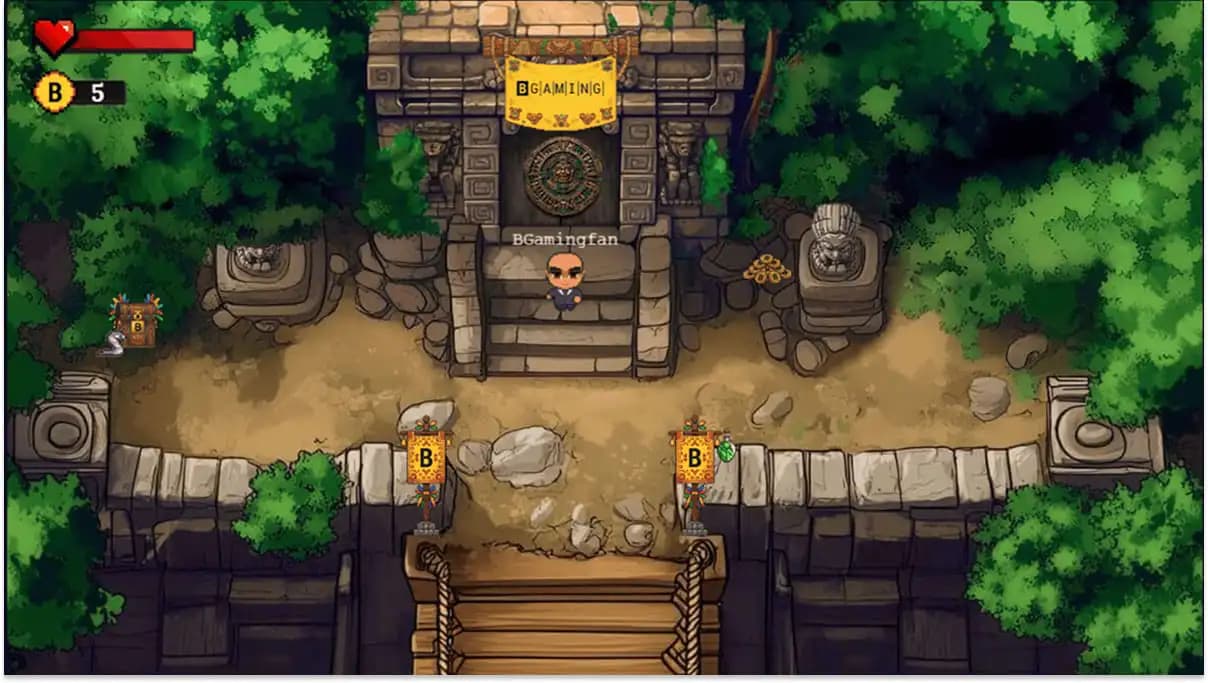
Your brand, inside the game
Three add-ons: $1,000, $2,500 and $5,000. Take one, take all three for $7,500.
Your branding
$1,000
Your logo, colors and intro screens inside the game world.
Your people in the game
$2,500
Your CEO or team leads appear as characters players actually interact with.
Your story
$5,000
The plot rewritten around your company: your milestones, your inside jokes, your year.
Any customization needs 10 business days. Without it, 3 days for a live game and 2 for a marathon.
PLATFORM
Watch the event happen, while it happens
Big Game, tournament, trivia or a multi-day marathon — it all runs on one platform. You get a dashboard with every number on it; teams get their score and their place in the standings. Below is what that looks like on screen.
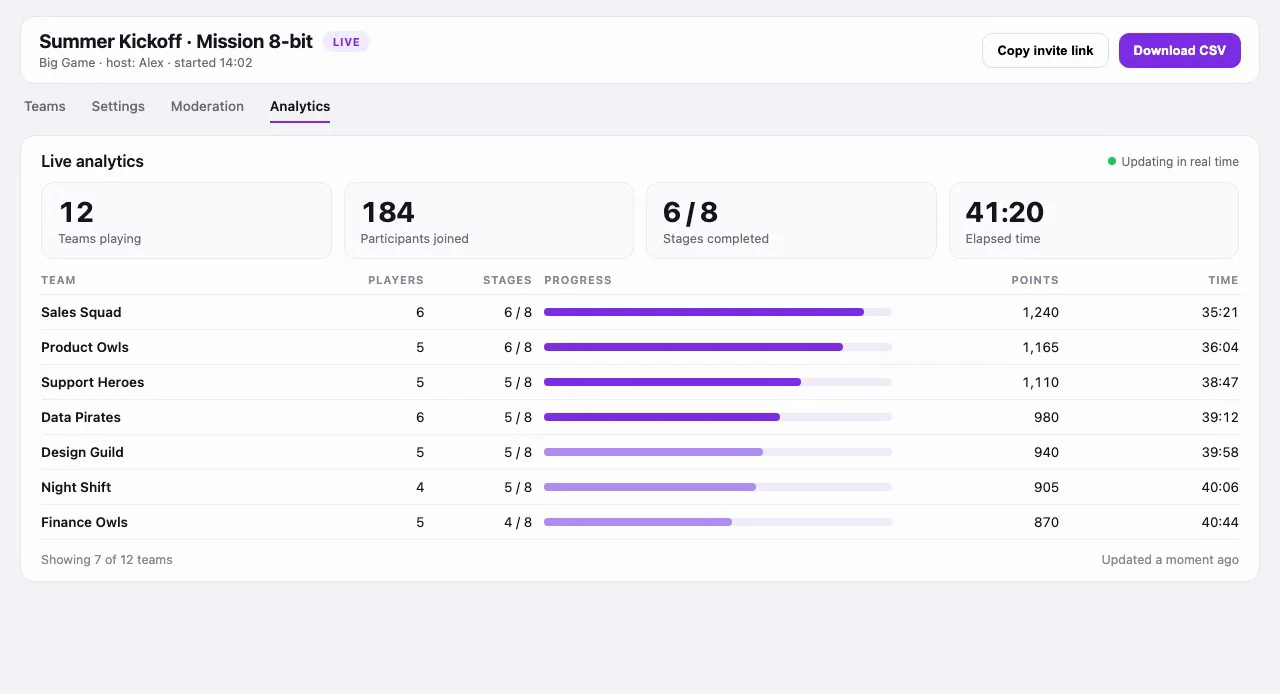
Organizer dashboard
Updates as the event runs, so nobody keeps a spreadsheet open on the side.
- How many participants and teams have joined
- How each stage or round is going
- Time and points for every team
- CSV export in one click
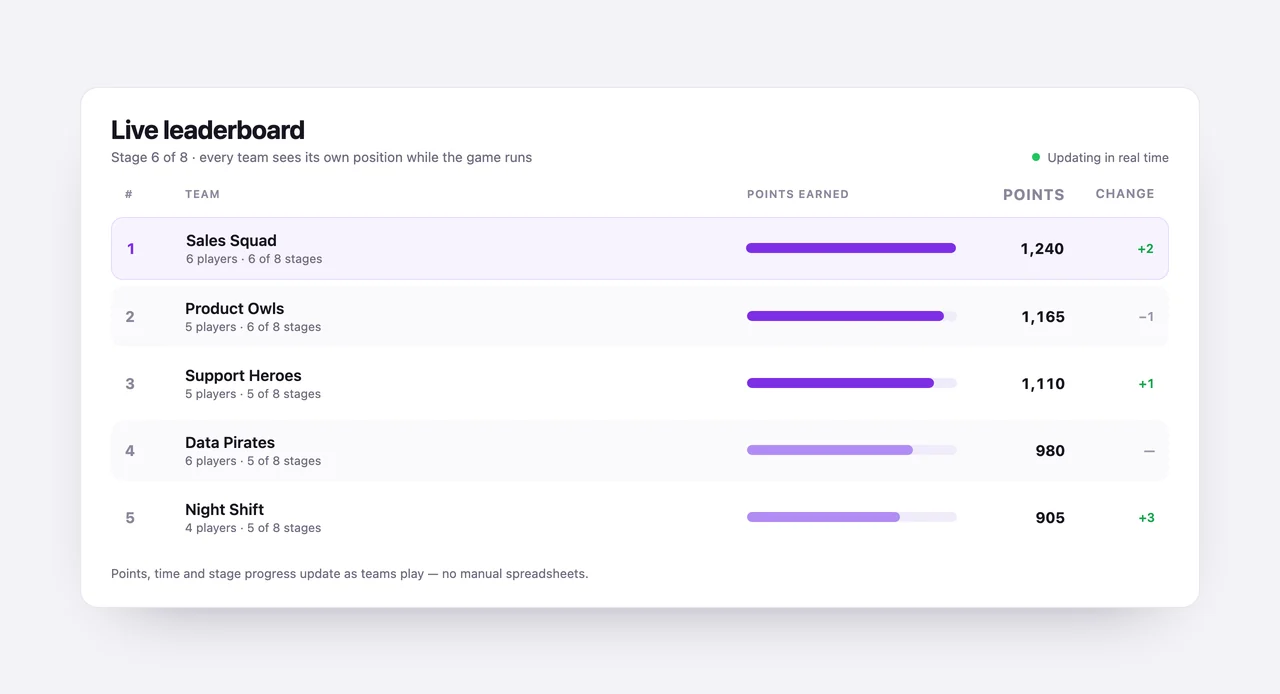
Live leaderboard
Teams watch their position move while they play, so the competition holds to the last stage.
- Points across all stages
- Time taken
- Who is leading right now
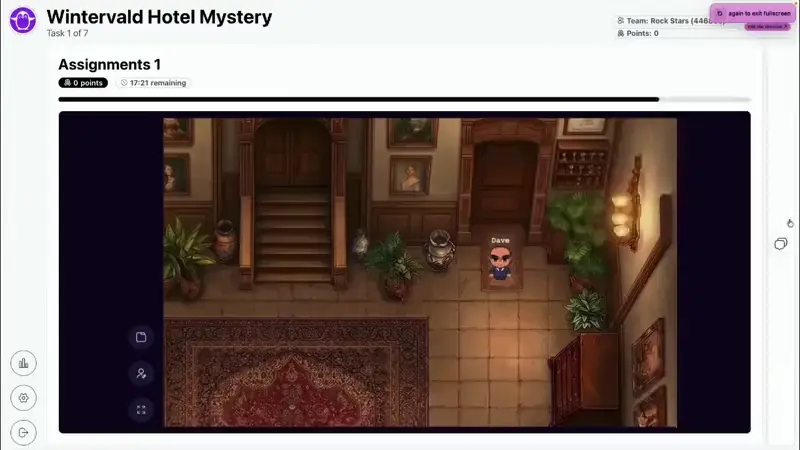
Moderation and live support
If a participant gets stuck, they ask in the chat on the platform and the host or a moderator answers there.
- Chat open for the whole event
- Hosts review answers and control the pace
POST-EVENT REPORT
The numbers, and what they mean
After the event your People team gets a report that can go straight to a director: attendance, NPS and participant feedback, with our read-out of whether the event did its job and what to do next.
Results
How the event went
- 92%attendance: 184 of 200
- 12teams reached the finish
- +52NPS from survey answers
- 280hours spent together
- Warm-up92%
- Investigation74%
- Team challenge86%
- Finale61%
The finale was the hardest part for the teams. The report shows which task held them up and why.
Inside the game
Inside the game
Average time per stage · min- Warm-up8:10
- Investigation21:40
- Team challenge15:30
- Finale12:20
- Team 71,240
- Team 21,165
- Team 111,110
- Everyone else≈880
- Question 194%
- Question 281%
- Question 346%
Fewer than half the company knew question 3 — worth a line in the internal newsletter.
Feedback
What participants said
NPS · would recommend the format- ChallengesVery high 66%, High 34%
- The hostVery high 78%, High 22%
- Look and feelVery high 58%, High 42%
Answer 1
Challengesvery high
Recommendsdefinitely yesWhat workedWhat to changeAnswer 2
Challengeshigh
Recommendsprobably yesWhat workedWhat to change
Conclusions
What follows from it
- 01What worked
Which challenges and format decisions produced the engagement — with quotes from the survey.
- 02Where teams struggled
Which stages slowed teams down and which questions turned out to be hard.
- 03What participants ask for
Open answers grouped by meaning: "more of this" versus "change this".
- 04How to read low scores
We separate a single opinion from a pattern, so nobody draws a conclusion from one answer.
- →What we suggest running next
Two or three formats picked for what landed with your team.
FOR HR LEADERS
Engagement that pays for itself
Engagement gaps have a dollar size. Here is the arithmetic, and here is where it stops being evidence.
+21%
profitability
Gallup Q12 meta-analysis+17%
productivity
Gallup Q12 meta-analysis−59%
turnover
Gallup, low-turnover orgs
Estimate the upside for your team
Value gap: engaged vs disengaged team
$2.7M / yr
Turnover cost gap at that difference
$1.7M / yr
This models the gap between a high-engagement and a low-engagement organization at your headcount, using published Gallup correlations. Open the method below to see every constant.
How this is calculated, and what it cannot show
value gap = team size × avg salary × 0.17 | turnover cost gap = team size × avg salary × 0.18 × 0.59
0.17 and 0.59 come from Gallup's Q12 meta-analysis, which compares business units scoring high on engagement against those scoring low. 0.18 is an assumed industry-average baseline turnover rate, not your rate. Replacement cost is modeled at full salary.
What this does not show: it is not a prediction of what happens after you run an event with us. The Gallup research is correlational and contains no measurement of team building. It models a gap; it does not claim we close it.
Gallup sells the engagement instrument this research is built on, which is worth knowing when reading the size of the effect.
FROM EVENTS WE RAN
What actually happened
Coca-Cola HBC
- The brief
- LearnFest runs for the whole company. The closing event had to hold 6,000 people across 28 countries at the same time, on one connection, with no installs.
- What we built
- Two 30-minute virtual journeys back to back, Tokyo then New York, hosted end to end.
- people in one event
- 6,000
- countries
- 28
- journeys, back to back
- 2
- start to finish
- 60-70 min
Citibank
- The brief
- 800 people in a banking operation, on shifts and in branches, who could not all be online at any one hour.
- What we built
- Game Marathon over a single day, branded, about 10 minutes per person, played whenever their shift allowed.
- completed in one day
- 800
- support request in total
- 1
- attendance rate
- 86%
- would recommend
- 93%
Playrix
- The brief
- A global mobile-games studio wanted an event their people would recognise as theirs, not as a vendor's template with a logo dropped on it.
- What we built
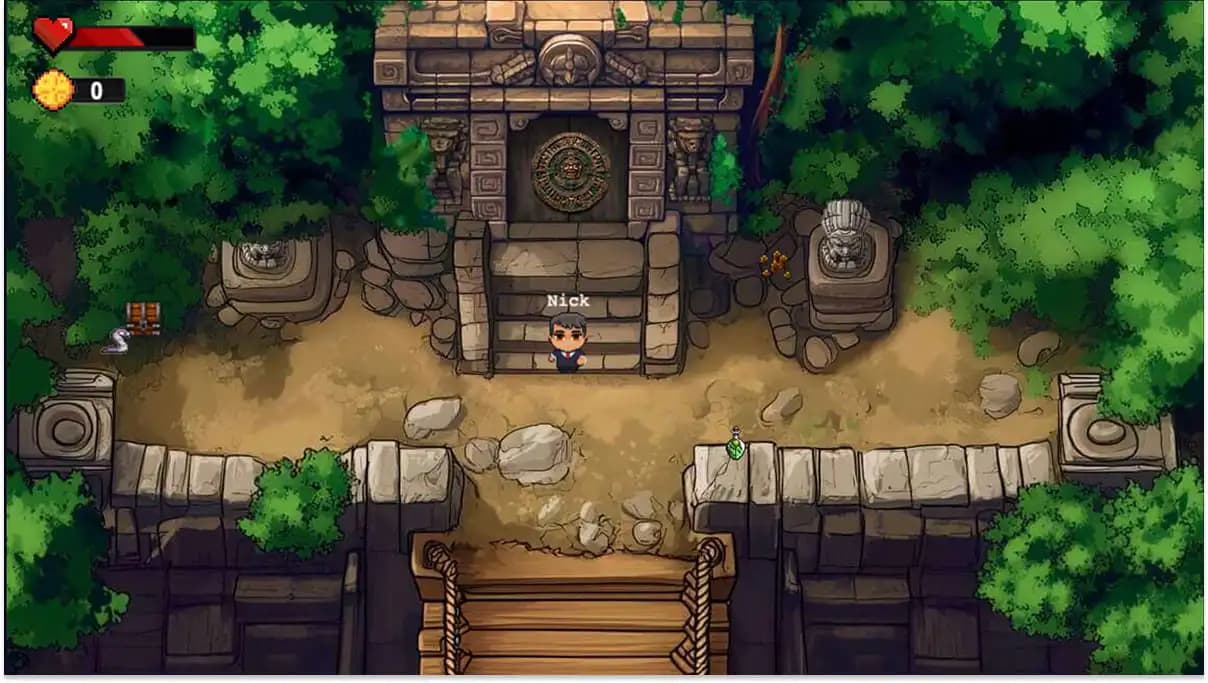
- Austin, their own character, rebuilt as a playable NPC: he greets the team, sets the tasks and reacts to what they do.
- participants
- 180
- attendance
- 90%
- custom scenes
- 6
- would recommend
- 95%
WHO HAS PLAYED
700+ companies across 50+ countries.
Not one industry with a taste for games. Four, with the same problem and the same budget line.
Industry and consumer
Global all-hands and year-end, across sites and time zones


Finance and professional
Reaching branch and shift staff who never get a calendar hour


Software and SaaS
Onboarding waves, kickoffs, teams that scaled past knowing each other
Games and entertainment
Anniversaries for people who build games for a living and notice everything


From 15-person squads to 800 people in a single day. The buyer is the same person every time: whoever in HR or internal comms was handed the job.
Not sure where to start?
Tell us your event. We'll recommend the format and price in 30 seconds.
- Quarterly all-hands100 to 1,200 people
- Christmas partyBranded experience
- Onboarding cohortAsync, multi-day
- Anniversary celebrationCustom characters
- Training programCustom mini-games
- Something elseTalk to us →
Pay by card at booking · Confirmation within 2 business hours · 3-day lead time
FREQUENTLY ASKED
Quick answers before you book
What is virtual team building?
Virtual team building is a structured online activity that helps distributed teams connect, collaborate, and build trust without an in-person meeting. HeySparko runs adventure-quest games in a browser-based 2D world — your team plays together through a real story, live with a host or async over several days. No travel, no scheduling chaos.
How much does virtual team building cost?
Pricing scales with group size, not per-seat. A 15-person event is $550; 100 people, $1,800; 1,000 people, $6,800. Per-person cost drops 16× as you scale — from $36.67 down to $2.25 at 10,000 participants. Optional branded add-ons start at $1,000. You pay by card when you book, no hidden fees. Full ladder on the pricing page.
What's the difference between a Big Game and a Game Marathon?
A Big Game is live and host-led: 70-90 minutes, your whole team plays at the same time with a professional facilitator on Zoom guiding the story. A Game Marathon is async — the same game runs over several days, and your team drops in on their own schedule. Same activities, same characters, different rhythm.
Can we customize the games for our brand?
Yes — three add-ons: your branding $1,000, your people in the game $2,500, your story $5,000. Take any one, or all three for $7,500. Your branding puts your logo, colors and intro screens inside the game world. Your people in the game turns your CEO or team leads into characters players interact with. Your story rewrites the plot around your company: your milestones, your inside jokes, your year. Any customization needs 10 business days of lead time; without it, 3 days for a live game and 2 for a marathon.
How many people can play at once?
From 5 people up to 10,000 in a single event. Small teams (5-15) get tight collaboration; mid-size groups (50-300) split into themed squads inside the same world; large events (1,000-10,000) run as parallel instances with shared leaderboards. Same game, different scaling — ladder pricing reflects the operational difference.
Do we need to install anything?
No installs, no app store, no IT ticket. The game world runs in any modern browser (Chrome, Safari, Firefox, Edge) on desktop or laptop. For Big Games (live host), you'll join a Zoom call alongside the browser game. Internet speed needed: roughly 3 Mbps per person. That's it.
How fast can we book, and how do we pay?
Three business days for a live game, two for a marathon, ten business days if you want customization. You pick the date and pay by card on the spot, no quote call and no procurement cycle. Need an invoice instead? We can do that, it just adds a few days. For events above 1,000 people, allow 5 to 7 days so we can staff the hosting.
What languages do you support?
The platform and the games run in 16 languages, so your team plays in the language they think in. Live hosting is currently in English. If you need a hosted game in another language, ask us and we will tell you straight whether we can staff it.
Will people actually want to do this?
Honest answer: most people have been burned by team building, and the usual reason is that it ate their evening or put them on the spot. Events run 70 to 90 minutes inside the workday. Cameras are never required. People participate through chat and polls instead of going around the circle. The most common feedback we get is some version of 'I normally hate this and I enjoyed it.'
What if fewer people show up than we booked for?
Nothing happens to the price. You are paying for the event, not per seat, so you do not have to guess the headcount weeks out and you do not pay for empty chairs.
What do we get after the event?
Participation data per team and per person, time spent on each stage, survey results including whether people would recommend it, and a CSV export. It is built so you can forward it to whoever approved the budget without editing it first.