
There's a specific failure pattern in async team-building programs that shows up around the second or third attempt. Day-1 participation looks encouraging, with 65 to 70% of the team joining. By Day 3, completion has dropped to 43%. The post-event debrief blames remote culture, or the timing, or the format itself. The actual cause is usually simpler: the activity wasn't matched to how that particular team engages. An engineering culture that responds to high-urgency coordination requires a different game than a finance function that wants careful deduction. The wrong activity in the right format still produces the mid-event cliff.
Five years into running virtual team building as a category — 2,000+ events for 700+ companies across 50+ countries — we've watched the failure modes repeat enough to predict most of them. The single most consistent completion-rate predictor isn't format choice or leaderboard mechanics alone; it's whether the activity's premise and puzzle logic resonate with how that specific team solves problems.
Which asynchronous team-building activities work for different team cultures, and how do you run them so people complete the whole event and not just Day 1?
What Makes an Activity Work in Async Format
Not every team-building activity transfers to an async format. The ones that work share three design properties that unstructured self-paced activities typically lack.
The first is narrative momentum. When each episode advances something (an investigation deepening, a crisis escalating, a mystery's suspect list narrowing), players have a concrete reason to return beyond obligation. The leaderboard creates competitive pull; the story creates curiosity pull. Both are required. Leaderboard-only designs produce participants who check scores but don't complete puzzles. Story-only designs produce people who read the narrative but skip the challenges. The combination is what drives 78-92% full-event completion in our data across 500+ companies.
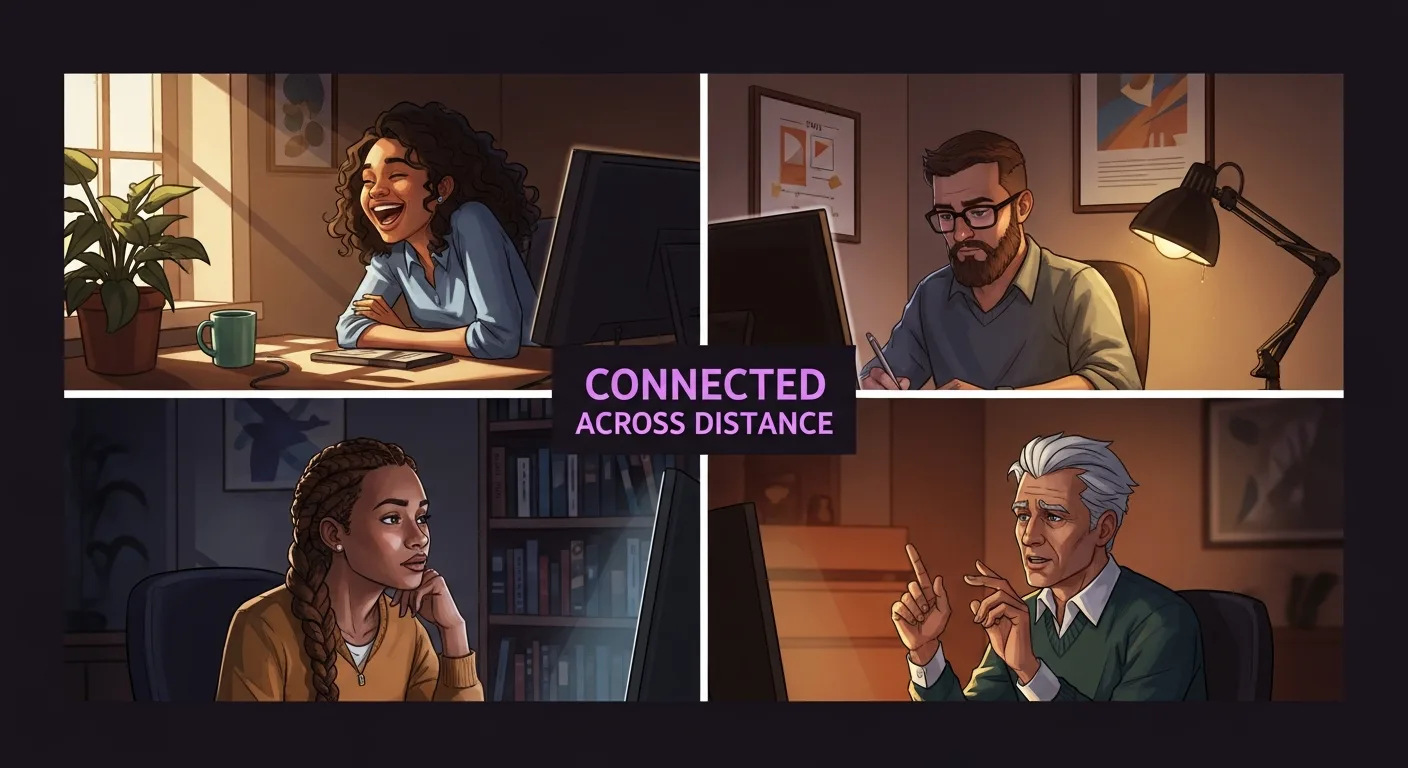
The second property is time-zone-neutral mechanics. An activity where the next puzzle requires real-time coordination with a teammate in a different time zone reintroduces the scheduling problem that async is supposed to solve. The best async activities are designed so each player can advance their team's position independently, with the synthesis happening through the leaderboard rather than through forced synchronous moments.
The third property is a result-visible-between-episodes design. When teams can see exactly where they stand relative to other teams after every submission, and when that gap is close enough to feel recoverable, they return for Day 2. We've watched leaderboard design affect completion rates more than game theme in multiple events. A 10-point gap feels recoverable; a 40-point gap after Day 1 produces abandonment in the bottom-ranked teams.
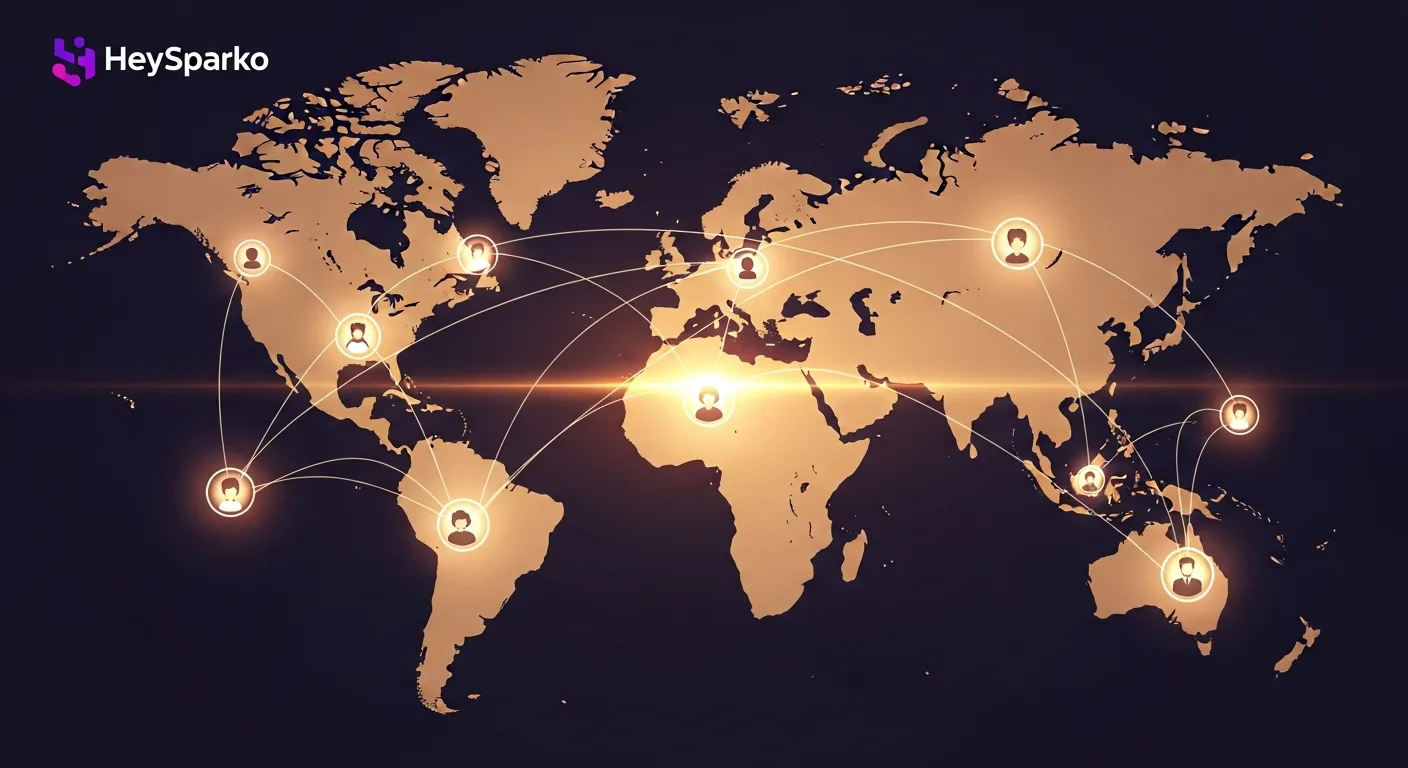
Owl Labs' 2024 State of Hybrid Work report found that 44% of distributed workers report collaborating daily with teammates across three or more time zones. For those teams, a live event window creates a structural disadvantage that participation numbers make visible: someone's region is consistently underrepresented in the final attendance count. Async activities built with the three properties above don't just match that reality — they're designed for it.
An internal products company we worked with last fall ran their quarterly engagement event as a synchronous Big Game for two consecutive quarters and saw 58-62% participation each time. Their third quarter was a Marathon. Participation hit 76%, with their Southeast Asian team engaging at the same rate as their North American headquarters for the first time. The difference wasn't the game. It was the format that removed the scheduling penalty.
The Five-Stage Playbook: Running Async Activities That Actually Finish
The operational difference between a 68% completion rate and a 41% one usually comes down to execution in the stages before and during the event, not the game selection or the budget. Here's the playbook we've refined across hundreds of Marathon events.
Stage 1: Format decision, four weeks out (HR Lead + manager team)
This is the upstream decision that constrains everything else. The two formats serve distinct objectives and distinct audiences.
Big Game is a single live 60-90 minute synchronous event. Everyone joins the same session at the same time. The energy is immediate and shared, with leaderboard shifts visible to everyone simultaneously and the host setting real-time pace. Big Game is the right call when the team's time zones fall within a 6-hour spread and the occasion warrants a live shared moment: a kickoff, a holiday party, a milestone celebration.
Marathon is the async format: 1-5 days of daily episode releases, players engaging on their own schedule, a shared leaderboard that updates continuously. Marathon is the right call when the team spans 8+ time zones, when the culture has started pushing back on mandatory synchronous commitments, or when the program needs to sustain over a week rather than deliver a single time-bounded block. It's also the format that reaches the 25-35% of most distributed companies who never show up to live windows, often entire regional offices rather than scattered individuals.
If you're unsure which format fits the situation, the decision usually resolves itself: occasions go Big Game; programs go Marathon.
Stage 2: Activity selection and team formation, two weeks out (HR Lead)
This is the most consequential decision in the entire process, and the one most commonly made too fast. Activity selection should take 15-30 minutes of deliberate thought, not a 2-minute gut call. The variables: cultural baseline (does the team lean toward high-urgency coordination, careful deduction, or imaginative story?), the occasion or program context (is this an anniversary, a culture week, a quarterly event?), and whether the team has run an async activity before (first-timers need cleaner mechanics; experienced teams can handle more narrative complexity).
Team formation matters almost as much as game selection. Pre-assigning cross-functional squads of 4-7 players, deliberately mixing departments and manager pods, produces higher cross-team connection scores post-event than allowing self-formed groups. The leaderboard creates rivalry; the squad composition determines what kind of rivalry, and whether it builds new relationships or reinforces existing clusters.
Stage 3: Pre-event communications, ten to fourteen days out (HR Lead + direct managers)
A Marathon without a strong pre-event comms sequence is like pushing a product launch with no announcement. The components in order: an announcement email that opens with the game's premise rather than a logistics summary ("You've been selected for Bureau No. 7's most chaotic case file yet" outperforms "Q2 Team Event: Marathon Format Announced"); calendar holds for each episode window that double as a daily reminder; and team assignments circulated at least seven days before Day 1, so players know their squad before they join the first episode.
If you're adding any customization tier, this is the window where the brief needs to reach the production team. NPC customization (characters that speak in your company's voice, with internal references and industry-specific language) and Story customization, where the game's full narrative arc ties to your situation (a product launch, a team milestone, a company anniversary), need 10 business days, plus a 30-minute briefing call for Story. Logo integration needs the same 10 business days. Skipping this lead time doesn't mean running without customization gracefully; it means running the stock version because there was no other option.
Stage 4: Daily momentum management (direct managers, primarily)
Day 2 is where most async events are won or lost. Without intervention, completion rates drop 20-30 percentage points between episodes. The intervention that works isn't a company-wide HR announcement. It's a specific Slack message from the direct manager. The formula: mention the team's current leaderboard position by name, add one concrete data point from the overnight analytics ("Your squad solved the Stage 2 puzzle faster than 78% of teams"), close without pressure. Curiosity closes the gap; obligation creates resentment.
The responsibility for this lives with the manager, not People Ops. In our experience, manager-sent nudges outperform HR-sent nudges by a factor of 2-3 in click-through and episode-start rates. If your organization's managers aren't briefed on this expectation before the event starts, the Day-2 nudge won't happen. Briefing managers is a pre-event task, not a mid-event one.
Stage 5: Post-event recognition (HR Lead + direct managers)
The analytics report, delivered within 24 hours of Marathon close, gives you completion rate by episode, team-by-team scores, participation by manager pod, and post-event NPS. Use this data actively. Post the top three teams in a visible Slack channel. Send a direct acknowledgment to the first completers in each function. If the winning squad gets a moment at the next all-hands, even 30 seconds of their name, participation at the next event increases.
This last mile is where most programs leave value on the floor. The game is the mechanism. Recognition is the signal that the mechanism mattered, which is the fuel that makes the next event worth doing.
Matching the Activity to Your Team's Culture
The most reliable predictor of completion-rate failure is a mismatch between activity type and team culture. This is the culture-matching framework we use before every game recommendation, and it has six operating options depending on your team's baseline.
For logic and problem-solving cultures — typically engineering, product, and technical operations teams:
Last Temple Mystery is the most consistent high-completion choice for this profile. Four floors of a Mayan temple, each with observation-and-decoding puzzles that reward the debugging mindset. In Marathon format, each floor releases as a daily episode: Village of the Keepers on Day 1, then the Earth Floor, then Storm Floor, then the Heavens Floor finale. The Storm Floor is a coordination mechanic where teams must move together or fail together; it creates exactly the kind of cross-team Slack conversation that outlasts the event.
Apocalypse is the choice when high urgency is the point. An overnight outbreak, four locations between the team and a vaccine, time pressure built into every stage. The art is stylized 2D (not horror, closer to a crisis film), and the NPS scores on Apocalypse are among the highest in our catalog. Something about a shared crisis surfaces natural leadership in 80-minute windows that lower-stakes activities don't. If a team responds better to slow-burn tension than to crisis urgency, Book of Awakened Nightmares is the quieter counterpart — atmospheric mystery-adventure with ensemble narrative beats that reward deliberate observation across episodes rather than rapid coordination.
BGaming, the international iGaming company distributed across 12+ countries, ran a fully customized adventure format for their anniversary event and reported specifically that engineering teams, who typically opt out of social events, participated at the same rate as their business operations counterparts. The cross-functional engagement pattern is consistent enough that we now lead with adventure formats by default for distributed tech companies.
For whimsy-friendly and workplace-comedy cultures:
Bureau of Magical Affairs is the strongest recommendation for teams with a Parks & Recreation or The Office cultural DNA. Four open cases (philosophical chaos at Brum's Mansion, time anomalies, stealth puzzles in a forest of sleepfrogs, a sky observatory finale), all in the context of "this is still a bureaucratic job, file the paperwork after." The premise mirrors the new-hire first-week experience so precisely that we recommend it as the top async activity for onboarding cohorts. We've run it for 100+ new-hire orientation weeks.
Stolen Hours is the activity for teams that genuinely enjoy speculative fiction. Santa's clock hands scattered across postapocalypse, cyberpunk, steampunk, and biopunk worlds: four genres in a single event, each with puzzles that surface different player strengths. The four-world structure produces unusually competitive leaderboard dynamics because different teams lead in different worlds, keeping late-game participation high among squads that fell behind early. Works year-round but hits particularly hard for end-of-year events.
For enterprise and sophisticated cultures — finance, legal, C-suite events, and formal professional services teams:
Wintervald Hotel Mystery is the most enterprise-appropriate activity in our catalog. An isolated luxury hotel in a snowstorm, a murder before sunrise, three stages of Agatha Christie-style investigation. In Marathon format, Day 1 gathers evidence, Day 2 runs suspect interviews, Day 3 reconstructs the crime scene. Teams develop genuine suspect theories between episodes, and the deductive investment across two days makes the Day-3 reveal land differently than it would in a single-session event.
For creative, design-adjacent, and theatrical cultures:
Under the Big Top takes the same three-stage deduction mechanic as Wintervald and drops it into a vintage circus setting: a vanishing act, a wonderfully strange cast of suspects, backstage evidence trails through circus tents and animal pens. The whimsy is warm rather than goofy, closer to Big Fish than to slapstick, and it works particularly well for teams in creative, marketing, or arts-adjacent functions. Strong for summer events when the aesthetic feels right and PTO-adjacent timing makes the multi-day investigation rhythm the most participant-friendly structure possible.
One structural observation about mystery activities in Marathon format specifically: the investigative rhythm maps to daily episode releases better than almost any other structure. Evidence on Day 1, alibis on Day 2, reconstruction on Day 3: the build creates anticipation between episodes that doesn't require a manager nudge to sustain. Adventure formats produce higher peak energy; mystery formats produce more consistent daily return rates.
What Could Go Wrong (and Usually Does)
Playbook articles earn their keep by being honest about failure. Here are the five failure modes we've documented consistently across async team-building events, in roughly the order we see them.
Failure mode 1: No mid-event manager nudge.
This is the single most documented cause of completion-rate drop. We have data from Marathons that started at 67% Day-1 participation and ended at 41% completion because the only mid-event communication was an automated reminder email. The fix costs 10 minutes across a manager team. The message formula that works: team's current leaderboard position + one specific performance detail + no pressure language. "Your squad solved the Storm Floor faster than 83% of teams so far; Day 3 opens at 9am" is the entire nudge you need. The curiosity about whether the squad can hold that position does the rest.
Responsibility for this belongs to direct managers, not People Ops. Building manager briefing into the pre-event plan, not the day-of plan, is the operational prerequisite.
Failure mode 2: Mismatch between activity tone and team culture.
Running Apocalypse for a formal enterprise team that wanted something sophisticated is the most common specific mismatch we see. The urgency mechanics read as stressful rather than energizing for groups that didn't opt into high-stakes content. The inverse mismatch, running a mystery for a team that genuinely wanted action and coordination, produces lower energy and more passive engagement than the team expected.
A 10-minute pre-selection conversation eliminates this. We ask four questions: cultural baseline, time zone spread, whether there's a seasonal anchor, and whether the team has run async activities before. The game recommendation follows almost automatically from those answers.
Failure mode 3: Post-event silence.
Sending a single leaderboard email after a Marathon is the operational equivalent of running a product launch and then going quiet. Companies that do the public recognition (Slack leaderboard posts, manager DMs to completers, a moment at the next all-hands) see 15-20 point participation growth at the following event. Companies that send the leaderboard email and move on typically see participation drift downward over subsequent quarters.
The post-event analytics report is designed to make recognition operationally easy. It surfaces which teams and individuals can be recognized publicly without anyone having to manually compile the data.
Failure mode 4: Insufficient lead time for customization.
This one shows up most painfully at enterprise scale. When a 1,500-person company decides five days before an event that they'd like NPC characters to speak in their brand voice, it's too late. When a CEO wants to appear as a game character (a choice that produces the highest engagement scores of any customization option), that conversation needs to happen at least 10 business days before the event date. Missing these windows doesn't produce a customized event on a compressed timeline; it produces a stock event and a disappointed executive.
Failure mode 5: No pre-event baseline for measuring impact.
This one doesn't kill the event. It kills the budget renewal. Running a 3-question pulse survey before the Marathon (targeting perceived connection to team, overall morale, and one question aligned to the current engagement priority), then repeating it 48 hours after, gives you a defensible before/after delta. The survey takes 90 seconds per respondent. Without it, the post-event ROI case relies on anecdote. Finance doesn't fund anecdote, regardless of how high the NPS scores were.
What the Data Says
The research on async team engagement has matured substantially in the last three years. Several findings directly inform how activity selection and operational staging should work for distributed teams.
Microsoft's 2024 Work Trend Index — a survey of 31,000+ knowledge workers across 31 countries — found that 57% of distributed workers prefer asynchronous engagement options over live ones. That figure represents a majority preference, not a fringe one, among the exact population that most companies are still routing against by defaulting to mandatory live events. The preference is sharpest among workers collaborating across three or more time zones, where the live-window disadvantage is most acute.
Atlassian Teamwork Lab's February 2024 Intentional Togetherness research provides the most directly relevant finding for cadence design: intentional team gatherings boost team-connection scores by an average 27%; for new graduates the lift is from 74% pre-gathering to 96% post (+22 points); the effect decays to baseline over ~4 months, implying ~3 gatherings per year is optimal. That four-month half-life is the single most important number in any conversation about how often to run async engagement events. A once-a-year Marathon decays back to baseline two-thirds of the way through the calendar; the quarterly cadence the playbook above assumes isn't a budget heuristic — it's what the connection-decay curve actually demands. Stage 4's manager nudge keeps the gathering itself high-impact; the quarterly rhythm keeps that impact compounding rather than fading.
Deloitte's 2024 Burnout in the Workplace report surveyed 1,000+ US full-time workers and found that 77% of professionals report burnout at their current job, with 31% naming lack of recognition as the primary driver — overtaking workload as the top cause for the first time in 2024. The same report found that workers attending two or more company-sponsored events per quarter report 23% lower burnout symptoms than those who attend none. That figure is worth pausing on: structured engagement activities aren't primarily a culture-metric play. For a significant portion of teams, they're a burnout-prevention mechanism. Missing the quarterly event isn't a neutral choice; it's a missed touchpoint in the recognition and connection cycle that the burnout data says matters.
The recognition connection is quantified further in Workhuman-Gallup's 2024 joint study on 2,400 US workers: workers who receive meaningful recognition at least monthly are 20 times more likely to be engaged compared to those who don't. At HeySparko, the post-Marathon analytics reports specifically include recognition triggers — first completers by team, highest engagement by squad, unexpected high performers by manager pod. The report is designed to make that 20× finding operationally actionable, not just a citation.
Academic research provides the mechanism behind the pattern. Anog et al. (SSRN, 2023), in a systematic review covering 60+ team-building intervention studies, found that structured activities produce measurable increases in satisfaction and reductions in turnover, with effects amplified when integrated into a broader development and recognition strategy. The word "integrated" matters. A one-off Marathon produces a short-term participation lift. A quarterly Marathon with manager-driven mid-event engagement and a consistent post-event recognition process produces the retention movement. The activity is the anchor point; everything around it is the program.
From HeySparko's own portfolio across 500+ companies: Marathon format completion rates run 78-92% for opt-in events. That range holds from 50-player startup events to 5,000-player enterprise Marathons. Cross-time-zone Marathons reach approximately 35% more participants than forced-synchronous alternatives for the same team — those are the people who chronically can't make live windows, typically in APAC or EMEA regions when the live event is scheduled for US business hours.
The compounding case for a structured async program: CultureAmp's 2024-2025 State of Culture report shows that companies with above-median engagement scores have 31% lower voluntary turnover than those below median. SHRM's 2024 cost-per-hire research quantifies what that means in practice: replacing a single mid-level employee costs significantly more than a full Marathon event once recruiting and ramp time are factored in. The math for a quarterly async engagement program points firmly in one direction once those two numbers appear on the same Finance spreadsheet.
Frequently asked questions
How do you keep remote employees engaged across multiple days of an async team-building event?
The leaderboard is the primary mechanism, but only when the gap between teams is close enough to feel recoverable. An activity that shows 40-point leads after Day 1 produces drop-off in the lower-ranked squads; one with 8-10 point gaps produces nearly universal Day-2 return. Pairing the leaderboard with a specific Day-2 Slack message from the direct manager — mentioning the team's current position plus one concrete performance detail — typically recovers any first-episode drop-off within a few hours. In our experience, Marathons with active manager nudges run 20-25 percentage points higher in final completion rates than those without.
Which async team-building activities work best for teams that have never done this before?
First-time teams need cleaner mechanics and a lower barrier to entry. Bureau of Magical Affairs is our consistent first-timer recommendation — four distinct case types across four episodes, each self-contained enough that missing one day doesn't break the experience, whimsical enough that the premise doesn't feel like work. Last Temple Mystery is the other strong first-timer option for engineering and analytical cultures: the puzzle logic is intuitive and the floor-by-floor structure makes the Marathon format immediately legible. Both run without requiring any prior game experience from participants.
How many people can participate in an async team-building activity?
HeySparko's Marathon format scales from 50 players to 10,000+ in a single event. Below 50, the leaderboard dynamics that create competitive pull start to feel thin — there aren't enough teams for meaningful rivalry. At 50-300 players, the event has the tightest cross-team familiarity. Above 300, we split participants into competing squads of 4-7 with a unified company leaderboard, which preserves team intimacy while maintaining company-wide competition. The format has run successfully for distributed companies at every scale in that range, including BGaming's ~400-person globally distributed team.
What's the minimum lead time needed to plan an async team-building event?
For a standard Marathon without customization, 7-10 business days is workable — game selection, team formation, and pre-event communications can be completed in that window. If you want NPC customization (characters that speak in your company's voice, with internal references), Story customization (full narrative rewrite tied to your specific situation), or Logo integration, budget 10 business days, plus a 30-minute briefing call for Story. In practice, the best-performing events we run have 3-4 weeks of lead time — not because setup requires it, but because the pre-event comms sequence builds anticipation that measurably improves Day-1 participation numbers.
Do employees need to download software or create an account to join?
No. The entire Marathon experience runs in a standard web browser with no app, no account creation, and no IT approval process. Players receive a unique link tied to their team assignment and join directly. This matters particularly for enterprise teams with device management policies that vary across regions: the browser-based mechanic works on corporate-locked laptops, Chromebooks, and personal devices without configuration. The absence of a download requirement also removes one of the most common async event excuses — "I couldn't get it installed" — before it becomes a completion barrier.
How do you measure whether an async team-building activity actually worked?
The most defensible measurement approach pairs a 3-question pulse survey (sent 3-5 days before the event, repeated 48 hours after) with the post-event analytics report. The survey targets perceived connection to team, morale, and one question tied to your current engagement priority. The before/after delta on those three items is the metric Finance will accept. The analytics report adds operational detail: participation rate by episode, completion rate across all days, team and manager-pod breakdowns, and post-event NPS. Together, the two data sources give you a leading indicator (NPS), a lagging indicator (connection and morale delta), and the by-manager breakdown that surfaces where the engagement gap lives.