
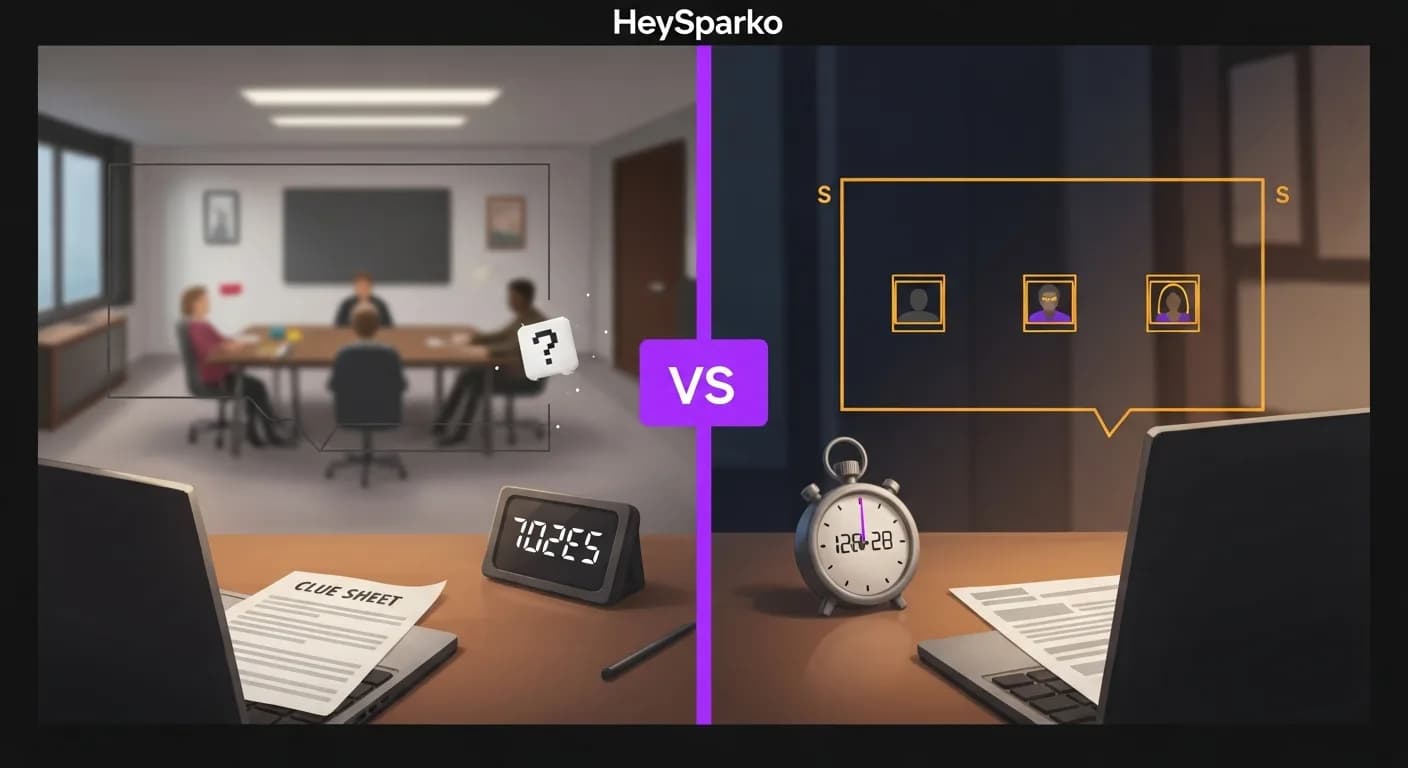

The phrase "digital escape room" now covers an enormous range of actual experiences. At one end: a 20-minute Kahoot with a countdown timer layered on top and a PDF clue sheet emailed beforehand. At the other: a fully narrated multi-stage adventure, a live professional Game Host, breakout teams coordinating across time zones, and a real-time leaderboard that has people checking Slack between stages to see how their team ranks. Both get sold under the same label. The gap in what they deliver is substantial.
Our portfolio: 2,000+ live virtual team events, 700+ companies served, 50+ countries reached, five years of operating data since 2020. The pattern we see after a team's disappointing first experience is almost always the same: they didn't choose a bad format, they chose a bad product. A trivia app dressed up with escape-room branding. The format itself, puzzle-based, narrative, staged, competitive, is one of the strongest team-building structures we have. The design behind most off-the-shelf implementations is what fails.
What should you look for when choosing a digital escape room for company team building?
What a digital escape room actually is in a company context
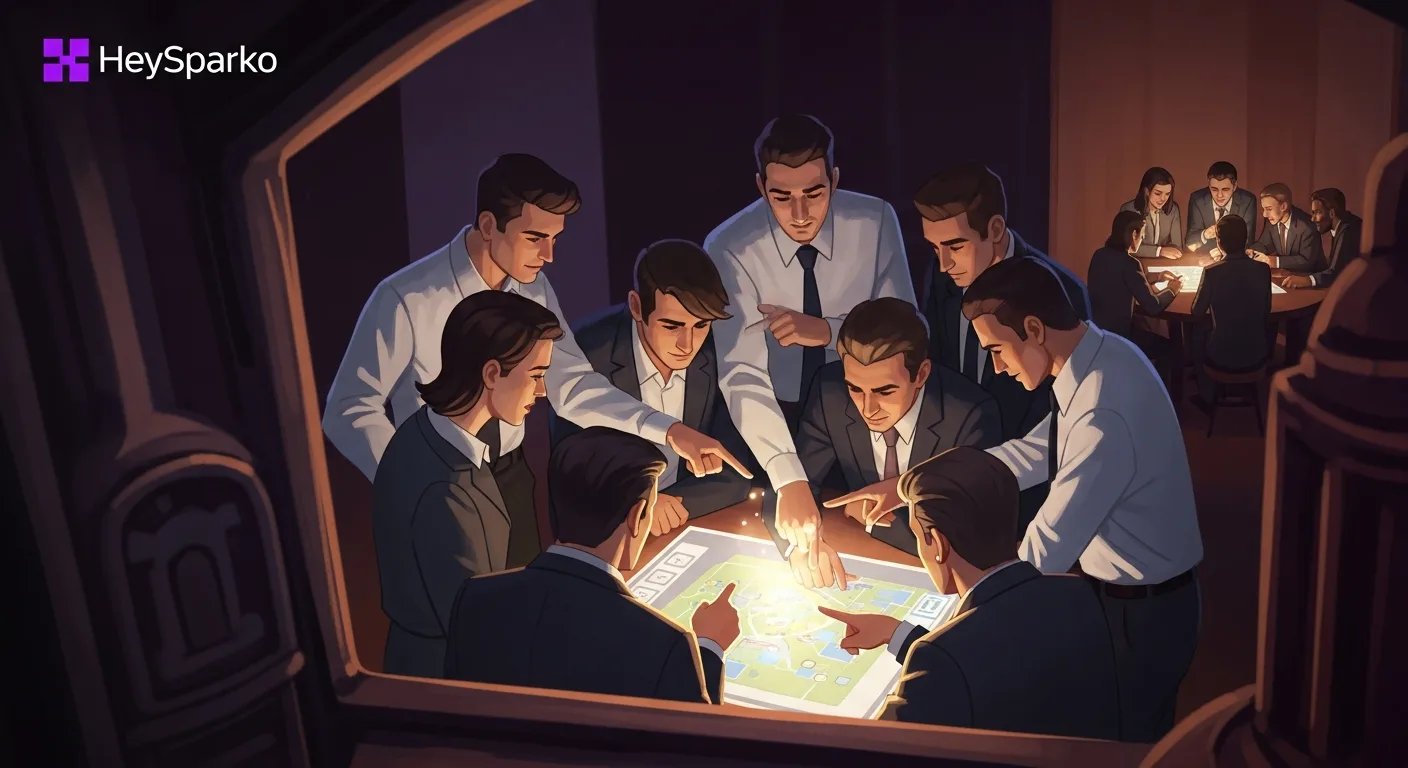
A well-designed digital escape room for a company event is a puzzle-based narrative experience where teams of 4-8 people collaborate to solve a shared challenge across multiple stages, with a live competitive leaderboard tracking everyone's progress. What distinguishes it from a trivia night or a passive virtual happy hour is the story arc. There's a premise — maybe the team is decoding a Mayan temple, racing to stop a digital virus, or investigating a murder at a snowbound hotel — and that premise creates stakes. Stakes create coordination. Coordination, it turns out, is what the post-event survey scores reflect.
In the way we run these at HeySparko, players join through a browser link with no app install, no account creation, and no IT clearance required. A professional Game Host manages the narrative, controls the transitions between stages, and maintains the event's energy throughout. Breakout teams handle the puzzle mechanics in parallel. The shared leaderboard updates in real time, giving the event a competitive throughline that a happy hour doesn't have and a trivia night only approximates.
Last Temple Mystery illustrates how this works at scale. Teams navigate four floors of a Mayan temple, from a village of ancient keepers to the Heavens Floor, with each stage introducing a different puzzle style. The Storm Floor involves sequence puzzles where the team must move together or fail together. That mechanic surfaces real coordination patterns. We've watched 200-person engineering teams find their natural tech leads in Stage 2 — the puzzle structure requires someone to hold the thread while others work the clues, and the person who steps into that role isn't always who the org chart suggests.
Bureau of Magical Affairs works from a completely different angle: four magical bureaucratic emergencies in ninety minutes, a whimsical premise that deliberately mirrors the new-hire experience of too many things on fire at once. It's the game we recommend most often for onboarding cohorts, because the chaos is the point. Both games share the same structural foundation (narrative stages, parallel breakout teams, live leaderboard, browser-based play), but the energy, audience fit, and occasion alignment are different.
What varies between events is the game choice and the format. Both of those decisions shape outcomes more than most teams expect when they're booking.
The format decision that determines attendance more than anything else
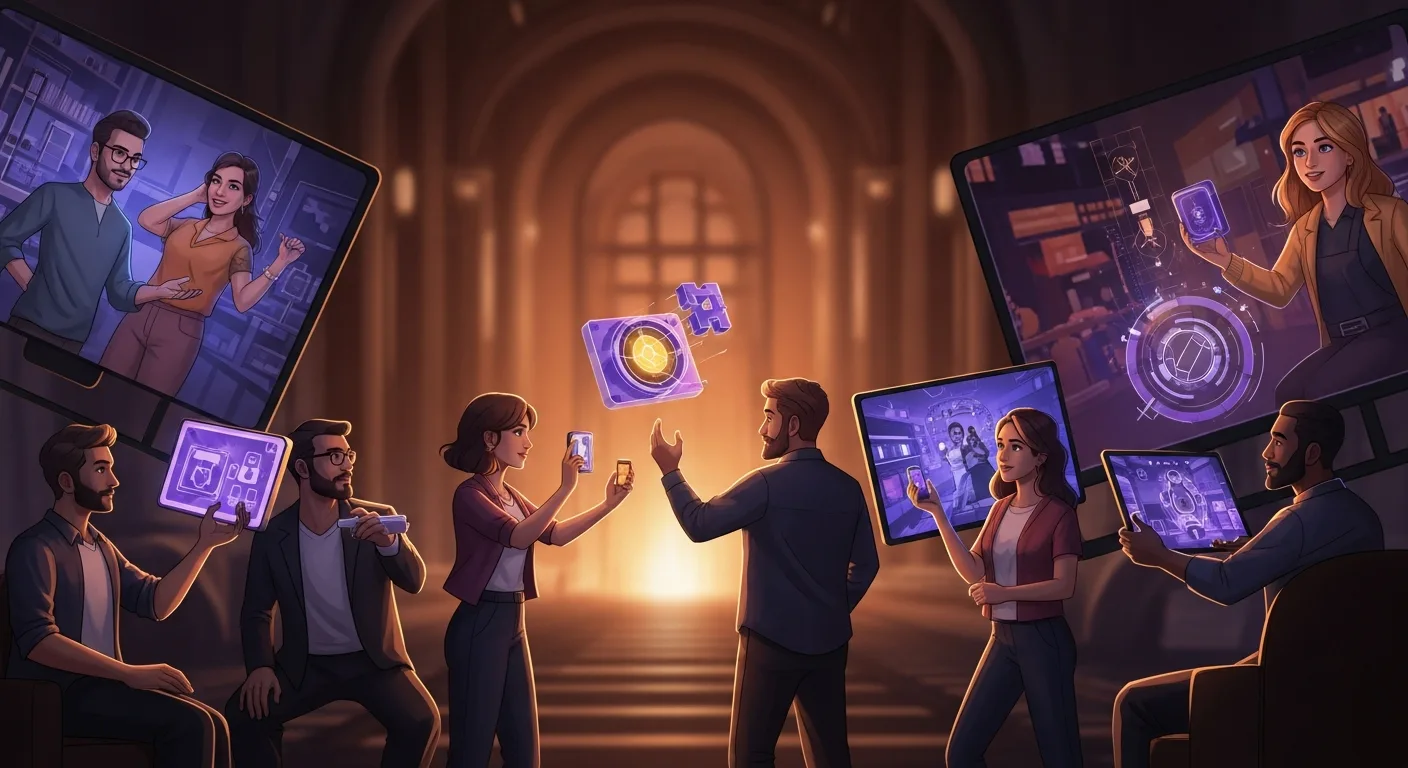
The most consequential decision in a digital escape room team event isn't which game you pick. It's whether you run it synchronously or asynchronously — and for distributed companies, getting that call wrong means either a third of the team skips or someone takes a 6am call that generates resentment rather than the connection you're trying to build.
The Big Game format is a single synchronous event, 60 to 90 minutes, with everyone in the same video call at the same time and a professional Game Host running the show. It's the right call when your team is within roughly a 6-hour time zone spread. The shared real-time energy is what makes it distinct: a live leaderboard shifting in the final 10 minutes while your team scrambles to catch up has a texture that no async format can replicate. Big Game is built for kickoffs, holiday parties, and one-off culture events where the moment itself matters.
The Marathon format spans 1 to 5 days, delivering game content through daily episodes. Players can participate at their convenience; the leaderboard updates in real-time without requiring everyone to be present at once. For teams spread across 8 or more time zones, this format often proves to be the most effective. We consistently see completion rates of 78-92% in Marathon events across over 500 companies — significantly higher than the results from mandatory live events for global teams. In those cases, 'mandatory' often translates to one person joining at 6am, then spending an hour in a post-event survey attributing their grogginess to the event.
A fintech we worked with (about 600 people, distributed across London, Dubai, Singapore, and Austin) ran their first digital escape room as a Big Game and found the best time window they could, which produced 48% attendance. The following quarter they shifted to Marathon for the same type of game content. Completion rate: 71%, without a single mandatory calendar block. The format change was the variable; the game design was similar.
The format decision usually makes itself when you account honestly for geography. For a US-only team or a European team with a 2 to 3 time zone spread, Big Game is the natural starting point. For anyone global, Marathon deserves a real evaluation before you spend two weeks trying to find the mythical time slot that works for everyone — it doesn't exist when you're spanning more than 8 hours, and the event you run in the "best compromise" slot will reflect that.
Matching the game to your team's energy and the occasion
With format decided, the game selection matters more than most HR teams anticipate when they're booking. We run a catalog of narrative experiences, and each one has a different energy profile, occasion fit, and audience alignment. The game that's right for a sales kickoff is not the game that's right for an enterprise legal team's December party.
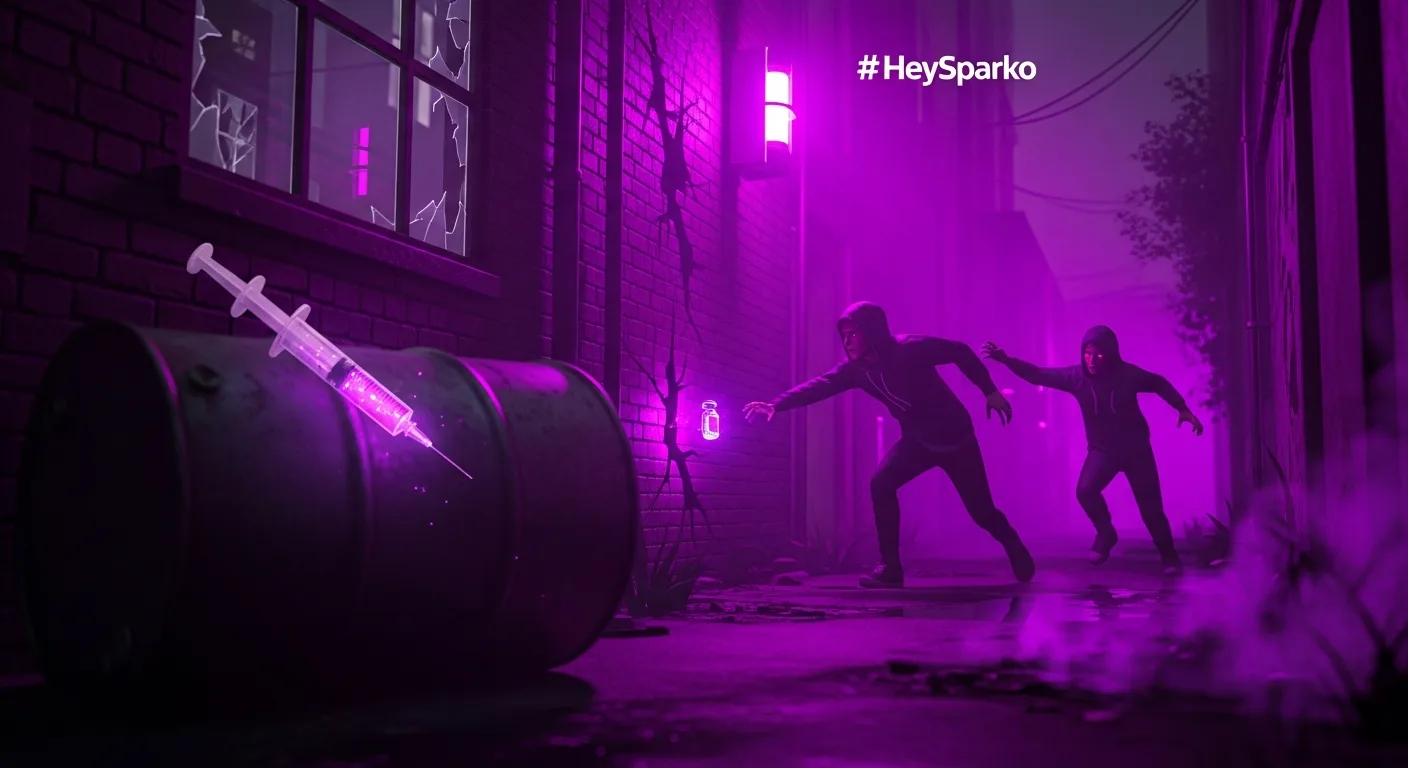
Apocalypse is the highest-energy adventure: an overnight outbreak, four locations between the team and a vaccine, a countdown clock that stays visible throughout. It runs 80 minutes in Big Game format and is our most-requested game for Halloween events and sales kickoffs where "we can solve hard problems under pressure" is the narrative the team needs to feel. Tech, engineering, fintech, and startup cultures embrace the time-pressure mechanic reliably. The art is stylized 2D throughout (not graphic, not horror), but the urgency is real enough to make coordination dynamics visible in real time. We've watched engineering teams self-organize into specialists by Stage 3, which is the game's design intent: the role specialization mechanic needs the pressure to surface naturally.
Mission 8-Bit is the year-round kickoff game for engineering-adjacent cultures. A modern virus has hijacked every digital device except a retro electronics shop the virus can't touch. The three-stage arc (escape the office, rebuild a 1980s computer, enter the digital world as 8-bit avatars to assemble the killcode) maps onto quarterly project rhythm in a way that product teams notice immediately. We didn't set out to make our most-requested Q1 game, but the setup → build → ship structure keeps resonating. Post-event, each player receives their own sprite for Slack and sticker sets.
Bureau of Magical Affairs takes a gentler angle: four magical bureaucratic emergencies, workplace humor in a fantasy setting, a premise that mirrors first-week onboarding without making that parallel explicit. It's the game we most consistently recommend for new-hire cohorts, and equally strong as the year-round option for teams that enjoy Parks and Rec or The Office type culture.
Book of Awakened Nightmares is the atmospheric choice — a cabin weekend, a leather-bound book, three folklore worlds the team didn't plan to visit. Tim Burton tone throughout: moody and slightly off-kilter, not frightening. It runs slower than Apocalypse, which creates more actual conversation in the breakout channels during play. Teams that finish it frequently describe it as the "most thoughtful 90 minutes" they've had as a company event. The atmosphere works year-round but peaks at Halloween, where it offers mood without menace for teams that don't want zombie-and-crisis urgency.
For December and end-of-year events, the choice between Wintervald Hotel Mystery and Stolen Hours usually reflects culture. Wintervald is a murder mystery at an isolated luxury hotel — Agatha Christie aesthetic, no Santa, no office parody. Enterprise finance teams, legal functions, and any culture where the workshop-comedy angle would land badly respond well to Wintervald's detective-evening framing. Stolen Hours is the same season, different energy: Santa's clock hands scattered across postapocalypse, cyberpunk, steampunk, and biopunk worlds, Pixar-bright rather than dark, built for teams that want something genuinely surprising and genre-imaginative.
Last Temple Mystery is our flagship adventure and the right default when the team is unknown or the occasion is open. It supports 15 to 10,000 players, scales without structural changes, and works year-round. When the occasion is specific (a specific holiday, a cultural moment, a new-hire cohort, a team with strong identity around their craft), the game choice should be specific too.
When customization changes a vendor activity into your event
Most teams run a stock game and have a genuinely good time. Customization exists for situations where the event needs to carry meaning beyond the game experience — where the HR leader needs the event to reinforce something, or where the team should feel like the company built this for them.
The three tiers work differently depending on what that meaning needs to be. The NPC tier rewrites the game's character dialogue in your company's voice — internal references, naming conventions, industry-specific language, optionally a character named after a real internal figure. The Logo tier integrates your visual brand across the game environment: brand colors in the UI, your logo on the leaderboard and completion screens, branded certificates. The Story tier rewrites the entire narrative arc to fit a specific company situation — a Series B close, a major product launch, a five-year milestone, a rebrand. Same mechanics, same Game Host, different story.
Customize for your team
TYPE 1
Your team as in-game characters
Real team members, mascots, or characters from your games as NPCs.
TYPE 2
Your brand integrated natively
Logo and brand elements native to game environments — locations, items, UI.
TYPE 3
Your story woven into the game
Company milestones, products, and inside references woven into puzzles, dialogues, and tasks.
BGaming, an international iGaming company with around 400 employees in more than 12 countries, celebrated their company anniversary by utilizing all three tiers. They chose the game Adventure Through the Ages, featuring a full NPC, Logo, and Story that traced BGaming's growth throughout historical milestones. This led to an impressive 89% participation rate, exceeding their 75% target, along with an 8.7 NPS in the post-event survey. Their People team observed that cross-functional conversations, especially between engineering and business operations, experienced a notable increase in the weeks following the event, as participants credited the shared experience in their internal survey.
About 15% of HeySparko events run with at least one customization tier. The cases where it earns its cost most clearly are milestone celebrations, annual all-hands events, onboarding cohorts where the company wants the game to feel native from day one, and any customer-facing event where players shouldn't see HeySparko's brand. For events where the shared experience is the point, stock is usually right. Customization pricing is on our pricing page.
One operational note: lead time matters here. The NPC, Story, and Logo tiers each need 10 business days from brief to event. If you're planning a milestone event for a specific date, the customization conversation needs to start earlier than you'll think it does.
What the research says about why the format works
The intuition behind a digital escape room — that a structured, staged shared experience builds team cohesion better than a passive social hour — has a research foundation worth knowing when you're making the budget case internally.
Atlassian's 2024 State of Teams report estimates that 25 billion work hours are lost annually to ineffective collaboration within the Fortune 500, and that 93% of executives say teams could deliver similar outcomes in half the time if they collaborated more effectively. Those figures are extrapolations from executive opinion rather than time-stamp telemetry, but the directional signal is consistent with what we see in our own post-event data: the biggest variable in whether a team is fast or slow isn't talent, it's whether the team has shared reference points for how to coordinate under pressure. A well-designed escape room creates exactly that — a shared moment ("the Storm Floor, when your team cracked the sequence before anyone else") that managers can turn into a cultural reference in the weeks following. That's harder to create in a passive happy hour where the content is drinks.
Deloitte's 2023 Human Capital Trends report found 46% of employees felt less connected to colleagues compared to before 2020. That figure hasn't recovered to pre-pandemic baselines. Among the teams we see with Marathon completion rates above 75%, a consistent pattern: the manager is actively engaged during the event — sharing leaderboard updates in team Slack channels, calling out specific moments, making the event visible beyond the participants. The game provides the pretext; the manager converts it into a cultural moment. Events that run without that manager layer tend to produce good NPS scores and limited behavioral change.
Microsoft's 2024 Work Trend Index found 57% of distributed workers would prefer asynchronous engagement options over live ones. That's the single strongest data point behind Marathon as a format for global teams. "Prefer" here isn't about wanting less interaction — it's about calendar reality. For a team spanning three continents, the choice between a compromised live event where someone is at 6am and a well-designed async event where everyone participates at their most functional hour isn't ambiguous. Marathon's 78-92% completion rates in our data reflect what happens when the format respects that reality.
The academic foundation sits in Anog et al. (SSRN, 2023), a systematic review of 60+ studies on structured team-building interventions. Their finding: structured activities increase satisfaction and reduce turnover, with effects amplified when they're integrated into a broader development strategy rather than standing as isolated one-off events. This is the case for recurring Marathon programs over single Big Game events in ongoing engagement work — not that Big Game is wrong for a kickoff, but that the 3-to-5 day narrative arc of a Marathon creates more integration points than a single 75-minute live session. The recurring format, quarterly or bi-annual, is where the retention signal becomes measurable.
In our own data across 2,000+ events, the participation gap between groups that receive substantive pre-event communication and active manager advocacy versus groups that receive a calendar invite and nothing else runs approximately 20-25 percentage points. The event is the moment. The two weeks of anticipation and the Slack message from the manager afterward are what determine whether the moment compounds into something.
Frequently asked questions
What's the difference between a digital escape room and a virtual trivia night for team building?
A digital escape room is a narrative puzzle experience with multiple stages, a story arc, and mechanics that require actual team coordination — routing decisions, role specialization, timed challenges. Trivia is question-and-answer with a score. The coordination dynamics are completely different. In an escape room, what the team learns about itself (who leads under pressure, who notices environmental detail, who holds the thread when things get complicated) is a natural byproduct of the mechanics. For team-building purposes, those coordination dynamics are what HR teams are usually trying to surface.
How many people can join a digital escape room company team event?
HeySparko's Big Game format scales from 15 to 10,000 players in a single session. Breakout teams of 4-8 run in parallel, so a 500-person event becomes 60-plus competing squads on a shared leaderboard. Marathon format supports similar player counts spread across 1 to 5 days rather than a single live window. For groups over roughly 400 players with a concentrated time zone spread, Big Game typically works well. For larger or more geographically distributed groups, Marathon produces better completion rates in our data.
Do players need to download any software to participate?
No. HeySparko runs entirely in a standard browser — no app install, no account creation, no IT clearance required. Players receive a link, join, and play. This matters specifically for corporate teams where locked-down laptops and IT security policies routinely block third-party installs. We've run events for companies with strict device-management policies without a single player-side technical barrier. The Game Host handles all navigation; players need a browser tab and working audio, nothing else.
How far in advance should we book a digital escape room team event?
For a stock game in Big Game format, 7 to 10 business days is usually workable — the primary constraint is Game Host availability for your date and time. Marathon format is comfortable with two weeks. Customization extends those timelines: any tier (NPC, Story, or Logo) needs 10 business days of lead time. For large events over 500 players or events requiring detailed customization, 4 to 6 weeks gives enough room for the brief cycle, approval, and participant logistics. Milestone events with a fixed date should start the conversation earlier than feels necessary.
What's the difference between Big Game and Marathon for a distributed team?
Big Game is a single synchronous event — 60 to 90 minutes, everyone on the same call at the same time. Marathon runs across 1 to 5 days with daily episode releases and async engagement. If your team is within a 6-hour time zone spread, Big Game delivers the shared energy of a live event that async can't replicate. If you're spanning 8 or more time zones, Marathon is almost always the better choice — completion rates in our data (78-92%) consistently outperform the attendance rates we see in forced-synchronous global events. Format should match your geography before you think about anything else.
How do we measure whether the digital escape room team event actually worked?
HeySparko delivers a post-event analytics report within 24 hours — participation rate, team-by-team breakdown, coordination scores by stage, and an NPS pulse. Those numbers give you defensible data for the budget conversation and a benchmark for the next event. Beyond the analytics, the engagement signal we find most predictive is manager behavior in the 48 hours following: managers who reference the event in team Slack channels, recognize specific player moments, or share the leaderboard results see measurably stronger engagement in the month following. The event creates the content; the manager determines whether it becomes a cultural reference.