
Every October, the calls we take from People Ops managers have a familiar structure. They open with "we want to do something for Halloween" and quickly narrow to "but we're worried about the team." Not worried about the event logistics. Worried about the half of the team that finds horror-themed content genuinely stressful, or the employees from countries where Halloween isn't part of the cultural furniture at all. We've run 1,500+ virtual team events for 300+ companies across 50+ countries since 2020. The October format problem is one we've worked through more times than any other seasonal window. What's the best virtual Halloween office party format for a distributed team?
What makes a virtual Halloween office party actually land
Start with the framing problem. Most teams don't want horror. They want the energy of the week — costumes, atmosphere, something that acknowledges October's arrived — without requiring anyone to sign on to the full American Halloween aesthetic. The events that work treat the holiday as an excuse for a specific kind of energy: competitive, atmospheric, slightly charged. The events that fail try to replicate that energy through content that leans too hard on jump-scares, gore-adjacent visuals, or cultural references that don't travel.
A People Ops lead at a 350-person fintech called us in mid-September last year. Her team was genuinely global: US east coast, UK, India, Singapore. She ruled out anything with zombie imagery before we reached the first game description. Not squeamishness — strategic read of her room. "Half the company will think it's fun. The other half will spend the call wondering if they can leave early." We ended up booking Apocalypse: stylized tension, no gore, urgency that you can feel without needing to believe in the premise. The October atmosphere came from the pacing and the game design, not from asking anyone to celebrate anything.
That's the core insight for virtual Halloween office parties: the best games don't require the occasion. They reward it.
Book of Awakened Nightmares is the clearest example. Tim Burton visual logic, composite folklore from multiple cultural traditions, three worlds your team gets pulled through against their will — Despair, Rage, Madness — without a single piece of US Halloween iconography. The international teams that book it for October do so precisely because it doesn't ask their Singapore or Berlin employees to relate to a candy-and-costumes tradition they grew up without. There's atmosphere here. It just doesn't belong to any one culture.
For teams where professionalism runs deep (finance, legal, some enterprise tech), neither of those games is usually the right call. Wintervald Hotel Mystery solves that problem in a different register: an Agatha Christie-flavored murder mystery at an isolated winter hotel, sophisticated rather than spooky, genuinely elegant without a single Halloween element. We've booked it for legal teams specifically because the "detective at a luxury hotel" premise is aspirational where "zombie response squad" would feel off-brand for their culture.
Then there's Under the Big Top, which is for teams whose culture leans warm and theatrical rather than spooky or serious — a vintage circus, a missing headliner, an intentionally strange cast of suspects. It's melancholic rather than eerie. Different appeal entirely, but October works for it.
Point being: the game you pick for a Halloween virtual office party isn't primarily a Halloween choice. It's a culture read.
The format question that happens last but should happen first
The game catalog conversation tends to happen before the format conversation. We've learned to reverse the order.
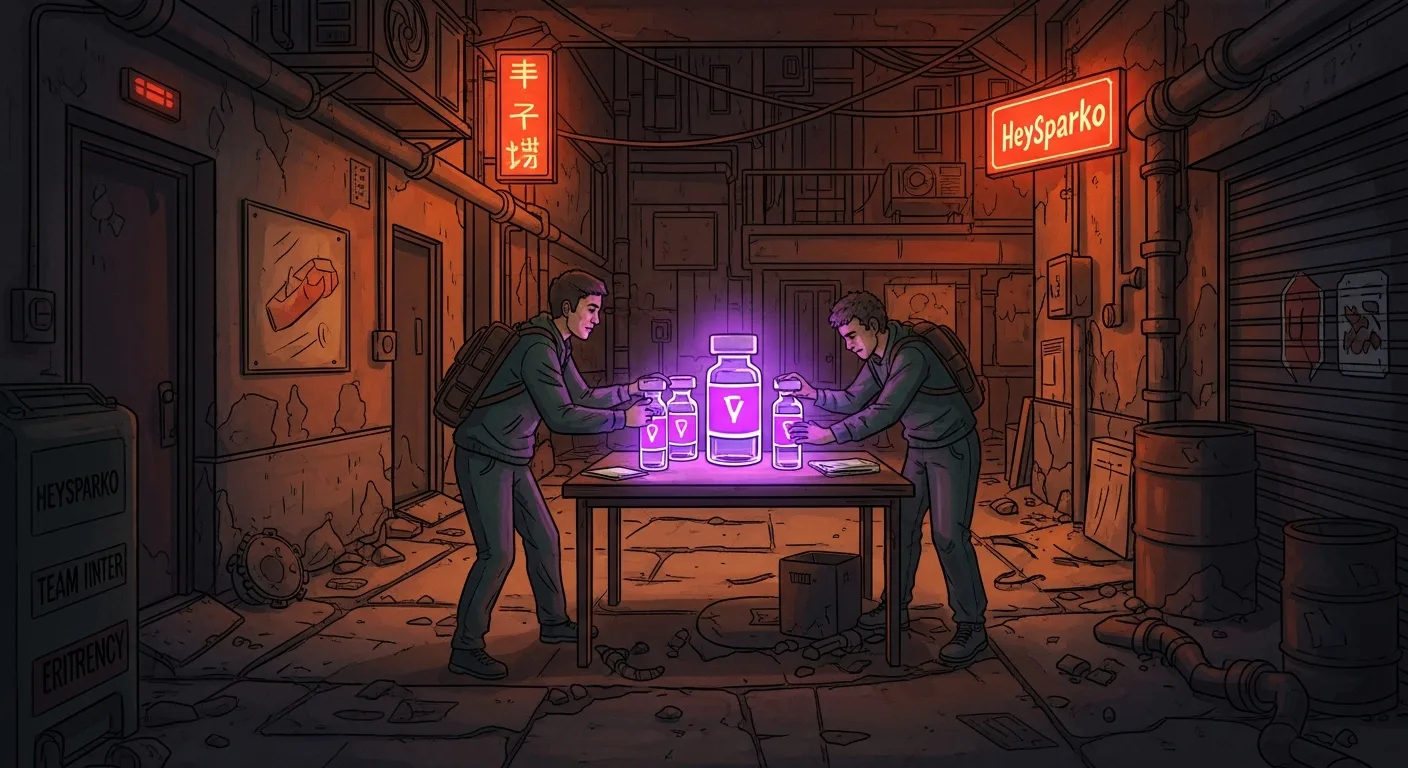
Big Game is a single synchronous event. Everyone joins the same call at the same time; a HeySparko Game Host runs the session start to finish; breakout teams of four to eight players work through the game in parallel with a live leaderboard. 60-90 minutes. The shared-energy payoff is real — there's something that happens when a company of 200 people is on the same leaderboard and the standings flip in the last round that no async experience replicates. But it requires time zone alignment. Within a six-hour spread, you can usually find a window that doesn't force anyone into very early morning or very late evening. Beyond that, you're compromising someone's day for what's supposed to be a party.
Marathon is the format built around that constraint. Content releases daily — each day a new episode, each episode roughly 30-45 minutes of engagement, players join when their schedule allows. The leaderboard updates continuously, so a team in Tokyo playing their Day 2 episode at 3pm is competing on the same board as a team in New York playing theirs at 3pm. No synchronization required. In our Marathon data across 500+ companies, completion rates hold between 65-78% for opt-in events. That number surprises most People Ops managers, who expect async to underperform live. What drives it is the leaderboard: people return not because they're required to, but because they want to check standings.
For October, we see Marathon booked most often as a Spirit Week: Monday through October 31st (or the Friday before, if October 31st falls on a weekend), five days of content that build toward a close. A hospitality company we worked with ran exactly this format last fall — US, UK, and Asia offices, no scheduling problem because there was no scheduling requirement. Seventy-one percent of employees finished all five episodes voluntarily. "It just ran," their People Ops lead told us afterward. "I sent one Slack message on Day 2. That was the whole job."
For three-day Marathons, Apocalypse runs as a three-episode vaccine-race arc where each day's content advances the outbreak narrative. Book of Awakened Nightmares paces well across days too — each folkloric world becomes its own episode rather than a third of a 90-minute experience.
The decision usually makes itself. If your company's time zones are contained, Big Game gives you the shared live energy that a company-wide moment deserves. If they're not, Marathon is the format that doesn't penalize the people who drew the short straw on the timezone map.
Matching game tone to culture: the catalog for October
Eight games in the linked catalog for this article. Here's how they split across use cases.
Apocalypse is the high-energy option: a racing-clock vaccine mission across four locations, teams coordinating under urgency, stylized menace that reads as charged rather than frightening. 80 minutes Big Game, or three-episode Marathon arc. Works best for tech, engineering, startup cultures — the kind of team that would enjoy an escape room with a faster pulse. The Story customization tier can anchor the outbreak to your company's specific domain (a fintech reframe, a biotech reframe, a logistics reframe) which tends to land especially well for teams that are already thinking about crises in their work.
Book of Awakened Nightmares is the atmospheric one. Ninety minutes, three folkloric worlds, slower pace, cameras off is entirely fine. The teams that book this for October are usually the ones who've been to enough "escape room but on Zoom" events to want something that doesn't feel like an escape room. There's a version of team-building that's thoughtful and strange and stays with people for a few days after. That's this one.
Wintervald Hotel Mystery lands for enterprise audiences and for buttoned-up cultures where the other options feel too loose. Murder mystery, luxury hotel, snowstorm, one night to solve it — the Knives Out aesthetic runs through the whole thing. The deduction structure rewards teams that debate carefully more than teams that guess fast, which suits certain cultures very well.
Bureau of Magical Affairs is a useful wildcard. Four magical bureaucratic crises, whimsical office comedy, genuinely funny — not "fun in the way corporate events are fun" but actually funny. We've seen teams pick this for October because their culture wants an excuse to gather and the specific holiday doesn't matter to them. The Halloween calendar date is convenient; the game has nothing to do with it. That's a perfectly valid event.
Stolen Hours is a December game by design (stolen clock hands, Santa, four genre worlds to chase through), but it has a natural October run window for teams who want something genre-fiction and imaginative rather than atmospheric or thriller-adjacent. Postapocalypse, cyberpunk, steampunk, biopunk — all in 90 minutes. Teams that enjoy that kind of imaginative scope often prefer it to a "spooky" theme they'd find contrived.
For lighter formats: Pop Culture Trivia is 60-75 minutes, three rounds, genuinely competitive without narrative investment. The right choice when the team has already done multiple adventures and wants something lower-key for October. History Trivia is the option for academically-leaning cultures — consulting, policy, research — where the "Connecting Lines" final round rewards lateral thinking more than recall.
The booking window for 2026, with the numbers that matter
Our booking data is fairly consistent year to year: demand for October dates starts accelerating in mid-August and peaks in late September. By October 10th, the most-requested dates in the week of October 26-31 are typically gone. This is not a soft "consider booking early." It's a description of what actually happens to the calendar.
For Big Game: ten days minimum lead time for a stock no-customization event. Logo customization — brand colors and logo integrated into the game environment, leaderboard, completion certificates — needs seven days from brief submission. NPC customization, where game characters reference your company's internal voice, naming conventions, or a specific leader by name with their consent, needs fourteen days. Story tier, a full narrative rewrite tied to your company's specific situation, needs twenty-one days from brief.
Customize for your team
TYPE 1
Your team as in-game characters
Real team members, mascots, or characters from your games as NPCs.
TYPE 2
Your brand integrated natively
Logo and brand elements native to game environments — locations, items, UI.
TYPE 3
Your story woven into the game
Company milestones, products, and inside references woven into puzzles, dialogues, and tasks.
October 31st falls on a Saturday in 2026, which shifts the primary demand to October 29th and 30th — the last Thursday and Friday before the weekend. Those dates start booking in early October. For a no-customization event with flexible date options, mid-October is workable. For specific dates or any customization, September gives you the production margin you actually need.
For Marathon Spirit Week: book in September for the same reason the game production timeline isn't the only constraint. A five-day Marathon needs announcement emails, calendar invites, and pre-event context landing in inboxes before the last week of October arrives fully loaded with end-of-quarter work. Fourteen days booking-to-launch for a three-day Marathon; twenty-one for a five-day Spirit Week running October 27-31.
A note for multi-region companies: APAC and EMEA date availability is drawn from the same pool as US bookings. The People Ops manager who books the US event in October and then discovers Singapore and London dates are already gone had a September problem they deferred to October.
Engagement events and the data behind them
The business case for a Halloween event isn't about October morale. It's about what structured shared experiences do to the underlying numbers that HR teams are already tracking.
Quantum Workplace's 2024 Workplace Trends Report surveyed executives at companies across its database of 700,000+ employees at 8,000+ U.S. organizations. Among those executives, 92% said they'd seen increased performance from their engagement efforts. That qualification matters: these aren't employees saying events were enjoyable. These are the people who approve the budgets reporting they see lift from the work they fund. Which is a materially different claim.
A systematic review by Anog et al. (SSRN, 2023) across 60+ studies found that structured team-building activities increase satisfaction and reduce turnover, with the effects growing larger when activities are integrated into a regular cadence rather than treated as one-off interventions. The word "structured" is doing work there. An informal Zoom happy hour with a pumpkin-emoji background doesn't generate the same signal. A game with a leaderboard, team coordination, and a shared outcome does.
Microsoft's 2025 Work Trend Index documented that 30% of meetings now span multiple time zones, an 8-point increase since 2021. If nearly a third of your company's regular collaboration is already cross-timezone, a mandatory live Halloween event with no async option creates exactly the scheduling friction you're spending the rest of the year managing. This is part of why Marathon completion rates hold where live-event attendance rates don't: the format respects how people's work actually works.
Deloitte's 2024 Burnout in the Workplace research found workers at companies running two or more sponsored events per quarter report 23% lower burnout than those who don't. October is the Q3/Q4 touchpoint. SHRM's 2024 cost-per-hire data puts non-executive departure costs in the mid-five-figures per employee when recruiting and ramp time are included. CultureAmp's 2024 State of Culture report pegs the voluntary turnover gap between high-engagement and low-engagement companies at 31%. If you're presenting an October event budget to Finance, the argument isn't "we want to celebrate Halloween." It's "we're adding the Q4 touchpoint to a cadence that empirically reduces attrition, at a per-player cost well below one day of replacement-hire onboarding."
Frequently asked questions
How far in advance should we book a virtual Halloween office party?
September, honestly, for anything with customization or a Spirit Week format. For a stock Big Game with no customization, ten days is the minimum and two weeks is comfortable. Logo tier needs seven days from brief submission; NPC tier needs fourteen; Story tier needs twenty-one. For a five-day Marathon Spirit Week, the booking-to-launch gap should be at least twenty-one days so communications have time to land before the last week of October fills up. Mid-October for specific dates is late.
What's the difference between Big Game and Marathon format for a Halloween team event?
Big Game is everyone-on-the-same-call, 75-90 minutes, live leaderboard, shared energy. Marathon is daily-content-releases over one to five days, players engage on their own schedule, same leaderboard just asynchronous. If your time zones are within six hours, Big Game gives you the shared-moment payoff that makes an event feel like a company event. If your team spans eight or more time zones, Marathon is the format that doesn't ask anyone to take a 6am call for what's supposed to be a party. In our data, Marathon completion rates hold between 65-78% for opt-in events — that's not a concession to async, that's the intended design.
How many people can participate in a virtual Halloween team event?
Both formats scale to 10,000 players per event. In Big Game, large groups split into competing squads on a shared leaderboard, with breakout teams of four to eight so everyone is contributing rather than watching. In Marathon, the async structure handles large player pools naturally because there's no single attendance window to coordinate. We've run Big Games for 400+ employees and multi-day Marathons across companies with several thousand participants across twelve or more countries — the format difference is about scheduling fit, not capacity.
Do employees need to download software to join a virtual Halloween event?
No downloads, no accounts, no IT tickets needed. Everything runs in the browser on any standard laptop, and we've specifically tested compatibility with Cisco and CrowdStrike-restricted corporate environments. For People Ops managers coordinating across offices with different IT lockdown levels, the only instruction your employees need is "click the link." The HeySparko Game Host handles the rest — welcome, setup, breakout team assignment, everything. Your team arrives as players, not as tech support.
What if some of our team doesn't celebrate Halloween?
Label the calendar invite "October team event," make costume participation explicitly optional in the welcome message, and pick a game where October atmosphere is incidental rather than central. Apocalypse has urgency and menace without trick-or-treat tropes; Wintervald Hotel Mystery runs as a winter detective story without touching Halloween imagery; Bureau of Magical Affairs has nothing to do with October at all and works as a reason to gather without requiring belief in the holiday. Across 200+ October events we've facilitated, cultural objections to the Halloween framing itself are near-zero when the game doesn't require it.
Can we add company branding to a virtual Halloween office party?
Yes, through three add-on tiers that work on any game. Logo tier puts your brand colors and logo across the game environment — leaderboard, intro splash, take-home certificates. NPC tier rewrites the game characters to reference your company's internal voice, naming conventions, or a specific leader by name (with their consent). Story tier rewrites the game's full narrative around something specific to your company's situation — a milestone, a chapter, a product domain. Full details at /en/pricing. Customization lead times matter: Logo needs seven days, NPC fourteen, Story twenty-one.