
Halloween has moved up the corporate-events calendar. Five years ago it sat behind summer offsites and year-end celebrations in our booking volume; in 2026 it ranks third behind December holiday parties and Q1 kickoffs. Remote-first hiring, distributed teams treating costume traditions as nostalgia worth preserving, and the steady decay of generic "spooky" content have pushed People Ops leaders into a more specific question. They aren't asking us what's fun in October. They're asking what works for a Singapore engineer who finds the holiday culturally meaningless, a US east-coast marketer who still loves the tradition, and a CFO who needs the event line item to lift Q4 engagement scores.
Our portfolio: 1,500+ live virtual team events, 300+ companies served, 50+ countries reached, five years of operating data since 2020. Halloween is the third-most-frequently-booked window in that data, and the format failures we watch teams stumble into in October are remarkably consistent. Almost every one of them is upstream of the activity choice itself.
So what are the Halloween team building activities that work for distributed teams in 2026, and how do you book them before October calendars fill?
The format decision happens before the activity choice
People Ops leaders almost always lead with the game catalog conversation. We've learned to redirect to the format question first. Picking a beloved activity for the wrong format is the most reliable way to lose half the team before the event begins, and two formats handle Halloween team building activities at HeySparko, each fitting different team shapes.
Big Game runs as a single live event of 60-90 minutes. Everyone joins the same video call, a HeySparko Game Host runs the session start to finish, and breakout rooms of four to eight players work through the experience while a shared leaderboard updates in real time. The shared energy is real. When a 200-person company watches one team's theory collapse in the final round, no async format reproduces that moment. Big Game fits Halloween cleanly when your team sits inside roughly a six-hour time zone spread. Regional companies, single-country teams, and groups where the live shared moment is the entire point.
Marathon runs the same narrative across one to five days as daily episodes that players complete on their own schedule. Day-1 unlocks Monday morning local time. The leaderboard stays live the whole week. People return on Day 2 not because anyone reminded them, but because they want to see whether their team is still ahead. Marathon completion rates in our data hold between 65 and 78 percent at companies of 500+ employees. We've watched roughly 35 percent of "lurkers" (people who routinely opt out of mandatory live events) engage with Marathon when it appears on their calendar with no scheduling burden attached.
A fintech we ran a Halloween Marathon for last October had 280 people across seven time zones from Lisbon to Singapore. Their previous Halloween event had been a single live escape room, and APAC attendance came in at 41 percent. The Marathon — three days of Book of Awakened Nightmares episodes — finished at 73 percent globally, including full participation from Singapore and Manila. For teams with that distribution, Marathon isn't a fallback. It's where the whole company shows up.
The rule we use in October briefing calls: if every participant sits inside a six-hour window, Big Game gives you the shared live energy a company-wide moment deserves. Beyond that, Marathon is the format that doesn't penalize whoever drew the short straw on the time-zone map.
Matching the activity to your team's culture, not the holiday
A pattern we hit repeatedly in briefing calls: the activity that lands isn't the most Halloween-coded option. It's the one matching the team's existing cultural register, with the October timing doing the atmospheric work. Halloween team building activities at HeySparko split into four distinct flavors, and the choice belongs to the room.
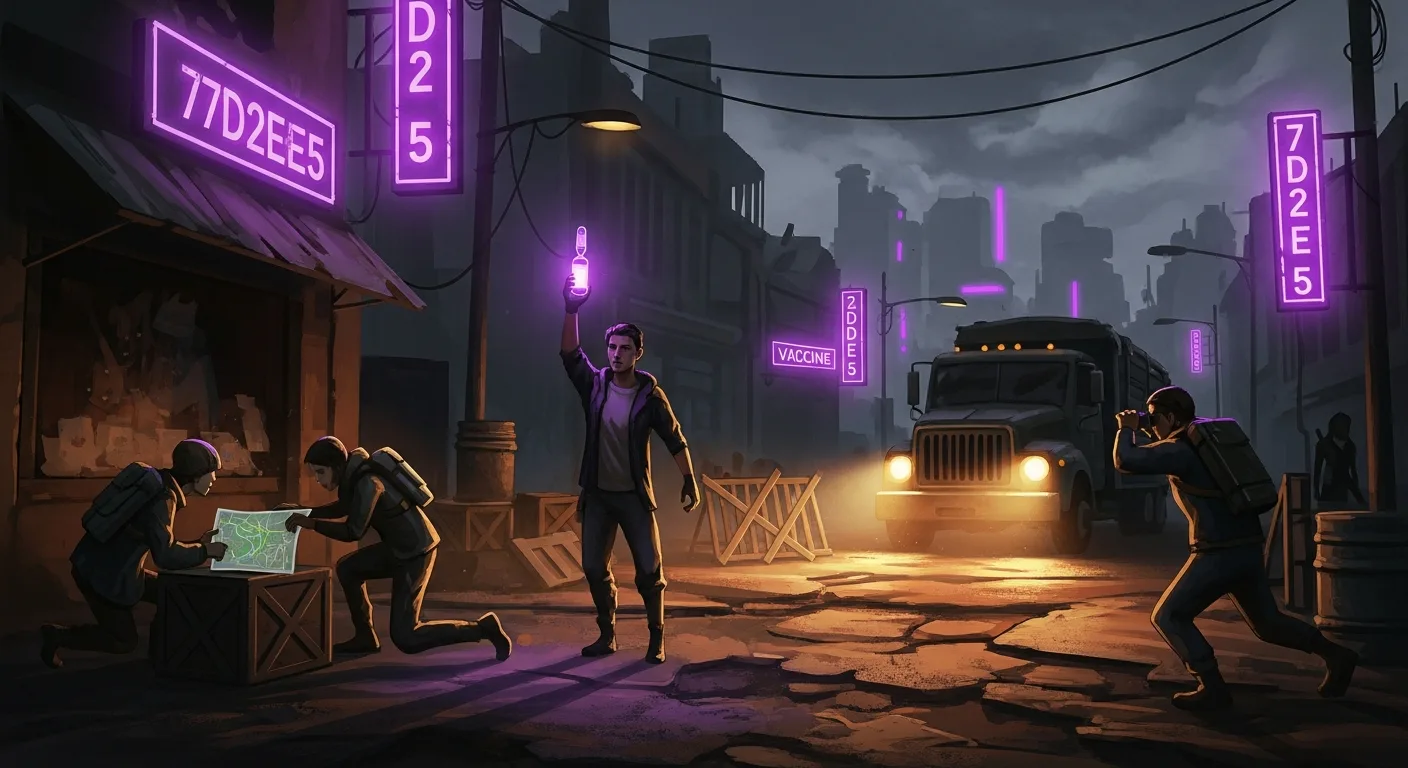
Apocalypse is the closest thing in the catalog to a high-energy October flagship. An overnight outbreak, 80 minutes, four locations (Research Center, Street, Power Station, Laboratory), and an in-game countdown that compresses the team into role-specialization patterns by Stage 3 without anyone prompting them. The art direction is stylized 2D throughout. Cartoonish menace, not horror. No gore, no jump-scares. We've run Apocalypse in 12+ countries without a single comfort complaint, and it suits tech, engineering, fintech, and sales cultures where time-pressured coordination is already the day-job register. The Story customization tier ties the outbreak premise to whatever launch or migration is happening at the company, which lifts the experience from "fun game" into "the team talked about this for weeks."
Book of Awakened Nightmares is the atmospheric counterpart. A cabin weekend goes sideways when somebody reads aloud from a leather-bound diary. Three folklore worlds open in sequence (World of Despair, World of Rage, World of Madness), each with its own visual logic and puzzle grammar. The folklore is intentionally composite, drawn from multiple traditions rather than centering Western Halloween mythology, which matters when the team includes Berlin, Mumbai, and São Paulo. We book this one most often for People Ops briefs that read "real atmosphere, no horror" because the slower pacing produces more genuine breakout-room conversation than any of the high-energy options.
For enterprise audiences whose internal language treats "October event" and "Halloween event" as different categories, Wintervald Hotel Mystery is the move. An isolated luxury hotel, a private dinner that ends in murder, a snowstorm sealing everyone in for the night. The investigation runs across three stages: evidence collection, suspect interviews, crime-scene reconstruction. Tone is Agatha Christie by way of Knives Out. Stylized on the violence, substantive on the deduction. Legal partnerships, finance leadership cohorts, and C-suite all-hands groups we've supported in October consistently pick this game over horror-coded options because the deduction mechanic gives senior audiences something operationally serious to engage with.
Under the Big Top is the third mystery option, with a vintage-circus frame rather than a hotel one. A headlining performer has vanished before opening night. The team works through the Big Top floor, backstage tents, and a final confrontation to name both the perpetrator and the motive. The aesthetic is warm melancholic whimsy, closer to Big Fish than to clown-honking stereotypes. October works well for it because the post-escape-room fatigue showing up in 2026 makes a tonally different mystery feel like genuine novelty. Hospitality clients tend to gravitate here because the circus framing mirrors how guest experiences unfold in their day jobs.
Bureau of Magical Affairs sidesteps the Halloween question entirely. Bureau No. 7 handles magical emergencies; four cases land at once; your team is the field agents. The tone is The Office meets Men in Black: bureaucratic absurdity treated with operational seriousness. When the company has a meaningful slice of employees in non-Halloween-celebrating regions, this is the activity we recommend for the "October team event" framing. No holiday iconography, no costume expectations, accessible across any regional mix. The four-case structure also splits cleanly into Marathon episodes for distributed onboarding cohorts that happen to land in October.
Stolen Hours was built for December (Santa's clock hands scattered across postapocalypse, cyberpunk, steampunk, and biopunk worlds), but we run it in October for engineering, design, and creative agency teams where genre-fiction lands harder than candy-and-costumes ever did. The postapocalypse and cyberpunk worlds carry October-compatible urgency. The Pixar-quality art keeps the tone accessible across the full company, including people who don't ordinarily reach for science fiction.
For teams that want lower stakes than any of the narrative-driven options, the two Halloween-adjacent trivia packs in our catalog hold up. Pop Culture Trivia covers the safe-universal angle when the room runs from new grad to C-suite and a single shared theme would feel forced. History Trivia suits the consulting, policy, and academic-leaning cultures where a pop quiz would feel beneath the room. The "Connecting Lines" final round reliably produces more genuine debate than any escape room in the catalog, which is a useful tonal lever for the kinds of October audiences that politely tune out of the genre options.
Customization, the booking calendar, and the lead time that decides everything
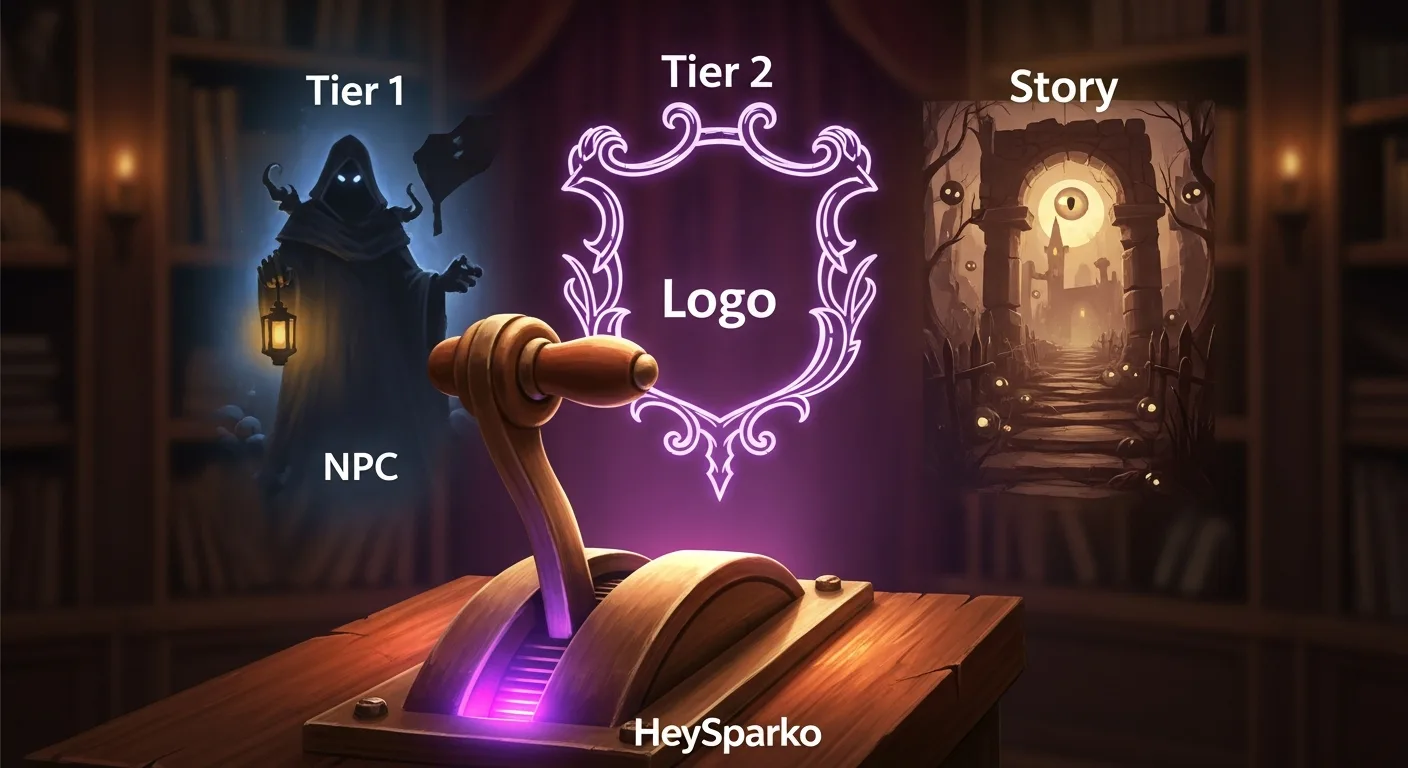
Customization is the lever that turns a stock Halloween event into something the company talks about into November. The customization tiers — NPC, Logo, Story — apply to every Halloween team building activity in the catalog and work differently at Marathon scale than they do in a 90-minute Big Game. The NPC tier rewrites character dialogue in your company's voice and inside references; we've seen tech teams build Apocalypse outbreaks where the "patient zero" is a fictional bug in the company's own product. The Logo tier puts your brand on the leaderboard, the intro splash, and key transition scenes — light-touch but visible everywhere. The Story tier rewrites the whole narrative to fit a company moment, like tying the Book of Awakened Nightmares "diary" to a real founding document, an internal rebrand brief, or the original product spec.
Customize for your team
TYPE 1
Your team as in-game characters
Real team members, mascots, or characters from your games as NPCs.
TYPE 2
Your brand integrated natively
Logo and brand elements native to game environments — locations, items, UI.
TYPE 3
Your story woven into the game
Company milestones, products, and inside references woven into puzzles, dialogues, and tasks.
One operational note for the customization tiers: NPC needs a 14-day lead, Logo needs 7, Story needs 21. None of those fit a calendar request that lands September 28 asking for an October 25 event, and this is where the October booking window starts to bite.
Halloween demand peaks August 15 through September 30 in our booking data. By the third week of September the calendar slots for the working week of October 27-31 are typically 60-70 percent committed. The week of October 31 itself fills first; the surrounding two weeks fill next. Teams that book in August get their preferred Game Host, their preferred game, and full customization runway. Teams that book in mid-October get whatever date and Game Host remains, usually without customization options on the table. Pricing dynamics don't change with timing — volume tiers stay visible on the Booking Calculator up-front — but the available experience narrows considerably as the calendar fills.
The People Ops persona pattern we see most often: leadership signs off on engagement budget in late August, the People Ops lead spends two weeks on vendor evaluation, and the booking conversation starts mid-September. That window works for stock Big Game. It barely works for Marathon with Story customization. It does not work for a fully custom NPC-and-Story experience targeting October 31. If you're reading this in late summer planning Halloween team building activities for 2026, the booking conversation should start now or in the next two weeks.
What the data says about the October investment
In our briefing calls, People Ops leaders justifying an October event budget are typically running two arguments at once: the ROI case for finance and the format case for their own planning confidence. The research on both fronts is more consistent than the engagement-content discourse usually allows.
The collaboration-cost framing comes from Atlassian's State of Teams 2024 report, which estimates that 25 billion work hours are lost annually to ineffective collaboration within the Fortune 500 and finds 93 percent of executives saying teams could deliver similar outcomes in half the time if collaborating more effectively. The 25-billion-hour figure is an extrapolation from executive opinion rather than a directly measured count, and worth citing as Atlassian's estimate rather than as a hard data point. The directional argument lands either way: the cost of teams that don't coordinate well is not a soft people-cost, it's a hard productivity tax. Halloween team building activities run as Big Game or Marathon become, in this framing, collaboration-tuning interventions disguised as October atmosphere. A 90-minute Apocalypse session that forces a 200-person engineering org into role-specialization under pressure is the rehearsal Atlassian's data argues is missing from most teams' working week.
The retention math sits alongside that. The US Bureau of Labor Statistics' 2024 JOLTS data put the monthly quits rate at 2.3 percent, down from the 2022 peak but still above 2019 levels. SHRM's 2024 cost-per-hire calculation pegs non-executive departures at fifteen to twenty-one thousand dollars each once recruiting time and ramp loss are accounted for. For a 500-person team, even a one-percentage-point shift in voluntary attrition is a five-departure swing — eighty thousand dollars on the conservative end of SHRM's range. Engagement events aren't a one-tool fix for retention, but Deloitte's 2024 Burnout in the Workplace report found employees attending two or more company-sponsored events per quarter reported 23 percent lower burnout symptoms. October is one of the four quarters of the year, and the quarter most teams already have an obvious reason to spend on.
The learning-program angle reinforces the same pattern from a different direction. The LinkedIn Workplace Learning Report 2024 found career-development investment ranking as the top retention factor among knowledge workers, ahead of compensation in several demographic cuts. Treating Halloween team building activities as part of a quarterly engagement cadence (rather than as an isolated October purchase) puts them inside that "investment in people" signal that the LinkedIn data argues is doing the actual retention work.
The academic anchor for all of this is Anog et al. (SSRN, 2023), whose systematic review of 60+ studies on structured team-building interventions found that they increase satisfaction and reduce turnover, with effects amplified when the events are integrated into a broader development strategy rather than treated as one-off social spending. Translating that into 2026 People Ops language: the Halloween event matters more when it's the October entry in a quarterly engagement rhythm than when it's a standalone October fix. Marathon-as-Spirit-Week, repeated each quarter with different games, fits the Anog pattern more cleanly than a one-shot Big Game ever does.
Internally we track our own version of these numbers across both formats: Marathon completion rates of 65-78 percent, post-event NPS averaging 8.4 on the standard pulse, around 35 percent of typical-event lurkers participating when the format goes async. None of that beats Atlassian's data on the underlying problem. It does suggest the formats are doing the work the research argues for.
Frequently asked questions
How early should we book Halloween team building activities for 2026?
Book by mid-September for stock Big Game or Marathon. Customization tiers need more runway: 21 days for full Story rewrites, 14 days for NPC dialogue work, 7 days for Logo branding. Demand in our booking data peaks August 15 through September 30, and by the third week of September the working week of October 27-31 is roughly 60-70 percent committed. Teams that wait until mid-October usually get whatever date and Game Host is still open, frequently without customization options on the table.
Which Halloween activity works for teams where part of the company doesn't celebrate?
Frame the event as "October team event" in calendar invites and welcome messages, make any costume participation explicitly optional, and pick activities where October atmosphere enhances the experience without requiring belief in the holiday. Bureau of Magical Affairs has no Halloween iconography at all and runs cleanly across mixed cultures. Book of Awakened Nightmares uses composite folklore rather than Western imagery. Both have run for us in Singapore, Mumbai, São Paulo, and Berlin offices without comfort issues.
How long does a typical virtual Halloween team building event run?
Big Game events run 60-90 minutes start to finish, which is the longest single-session block most teams will sustain in October. Apocalypse runs 80 minutes, Book of Awakened Nightmares and Wintervald Hotel Mystery both run 75-90 minutes, and Under the Big Top fits the same 75-90 minute band. Marathon stretches the same narrative across three to five days of daily 30-45 minute episodes. We don't recommend single sessions over 90 minutes for Halloween — the October atmosphere fades fast past that mark, and the team starts checking laptops in the chat.
Do participants need to install software or create accounts?
No installs, no account creation, no app downloads. Every HeySparko game runs in a browser tab, including on corporate-locked laptops with strict IT policies. We've tested with Cisco, Crowdstrike, and several other endpoint-protection stacks. Players join through a single link sent by their People Ops team. The lack of friction matters more than it sounds, because most virtual event drop-off comes from technical setup steps, and removing them moves participation rates by 8-12 points in our data across the past two years.
What's the right team size for a virtual Halloween team building event?
HeySparko games scale from 5 to 10,000 players in a single session, though the sweet spot varies by activity. Apocalypse shines in the 12-50 range where role-specialization mechanics produce visible dynamics. The mystery games like Wintervald Hotel Mystery and Under the Big Top work best from 50 to 300, where suspect-deduction debates have room to develop in breakout rooms. Above 500, large groups split into competing squads on a shared leaderboard. Below 30, smaller teams sometimes lose the leaderboard energy and benefit from a tighter game choice.
How do we measure whether the Halloween event was actually worth the budget?
Every event ships with an analytics dashboard covering participation rate, by-team breakdown, NPS pulse, and team-coordination indicators like chat heat per breakout and decision speed by stage. For Marathon, the analytics span the full event window and surface day-by-day engagement curves. The clean ROI argument pairs the event participation rate against the next engagement-survey cycle by team. Both Big Game and Marathon analytics let you isolate which manager-pods drove participation and which didn't — the data People Ops leaders most need for the next leadership readout.