
Halloween shifted somewhere around 2022 from a fun extra into a fixed line in the Q4 People Ops calendar. The booking pattern says it plainly: across our portfolio, October has overtaken summer offsites as the second-busiest virtual event window after December. The People Ops leaders we work with no longer ask whether to run a Halloween event. They ask which game will hold for the audience they actually have, which is usually three audiences in the same Zoom: engineers in Bangalore who don't celebrate October 31, customer success leads in Austin who love costumes and have already booked one, and a CFO who needs the line item to lift Q4 survey scores. 1,500+ virtual events later — across 300+ companies in 50+ countries since 2020 — the patterns are more consistent than most People Ops leaders expect. The Halloween games that land share three properties. The ones that flop also fail in predictable ways, and almost every failure is upstream of the game catalog itself.
Which Halloween team building games actually work for a distributed corporate team in 2026?
What separates a Halloween team building game that lands from one that flops
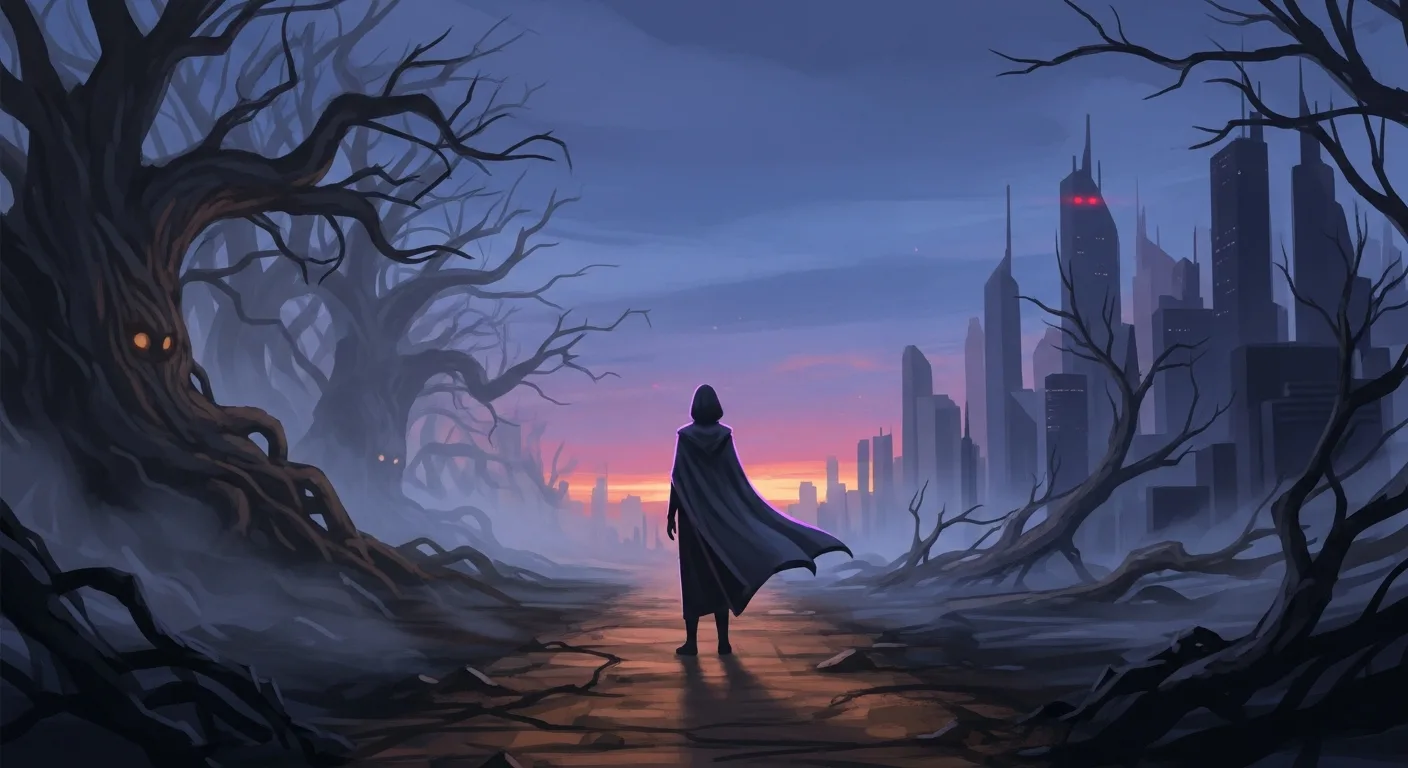
The first property is tonal range. A game has to deliver October atmosphere without forcing every team member to opt into US trick-or-treat conventions. We've seen the same booking mistake at companies running their first virtual Halloween event and their fifth. Pick something that leans hard into pumpkin-and-witch aesthetics, then watch the half of the team based outside the US sit through it politely without engaging. The games that hold for global rooms build atmosphere through gameplay — pacing, urgency, ambiguity, mood — not through holiday iconography that travels poorly. Book of Awakened Nightmares is the cleanest example. The folklore is composite, drawn from multiple traditions; the visual register is closer to Tim Burton than to pumpkin patch. We've run it in 15+ countries with zero comfort complaints from international audiences. A hospitality client we worked with last October, around 280 employees split between four EMEA cities and a US flagship, picked it for exactly that reason. Their People Ops lead read the room and ruled out anything zombie-forward before the briefing call had ended.
The second property is what we think of as the menace-without-horror line. Tech and engineering teams tend to want real stakes. They want to feel something at risk inside the game, not sit through cozy ambient music for ninety minutes. The moment a Halloween game crosses into jump-scares, gore, or first-person body horror, comfort drops sharply across the room and most international markets opt out by Stage 2. Apocalypse is the game that lives on the productive side of that line. An overnight outbreak, four locations, a racing clock — but the visuals are stylized 2D throughout. The pressure is real and the imagery is not. In our work with a global fintech we ran a Halloween Big Game for last fall, the engineering team called out the Stage 3 power-station puzzle in their post-event survey, and comfort scores in EMEA matched those in the US row for row.
The third property is what we call the "doesn't require the holiday" rule. The strongest Halloween games are games that work year-round and happen to land especially well in October. They reward the occasion without requiring it. Wintervald Hotel Mystery is the most useful illustration. It's a snow-bound whodunit at an isolated luxury hotel, sophisticated rather than spooky, Agatha Christie register, completely free of pumpkin iconography. We book it for legal teams, C-suite all-hands, and finance functions where the standard Halloween framing would feel beneath the room. The October air gives it atmosphere; the gameplay carries it the rest of the way. Under the Big Top clears the same bar from a completely different angle. A vintage-circus mystery with a missing headliner, warm melancholy whimsy closer to Big Fish than to slapstick. A B2B SaaS marketing team we worked with last October picked it over more horror-leaning options because their lead's instinct was that the room wanted something theatrical without the burden of being scary.
A few games sit comfortably in October without leaning on the holiday at all. Bureau of Magical Affairs — four magical-bureaucratic emergencies, a tone somewhere between The Office and Men in Black — works because nothing in it asks the team to celebrate anything. It also fits naturally when October coincides with a new-hire onboarding cohort, which it often does. Stolen Hours was built for December but the postapocalyptic and cyberpunk worlds give it real October energy. Useful for engineering and design teams who lean into genre fiction and would rather skip witches entirely.
For teams that want the lightest possible lift — a Q3 close that ran long, a quarter where the team is tired, an all-hands closer that simply needs to work — themed trivia is the route that asks the audience to bring nothing. Pop Culture Trivia is the broadest-appeal pack and travels well across age and geography. History Trivia fits academic, consulting, and policy-heavy cultures where a pop-culture quiz would feel dismissive of the room. Both run 60-75 minutes with a live host. Neither carries Halloween branding, which makes them quietly useful when the team genuinely doesn't want a themed event but the calendar slot is in October.
Big Game or Marathon: the format decision shapes everything else
Picking the right Halloween game without picking the right format first is a reliable way to lose half the team before the event begins. We've watched this play out enough times to know it isn't a catalog question. It's a question of whether the format matches the team's geography and the audience's willingness to show up on a calendar invite.
Big Game is the single live event format. Sixty to ninety minutes, the whole company on the same call, a HeySparko Game Host running the session start to finish, breakout rooms of 4-8 players, a shared leaderboard moving in real time. The energy of a live shared moment — a team's theory collapsing in front of everyone, the leaderboard flip in the final round — is something asynchronous formats genuinely cannot replicate. Big Game fits Halloween cleanly when your team sits inside roughly a six-hour time zone spread. Regional offices, single-country companies, mid-size US teams where the live shared moment is the entire point.
Marathon runs the same narrative across one to five days as daily episodes that players complete on their own schedule. For Halloween, the most common shape is a three-day Marathon running the working week of October 27-31, with episodes unlocking each weekday morning local time. The leaderboard stays live the entire week. Tokyo engages at 9am local; Chicago engages at 4pm local; the Manila office logs in after dinner. People return on Day 2 not because anyone reminded them but because they want to see whether their team is still ahead. Completion rates in our data hold between 65 and 78 percent at companies of 500+ employees, and roughly a third of the participants who routinely opt out of mandatory live events engage with Marathon when no scheduling burden is attached.
When we ran Coca-Cola HBC's LearnFest 2021 closing event for 6,000 employees across 28 countries, the design constraint that mattered most wasn't the audience size. It was that participants needed to join the experience inside their local calendars rather than ours. The same constraint shapes any global Halloween program — the audience is the same shape, the holiday lands on the same Friday, the time zones still don't agree. For teams above ~200 people with offices in four or more zones, the format conversation is almost always Marathon. For teams below 150 in one or two zones, Big Game wins on shared-energy alone.
There's a third variant worth knowing about: the multi-window Big Game. For companies that want the live shared experience but cannot fit everyone into one window, we run the same game twice — once for AMER, once for EMEA-APAC — with separate leaderboards and a brief shared kickoff video stitched into both sessions. It is operationally heavier on our side, but it preserves the live-energy property without forcing a time zone to take a 6am call.
Customization tiers: how a stock Halloween game becomes your team's event
Most Halloween events ship as stock. Catalog game, standard narrative, HeySparko visual identity. That lands well enough for most teams. The bookings that earn an internal Slack thread the day after are usually the ones with at least one customization tier applied. Three tiers exist as flat add-on options, mix-and-match: NPC, Logo, Story. The full breakdown sits on our pricing page.
The NPC tier rewrites character dialogue in your company's voice, weaves in internal references, and (with permission) gives one character the personality of a real internal figure. Typically a beloved exec or the longest-tenured engineer on the team. For Halloween, NPC customization lands most reliably when the narrator or antagonist becomes someone the company recognizes. In Apocalypse, that's the survivor-coordinator NPC. In Wintervald Hotel Mystery, it's one of the suspects. Lead time is 14 days minimum.
The Logo tier integrates brand color, the company logo on the leaderboard and intro screens, and a branded completion certificate. For Halloween the trick is restraint. Brand color saturation on top of October atmosphere can feel cluttered. The most effective Logo work for Halloween events is the certificate and the leaderboard, not the in-game environments. Lead time is 7 days minimum.
The Story tier rewrites the narrative arc to fit your company's situation. For Halloween events at companies in genuinely turbulent moments, a launch coming up, a chapter closing, a milestone being hit, Story customization is the most useful choice in the catalog. We did this for the BGaming anniversary event, mapping the company's growth chapters onto the game's narrative beats, and the participation rate landed at 89 percent against a 75 percent target. The Story tier needs 21 days minimum, ideally 28.
Customize for your team
TYPE 1
Your team as in-game characters
Real team members, mascots, or characters from your games as NPCs.
TYPE 2
Your brand integrated natively
Logo and brand elements native to game environments — locations, items, UI.
TYPE 3
Your story woven into the game
Company milestones, products, and inside references woven into puzzles, dialogues, and tasks.
One operational pattern worth flagging for budget conversations. For Halloween events, NPC paired with Logo is the most common stack we see, doubling the single-tier add-on. Adding Story brings the customization layer to its full triple stack. For events under 100 people the math gets tight; above 200, the customization layer becomes a small fraction of total spend and dramatically lifts the "this was ours" feeling that determines whether the event gets remembered six months later.
The numbers behind the engagement case
The Halloween event budget conversation is usually two arguments running in parallel: the ROI case for leadership and the format case for the People Ops team's own planning confidence. The research on both fronts lines up reasonably well with what we see in our own portfolio data.
The Buffer State of Remote Work 2023 report named the connection problem in the clearest terms we've seen. Among remote workers who feel connected, 46% attribute that connection to having met in person; among those who do not feel connected, 56% cite no opportunity to connect socially as the reason. The qualifier carries weight: the 56% applies to the sub-sample of remote workers who report feeling disconnected, not all remote workers. The implication for a Halloween event budget is direct. Social connection events, both in-person off-sites and virtual social formats, are not a nice-to-have. For roughly half of the disconnected population, the absence of structured opportunity is what they name first when asked why. A virtual Halloween team event is a budget instrument against exactly that gap.
Anog et al. (SSRN, 2023) published a systematic review of 60+ studies on team-building interventions. The finding is consistent across the literature: structured activities increase satisfaction and reduce turnover, with effects amplified when the activity sits inside a broader development strategy. The "amplified when integrated" qualifier matters. A one-off Halloween event in an otherwise empty year of intentional team gatherings will still move scores. The same event landing in a year that already contained a Q1 kickoff and a summer offsite compounds.
Burnout is the other half of the conversation. Deloitte's 2024 Burnout in the Workplace report surveyed 1,000+ US full-time workers and found that 77% report burnout at their current job, with 31% naming lack of recognition as the primary driver (overtaking workload, which led in earlier surveys). The same report found workers attending two or more company-sponsored events per quarter report 23% lower burnout symptoms than those attending none. Halloween isn't a cure for burnout. It is one of the recognition-rich, structured events that the Deloitte data argues add up across a year. On the retention math, SHRM's 2024 cost-per-hire calculation puts the cost of a non-executive departure between fifteen and twenty-one thousand dollars per role, including recruiting and ramp time. Even a single-point lift on a quarterly engagement pulse, well within our observed range from properly-scoped events, pays back the spend many times over against the next departure that doesn't happen.
Our own portfolio data points in the same direction. Marathon completion rates run between 65 and 78 percent at companies of 500+ employees. Big Game scales reliably to 10,000 players in one session. The roughly one-third of "lurkers" who engage in Marathon when no scheduling burden is attached represents real audience reach that's invisible to anyone running mandatory live events only. The Buffer connection-deficit finding and our own Marathon participation data are pointing at the same population: people who want connection but won't pay the scheduling cost to attend a live event.
Frequently asked questions
Which Halloween team building game works best for a global team where part of the company doesn't celebrate Halloween?
For globally distributed teams, frame the event in calendar invites as an October team event rather than a Halloween party, make any costume element explicitly optional in the welcome message, and pick a game whose atmosphere comes from gameplay rather than holiday iconography. Apocalypse and Book of Awakened Nightmares both deliver October energy without leaning on trick-or-treat tropes. They have been tested in 12+ and 15+ countries respectively with no comfort complaints from international audiences.
How far in advance do we need to book a Halloween team event for October 2026?
For the Oct 27-31 window in 2026, booking before September 15 gives you the full range of HeySparko Game Host availability and full access to customization tiers. Booking in late September still works for stock events, though the Story tier needs 21 to 28 days minimum lead time. Bookings inside three weeks of the event are workable for stock Big Game format, but Host availability narrows sharply in the last two weeks of October as the calendar fills.
What's the right team size for a Halloween Big Game versus a Halloween Marathon?
Big Game scales from 15 to 10,000 players in a single session, but the format fits best for teams under roughly 400 who share a six-hour time zone window. Marathon was built for distributed teams of 50+ across multiple time zones and excels at company-wide engagement programs running across a working week. For 500+ employee companies with offices in four or more zones, Marathon is almost always the right call. For mid-size US teams in one region, Big Game wins on energy alone.
Can the same Halloween game be re-run year over year, or does the team need something new each October?
Most Halloween games in the catalog support replayability through randomized puzzle variants per stage and through customization tiers that reframe the narrative each year. A team that ran Wintervald Hotel Mystery in 2025 can rebook it in 2026 with a different in-game crime scene and a fresh Story-tier framing. Teams who want a different aesthetic year-over-year tend to rotate between Apocalypse, Book of Awakened Nightmares, and Wintervald Hotel Mystery, which deliver three distinct registers from the same October window.
What do we do if a portion of the team is uncomfortable with anything spooky or horror-adjacent?
We pick a game whose atmosphere comes from gameplay rather than horror tropes, frame the calendar invite as an October team event rather than a Halloween party, and make any costume element explicitly optional. Bureau of Magical Affairs is a strong pick because nothing in it asks the team to engage with holiday mythology. Themed trivia is the lightest-lift alternative for rooms where even atmospheric mystery feels like overcommitment.