
Every fall, somewhere around the second week of August, the same email pattern starts landing in vendor inboxes across the team-event industry. The subject line is usually a variation on "quick question about Halloween availability," the sender is an Executive Assistant or Office Manager juggling six other priorities, and the underlying ask is closer to "I need to lock in something for 240 people in eight weeks, and I do not have three internal review cycles to get there." The Halloween booking window has compressed in ways the calendar people who own this work do not always have time to map out in advance, and the gap between a clean booking and a scrambled one usually traces back to whether the coordinator knew which questions mattered in the first 90 minutes.
We've run 1,500+ virtual team events for 300+ companies across 50+ countries since 2020. Most of the calls that reach us in September come from Executive Assistants who have been handed Halloween as the third item on a Tuesday morning to-do list, between a board prep block and a CEO travel rebook. They do not need a sales pitch, they need a working process. So this guide is written for that situation directly: how do you book a Halloween team event for a distributed workforce without burning two weeks on vendor evaluation alone?
Why the Halloween booking window collapses your calendar headroom
The compression is structural, not anecdotal. Most companies want their October event to land between October 27 and October 31. That gives you five workdays. For a US-distributed team with offices in three time zones, the pool of viable live windows shrinks to roughly 30 candidate hour-slots across that week, and a meaningful share of those slots are already claimed by vendors a month before October starts. Meanwhile the same calendar week tends to absorb end-of-quarter sales kickoffs, fiscal-year planning offsites, and any leadership travel that got bumped from September. The result is an Executive Assistant trying to thread a 75-minute event past five overlapping priorities, often with one Outlook tab and three Slack threads open at the same time.
What makes the EA job harder than the People Ops version of the same role is the speed expectation. People Ops can credibly take three weeks to evaluate vendors. An EA who comes back to a CEO with "I need three more weeks" gets a quietly different answer. The booking decision has to land inside the window where the CEO is still in the room emotionally, which usually means two to ten business days from "do something for Halloween" to "contract signed and date locked." Anything longer and the priority gets reshuffled, the budget gets quietly reallocated to a Q4 offsite, and the Halloween moment becomes a generic Slack message on October 30.
The vendors who understand this dynamic structure their booking process around it. The ones who do not assume you have time for a discovery call, a sample event invitation, and a custom proposal cycle. In our experience, those three phases are the longest path to a no. The shorter path is a vendor whose pricing is visible without a sales call, whose sample content lives on a public page, and whose contract can move through procurement in five days because the SOW is standard.
Big Game versus Marathon: the format decision your booking sequence depends on
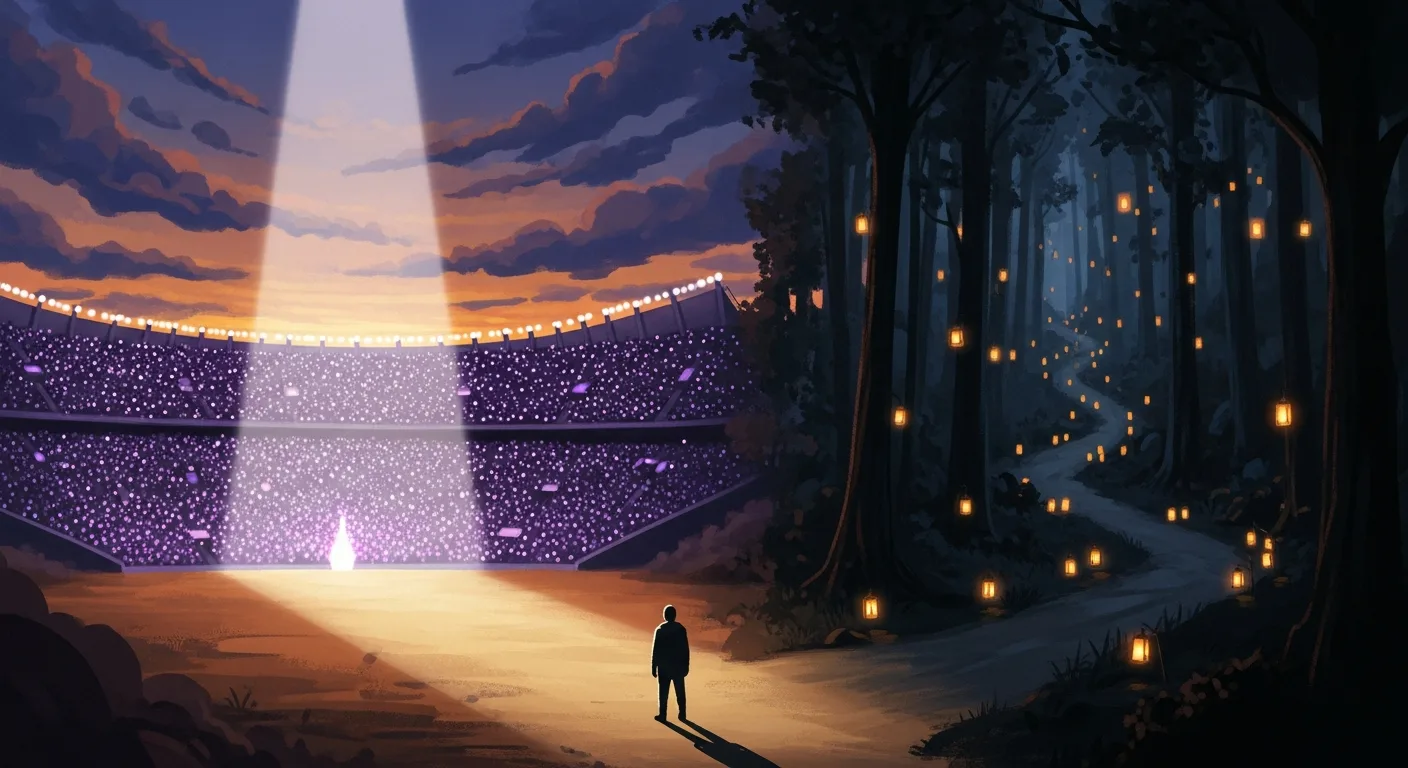
The format choice is the single most leveraged decision in the booking sequence, and it is also the one most coordinators back into rather than make explicitly. HeySparko runs two formats; they target genuinely different audiences and they create different lead-time windows. Knowing which one fits your team before the first vendor email saves an entire round of evaluation.
Big Game is a single synchronous event. Sixty to ninety minutes, fully hosted by a HeySparko Game Host, your team shows up as players. The format scales from 15 to 10,000 players in one session. It works cleanly when your team can credibly coordinate a single live window inside a six-hour time-zone spread. For a US-only company across PT, MT, CT, and ET, Big Game is the right answer. For a fully global team across APAC, EMEA, and the Americas, the format requires either splitting into regional shifts or accepting that someone takes a 6am call. Lead time during Halloween week: as little as 10 business days if the date you want is open, two to four weeks at peak. Apocalypse, our highest-energy adventure and the most-booked Halloween game in the catalog, sits on the longer end of that band because demand stacks into October.
Marathon runs the same narrative arc across one to five days, with daily episodes that players engage with on their own schedule. The leaderboard stays live the whole week. Marathon completion rates in our data run 65-78% across 500+ companies, strong enough that a meaningful slice of our distributed clients have stopped running live Halloween events entirely. The format suits teams across eight or more time zones, opt-in cultures, and any company where mandatory live events trigger calendar friction. A 3-day Marathon for the week of October 26-30 is the most common configuration we see at distributed teams. Lead time floor: roughly two weeks for stock Marathon, three to four weeks if you want to layer customization on top.
The format decision usually maps to a clean signal from inside your company. If your all-hands meetings see 85%+ live attendance, Big Game is the right format because the cultural pattern already supports synchronous events. If half the company joins all-hands from the recording link the next day, Marathon respects the way your team already works and converts better. There is a third pattern worth flagging: hybrid teams with a hub-and-spoke shape (one strong HQ, satellite remote workers) sometimes do best with a Big Game targeted at the HQ window plus a same-week Marathon for the satellites. That configuration costs more, but it lands as one shared cultural moment instead of two parallel ones.
Beyond Apocalypse, the Halloween-fit games we recommend most often during the October week are Book of Awakened Nightmares for teams wanting atmosphere without horror, and Wintervald Hotel Mystery for enterprise audiences who want a Knives Out tone over zombie energy. For groups that do not want a Halloween framing at all, Bureau of Magical Affairs and Under the Big Top both run cleanly as October team events without any holiday iconography.
How the booking actually works, end to end

This is the part of the process that most blog content treats as a series of "tips" rather than a sequence. It is a sequence. Run the steps in this order and the booking lands in two to five hours of your time, spread across a week. Skip a step and you create a downstream problem that takes longer to fix than the step would have taken. The order below is the workflow we hand new EAs we work with directly, and it is the one we use internally when we run events for our own portfolio companies.
Step 1: Confirm internal authority before the first vendor call
The single most common booking failure we watch happen is the EA who gets a verbal "go ahead with Halloween" from the CEO on a Friday, runs a tight vendor evaluation across the weekend, brings back a recommendation on Monday, and discovers the CFO had quietly reserved budget for something else. Internal authority comes in three layers. Layer one is who approves the budget number. Layer two is who picks the format. Layer three is who signs the contract. Those are often three different people, and the order they sign off in shapes everything else. Spend the first 30 minutes of your booking process getting all three names confirmed in writing, even if it is a one-line Slack reply. The CFO who confirms "the Q4 culture budget is locked at X" on Monday morning saves you the Thursday afternoon where the budget evaporates.
Step 2: Filter vendors with three concrete questions
You do not need to evaluate five vendors. You need to filter the field to two that can serve your situation. The three questions that do the filtering fastest: Is the price visible on the website without a sales call? Can you watch a sample of the actual event on a public page without filling out a form? Will the vendor send a draft SOW within 48 hours of a "we want to move forward" email? Vendors who answer yes to all three can complete the booking in your timeline. Vendors who answer no to any of them are built for a different procurement cycle than the one you are in. Across the EA inboxes we read every fall, the difference between a smooth booking and a panicked October usually traces back to the first 24 hours of vendor outreach, and specifically to which vendors made it past those three filters.
Step 3: Lock the format decision before discussing dates
Picking the date first is the second most common booking failure. The trap: you tell the vendor "we want October 30 at 2pm ET," the vendor confirms availability, and only then do you discover that 2pm ET means 11am for your San Francisco team and 7pm for your London office, and that you needed a Marathon all along. Decide live versus async first, in writing, before the date conversation starts. The format choice changes which dates are viable and which are not. Big Game collapses to a single window. Marathon spans an entire week. The internal stakeholder reactions to each are also different: Big Game gets sponsor pushback if anyone has a hard conflict that day, Marathon gets sponsor pushback if the team is already drowning in async expectations and a week-long arc reads as one more thing.
Step 4: Shortlist three games, not eight
The catalog is wider than your bandwidth. Pre-filter by two questions: what is your team's comfort threshold with horror or menace, and how strongly do you want a Halloween framing specifically? Three or four titles will survive both filters. The high-energy Halloween option is Apocalypse. The atmospheric Halloween option is Book of Awakened Nightmares. The enterprise-friendly mystery is Wintervald Hotel Mystery. The "October team event without Halloween" options are Bureau of Magical Affairs and Under the Big Top. For a year-end frame that spans into November, Stolen Hours is a genre-bending option that re-themes well. If you have an internal sample group, share the catalog pages with two or three trusted colleagues and ask which lands; that gives you signal without committing to a long evaluation cycle.
Step 5: Decide customization in the first 48 hours
Customization is the choice that is easy to defer and painful to retrofit. The customization tiers — NPC, Logo, and Story — work differently at Marathon scale than they do in a 90-minute Big Game, and they each carry a different lead-time floor. NPC customization rewrites character voice using your company's internal language, and needs roughly two weeks of brief-and-review time. Logo customization integrates your visual brand across the game UI, and needs about one week. Story customization rewrites the entire narrative arc to your situation (the missing performer becomes a stand-in for your departing CFO, the apocalypse becomes a fintech-flavored ransomware emergency), and needs three weeks minimum.
Customize for your team
TYPE 1
Your team as in-game characters
Real team members, mascots, or characters from your games as NPCs.
TYPE 2
Your brand integrated natively
Logo and brand elements native to game environments — locations, items, UI.
TYPE 3
Your story woven into the game
Company milestones, products, and inside references woven into puzzles, dialogues, and tasks.
The cleaner pattern: decide in the first 48 hours of the booking process whether customization is in scope. If it is, brief us the same week. If it is not, lock the stock event and stop second-guessing. About 15% of our events involve at least one customization tier; the other 85% run beautifully without any, and the EAs who land cleanly do not relitigate the choice in week three.
Step 6: Close the contract within five business days
Vendors block dates on contract signature, not on verbal commitment. We've watched this scenario play out dozens of times across the years. A coordinator gets verbal commitment from us on a Tuesday, takes 10 business days to circulate the SOW through internal review, and comes back to discover another team booked the same date in the interim. We do not double-sell intentionally, but Halloween week is compressed and dates move. Locking the contract within five business days of vendor selection is the operational discipline that protects you from this. If your internal procurement requires longer, get the vendor to issue a date-hold (most reputable ones will, for five to ten business days) and treat that as the real deadline.
Step 7: Trigger the internal comms sequence the same day you sign
Internal communications is the most under-invested piece of the booking sequence and the one that determines whether your participation rate hits 80%+ or stalls around 55%. The teams that hit high participation start signaling the event in their company Slack four weeks ahead: a casual reference in a leadership update, a save-the-date on the calendar three weeks out, a manager-led nudge in 1:1s the week before. We provide a comms template with every contract. Clients who use it consistently see 8 to 15 percentage points higher participation than the ones who send a single calendar invite the day before. The mechanical part of internal comms takes 30 minutes of your time across four weeks; the participation upside is the difference between a Halloween event that gets referenced in the next month's engagement survey and one that does not.
What the data says about getting Halloween bookings right
The research backing this entire workflow is more rigorous than the "more events equal more engagement" framing most blog posts default to. Three independent sources triangulate the case for booking Halloween events with intentionality, picking the right format, and giving yourself enough lead time to invest in internal communications.
Atlassian's Teamwork Lab 2024 Intentional Togetherness research is the most rigorous primary data we know of on this question, based on 1,600+ tracked team gatherings since August 2022 and roughly 25,000 data points. Their finding: intentional team gatherings boost team-connection scores by an average 27%; for new graduates, the lift runs from 74% pre-gathering to 96% post (a 22-point jump); and the effect decays to baseline over roughly four months, implying that about three gatherings per year is the operational optimum. The decay finding is the one most relevant for booking cadence. A single Halloween event in October that does not connect to a December event and a Q1 kickoff is going to fade as a cultural moment by February. The teams that get the most out of Halloween are the ones treating it as the second of three or four quarterly events, not as a standalone holiday party. That changes how the EA pitches the booking internally: the budget is for a quarterly cadence, not a one-off cost.
The distributed-team timing pressure shows up in Microsoft's Work Trend Index 2025 report, based on a survey of 31,000 knowledge workers plus Microsoft 365 telemetry. The headline number for booking decisions: 30% of meetings now span multiple time zones, an 8-point absolute increase since 2021. That trend is climbing year over year, and it sharpens the case for booking the Marathon format early enough to align communications across regions. A Big Game with five regional shifts is operationally workable; a Marathon that releases at the same UTC hour and lets everyone engage during their own workday is operationally cleaner, and the booking process for it is easier on the EA. Microsoft's research also implies the participation gap between same-zone and cross-zone events is widening, which is why the format decision matters more in 2026 than it did in 2022.
The academic anchor comes from Anog et al. (SSRN, 2023), whose systematic review of 60+ studies showed that structured team-building activities increase satisfaction and reduce turnover, with effects amplified when integrated into a broader development strategy. The phrase "broader development strategy" is the one that matters for Halloween-event coordinators. A Halloween event booked in isolation is a moment. A Halloween event that is part of a quarterly engagement rhythm is a multiplier. Across the 200+ Halloween events we've facilitated since 2020, the ones that landed strongest were the ones connected to a December follow-up and a Q1 kickoff. The compressed, one-off October events can still be great, but they are great by exception, not by design.
The Buffer State of Remote Work 2025 study (3,000+ respondents across 90+ countries) surfaces a fourth angle worth pricing into the booking conversation: 27% of remote workers named "unplugging after work" as their biggest challenge, up from 22% two years prior. The framing matters for format choice. An optional Marathon run during work hours respects a fragile boundary; a mandatory live evening event eats into the exact time the survey says people are struggling to protect. The booking process for an evening event is harder on the EA, the participation rate is lower, and the engagement after-effects are weaker. Choose the format that respects what your team is already telling People Ops in the engagement survey.
Frequently asked questions
How long does the full Halloween booking process actually take?
If you are running this end to end as an EA with no prior experience, plan on two to five hours of your time spread across a week. The compressed version is achievable for stock Big Game on a popular date if you start before mid-September: 30 minutes of internal authority confirmation, 60 minutes of vendor filtering, a 30-minute call with the shortlisted vendor, 60 minutes to circulate the SOW for signature, and 30 minutes to set up the comms cadence. Customization adds two to three weeks of calendar time but minimal extra EA hours; the vendor does the heavy lift.
What is the latest date I can realistically book a Halloween event?
For a stock Big Game during Halloween week, the practical floor is roughly two weeks out, so around October 16 for a date in the October 26-30 window. We have turned around events on shorter notice when the date stars align, but you are betting against availability and you cannot customize. For an event with NPC, Logo, or Story customization, four to six weeks is the realistic minimum. Past mid-October, your best fallback is a 3-day Marathon in early November with a "Spooky Season Encore" frame, which lands more cleanly than people expect.
How do I get budget approval for a Halloween event without a long internal cycle?
The approval cycle compresses when you bring three numbers to the CFO conversation in the same email: the all-in event cost, the participation rate the vendor projects, and the cost-per-engaged-employee figure (typically low double-digits in dollars for a mid-range Big Game). Framing it that way moves the conversation from "Halloween line item" to "engagement intervention with measurable participation," which is the conversation CFOs are paid to have. See our pricing page for the structure, and lean on the vendor to give you the participation projection in writing so the math is defensible.
What if leadership wants to be involved in the format and game decision?
Build a 20-minute review meeting into the booking process between Step 3 and Step 4. Walk leadership through the format choice, the shortlisted games, and the customization decision. The trap to avoid: a 60-minute meeting where leadership wants to evaluate every game in the catalog. Pre-shortlist to three titles, present those, and ask for a binary preference within each layer (format, game, customization). When we run this with EAs we work with directly, the decisions land in 15 to 25 minutes, the CEO feels appropriately involved, and the booking timeline does not slip by a week.
How do I handle the half of the team that does not celebrate Halloween?
Pick a game without explicit Halloween iconography and frame the event as an October team activity rather than a Halloween party. Bureau of Magical Affairs is our most-recommended option for culturally mixed teams: no Halloween framing, costumes are optional, and the premise is universally accessible. Under the Big Top is the other strong choice for the same reason, with a vintage-circus aesthetic that lands cleanly across cultures. We've seen this configuration work well for teams with significant Muslim, Hindu, or East Asian populations where a Halloween-forward framing would not have been a comfortable fit, and the participation rates run several points higher than the ones we see for the same teams when the event is framed explicitly as Halloween.
What happens at the booking stage that determines participation rate?
Three operational decisions made during booking shape the participation rate more than the event itself does. First, the format choice has to match the team's existing live-meeting culture (Big Game for live-attentive cultures, Marathon for async-preferring ones). Second, the internal comms sequence has to start four weeks ahead, not the day before; we provide a template with every contract and the participation gap between using it and not using it runs 8 to 15 percentage points. Third, the customization choice should be made decisively in the first 48 hours; relitigating it in week three is the most common reason event prep gets behind. Get those three right at booking and the participation rate takes care of itself.