
October 2026 is the first Halloween in a few years where the team-event booking pattern has fully reset to its pre-pandemic shape, with one structural quirk that catches first-time coordinators off-guard. The demand peak now lands in mid-August, not late September. Calendar tools optimized for hybrid teams have collapsed the available lead time at the front end of the booking window, while the back end (late October, the run-event week itself) hasn't moved. The result is a tighter discovery-to-contract sequence than most People Ops and Executive Assistant teams remember from their last pre-pandemic October cycle.
Five years into running virtual team building as a category — 1,500+ events for 300+ companies across 50+ countries — we've watched the failure modes repeat enough to predict most of them. The pattern for Halloween specifically is stable: clients who reach out before Labor Day get the dates they want, clients who reach out the week of Sept 23rd start hearing "that slot is taken" from us and from every comparable vendor. The booking sequence has compressed without the calendar headroom expanding to match.
When should you start booking your 2026 Halloween team event, and which October dates will already be gone if you wait until late September? This guide maps the 2026 calendar in detail: booking windows, run-event date pressure by week, format-driven lead times, customization timelines, and which Halloween games are filling up first this year.
How the 2026 Halloween booking window actually moves
The booking calendar for Halloween events runs on three overlapping waves. Wave one (early planners) opens around August 1st and runs through August 31st. These are the People Ops leads who set their Q4 calendars in late July; they get full pick of dates, formats, games, and customization tier. Wave two opens September 1st and runs through Sept 25th, and it's where most of our 2026 inbox volume has already landed. Lead times are workable here but customization add-ons start hitting their floor (NPC at 14 days, Story at 21). Wave three opens late September and runs through October 10th, which is where we start telling prospects honestly that some game-format-date combinations are no longer available.
What changed in 2026: the front of the wave has pulled forward by roughly two weeks compared to 2024. We attribute this to two effects we see in our intake data. Distributed-team coordinators have one more year of post-pandemic muscle memory ("book Q4 holidays in July, not September"), and Halloween-as-a-team-event has finished normalizing among the mid-market companies that treated it as optional through 2022. For most of our mid-market clients, the Halloween team event is now a budgeted Q4 line item, which means it moves through procurement on the same calendar as sales kickoffs and offsites.
For a 2026 Halloween event, the practical translation is this. If you're reading this in late June or July, you have full flexibility on date, format, game, and customization. If you're reading it after Sept 15th, your window has narrowed enough that the conversation needs to start with which dates are still open and back-solve from there. If you're reading it after October 5th, the question shifts from "what's the best event" to "what can we still credibly run for our team in three weeks."
The October week itself: which 2026 dates carry the most weight
Halloween 2026 falls on a Saturday — October 31st. That single calendar fact reshapes the entire month's demand curve. Saturday Halloweens push the run-event sweet spot to Thursday October 29th and Friday October 30th, the two workdays immediately preceding the holiday. Both dates are already disproportionately full in our intake data, with the Friday afternoon slot in particular near booked across our preferred US-business-hour windows.
The full October 2026 demand pattern for team events looks like this in our booking data so far. Monday October 26th and Tuesday October 27th run softer; they're available for teams who want a longer pre-Halloween lead-in and don't need the Friday energy. Wednesday October 28th sits in the middle, with moderate demand and plenty of slots open as of late June. Thursday October 29th is the unofficial winner this year because it's the last full workday for most teams (Friday tends to absorb early-leavers for the weekend), and our Game Hosts have already had to release earlier-tentative holds on that date.
For Marathon, the calendar reads differently. A 3-day Marathon for the week of October 26-30 is the most-requested configuration this year, with daily episodes unlocking Monday/Wednesday/Friday. A 5-day Marathon across October 26-30 is the second most common — daily episodes every workday, finale on Friday. Both formats have substantially more lead-time flexibility than Big Game because Marathon doesn't compete for the same narrow live-window slots. We're still booking 3-day Halloween Marathons into early October for late-October delivery without significant scrambling.
Big Game vs. Marathon for the 2026 Halloween window
The format choice drives the lead time, and the lead time drives which games are still available. Big Game runs as a single live event of 60-90 minutes, fully hosted by a HeySparko Game Host, with everyone in the same Zoom (or equivalent) at the same time. For a US-distributed team across PT to ET, Big Game fits cleanly inside the standard business-day window. The format scales from 15 to 10,000 players in one session. Lead time during October peak: 10 business days minimum if the date is open, two to four weeks if you're targeting a specific Game Host or a high-demand title.
Marathon runs the same narrative arc across one to five days, with daily episodes that players engage with on their own schedule. The leaderboard stays live the whole week. Marathon completion rates in our data run 65-78% across 500+ companies, high enough that we've watched a meaningful slice of our distributed clients move their Halloween event from a Big Game to a Marathon over the last three Octobers. Lead-time floor for stock Marathon: roughly two weeks. Add customization on top and it stretches to three or four.
The format decision usually sorts itself out from the time-zone math. If your team is contained within a six-hour spread (US-only, or US plus one EMEA office), Big Game works. If your team spans eight or more time zones, Marathon respects everyone's calendar without anyone taking a 6am or 11pm call. Our cross-time-zone Marathon engagements reach roughly 35% more participants than the forced-synchronous equivalent, because the lurkers who normally skip live events do show up to the async leaderboard.
A third pattern shows up at hub-and-spoke companies (one strong HQ, distributed satellites). The configuration that lands best is a Big Game targeted at the HQ live window plus a same-week Marathon for the satellites; everyone gets a Halloween moment in the format that fits their geography. The lead time for this combo is the longer of the two, usually three to four weeks during October peak.
Customization tiers and how they reshape the Halloween timeline
Customization add-ons (NPC, Logo, Story) work the same for Halloween events as for any other moment in the calendar, but the lead-time floors matter more in October because the booking window is already compressed. NPC tier (custom character voices, your internal references baked into dialogue) needs 14 days minimum. Logo tier (your brand colors and logo across the game environment) needs 7 days. Story tier (the entire game narrative rewritten to fit your situation) needs 21 days, and 30 if your situation is genuinely complex.
Customize for your team
TYPE 1
Your team as in-game characters
Real team members, mascots, or characters from your games as NPCs.
TYPE 2
Your brand integrated natively
Logo and brand elements native to game environments — locations, items, UI.
TYPE 3
Your story woven into the game
Company milestones, products, and inside references woven into puzzles, dialogues, and tasks.
For a 2026 Halloween event, the practical implication of the lead-time floors is that any customization decision needs to be made before the discovery call ends. If you reach us in late September and want Story-tier customization for an October 29th Big Game, the math doesn't work. We'll deliver a great stock event, but the bespoke narrative arc isn't compatible with a 25-day runway. Coordinators who know they want a fully branded Halloween event should book before September 1st; coordinators who reach us in October should treat Story-tier customization as a Q1 conversation, not an October one.
The exception we see most often is Logo tier on top of Apocalypse or Book of Awakened Nightmares. Both games take brand-color saturation cleanly into their stylized environments, and the 7-day lead time fits inside even compressed October bookings. The harder pattern is Story tier on Wintervald Hotel Mystery — clients love the idea of weaving a company milestone into the murder mystery framework, but the 21-day floor rules it out for late-September bookings.
Game selection for the 2026 Halloween window
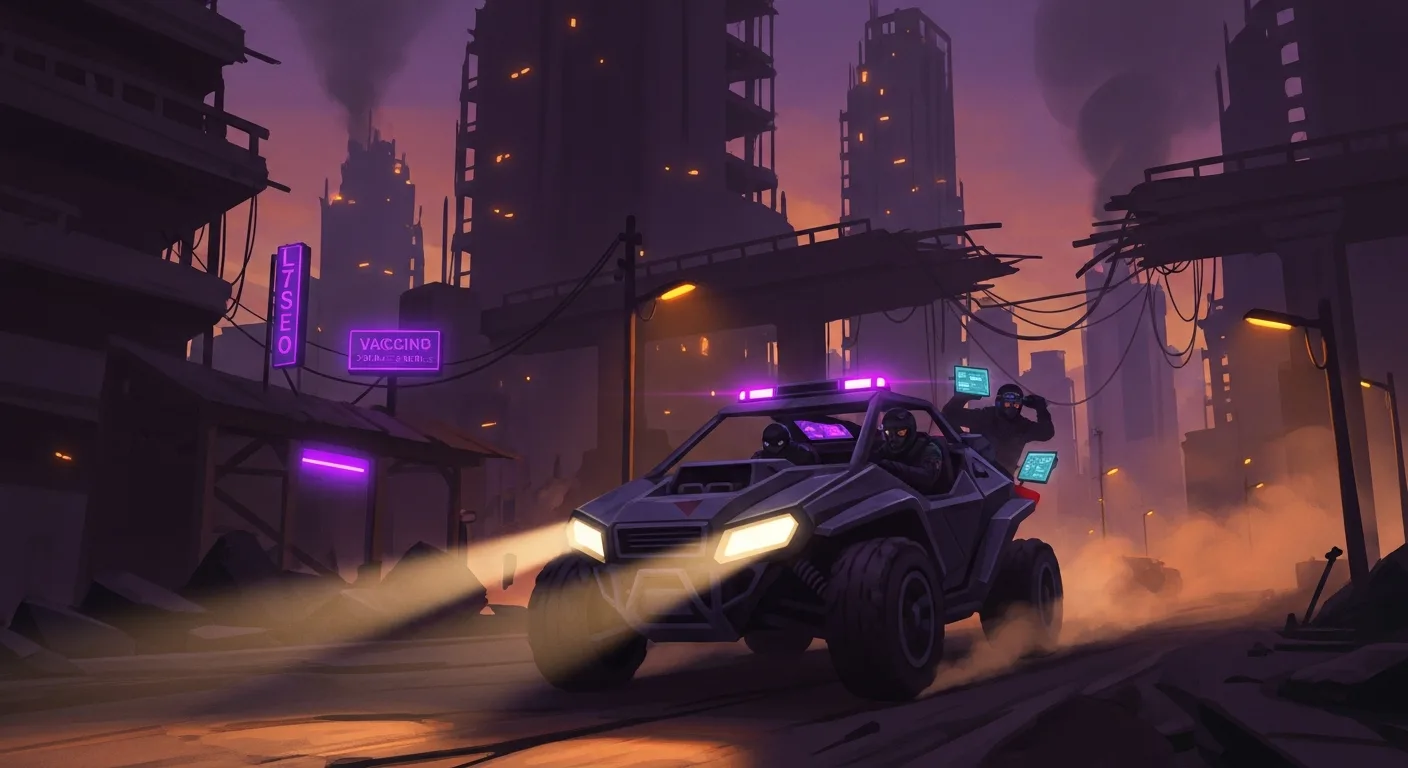
Apocalypse remains the most-booked Halloween game in our catalog and continues to drive the longest wait list. It's the high-energy adventure: an overnight outbreak, a racing clock, four locations between the team and a vaccine. The aesthetic is stylized menace rather than gore, which lets it land cleanly across cultures (we've tested it across 12+ countries with near-zero comfort pushback). For 2026, the October 29th and October 30th Apocalypse Big Game slots are filling fastest in our intake data right now.
For teams who want October atmosphere without the urgency mechanic, Book of Awakened Nightmares is our atmospheric Halloween game — Tim Burton vibes, folklore composite, no horror. The pacing is slower and the puzzles reward observation over speed. It's the right call for international teams where rapid-fire energy might not land, and for mid-size groups in the 50-200 range where the slower beat creates real conversation in team channels.
Wintervald Hotel Mystery and Under the Big Top both run as October team events without leaning into Halloween iconography at all. Wintervald is the enterprise pick: a sophisticated whodunit closer to Knives Out than to anything trick-or-treat-adjacent. Buttoned-up cultures, finance teams, and legal functions tend to ask for it by name. Under the Big Top sits in the same mystery-deduction family but with a vintage-circus aesthetic; it works year-round, and the October window is one of the seasons where it picks up extra demand from teams who want a mystery without snow imagery.
Bureau of Magical Affairs is our workplace-comedy adventure (closer to The Office meets Men in Black than to fantasy-fantasy); it runs cleanly as a non-Halloween October team event for cultures that want the calendar slot without the holiday framing. Its premise — four bureaucratic magical emergencies, ninety minutes, one team of newly-deputized agents — fits any company where "everything is on fire and there's also paperwork" reads as relatable rather than alarming. We see it booked most often for onboarding cohorts and Q4 new-hire weeks that happen to land in October.
Stolen Hours mixes genres in an adventure typically scheduled for December. However, some teams opt for late October to enjoy its unique blend of postapocalypse, cyberpunk, steampunk, and biopunk themes without the holiday interruptions. For those looking for a quicker, 60-minute option, there are two trivia games available. Pop Culture Trivia is the go-to choice, appealing to a broad audience, while History Trivia caters to teams with a preference for knowledge-based content over spooky themes. October is a perfect fit for trivia since it requires less planning than narrative-driven experiences.
What the engagement data says about timing-pressured team events
Halloween team events sit inside a broader question every People Ops lead is asked at some point in Q4 planning: does this kind of event actually move the engagement number, or is it a calendar formality? The 2024-2025 research on distributed-team engagement has converged on a few claims worth quoting directly.
Owl Labs' State of Hybrid Work 2025 report found that a supportive manager remains a top workplace factor, with 89% of US employees in agreement (the UK figure runs slightly higher at 90%, but the US sample is the one most relevant to our reader base). The implication for a Halloween team event is that the lift you're looking for usually isn't generated by the event itself. It's generated by what the manager does with the event as a vehicle. The same event run by an engaged manager and a checked-out manager produces wildly different post-event survey deltas. We see this pattern in our own analytics; the cohort-level participation data we send back to clients within 24 hours of the event shows a 3-4x gap between best-and-worst manager pods at the same company, consistently across our portfolio.
Microsoft's 2024 Work Trend Index, drawing from 31,000 workers across 31 countries, found that 64% of workers report struggling with the pace and volume of work. The same report surfaced a less-cited finding: 57% of distributed workers say they would prefer async engagement options to live ones. That second number is the quiet case for Marathon format at Halloween — when more than half of your distributed staff already prefer async, the calendar friction of a forced live event compounds the existing pace problem rather than relieving it.
For the retention angle, Deloitte's 2024 Burnout in the Workplace report puts the burnout rate at 77% of US professionals and identifies "lack of recognition" as the top driver, having overtaken raw workload in 2024. The same report found that workers who attend 2+ company-sponsored events per quarter report 23% lower burnout symptoms than those who attend none. A Halloween team event is one of those quarterly events, and for teams that don't have a recurring engagement cadence, the October slot is often the highest-impact moment in Q4 because it sits well-positioned between Q3 review pressure and December slowdown.
Academic research backs the through-line. Anog et al. (SSRN, 2023) published a systematic review of 60+ studies on team-building interventions, finding that structured activities increase satisfaction and reduce turnover, with effects amplified when the event is integrated into a broader development strategy rather than treated as a one-off. The one-off Halloween event, in other words, is fine; the Halloween event that's part of a recurring quarterly rhythm produces measurably more retention impact.
The numbers from our own portfolio sit in roughly the same range. Across the Marathon Halloween events we've facilitated, completion rates run 65-78%, with the upper end skewing toward teams whose managers send a single mid-event Slack nudge on Day 2. Big Game Halloween events show NPS scores averaging 8.4 on the post-event pulse, with strong correlation between NPS and whether the company runs a structured 24-hour post-event recap rather than letting the leaderboard email be the only follow-up. These aren't dramatic numbers, but they're durable across years and across team sizes. Engagement is a function of repetition and follow-through, and the October slot is one of the cleanest quarterly anchors most distributed teams have on the calendar.
Frequently asked questions
When should we start booking a Halloween 2026 team event?
For 2026, the cleanest booking window opens in early August and stays workable through Sept 20th. Past Sept 25th, the October 29-30 Big Game slots start disappearing, and customization options drop off as lead-time floors kick in. If you want full date flexibility and the Story-tier option, late July through mid-August is the right window. If you're past Labor Day, prioritize the format decision first and back-solve the date from there. Booking the high-demand October-week titles needs the earliest commitment, especially for the Thursday-Friday window.
What's the difference between Big Game and Marathon for Halloween week?
Big Game is one live 60-90 minute event, fully hosted, with everyone in the same Zoom at the same time. It fits US-distributed teams cleanly and scales to 10,000 players in one session. Marathon runs the same narrative across 1-5 days with async daily episodes; completion rates land in the 65-78% range in our data. The format decision usually sorts itself out from your time-zone spread: under six hours, Big Game; eight or more, Marathon. Both formats run our full catalog of adventures and mysteries, so the game choice is independent of the format decision.
Can we run a Halloween event for a team that spans 12 time zones?
Yes, and Marathon is the format that makes the math work without forcing anyone to a 6am call. A 3-day Marathon across October 27-29 gives APAC, EMEA, and Americas teams full participation through async daily episodes plus a shared leaderboard. Our cross-time-zone Marathon engagements reach roughly 35% more participants than the forced-synchronous equivalent because lurkers who skip live events join the async leaderboard at their own clock. The atmospheric pacing of October-fit titles reads consistently across cultures.
Some of our team doesn't celebrate Halloween — what should we do?
Frame the event as "October team event" in calendar invites rather than a Halloween-specific holiday party, make costume participation explicitly optional in the welcome message, and pick games where October atmosphere enhances the experience without requiring belief in the holiday. Bureau of Magical Affairs is a strong default here — workplace-comedy adventure with no trick-or-treat iconography, which makes it land for global teams where Halloween cultural recognition genuinely varies team-to-team.
How does customization affect the booking timeline for our Halloween event?
Logo tier needs 7 days, NPC needs 14 days, Story needs 21 days (30 for genuinely complex narratives). For an October 29-30 event, Logo customization fits inside even mid-October bookings; NPC needs commitment by mid-October at the latest; Story-tier customization needs commitment before Sept 25th to land cleanly. Most October-booked customizations are Logo-tier saturation on existing titles, which works for compressed timelines. For full pricing structure on each tier, see our pricing page.