
October is the second-biggest event booking month of the year, and the actual challenge is different from the obvious one. Half the team is excited about Halloween. A meaningful slice is in countries where October 31 is culturally unremarkable. And the group that's been through five or six years of mandatory virtual "spooky" events has its skepticism fully formed. Getting all three of those groups to genuinely participate — rather than dutifully show up — is the job. The events that land in 2026 don't lean hardest into Halloween; they create real atmosphere and engagement while staying accessible to the whole room.
We've run 1,500+ virtual team events for 300+ companies across 50+ countries since 2020.
What are the best Halloween team event ideas for a distributed workforce in 2026, especially when part of the team celebrates the holiday and part doesn't?
Big Game or Marathon — the format decision comes first
Before picking a game, there's a structural decision that shapes everything. Get it wrong and no game will save you. In our experience, teams that miss this call don't get bad NPS scores — they get empty calendar invites, because people in the wrong time zone or the wrong meeting format simply don't show up.
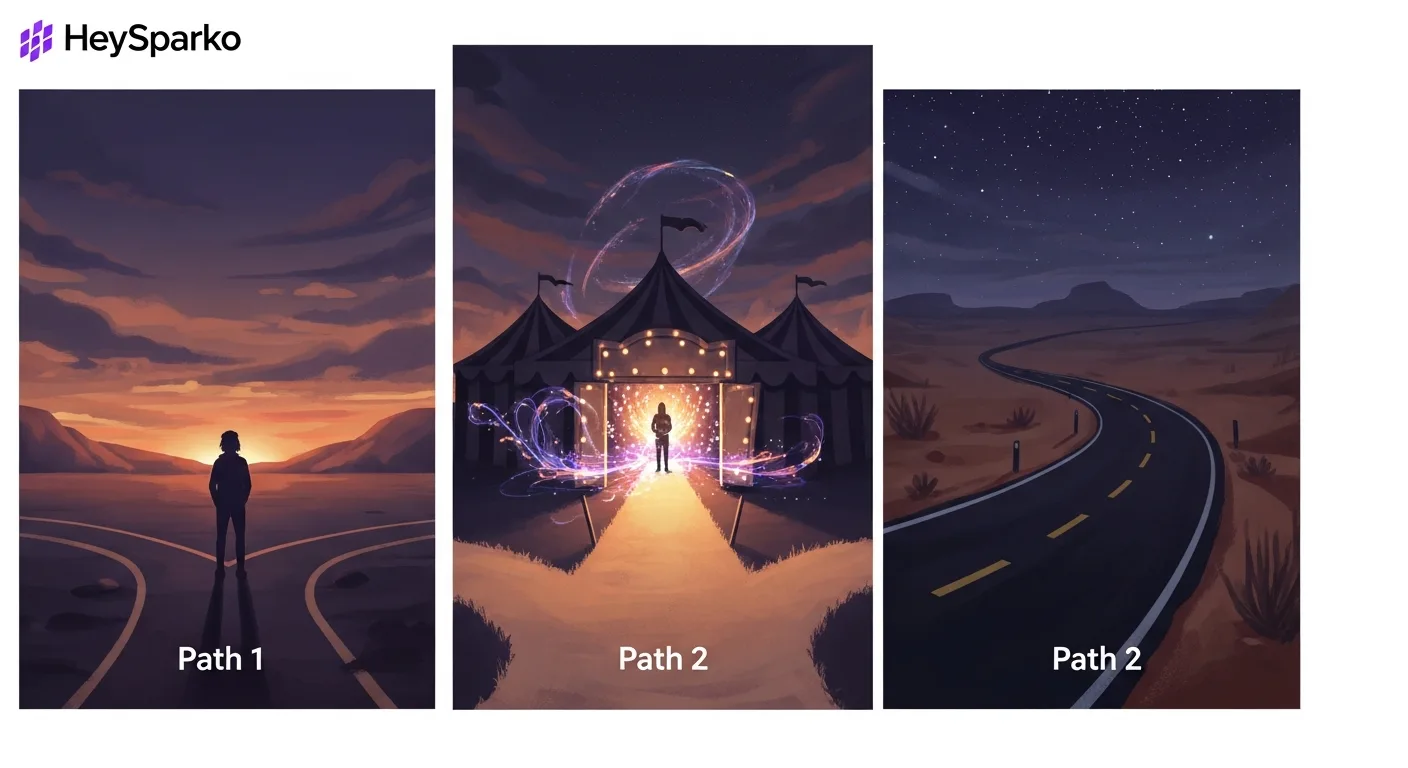
Big Game is a single synchronous live event: 60-90 minutes, everyone on the same video call, a HeySparko Game Host running the whole thing. Your team shows up as players. Live shared energy — the real-time leaderboard, the group reveal, the moment a team's theory collapses in front of everyone — is something that async formats can't replicate. Big Game works when your team fits inside a six-hour time zone spread. Regional offices, single-country companies, and groups where the live shared moment is the whole point.
Marathon runs the same narrative over one to five days, with daily episodes that players complete on their own schedule. Tokyo engages at 9am; Chicago engages at 4pm; the Nairobi office logs in after the afternoon clears. The leaderboard stays live the whole time. People return on Day 2 not because anyone reminded them, but because they want to see whether their team is still ahead. Marathon completion rates in our data run 65-78%, and roughly 35% of the participants who skip mandatory live events engage in async format.
One fintech we supported in October had 280 people spread across seven time zones from Lisbon to Singapore. Their previous Halloween event was a live escape room; APAC attendance: 41%. We ran a mystery Marathon across three days. Day-3 completion rate globally: 73%, including full participation from Singapore and Manila. For teams with that distribution, Marathon isn't a compromise. It's simply the format where the whole company shows up.
Eight Halloween team event ideas we recommend in 2026
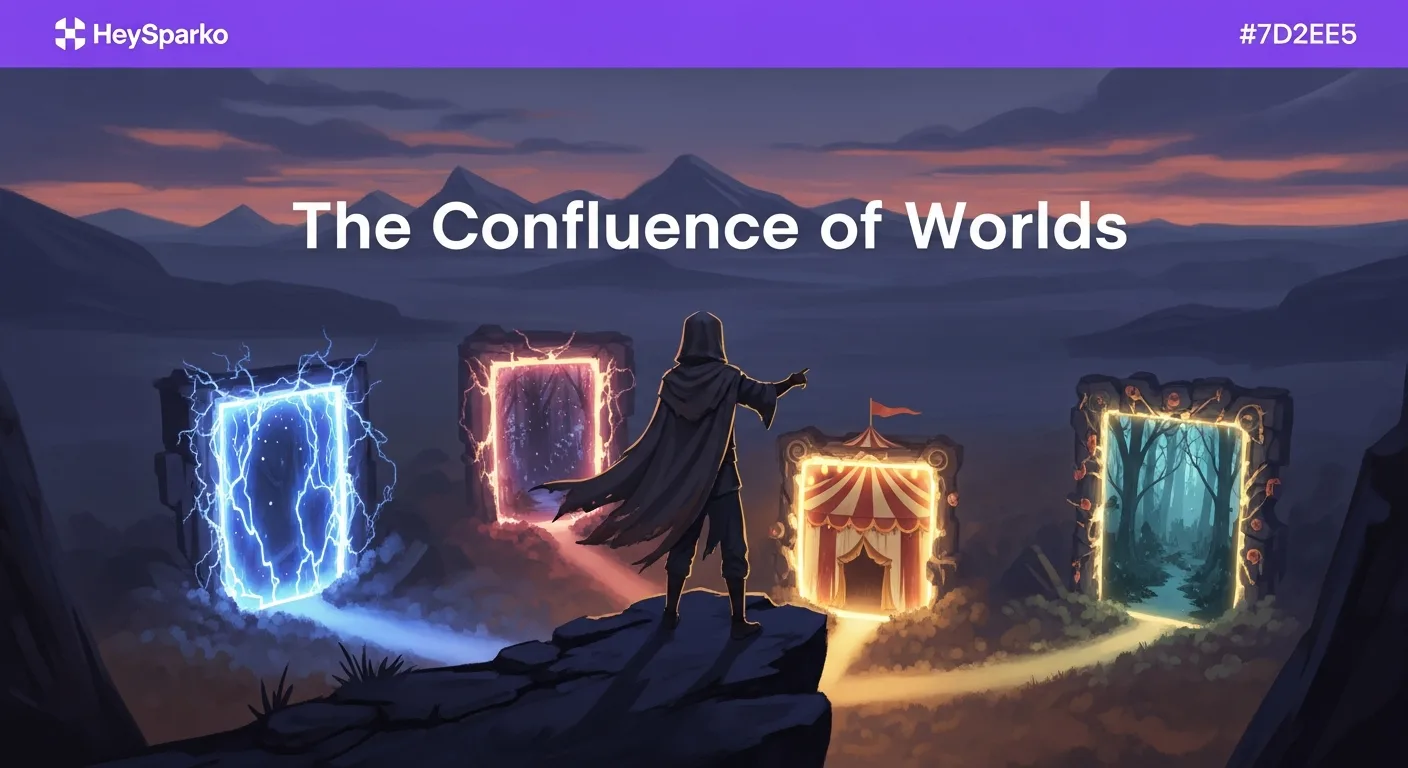
The catalog has 21 games. Not all of them hold up in October, when the audience includes people who find Halloween grating, people who've done six virtual escape rooms in the past two years, and people whose October 31 is just a Tuesday. The eight below survived that filter — and each earns a different use case within the October window.
Apocalypse — for teams that want real urgency
Apocalypse is the game we book most often in October. An overnight outbreak has overrun the city. Your team has 80 minutes, four locations — Research Center, Street, Power Station, Laboratory — a live countdown, and no idea yet which of the team's specialists will emerge by the end of it. Most groups self-organize into functional roles by Stage 3 without being prompted. The atmosphere is post-apocalyptic menace, but the visual design is stylized 2D: no gore, no horror-movie imagery, cartoonish menace throughout. We've run it in 12+ countries without a comfort complaint.
The brief this game answers is "spooky enough for Halloween, safe enough for a global workforce" — and it answers it more reliably than anything else in the catalog. Tech teams, engineering orgs, fintechs, and sales cultures where high-stakes coordination is already the daily register tend to respond best. The Story customization tier can tie the outbreak premise to something happening at the company; paired with a three-week lead time, it becomes genuinely memorable.
Book of Awakened Nightmares — for teams that want atmosphere, not anxiety
The game that pairs with Apocalypse as the "two flavors of October" is Book of Awakened Nightmares. A cabin weekend goes sideways when someone opens a leather-bound diary that shouldn't have been opened. Three folklore worlds open — World of Despair, World of Rage, World of Madness — each with its own visual grammar and puzzle logic. Ninety minutes as Big Game, and the pacing is slower than Apocalypse by design.
The folklore is composite, drawn from multiple cultural traditions rather than centering Western Halloween mythology. That matters for international teams, and the data reflects it: 15+ countries tested, zero comfort complaints. In our experience, this game produces more genuine conversation in breakout rooms than Apocalypse does — the deliberate pace creates space for it. For People Ops leaders whose brief is "real atmosphere but not frightening," this is always the first game we mention.
Wintervald Hotel Mystery — for enterprise and formal cultures
There's a subset of corporate teams for whom "October event" and "Halloween event" genuinely mean different things, and for that audience Wintervald Hotel Mystery is the obvious answer. An isolated luxury hotel, a private dinner that ends in murder, a snowstorm that traps everyone with the killer for one night. The investigation runs in three stages — evidence, suspect interviews, crime-scene reconstruction — in a tone comparable to a classic Agatha Christie novel: stylized and off-screen on the violence, substantive on the deduction.
We've run this for legal partnerships, C-suite all-hands, and finance teams who found other October formats too casual. The Knives Out social dynamics (everyone is a suspect, the group has to turn suspicion on itself) give high-seniority audiences something substantive to engage with. It runs 75-90 minutes as Big Game and holds up well for 50-300 people where the deduction debate has time to develop.
Under the Big Top — for teams that want something completely different
Under the Big Top is a vintage-circus whodunit: a performer has vanished before the closing night show, and your team works through the Big Top floor, backstage investigation, and final confrontation to name both the perpetrator and the motive. The aesthetic is warm melancholic whimsy, closer to Big Fish than to anything dark.
We started recommending this game in October for a specific reason: after five years of virtual events, teams running their fourth or fifth consecutive Halloween event have been through the "scary" register thoroughly. Bringing something with genuine narrative depth but a completely different tone consistently outperforms running another escape room variation on NPS. This game also happens to run exceptionally well as a Marathon — the three-stage investigation arc maps cleanly onto a three-day daily-episode format, and the tone sustains engagement without the urgency fatigue that action-adventure games can generate by Day 3.
Bureau of Magical Affairs — for mixed teams or groups running their first virtual event
Bureau of Magical Affairs has no Halloween iconography, which is the reason it works in October for culturally mixed teams. Bureau No. 7 handles magical emergencies; four crises have arrived simultaneously; your team is the field agents. The four cases (Brum's Mansion, Chrono-Lift, Forest of Dreams, Tower of the Forgotten Winds) play out in a tone somewhere between The Office and Men in Black. Bureaucratic absurdity treated with complete operational seriousness.
The October framing for this game is simply "October team event" rather than "Halloween event." Costumes are optional, nobody engages with holiday mythology, and the premise is culturally neutral enough to work across any regional or religious diversity. We book it often for new-hire onboarding cohorts that happen to fall in October: accessible enough for people joining their first company-wide event, and the four-case structure gives the Marathon format natural daily-episode breakpoints for distributed onboarding programs.
Stolen Hours — for genre-fiction teams that want adventure without October aesthetics
Stolen Hours was built for December. Santa's clock hands have been stolen and scattered across four genre worlds — postapocalyptic, cyberpunk, steampunk, biopunk. We run it in October for teams in engineering, creative agencies, and design studios where genre-fiction resonates and Halloween framing feels beside the point. The postapocalypse and cyberpunk worlds carry stylized urgency that lands in October; the Pixar-quality production keeps it accessible across the full company regardless of how strongly genre-fiction the team is.
For teams that want something genuinely immersive but aren't running a Halloween event, this is the answer. The three-stage 90-minute Big Game works for 50-500 players; the December narrative framing needs a brief contextual note from the host if you're running it in October, which is a small operational ask for what you get.
Pop Culture Trivia — when lower stakes fit the quarter
Pop Culture Trivia is not an atmospheric event. What it is: the most low-friction, universally accessible option in the catalog when the team needs something that simply works without briefing, calibration, or narrative setup. Three rounds — Mainstream Mix, Visual Iconography, Cultural Crossroads — run 60-75 minutes with a live Game Host. Groups from 15 to 10,000 players. No installs.
A team coming off a brutal Q3 close sometimes just needs an October event that everyone can show up to without mental loading. A quarterly all-hands happening to fall in October doesn't have to carry the Halloween theme; seasonally neutral content gets the job done. The pop culture content tests well across demographic ranges, which matters when the seniority spread in the room runs from new grad to C-suite.
History Trivia — for academically oriented cultures
For teams where a pop culture quiz would feel dismissive of the room's intellectual culture, History Trivia is the October option with credibility. Three rounds: Across the Centuries (multi-choice across eras and civilizations), Witness Marks (historical artifact and photograph recognition), and Connecting Lines (lateral-thinking final round that surfaces unexpected cross-era connections). Pan-civilizational and representation-tested across 15+ countries.
In our experience, this game produces the most genuine argument in the final round — teams who thought they knew history encounter connections they hadn't made, and the leaderboard stays competitive because memorization and lateral thinking are different skills. For consulting, policy, academic, and research-heavy organizations, this is the October format that respects the room.
What the data says about the investment
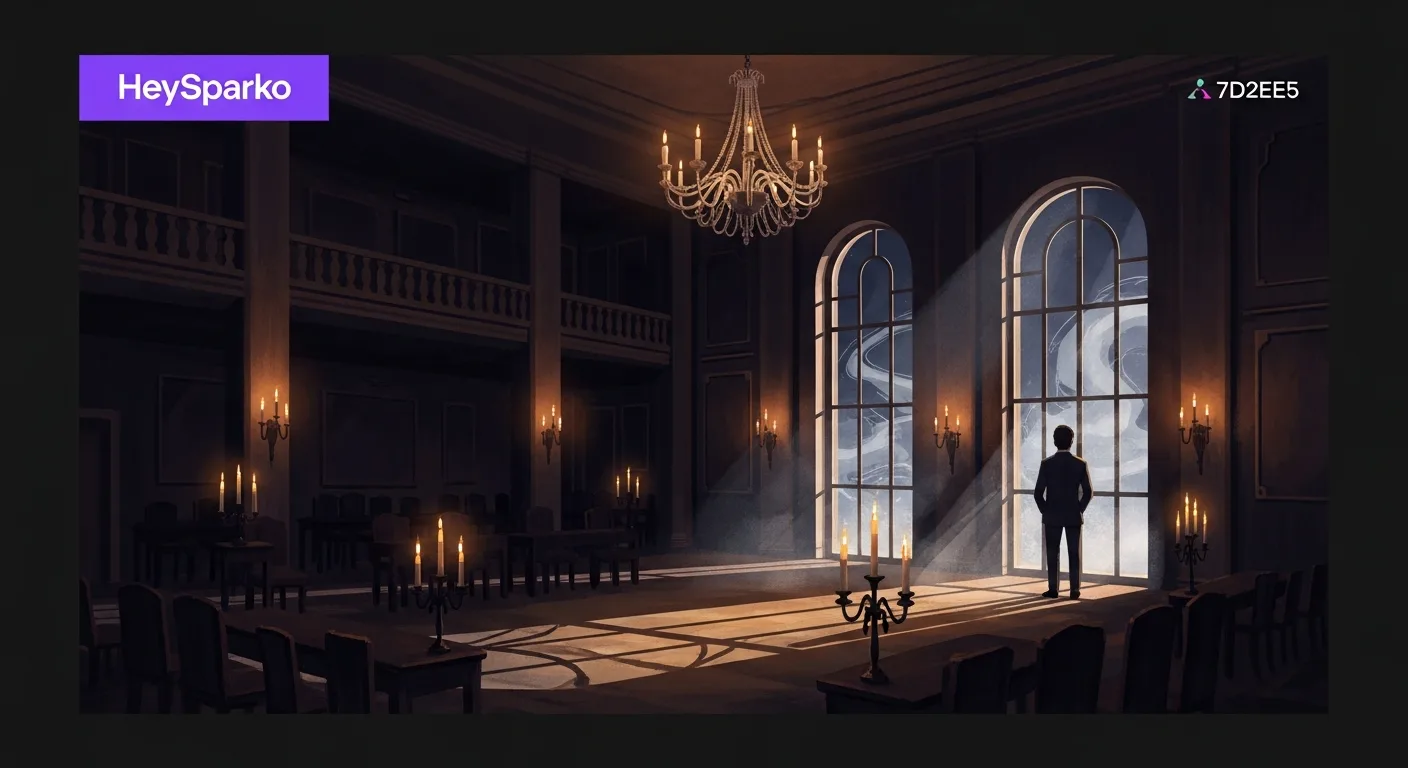
People Ops leaders justifying an October event budget are usually running two arguments at once: the ROI case for leadership and the format case for their own planning confidence. Research on both fronts is fairly consistent.
Microsoft's 2025 Work Trend Index found that 30% of meetings now span multiple time zones, up 8 percentage points since 2021. For October event planning, that figure shapes the format decision before any game choice enters the picture: the more distributed the team, the more scheduling friction a synchronous event introduces, and the higher the risk that participants from inconvenient time zones simply don't engage. This is why format selection matters more than game selection in distributed teams — getting the format wrong costs you the event regardless of how good the game is.
Quantum Workplace's 2024 Workplace Trends Report, drawn from a database covering 700,000+ employees across 8,000+ U.S. organizations, found that 92% of executives reported seeing increased performance as a result of their engagement efforts. The qualifier is important: that 92% comes from the executive sub-sample, not all respondents. The people approving event budgets are the same ones observing the lift. That alignment between decision-maker and outcome-observer makes the budget conversation considerably more tractable than it might seem from the People Ops vantage point.
The academic literature says something similar. Anog et al., 2023 (SSRN), pulling together findings from more than 60 structured team-building studies, found what most practitioners already suspect: the benefits are real, but they're strongest and most durable when the activities are part of a recurring cadence rather than one-off events. A quarterly rhythm including October, plus a Q1 touchpoint, plus something mid-year, consistently outperforms a single annual event with the same NPS score.
Deloitte's 2024 Burnout in the Workplace report found that workers attending two or more company-sponsored social events per quarter report 23% lower burnout symptoms than those who attend none. For People Ops leaders justifying October event spend against competing Q4 priorities, this framing tends to land more effectively than abstract engagement ROI — particularly in industries where burnout rates are high. The October event isn't a distraction from Q4 work. It's an investment in whether the team finishes Q4 at productive capacity.
In our own data, hospitality, retail, and customer-success teams consistently pick atmospheric mystery formats over action-adventure for October. The pattern repeats enough to be a standing recommendation: when October calendars are already hectic, the deduction-paced structure of a mystery lets the team settle in before the competitive arc builds. Completion rates and NPS scores are reliably higher for that audience in mystery format during October versus adventure format. Our best interpretation is that teams in service roles, where performance pressure is constant, find the deduction-first structure more comfortable than countdown-urgency mechanics that replicate, rather than relieve, the pressure of their actual work.
The most common October failure we see is forcing the event to be explicitly Halloween-themed when the team's cultural composition makes that frame exclusionary. Games like Wintervald Hotel Mystery and Bureau of Magical Affairs carry October atmosphere without requiring anyone to engage with Halloween mythology. Reframing as "October team event" rather than "Halloween party" produces higher voluntary participation than events that lead with the holiday in both title and invite copy.
Frequently asked questions
What's the difference between Big Game and Marathon for a Halloween event?
Big Game is a single live synchronous event, 60-90 minutes, everyone on the same call at the same time. Marathon runs the same narrative over one to five days as daily async episodes, with players engaging when it fits their schedule. For teams within a six-hour time zone spread, Big Game concentrates the shared energy that live Halloween moments benefit from. For globally distributed teams, Marathon is often the only format where full participation holds — completion rates in our data run 65-78% across the arc.
Do participants need to install software or create accounts?
Nothing to install, no accounts to create. Every HeySparko game runs in the browser via a single link, tested on corporate-managed machines with common endpoint security configurations. One useful thing to communicate before a Marathon starts: the browser experience works on phones. Players who can check the leaderboard between meetings or complete an episode during a commute show noticeably higher Day 2 and Day 3 completion rates in our data than those who only engage at a desktop. Worth one line in the Day 1 launch message.
How do we handle team members who don't celebrate Halloween?
Frame the calendar invite as an "October team event" rather than a Halloween party, and make costume participation explicitly optional in all communications. The game choice matters here too: Apocalypse and Wintervald Hotel Mystery both carry October mood without trick-or-treat iconography. Bureau of Magical Affairs is the broadest option: entirely secular, no seasonal references, and it reads as a team event that happens to fall in October rather than a holiday celebration that involves work.
How far in advance do we need to book an October event?
For a standard Big Game with no customization, two weeks is workable. Customization has longer lead times: Logo tier requires seven days, NPC requires 14 days because dialogue rewrites need real input-and-iteration time, and Story tier requires 21 days minimum. For a fully customized October 31 event, booking in early October keeps all three tiers available. If you're running a complex multi-team setup, two to three weeks gives enough time for the internal communications work that actually drives participation. Current availability and team-size options are on the pricing page.
How do we measure success after the event?
The analytics dashboard delivers participation rates, team scores, NPS pulse results, and by-team breakdowns within 24 hours of event close. For a leadership readout, the most actionable numbers are overall participation rate, NPS score, and the manager-pod breakdown showing which sub-teams engaged most and least. Marathon events add per-day engagement curves that show exactly where drop-off occurred. Pairing post-event analytics with the next quarterly engagement survey gives the before/after comparison that makes the renewal or program-expansion conversation considerably more concrete.