

Halloween has stopped being a fall-off-the-calendar afterthought for distributed teams. Over the last three booking cycles, October has settled in as the second-densest month on our calendar behind only December, and the booking-window pressure starts earlier every year. People Ops teams now walk into Q3 with the Halloween line already on the agenda, and the format question arrives first: the request shape is usually "a 60-minute virtual escape room," but the team it has to land for spans eight time zones, three comfort levels with the holiday, and an internal politics layer about whether a costume Zoom counts as work.
1,500+ virtual events later — across 300+ companies in 50+ countries since 2020 — the patterns are more consistent than most People Ops leaders expect. The team that books a Halloween virtual escape room in mid-September lands a meaningfully different event than the team that calls us on October 14th asking for "anything we can run next Thursday." The booking-window dynamics shape which choices stay available; the deeper question is structural — which game, which format, and how do you stitch the room together when half the company doesn't observe Halloween at all?
What is the right way to book a Halloween virtual escape room for a distributed team across time zones?
Format first: Big Game vs Marathon for the October window
The biggest decision in a Halloween virtual escape room booking isn't which game you pick. It's whether the team is going to share a live event window or run async across the week. We've watched both formats land well, and we've watched both formats break. The most common failure mode is format-to-team-shape mismatch — a Big Game booked for a 12-time-zone team, or a Marathon booked for a 50-person company that would have loved a live shared moment.
A Big Game runs as a single live 60-90 minute event. Everyone joins the same video call at the same time, a HeySparko Game Host runs the whole thing, and your team shows up as players, not event coordinators. The energy is the point here. The leaderboard updates in real time, breakout squads shout-react to plot beats together, and the closing-minute scoreboard moment is genuinely shared. For teams sitting within a six-hour time-zone spread, Big Game is what we'd recommend without hesitation. The shared moment is what people remember.
Marathon runs the same game material across 1-5 days, asynchronous. Daily episodes drop each morning, players engage when their calendars allow, and a single shared leaderboard creates pull without requiring anyone to take a 9pm call. For a team split between Tokyo, Warsaw, and San Francisco — three locations sharing roughly two hours of business-day overlap on a normal day — Marathon is the format that works without putting a punitive cost on someone's evening. Completion rates we see at 500+ companies sit in the 65-78% range, higher than the live-event attendance numbers most distributed teams post in October.
For the October window, Marathon carries one additional pull. The booking calendar gets dense the closer you get to the 31st, and a Marathon spanning October 27-31 can run mid-week without locking in a single 90-minute slot. A Big Game needs that 90-minute window to be sacred for the whole team. People Ops leads booking late often land on Marathon because the synchronous slot they wanted is already taken by another team.
The October games that hold up for distributed teams
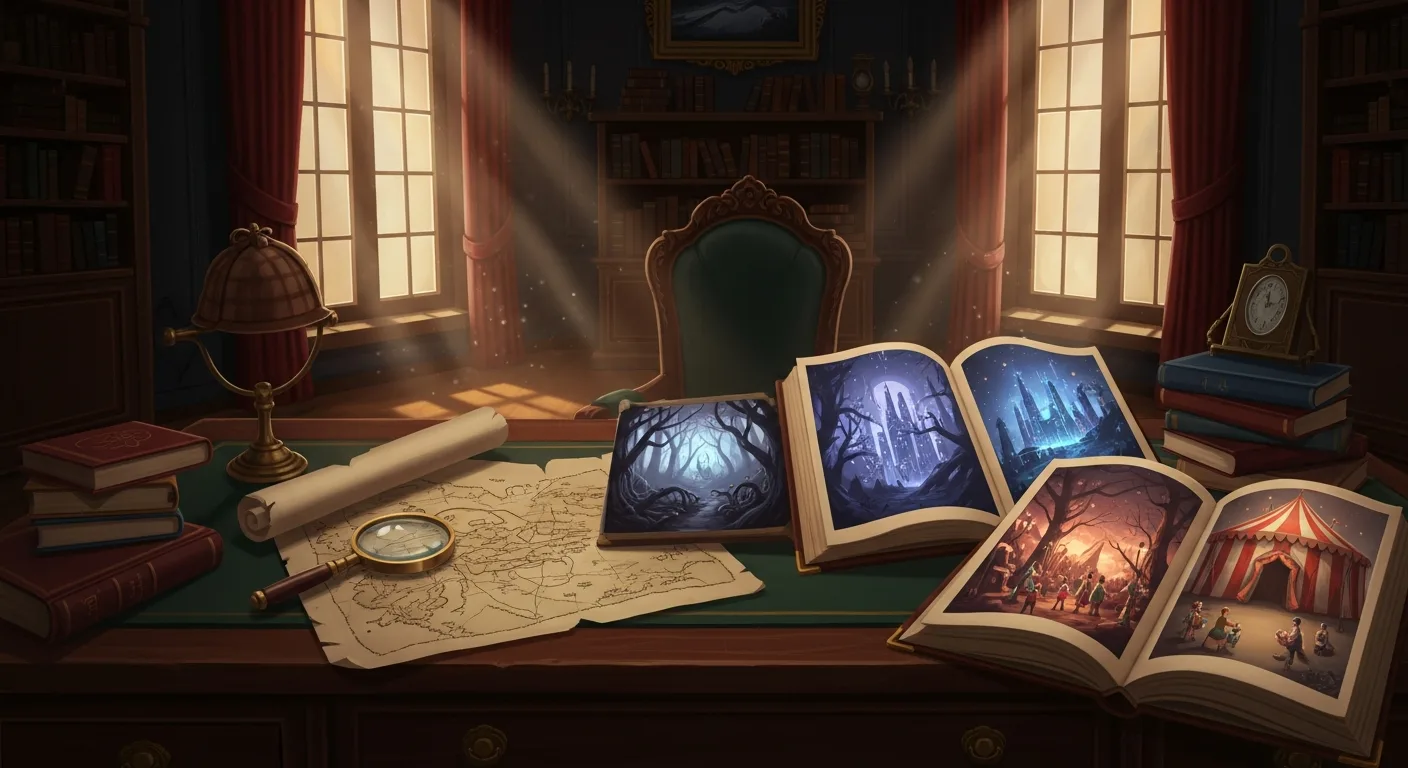
A specific mistake shows up in repeat October bookings: a team picks a game off the catalog page based on its October aesthetic without checking whether the game's mechanics match how their actual team coordinates. Halloween-named games aren't built the same way. The right pick depends on how spooky the team wants to be, how much narrative weight the room should carry, and what energy register the company actually wants.
Apocalypse is the flagship October game in our catalog and the one most teams default to first. An overnight outbreak, four stages between the team and a cure, a countdown clock that isn't decorative. The art is stylized 2D throughout — no gore, no body horror, no jump-scares — but the urgency is real and the team's coordination gets tested under pressure. Engineering and fintech teams love it; the role-specialization mechanic in Stages 2 and 3 surfaces who actually leads in a crisis versus who assumes they do. Where it breaks down: a buttoned-up enterprise audience that wants atmosphere without urgency, or a team that hasn't been together long enough to have a working coordination baseline. We typically steer brand-new teams away from it.
Book of Awakened Nightmares is the atmospheric alternative for teams that want October mood without October menace. Tim-Burton-meets-folklore tone; three worlds (Despair, Rage, Madness) the team gets pulled through after assembling a missing-pages book in a remote cabin. The closest film reference is Coraline, not anything that needs a sensitivity review. We've run it for global teams across 15+ countries without a single comfort complaint. Mid-size groups of 50-200 get the most out of the slower pacing — the worlds breathe, and the team has time to debate.
Wintervald Hotel Mystery becomes the October pick when the company culture skews enterprise-formal. The Agatha-Christie-snowbound-hotel framing technically reads December, but the isolation-and-storm aesthetic plays beautifully in late October for legal teams, finance functions, and C-suite-attended events. The office-comedy tone of other Halloween games would feel off-register for these audiences; Wintervald sidesteps that whole problem and gives them a Knives Out-tier mystery instead.
Under the Big Top is the wildcard October pick. Vintage circus, vanished performer, a cast of warm-whimsical suspects. The whimsy is melancholic rather than goofy, closer to Big Fish than to clowns honking horns, and it tends to land hardest for hospitality teams and companies whose day jobs already feel like running a slightly chaotic circus. Hospitality and customer-experience orgs book it more than any other vertical because the framing mirrors how their people already think about guest journeys.
A subset of teams books an October event that has nothing to do with horror, mystery, or escape — just because the calendar happens to land there. Bureau of Magical Affairs is the workplace-comedy-meets-magical-investigation option for cohorts that want the holiday timing without the holiday theme. Professor Brum's cauldron leaked, four bureaucratic emergencies in 90 minutes, and new-hire-orientation cohorts get a coordination workout that mirrors their actual first-month experience. We see it booked most often for October onboarding cohorts where Apocalypse would be too high-stakes for week-three new hires.
For teams that have already done the October escape rooms and want something genre-bent for a Halloween-into-early-November holiday party crossover, Stolen Hours gives genre-fiction-appetite teams a four-world chase that earns its 90 minutes. Santa's clock hands stolen and scattered across postapocalypse, cyberpunk, steampunk, and biopunk worlds; same coordination mechanics as our other adventures, very different aesthetic. It's the booking we make when the company calendar bridges Halloween into December and the team wants one room to carry the energy of both.
For a team that wants the lightest possible touch — a 60-minute closer for a monthly all-hands that lands in late October — Pop Culture Trivia with a Halloween-leaning theme remains the safest default. It isn't an escape room in mechanics, but it's the right booking when the team's energy is already tapped and the goal is a shared 60 minutes, not narrative depth. Last Temple Mystery becomes a reasonable choice for teams that want the puzzle-and-coordination architecture of an escape room without committing to a Halloween framing. The four-floor Mayan temple structure carries the work even on October 28th.
Customization moves that make the room feel like yours
The customization tiers — NPC, Logo, Story — work differently at Marathon scale than they do in a 90-minute Big Game, and the October window has its own customization patterns we see across the calendar. A stock event is already engaging; customization is what makes the room feel like the company's room, not the vendor's.
The NPC tier rewrites character dialogue to carry your company's voice. For October bookings, that often means tuning the game's narrator and supporting cast to reflect internal naming conventions or inside jokes. The apocalypse newsreader talks like your Slack #general; the hotel detective references the project codenames your team already uses. A fintech we worked with last fall ran Apocalypse with a "poisoned API" Story override that mapped the overnight outbreak onto a banking-systems-going-dark premise. The NPC tier put the apocalypse survivors talking in their actual engineering vocabulary. The event landed differently because it was about them.
The Logo tier is the quietest customization, and the one People Ops leaders find easiest to defend internally. Brand colors on the leaderboard, your logo on the intro splash and the take-home certificate, color saturation that says "this was ours." For October events that double as cultural moments worth Slack-sharing, the Logo tier is the difference between a screenshot worth posting and one that just shows a stock vendor's UI.
The Story tier is the most ambitious move. The game's entire narrative arc gets rewritten to fit a specific company situation — usually a milestone, an internal initiative, or a moment the leadership team wants the event to acknowledge. We've seen Story-tier rewrites that frame an end-of-quarter push as the race against the outbreak, the impending product launch as the ritual the team has to finish before the cult does, the headcount milestone as the case file the Bureau just landed. The room becomes the moment, not the side show.
Customize for your team
TYPE 1
Your team as in-game characters
Real team members, mascots, or characters from your games as NPCs.
TYPE 2
Your brand integrated natively
Logo and brand elements native to game environments — locations, items, UI.
TYPE 3
Your story woven into the game
Company milestones, products, and inside references woven into puzzles, dialogues, and tasks.
One operational note worth flagging for late-September bookings: customization has lead-time requirements that get tight inside three weeks. Logo tier needs roughly seven days, NPC tier fourteen, Story tier twenty-one. Teams booking a fully customized October event in late September are usually too late for full Story — Logo and NPC remain viable, but the narrative rewrite needs more runway. The standard advice we give: confirm format and game by mid-September; commit to customization tier by the first week of October. See the HeySparko pricing page for the configurations available.
What the data says about Halloween team events
A comfortable assumption sits underneath most Halloween bookings: that the event is a morale exercise, a feel-good break from real work. The research on distributed-team collaboration tells a more useful story when the event gets treated as collaboration-tuning rather than as a calendar-fill obligation.
Atlassian's State of Teams 2024 report estimates that 25 billion work hours are lost annually to ineffective collaboration within the Fortune 500, and 93% of executives say teams could deliver similar outcomes in half the time if collaborating more effectively. The 25-billion-hour number is an extrapolation from executive opinion, not a measured loss, but the directional finding is what matters: the time cost of poor team coordination is enormous, and the executives signing the engagement budget feel it. A 90-minute escape room that puts coordination patterns under structured pressure — who delegates, who freezes, who finds the unconventional path through Stage 3 — generates data the post-event analytics turn into something a People Ops lead can take to the next quarterly review.
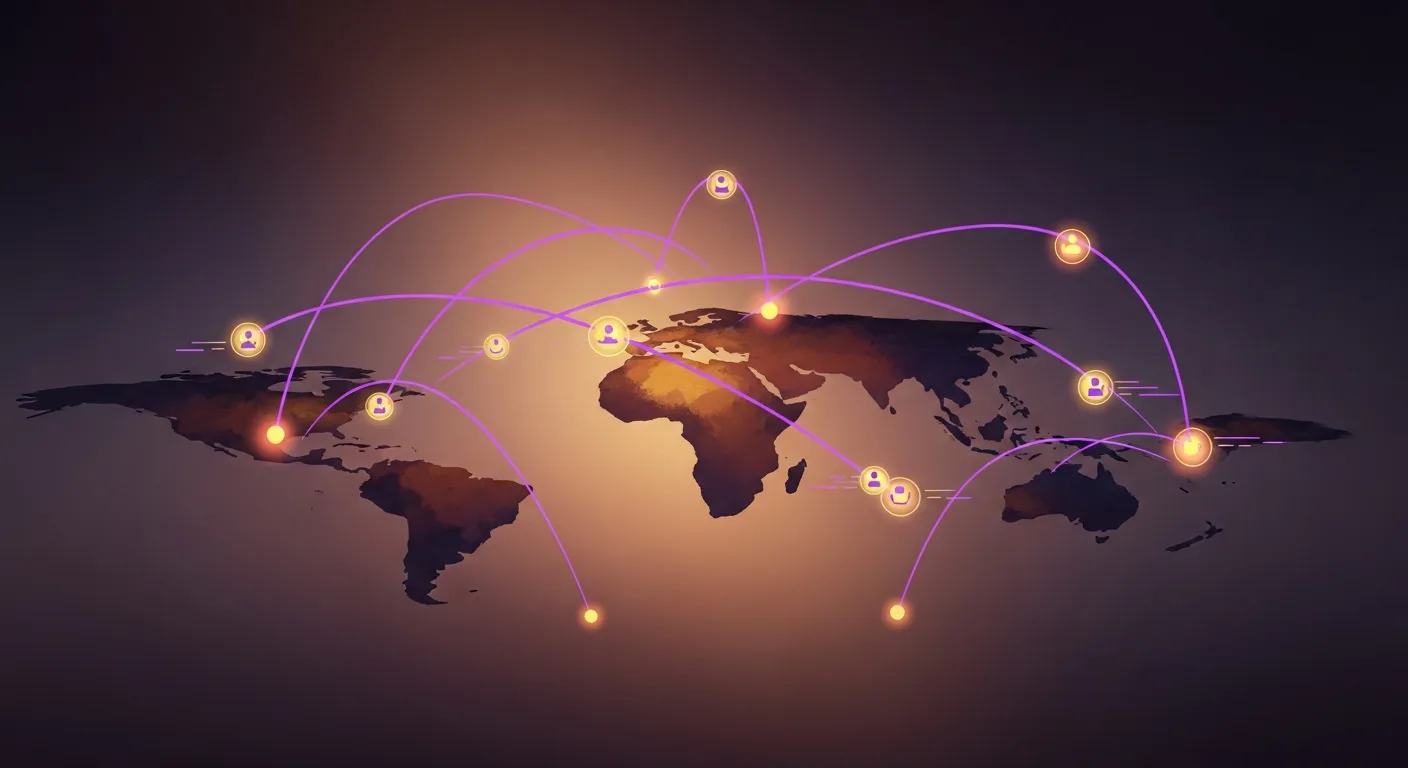
Microsoft's 2025 Work Trend Index, drawing on a survey of 31,000 knowledge workers and Microsoft 365 telemetry, reports that 30% of meetings now span multiple time zones, an 8-point absolute increase since 2021. For a People Ops lead booking an October escape room, the implication is direct. More than a quarter of the meetings already on the calendar carry the same time-zone load a Big Game would impose, which means Marathon format isn't a defensive concession to global distribution. It's the format that matches how the company already runs its work.
The academic backing comes from Anog et al. (SSRN, 2023), a systematic review of 60+ studies which concluded that structured team-building activities increase satisfaction and reduce turnover, with effects amplified when integrated into a broader development strategy. For a People Ops lead defending the Halloween line item against Finance, the last clause matters most. The one-off costume Zoom doesn't carry the same weight as a quarterly engagement rhythm where October is one beat in a four-event year.
That cadence pairs with the per-team focus signal from Deloitte's 2024 Global Human Capital Trends report, which surveyed 14,000+ business and HR leaders across 95 countries and found that 71% say focusing on individual teams and workgroups is the best place to cultivate culture. The implication is operational. The post-event analytics we send to People Ops break the participation and coordination numbers down by team, not by company average, so the conversation a manager has with their direct reports the week after the event has actual data behind it rather than a feel-good company-wide score.
Across our portfolio, Marathon completion rates run 65-78% at 500+ companies, and the cross-time-zone version reaches roughly 35% more participants than the forced-synchronous October events most distributed teams default to. The pattern we keep seeing: the teams that treat the October event as the data-collection moment for the full quarter's engagement work get more out of it than the teams that treat it as a one-shot morale exercise. The escape room is the surface; the coordination data is the durable artifact.
What can go wrong is worth naming. Booking the wrong format for the team's distribution, picking a high-energy adventure for a team that needed atmosphere, or running the event with no post-event communication. The first two are pre-event fixes the booking conversation handles. The third is the easiest avoidable mistake we still see at the end of October — a 20-minute follow-up email with the leaderboard, the analytics summary, and a recognition shout-out to the winning squad turns a one-day event into a week-of-week reinforcement.
Frequently asked questions
How far in advance do we need to book a Halloween virtual escape room?
The honest answer is six to eight weeks ahead of October 31st for the smoothest run. Booking by mid-September keeps the full customization tier (Story) on the table and the calendar slot you want still open. Late-September bookings still get strong Big Game and Marathon slots with Logo customization, but Story-tier narrative rewrites need a 21-day runway. October-week bookings get whatever slots remain, which usually means trivia or stock-narrative games rather than fully customized adventures.
What is the difference between Big Game and Marathon for an October event?
Big Game runs as a single live 60-90 minute event with everyone in the same video call and a HeySparko Game Host running it. It's the right pick for teams within a six-hour time-zone spread, and the energy of the shared leaderboard moment is what people remember. Marathon runs across 1-5 days asynchronously, with daily episode drops, and it's built for distributed teams across 8+ time zones. Group geography usually makes the format choice for you, and the same game runs in either format if the team wants to keep options open.
Half our team doesn't celebrate Halloween — what do we do?
Frame the event as an "October team event" in calendar invites, make costume participation explicitly optional in the welcome message, and pick games where the October atmosphere enhances the experience without requiring belief in the holiday. Bureau of Magical Affairs and Wintervald Hotel Mystery both work for mixed teams because they carry an October vibe without leaning hard into trick-or-treat tropes. Marathon format also gives non-celebrating team members a low-pressure opt-in rhythm rather than a single mandatory window.
How many people can play a single Halloween virtual escape room?
Every game in our catalog scales from 5 to 10,000 players in a single session, and the format adjusts around group size. Mid-size groups of 50-300 hit the sweet spot of leaderboard tension and breakout-team coordination dynamics. Smaller groups of 15-50 get the intimate adventure-club feel where every team member's contribution shows up in the chat. Large groups of 1,000+ split into competing squads with a single unified leaderboard, and we've run Apocalypse at both ends of that spread comfortably.
Do players need to download software or set up accounts?
No downloads, no installs, no account creation. Every HeySparko game runs in a standard browser via a single-click link your players receive in their event email. The platform is tested against corporate-locked laptops with Cisco, Crowdstrike, and similar enterprise security stacks, so IT approval is rarely a blocker. Players join, get assigned to their breakout squad, and start playing. The Game Host runs the whole experience; your team participates as players, not event coordinators.