
Over the past five years, Halloween team events at distributed companies have moved from "the office costume contest" to a real Q4 line item with their own budget approval and their own RFP process. October used to mean decorating a hallway and ordering pumpkin cupcakes. Now it means designing an experience for 300 people split across four time zones, half of whom have never met in person. People Ops leads inherit this expectation without inheriting the playbook for it.
Across 50+ countries and five years of distributed-team programs, we've designed and run more than 1,500 virtual team events for 300+ companies. The pattern that shows up most often at Halloween is the same one we see at every distributed-team event, only louder. The planner is told to make it fun. The planner picks a format that fits the New York team's evening window. The Singapore team logs in at 4am to play.
How do you actually plan a Halloween team event for a distributed company without forcing someone to take an 11pm call?
That's the breaking point this playbook is designed to help you avoid. Below is the six-step sequence we use with People Ops leads when an October event lands on their plate in early September, along with the third-party data we hand them when finance asks what the budget buys.
What changed about Halloween team events since 2020
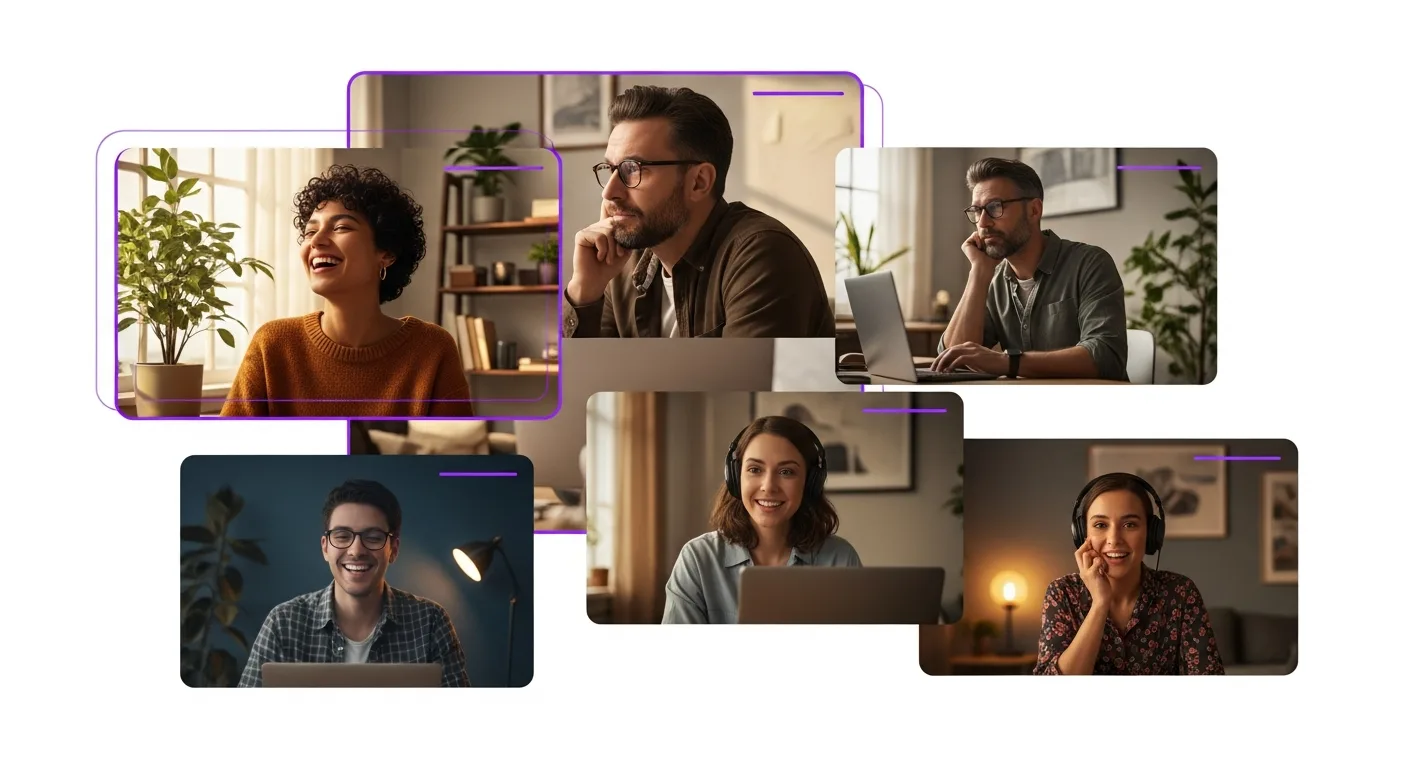
Three shifts have shaped the way distributed companies now approach the October calendar, and acknowledging them up front saves weeks of internal back-and-forth later. The first is that the costume tradition is no longer the headline. A visible-on-camera costume is a delight, not a deliverable. The deliverable is a 60-to-90-minute shared moment that lands the same way at 11am Pacific as it does at 7pm Berlin. The second shift is cultural sensitivity. Halloween is not a global holiday. Roughly half the workforce at a typical international tech team comes from regions where October 31 is not on the wall calendar. Asking those colleagues to dress up as ghosts is the small kind of mistake that surfaces in the engagement survey six months later. The third shift is the rising quality bar. Your team watches stylized scary content on Netflix on Friday night. A Zoom trivia called "Spooky Quiz Night" on Monday morning will read as a placeholder, because it is one. Acknowledging these three shifts is the easy part. Building the event around them is the work.
Big Game or Marathon: pick the format before you pick the game
We've watched this decision get inverted in three out of four planning conversations we sit in. The planner picks a game first and then asks how the format will work for the global team. The math does not run that direction. Format constrains game; game does not constrain format. So lock format first.
Big Game is the live, hosted, 60-to-90-minute synchronous format. One Zoom window, breakout teams of four to eight, a HeySparko Game Host MC'ing the entire run. Best for groups under about 400 people inside a contained time-zone spread, say North America plus a handful of EMEA folks willing to log on for a 4pm Eastern window. The energy of a live leaderboard is the payoff. Everyone watches the same score shift at the same moment.
Marathon is the multi-day asynchronous format. Daily episodes drop on a schedule, players engage when their day allows, the leaderboard stays live across three to five days. Best for teams spread across more than six hours of time-zone width, or any team where mandatory live events have triggered pushback in past surveys. The completion rates we see at 500-plus-employee clients running Marathon land in the 65 to 78 percent band, which beats the "show up at 8pm" attendance numbers of forced-synchronous events by a comfortable margin.
If your team is under 200 people in a single hemisphere, default to Big Game on the weekday closest to October 31; if your team is global, default to Marathon over the week of October 27 to 31. The third path, running Big Game in three rotating windows to cover three regional clusters, works but it triples both your Game Host cost and your internal coordination load, and we'd warn first-time planners off it. We have run that three-window pattern for two clients (one in 2023, one last year), and in both cases the People Ops lead's debrief came back with the same line: "I don't want to do that again."
The six-step Halloween planning playbook
The most common reason a Halloween event lands poorly is not the game choice. It is the timing of the planning. We've watched teams pull off a strong event with two weeks of lead time, and we've watched teams blow a six-month runway by spending the first five months on calendar negotiations with senior stakeholders. The six steps below are sequenced so each one closes off a decision before the next one opens. Skip a step and the next one stalls.
Step 1: Lock the date and the audience window (T-6 weeks)
The first decision is not when. It is who. Pull the org chart, mark the regional clusters, overlay each cluster's standard working hours. For a Big Game, find a 90-minute slot that covers at least 90 percent of headcount inside their normal workday. Tuesday or Wednesday between 10am and 11:30am Eastern is usually the right window for North America plus most of EMEA, and it leaves a soft 30-minute overlap with the Pacific Rim morning. For a Marathon, the audience window is the whole week of October 27 to 31. Send the holding invite at T-6 weeks. We've watched events lose 18 to 22 percent of headcount because the invite went out at T-3 weeks and conflicted with already-booked customer calls.
Step 2: Confirm the format against the calendar
By this step the format choice is already obvious from Step 1. If the chosen window covers 90 percent of headcount inside normal hours, Big Game is on the table. If it does not, Marathon is the call. Do not relitigate this decision. A common failure mode is the planner finding the format constraint uncomfortable and trying to stretch Big Game across an unreasonable hour for one region. We've watched Tokyo log in at midnight for the "fun event," and the post-event NPS from that region came back at 4.1 against a company-wide 8.3. Pick the format that lets every region log in inside their own day, and stop revisiting.
Step 3: Choose the game
Now you can pick the game. The Halloween catalog in our universe sorts into two emotional registers. There is the menace register, where stylized urgency drives team coordination. Apocalypse is the flagship here, a 90-minute race against an overnight outbreak that surfaces who on your team delegates well under time pressure. The art is cartoonish, not gory. There is no jump-scare content at any point. There is the atmosphere register, where mood and folklore carry the experience. Book of Awakened Nightmares sits here, a Tim-Burton-tone walk through three folklore worlds with composite mythology that plays globally. Both work for Halloween. The decision rule is your team's culture, not the holiday's expectations. A fintech engineering team booking its first Halloween event tends to land on Apocalypse. A design-heavy product team or a 200-person hospitality client tends to prefer the slower atmospheric path of Book of Awakened Nightmares.
If your team explicitly does not want a Halloween-themed game but still wants an October event, Wintervald Hotel Mystery is the enterprise-friendly mystery alternative, a Knives-Out-style whodunit with no holiday flavor. Under the Big Top is the same deduction mechanic with a vintage circus aesthetic. For teams that want adventure without the Halloween wrapper, Bureau of Magical Affairs is the year-round flagship. For a Christmas-adjacent option that still carries the chase energy of an October event, Stolen Hours is the genre-bending pick we book most often.
Step 4: Decide on customization (NPC, Logo, Story)
The customization tiers are the lever that turns "we hired a vendor" into "we ran our event." There is the NPC tier, where game characters speak in your company's voice and reference your internal language. There is the Logo tier, where your brand colors and logo are woven into the game environment. There is the Story tier, where the narrative arc gets rewritten to fit a specific moment in your company. We've combined all three for a fintech anniversary event, and we've run single-tier Logo runs for budget-constrained teams. Both work. The mistake is treating customization as a quality gate rather than as an opt-in lever. The stock event is already engaging.
Customize for your team
TYPE 1
Your team as in-game characters
Real team members, mascots, or characters from your games as NPCs.
TYPE 2
Your brand integrated natively
Logo and brand elements native to game environments — locations, items, UI.
TYPE 3
Your story woven into the game
Company milestones, products, and inside references woven into puzzles, dialogues, and tasks.
For Halloween specifically, the highest-payoff customization is the Story tier paired with Apocalypse: the outbreak's origin gets tied to your industry, and the team's "vaccine race" becomes a stand-in for a real launch or migration the company is working through right now. The last two times we ran this pattern (once for a fintech rebuilding their settlement engine, once for a SaaS rolling out a new pricing tier), the post-event conversation in the company Slack ran for three full days after the event closed out, because the game's narrative carried a meaning that lasted past the 90 minutes of play.
Step 5: Pre-event communications (T-14 to T-1)
The single largest predictor of attendance is not the game. It is the rhythm of pre-event communications. The pattern that works in our data: T-14 days, the holding invite goes from People Ops with a one-paragraph framing of what the event is. T-7 days, a teaser email goes from the CEO or VP People with a short opinion ("I'm playing, you should too"). T-3 days, a calendar nudge with a one-click confirmation. T-24 hours, a Slack drop in the all-hands channel from the People Ops lead with the join link surfaced. T-30 minutes, a final reminder. Five touchpoints over 14 days. We've watched events hit 91 percent attendance with this cadence, and we've watched the same game with the same audience hit 62 percent when the only communication was a single calendar invite three weeks out.
Step 6: Day-of and the 48 hours after
Run the event. The Game Host MCs everything; your team plays. The closing screen is not the end of the work. Within four hours, the analytics dashboard should be in the planner's inbox with the participation rate, the NPS pulse, the by-team breakdown. Within 24 hours, the People Ops lead should be sending a recap to leadership with three numbers (participation, NPS, one qualitative quote from the team). Within 48 hours, the manager 1:1 mention should be in motion, a quick line in every manager's Monday note acknowledging participation by name. The engagement compound starts after the event, not during it. Skip the 48-hour follow-up and the event becomes a memory by Friday.
What the data actually says about Halloween team-event ROI
A Halloween event is a budget line item. Defending the line item to a CFO requires the same three numbers any engagement program defends with: lift, retention impact, and executive-perceived value. The numbers below are the ones we hand People Ops leads when their finance partner asks what the spend buys.
The executive-perceived-value piece is where Quantum Workplace's 2024 Workplace Trends Report lands. Quantum Workplace surveyed executives at companies in its database, a database that covers 700,000+ employees across 8,000+ U.S. organizations, and reported that 92 percent of executives say they have seen increased performance as a result of their engagement efforts. That is the people approving the event budget reporting the lift they saw. It is the cleanest exec-side stat we have. When a People Ops lead asks us how to frame the cost of a Halloween Marathon to a skeptical CFO, the Quantum number is the opener, because the audience for the framing is the CFO's peer group.
The distributed-team reality piece is where the Work Trend Index 2025 lands. Microsoft's research found that 30 percent of meetings now span multiple time zones, an 8-point absolute increase since 2021. Half the value of running an event in Marathon format instead of Big Game format is that the Microsoft trend line is going to continue. The team you are planning for in October 2026 is more time-zone-spread than the team you planned for in October 2022, and the spread is widening every year. Format choice has to keep up with the workforce, not the calendar.
The connection piece is where Buffer State of Remote Work 2023 numbers land. Among remote workers who reported feeling disconnected from their team, 56 percent named "no opportunity to connect socially" as the primary reason. Read that sentence twice. The unconnected feeling is not loneliness for an in-person interaction the company cannot provide. It is the absence of a social-connection touchpoint the company absolutely can provide. A Halloween event is one of those touchpoints. Q3 kickoff is another. The recurring monthly all-hands is a third. The Buffer sub-sample number is the clearest defense of "social events are a real engagement intervention" we've seen in the literature.
The academic anchor here is Anog et al. (SSRN, 2023), whose systematic review of 60-plus studies showed that structured team-building activities increase satisfaction and reduce turnover, with effects amplified when integrated into a broader development strategy. The phrase "integrated into a broader development strategy" is the load-bearing part. A standalone Halloween event is a moment. A Halloween event placed inside a quarterly cadence is a program. The retention math runs on the program, not the moment.
The retention math itself rests on SHRM's 2024 cost-per-hire calculation, which estimates non-executive replacement at $15-21 thousand per departure once recruiting and ramp time are included. At 300 employees, with even modest turnover, the avoided-attrition value of a strong engagement program over a year easily exceeds the all-in cost of running a Halloween Big Game and a December Marathon. We are not the first vendor to make this math. We're making it explicit because People Ops leads keep telling us their CFO has not yet seen the chain laid out in one sentence.
Our own portfolio numbers sit alongside the third-party data, not in place of it. The Marathon format hits a 65 to 78 percent completion rate at 500-plus-employee clients running opt-in events. Big Game scales to 10,000 players in a single session; the largest Halloween event in our recent run was a 4,000-player closer for a global tech company across three rotating regional windows. These are our numbers. They generalize against the third-party stats above. They do not replace them.
Frequently asked questions
How far in advance should we book a Halloween team event?
Six weeks is the working minimum if you want any flexibility on date, format, and customization. We've seen teams book at T-3 weeks and land a workable event, but the calendar starts to fight you under four weeks because senior leadership calendars fill, and any customization tier needs its own lead time. Logo customization is seven days, NPC fourteen, and full Story customization needs three weeks to brief and produce. August 15 through September 30 is when our Halloween dance card fills.
What if half our team does not celebrate Halloween?
Frame the event as "atmospheric October" rather than as Halloween-as-cultural-holiday, and the cultural-fluency problem mostly disappears in the framing alone. The two games that work best for genuinely international teams are Apocalypse and Book of Awakened Nightmares, which both sit in a stylized-menace or moody-folklore register that doesn't require any cultural fluency with Halloween itself, and we've run both across 12-plus countries with consistent comfort feedback. Treat costumes as opt-in flavor for those who want to, never as a participation gate.
What is the difference between Big Game and Marathon for Halloween?
Big Game and Marathon sit at opposite ends of the synchrony axis, and the difference shapes everything downstream. Big Game is one live 60-to-90-minute event the whole company joins at the same hour, while Marathon is daily episodes released over a 3-to-5 day window that players engage with on their own clock. For teams under 400 inside a contained time-zone spread, Big Game is the right pick because live leaderboard energy is the point of the event in the first place. For teams across more than 8 hours of time-zone width, Marathon wins because nobody on your team takes an 11pm call to be "fun" with colleagues they barely know.
How many people can participate?
Both formats scale from 5 to 10,000 players inside a single session, with no architectural break point in between. The role-specialization mechanics in Apocalypse shine most clearly in the 20-to-35-person range, where every player has a distinct stake in the team's decisions, but the underlying engine scales by splitting larger groups into competing response squads on a shared leaderboard. The largest Halloween event we ran last October landed around 4,000 players for a global tech company across three rotating regional windows, and the bottleneck was never raw group size.
Do we need any software install?
There is no install required at any point. Both Big Game and Marathon run inside the browser, with players joining through a link that surfaces no account creation, no extension, and no admin install on the laptop. We've tested the stack with corporate-locked machines at companies running Crowdstrike, Cisco Umbrella, and similar endpoint security setups, which is part of why People Ops leads at security-conscious companies pick HeySparko in the first place. The IT review usually closes in a 10-minute conversation rather than a six-week approval cycle, and the event leaves nothing behind on the device after the closing screen.