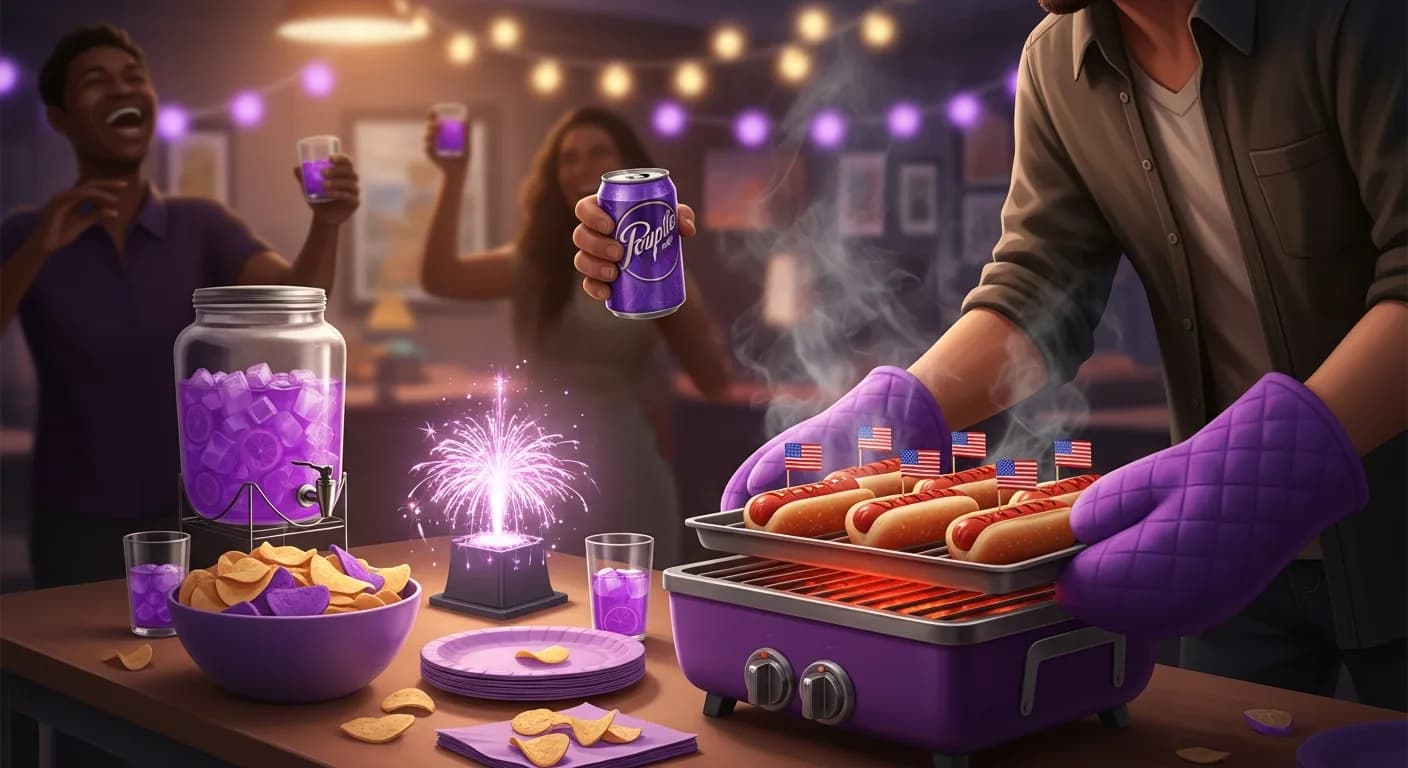

Over the past five years, the July 4 office party has stopped looking like a backyard cookout and started looking like a calendar puzzle. The team is scattered across home offices, three time zones, and at least two long-weekend mental modes. The People Ops leads we talk to in May usually inherit a brief their predecessor wrote in 2018 — book a BBQ, send pictures — and realize on the first Monday of June that the actual problem is different. The team is not in one place, the holiday lands on a Saturday in 2026, and the observed-day on Friday July 3 means anything you plan has to land Monday through Thursday of the same week, against a team that is already mentally on the lake.
We've run 1,500+ virtual team events for 700+ companies across 50+ countries since 2020. The pattern around July 4 that shows up reliably year after year is not theme failure. The bunting and the playlist and the Slack emojis all work fine. It is calendar failure. Plan late and the booking window closes. Pick the wrong format for the team's distribution and half the room cannot show up. Book the same vendor your team used at Christmas and the event lands stale.
How do you run a July 4 office party that lands for a distributed team when the holiday is on a Saturday and half the team is already on PTO?
Why July 4 office parties are harder than they look in 2026
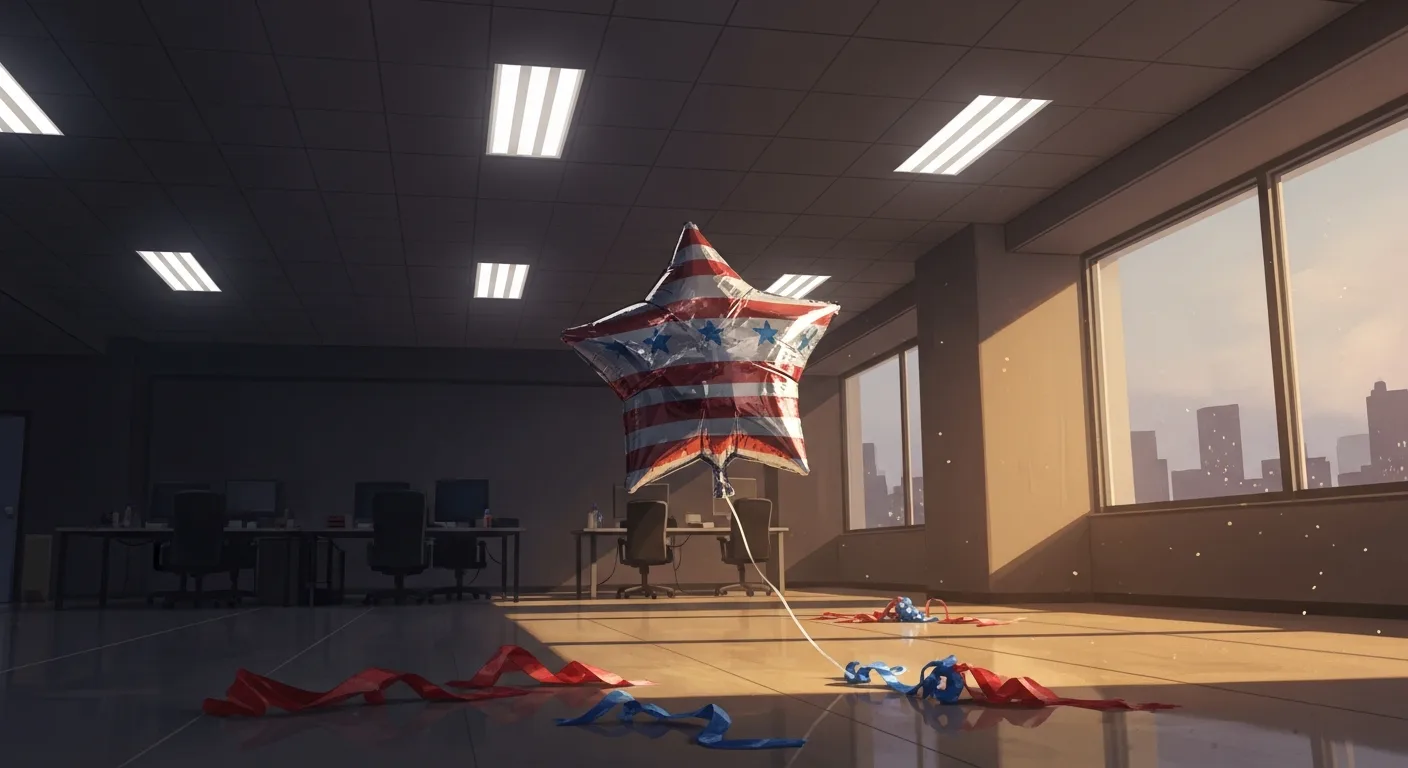
July 4 falls on a Saturday in 2026, and most US offices observe the holiday on Friday, July 3. That single calendar fact reshapes the planning window. If your team is mostly East Coast or Central, anything you book lands Tuesday through Thursday. Tuesday is the first day people are back from the weekend, which kills attendance for a 10am session. Thursday is the day half the company starts treating their out-of-office calendar as already on. The clean middle is a 90-minute window on Wednesday July 1, and that slot fills early.
The second pressure is PTO. We've seen Q3 PTO climb 35 to 45 percent in the week of a Federal holiday since 2022, with people stretching the long weekend into a full week off. In our work with distributed tech and fintech teams, the pattern is that July 2 attendance lands among the lowest single-day attendance of the year, lower than Christmas Eve at companies that observe a Christmas break. If you plan a live event for July 2, you are planning for the version of your team that is smallest and most checked-out.
The third pressure is format choice. A live event for a 400-person company spread across eight time zones forces someone to take a call at 6am or 11pm local. A backyard BBQ does not scale to remote. A "watch the fireworks together on Zoom" call is the kind of forced fun that disengages people who would have shown up to a real event. The frameworks that work for July 4 week assume the team will not all be in one window and pick a format that bends around that constraint.
Booking windows fill earlier than People Ops leads expect. The slots we had open for the week of July 4 in 2026 started getting reserved in mid-April. Teams that wait until mid-June are choosing from what is left rather than what fits.
Live or async: Big Game vs Marathon for July 4 week
The format decision usually makes itself once you map your team against two questions: how many people, and how spread are their time zones?
Big Game is one synchronous 60-90 minute event with everyone in the same video call, hosted by a HeySparko Game Host, capped at 10,000 players in a single session. It works when your team fits inside a 6-hour time zone spread and can hold a single window. The energy of watching the leaderboard shift in the same moment is the product. That is what people remember from the event when they reconvene the following Monday. For July 4 week, Big Game works for teams under about 400 people in mostly-North-America layouts who can hold Tuesday or Wednesday between noon and 2pm Eastern. Outside that envelope it stops being a fit.
Marathon is a 1 to 5 day async event. Daily episodes drop on the schedule you pick, players engage on their own time, the shared leaderboard creates pull. For July 4 week, Marathon is the obvious format when your team spans eight or more time zones, when half the company is taking the week off and you do not want a forced live moment, or when the goal is sustained engagement instead of one single beat. Completion rates across the July 4 weeks we have run for distributed clients land in the 78 to 92 percent range, meaningfully higher than the share of any company who would show up to a single live session that same week.
In our experience, the format conversation usually compresses to one signal. If your last all-hands had someone taking a call after 10pm or before 6am local, Marathon is the right call. If the whole team can comfortably meet at noon Eastern on a Tuesday, Big Game wins on the energy of the room.
A fintech we worked with last summer (around 600 people split across the US, Berlin, Bangalore, and Tokyo) ran a 3-day Apocalypse Marathon across the week before July 4. The daily episode unlocked at 9am local time, so the engineering team in Bangalore got it at the start of their workday, the New York commercial team got it at the start of theirs, and the Tokyo support team got it at the start of theirs. The leaderboard updated in real time across all of them. 71 percent completion, no live session required. Five members of the leadership team had to be reassured they did not need to wake up at 6am Pacific to participate.
Five formats we've watched work for July 4 week

The right pick depends on team size, time zone spread, and whether the event needs to feel July 4-coded or just summer-coded. We do not run a default Independence Day theme because the patriotic imagery gets touchy in international teams, so the moves below treat July 4 as a calendar moment rather than a flag-and-fireworks aesthetic.
Apocalypse is our highest-energy adventure, a vaccine-race scenario where the team coordinates across four stages to stop an outbreak before the last lab falls. It has been the most-booked summer adventure in our catalog for tech and engineering teams since 2022. The July 4 fit is not thematic, it is energetic. The stress-test mechanic and the role specialization in Stage 3 give a charged event that sits well against a quiet week. We've watched 25-person engineering teams find their natural incident commanders and project managers inside a single 80-minute session, which is the kind of takeaway that survives the long weekend and shows up in the next sprint planning.
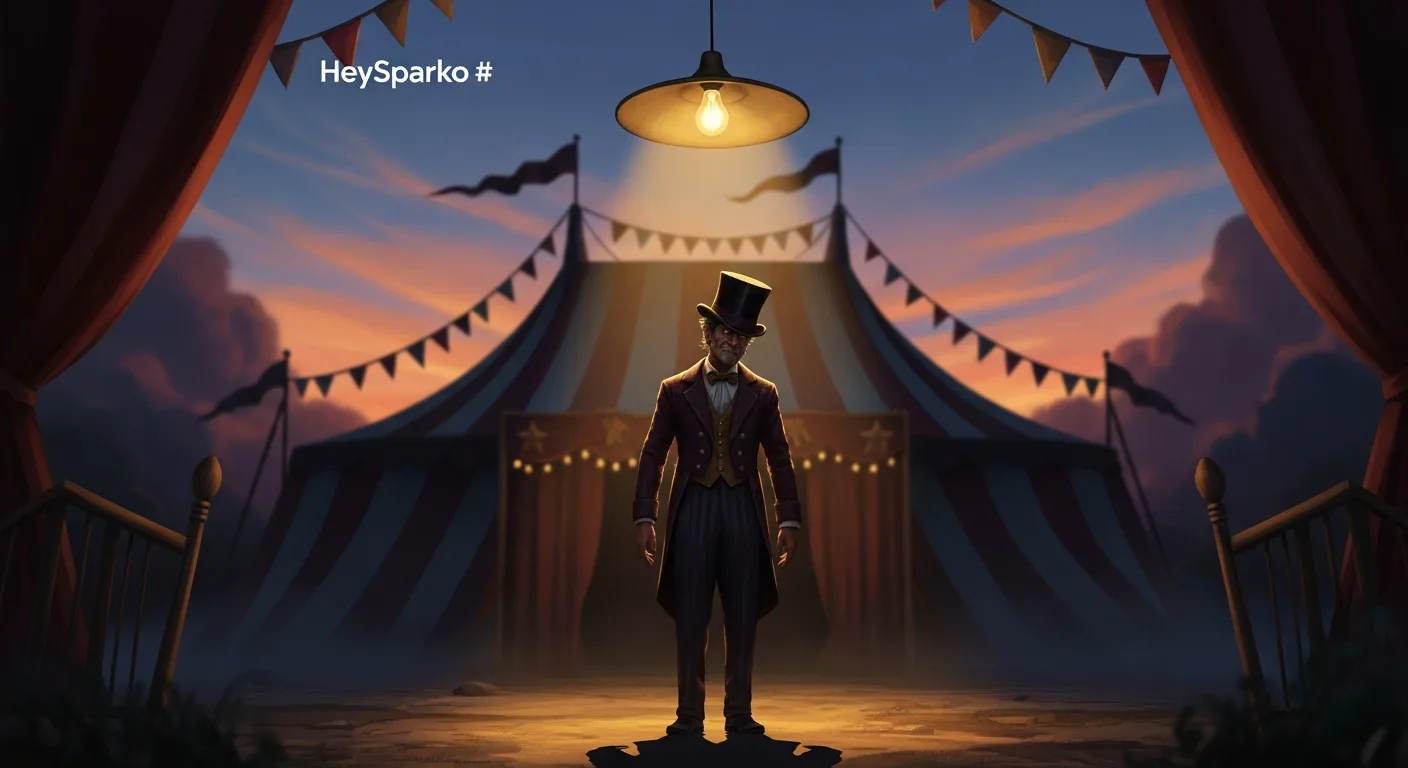
Under the Big Top is the deduction-mystery pick when you want a summery feel without leaning on patriotic imagery. The vintage circus aesthetic (a vanished performer, suspect interviews across three stages, a final reveal before showtime) lands well in hospitality, healthcare, and cross-functional teams that do not want a high-stakes thriller for their summer event. We've run it as both Big Game (75-90 min) and as a 3-day Marathon. The Marathon shape suits July 4 week because the daily-episode rhythm bridges the awkward post-holiday Monday for the half of the team that took the week off.
Wintervald Hotel Mystery reads as a December pick on the title, but the snow-and-hotel premise works year-round, and we book it heavily for enterprise legal, finance, and C-suite functions who want a sophisticated whodunit without the office-parody. For a July 4 week event at an enterprise where the holiday vibe needs to land formal (leadership offsites, board-week culture moments, partner-track team events), it is the cleanest mystery option in our catalog. The counter-seasonal choice reads as intentional rather than as a mismatch.
Pop Culture Trivia is the safe default when you do not know the room. Three rounds across music, film, TV, celebrity culture, viral moments, and the cultural fixtures of the last 50 years, hosted by a Game Host who keeps the pace tight. We recommend it for first-time-with-HeySparko clients, for quarterly all-hands closers, and for July 4 weeks at companies where the event needs to be light and the audience is cross-functional. A 60-minute Big Game format fits inside a normal lunch window without spilling into the afternoon.
Sports Trivia is the narrower pick for teams where the #sports Slack channel never sleeps. July 4 sits between the NBA Finals and NFL training camp in the US sports calendar, which makes it a moment when sports-fluent teams will engage hard on a sports-coded event. For companies in sports-adjacent industries (apparel, broadcasting, sportsbook, fitness tech) or for cross-functional teams with a strong sports rotation, this lands. For cricket-heavy or fútbol-heavy international teams it does not, and we would default back to Pop Culture Trivia or to one of the mysteries above.
Customization that earns the budget
Most July 4 office party budgets we see for distributed teams sit in mid-five-figures for a 200-person event, which gets you the base format, a Game Host, the platform, and the post-event analytics. The decision worth making early is whether you stack any of our three flat customization tiers (NPC, Logo, and Story) on top of the base game.
The three tiers — NPC, Logo, and Story — work differently at Marathon scale than they do in a 90-minute Big Game. For July 4 week, the NPC tier (where characters speak in your company's voice, reference internal language, optionally include a CEO cameo with their permission) gives the strongest return per dollar because the inside jokes land in front of a smaller, more checked-in audience than a December all-hands would have. The Logo tier (your brand in the game UI, on the leaderboard, on the completion certificate) is the easiest sell for marketing-led organizations where the event doubles as a brand moment. The Story tier (a fully rewritten narrative tied to your situation) is where the budget-defending value shows up. An Apocalypse rewrite where "the outbreak" is a poisoned API spreading through every banking system and only the engineering team can write the patch lands differently than a stock event.
Customize for your team
TYPE 1
Your team as in-game characters
Real team members, mascots, or characters from your games as NPCs.
TYPE 2
Your brand integrated natively
Logo and brand elements native to game environments — locations, items, UI.
TYPE 3
Your story woven into the game
Company milestones, products, and inside references woven into puzzles, dialogues, and tasks.
An iGaming company we worked with ran a fully customized Adventure Through the Ages with NPC, Logo, and Story stacked for their multi-year anniversary moment. 89 percent participation against a 75 percent target. 8.7 NPS on the post-event pulse. The cross-functional bonding lasted into the weeks after, with engineering team members initiating cross-org conversations they typically would not have. The lift comes from the customization landing on a team that already trusts the format, not from the format itself.
Customization lead times matter a lot for a July 4 week event. We need 10 business days for Story, NPC, or Logo. If you are reading this in late June planning a July 1 or July 2 event, that window has closed. The right move when you are inside the squeeze is to skip customization for July 4, ship the stock event, and queue a full Story rewrite for the Q4 event when the lead time is generous. Pricing for each tier sits on /en/pricing so you can model it before the briefing call.
What the research says about quarterly engagement cadence
The July 4 office party is not really about Independence Day. It is about whether the team gets one of three or four annual touch moments that build connection year over year. Atlassian's Teamwork Lab February 2024 Intentional Togetherness research is the strongest evidence we have on the cadence question. Across 1,600+ tracked gatherings and roughly 25,000 data points since August 2022, intentional team gatherings boost team-connection scores by an average of 27 percent. For new graduates specifically, the lift goes from 74 percent pre-gathering to 96 percent post (a 22-point swing). The effect decays to baseline over roughly four months, which implies about three gatherings per year is optimal.
That four-month decay window is the single most useful number for thinking about July 4 placement in the annual calendar. If your last team event was a Q1 kickoff in January, your connection scores hit baseline somewhere between mid-April and mid-May. The July 4 week event is not a nice-to-have on top of an otherwise-engaged team. It is the touchpoint that prevents the summer drop, and the data-backed argument for running it instead of waiting until a Q3 offsite in September.
Anog et al. (SSRN, 2023) ran a systematic review of 60+ studies on team-building interventions and reached the same conclusion from the academic side. Structured team-building activities increase satisfaction and reduce turnover, with effects amplified when the events are integrated into a broader development cadence rather than treated as one-off morale moments. For July 4, the implication is to plan the event as one node in a 3-events-per-year rhythm, not as a standalone summer thing that lives outside the program.
The format question gets sharper when you look at how distributed work has changed. Microsoft's 2025 Work Trend Index report on the infinite workday found that 30 percent of meetings now span multiple time zones, an 8-point absolute increase since 2021. That is the empirical version of the conversation we have with every distributed-team People Ops lead at this time of year. A live July 4 week event for that team is going to leave someone out, and the format decision has to start from that fact rather than wish it away.
Deloitte's 2024 Burnout in the Workplace report adds the retention side of the argument. 77 percent of professionals report burnout at their current job, with 31 percent naming lack of recognition as the primary driver. Workers who attend two or more company-sponsored events per quarter report 23 percent lower burnout symptoms. Pair that against SHRM's 2024 cost-per-hire calculation, which puts non-executive replacement at 15,000 to 21,000 dollars per departure (recruiting plus ramp time). A single retained mid-level employee covers a Big Game for 200 people with full customization, plus the next two quarterly events. The math is not subtle.
Our own data from Marathon events maps cleanly against the Atlassian finding. Across 500+ companies running Marathon format with us, completion rates land in the 78 to 92 percent range, and the post-event NPS pulse comes in at 8.4 average. We see the four-month half-life in our own follow-up surveys too. Companies that run a Marathon every quarter hold engagement scores 18 to 24 percent higher than companies that run a single annual event of equivalent quality.
One operational note from 1,500+ events. The July 4 cadence question is more important than the format question. Teams that pick a great format and run it once a year get one good event and four months of decay. Teams that pick a competent format and run it every quarter compound the connection lift across the calendar. For most distributed teams we work with, the July 4 office event is the simplest excuse to install a quarterly rhythm.
Frequently asked questions
When should we run the July 4 office party if July 4 falls on a Saturday in 2026?
Most US offices will observe the holiday on Friday July 3, which means your event lands somewhere Monday through Thursday that same week (June 29 to July 2). We recommend Tuesday or Wednesday between noon and 2pm Eastern for live formats. That window catches East Coast lunch, Pacific late morning, and avoids the post-weekend Tuesday-morning slump. For a Marathon, daily episode drops starting Monday June 29 give the team three full async days before the long weekend. Booking slots for the week of Apocalypse usually fill by mid-May.
What's the difference between a Big Game and a Marathon for July 4 week?
Big Game is a single live 60-90 minute event for everyone in one Zoom session, hosted by our Game Host, capped at 10,000 players. Works for teams under a 6-hour time zone spread that can hold a single live window. Marathon is 1 to 5 days async with daily episode drops, no live scheduling burden, and completion rates of 78 to 92 percent in our data. Marathon suits distributed teams and PTO-heavy weeks. Big Game wins on energy when the team can comfortably meet at noon Eastern.
How many people can join a single virtual July 4 office event?
Big Game scales from 5 to 10,000 players in one session. We've run 6,000-person events without breakout-room friction, with the help of an experienced Game Host and a tight pre-event comms plan. Marathon supports the same range plus longer durations. The honest sweet spot for energy and engagement quality is 75 to 500 players in Big Game. Below 50 the leaderboard dynamics flatten. For a 200-person team running Pop Culture Trivia, a standard 75-minute Big Game session works without modification.
How long does it take to set up a virtual July 4 office party?
For a stock Big Game or Marathon with no customization, 10 days is a workable lead time. That covers the briefing call, the calendar invite distribution, and the pre-event comms email. With customization, the lead time is 10 business days for Logo, NPC, or Story. For July 4 week 2026 events booked after mid-June, you are looking at stock formats. We try to lock the entire brief in a single 30-minute conversation rather than running a multi-call discovery loop.
What if half our team is on PTO during the week of July 4?
This is the single strongest argument for Marathon format over Big Game. Daily async episodes let people engage when they are at their desk. Early completers can finish before they leave for the long weekend, and returning team members can catch up Monday July 6. We've seen 78 to 92 percent Marathon completion even in heavy-PTO weeks, much higher than the share of the company who would attend a forced-live session. Under the Big Top Marathon suits the week because the daily rhythm bridges the PTO gap.
Do we need to download software for the July 4 office event?
No. Every HeySparko game runs in the browser. Players join via a link, no app install, no account creation, no admin approval at the IT desk. We've tested with Cisco-locked and Crowdstrike-restricted laptops, and the player works on every corporate environment we've encountered. The only external requirement is a Zoom or equivalent video call for the host's video feed and players' team chat. For Wintervald Hotel Mystery, the deduction phases use the same browser-based answer-submission system the rest of the catalog uses.