
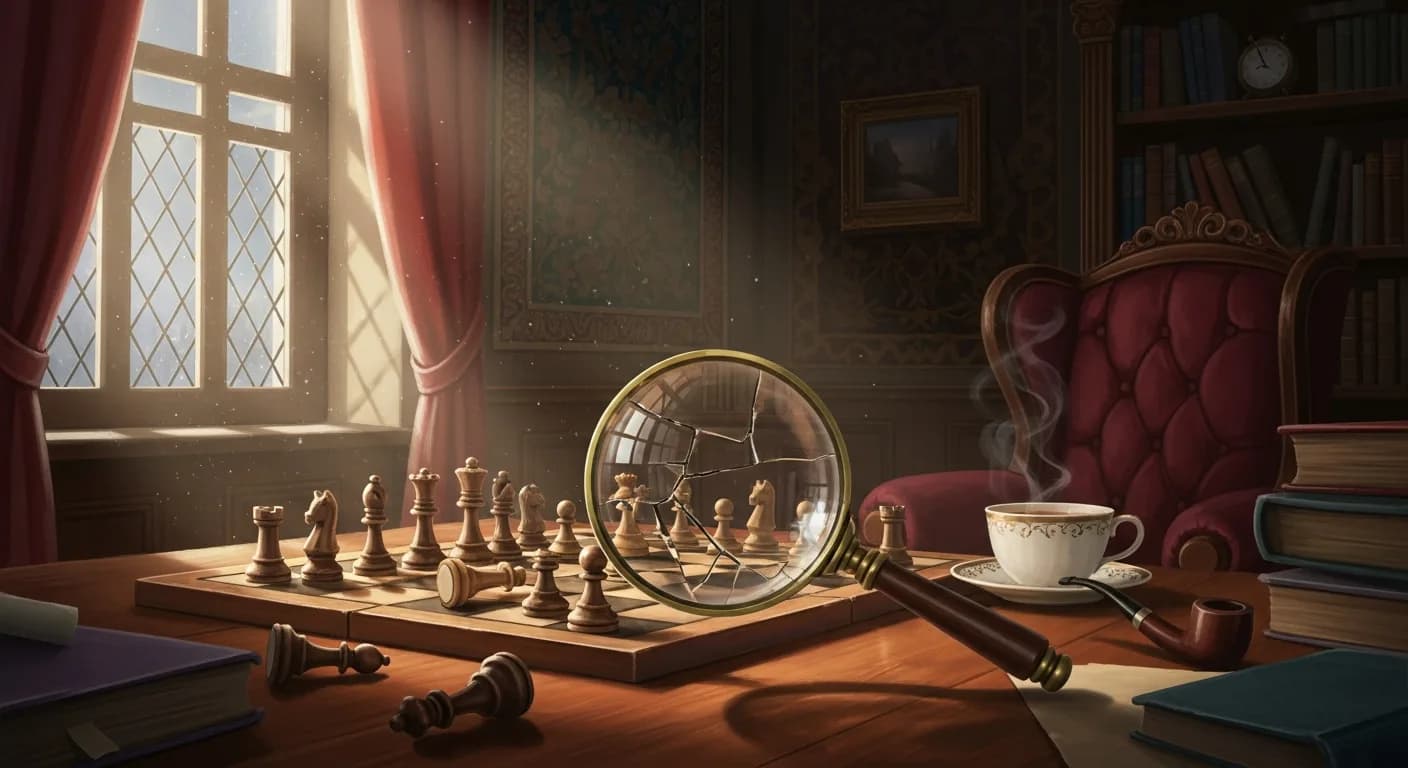

Over the past four years, murder mysteries have moved from novelty to a reliable quarterly staple in People Ops calendars, and the reason is operational, not sentimental. They're not booked because HR leaders suddenly love Agatha Christie. They're booked because the deduction mechanic does something that trivia nights, virtual happy hours, and most escape-room formats don't: it forces actual coordination between people who don't typically talk to each other. The conversation that happens when one breakout team's theory contradicts the evidence another team found in Stage 2 is a fundamentally different kind of collaboration than "which year was the Eiffel Tower built?" And that difference shows up in post-event engagement scores, in engagement survey free-response fields, and in the Slack messages still running three days after the event ended.
2,000+ virtual events later — across 700+ companies in 50+ countries since 2020 — the patterns are more consistent than most People Ops leaders expect.
How do you run an online murder mystery for work that your whole team wants to show up for?
Why murder mysteries produce real coordination, not just entertainment
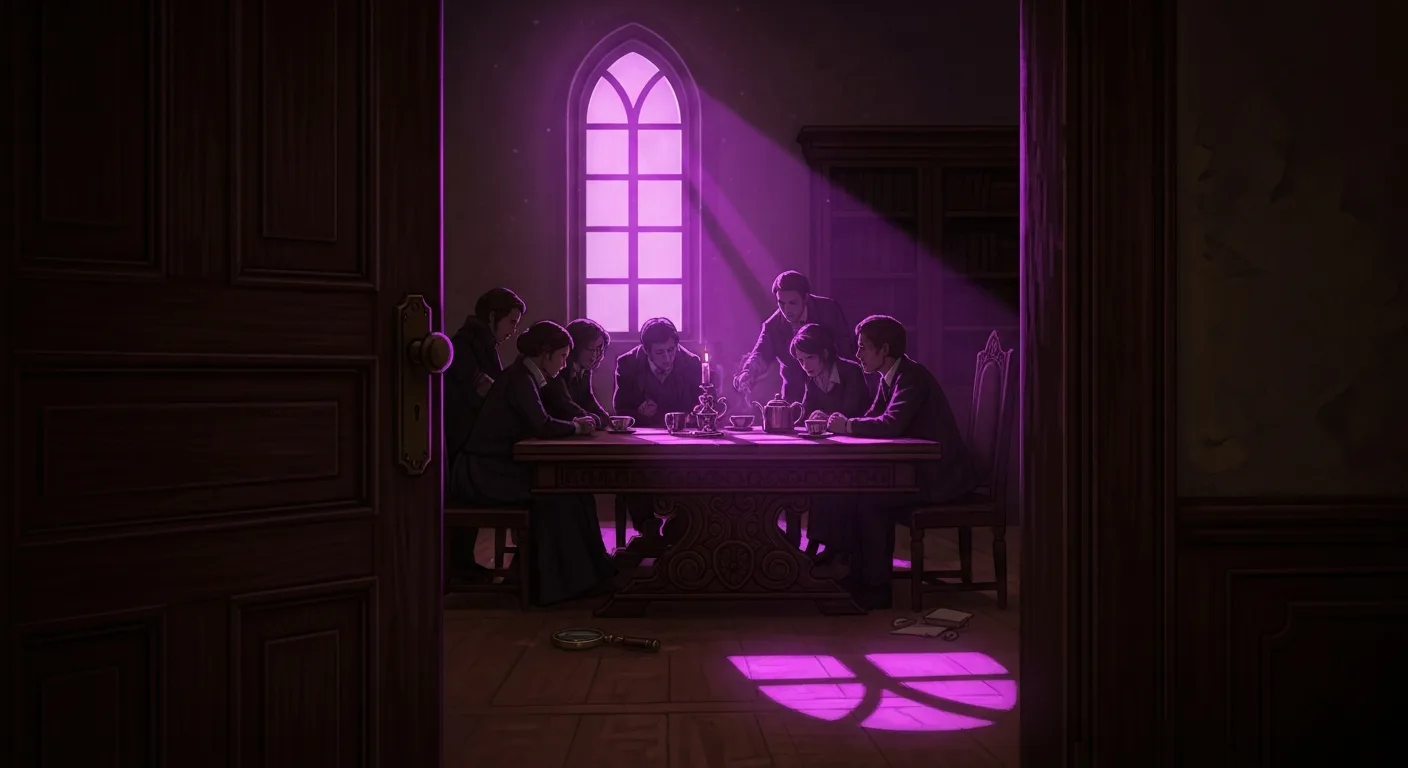
The mechanics are what separate murder mysteries from other virtual event formats, and they're worth understanding before booking. A trivia night is fundamentally competitive and individual. Someone on your team knows the answer, types it in, scores the point. The social exchange is thin. An escape room is collaborative but additive: solve puzzle A, then puzzle B, then C. Murder mysteries are structurally different: all the evidence exists from the start, and the team has to cross-reference contradictions to build a coherent theory. The ringmaster's alibi doesn't match the timeline the strongman described. The door was locked from the inside, but the key is missing from the room. This produces a different quality of conversation than almost any other virtual team format.
What we observe operationally: breakout team chat in mystery formats runs 2-3× more active than in trivia formats, and post-event debrief conversations last meaningfully longer. People argue about their deduction. They want to know if they were right. That sustained investment is the signal. It's engagement, not attendance.
There's also a role-formation dynamic that doesn't appear in most other formats. By Stage 2 of any well-structured mystery, most breakout teams have spontaneously organized: one person is tracking the suspect list, another is building the timeline, a third is finding the contradictions in the evidence set. These roles weren't assigned. They emerged from the structure of the problem. In our experience running events for hundreds of distributed teams, this mirrors how high-functioning project teams naturally organize. Noticing who took which role tends to generate its own conversation in Slack afterward.
One pattern worth knowing: employees who stay quiet in most team meetings often find a voice during the deduction phase. The evidence is in front of everyone equally. Tenure and title don't confer an advantage when you're building a timeline from clues and testimony. We see this particularly benefit distributed teams where some members are always joining from inconvenient time zones. Everyone starts the mystery on the same footing, and the person who finds the contradicting alibi in Stage 2 becomes the most important person in the breakout, regardless of their seniority.
A hospitality company we worked with (around 200 employees spread across six European cities) ran Wintervald Hotel Mystery for their year-end event. Their People Ops lead noted afterward that three team members had spoken more words in the two-hour session than in the preceding full quarter of weekly team calls. That's the pattern a well-structured mystery creates: conditions for people who normally fade into the background to show up.
Big Game or Marathon — the format decision that changes everything
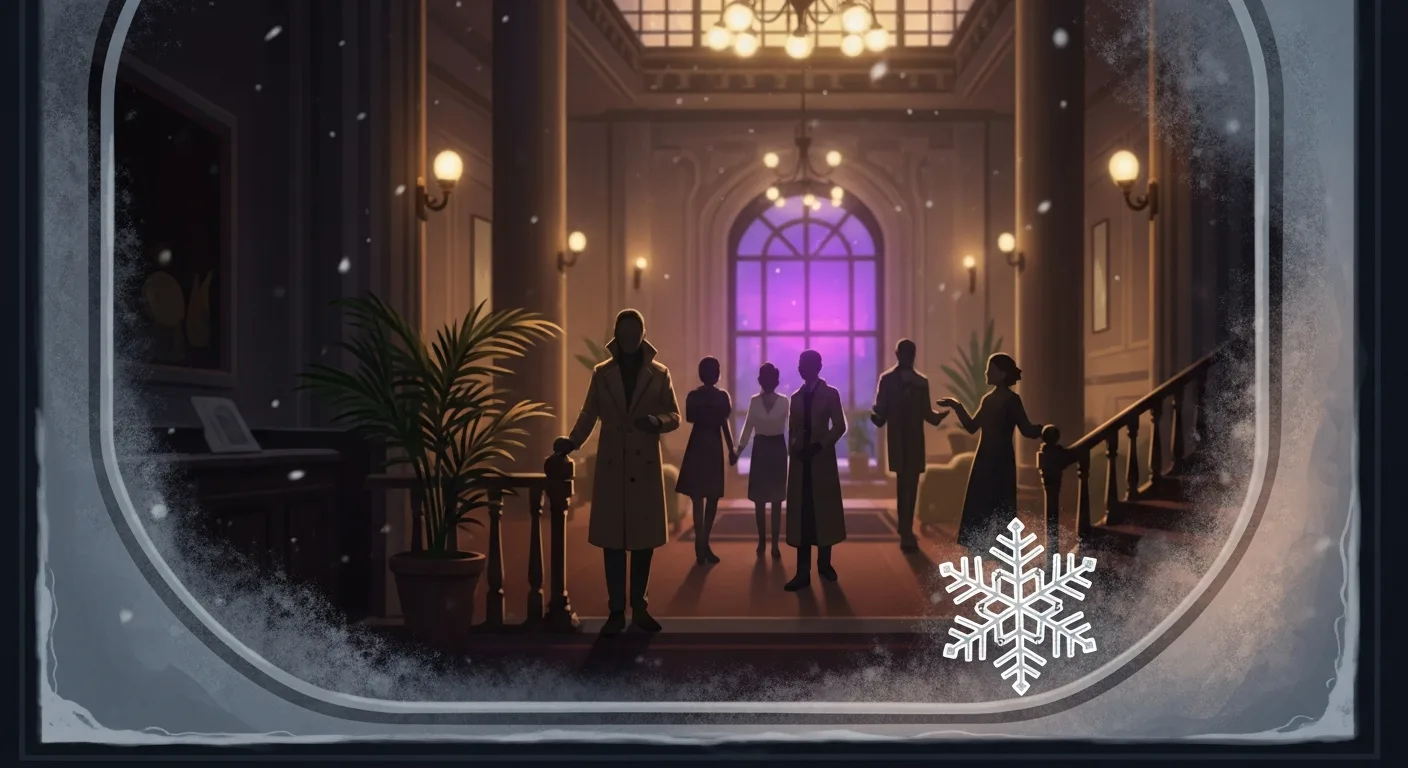
Before choosing a game, choose a format. The decision usually makes itself based on two factors: how many time zones your team spans, and whether you're running a one-time contained event or a multi-day engagement campaign.
Big Game is a single synchronous live event, 60-90 minutes, with everyone joining the same video call at the same time. A HeySparko Game Host runs the entire event. Your team shows up as players, and nobody from People Ops has to MC or troubleshoot. The leaderboard updates in real time, and the shared tension of watching another team close in on your score during Stage 3 is the kind of energy that asynchronous formats structurally can't replicate. Big Game works best for groups contained within a 6-hour time zone spread. It's the right format for holiday parties, quarterly kickoffs, team anniversaries, and any occasion where shared live energy is the explicit goal.
Marathon runs the same narrative arc over 1-5 days, with daily episode releases. Players engage on their own schedule, from any time zone. The leaderboard persists across the full event. People return on Day 2 not because they're required to, but because they want to see whether their team is still ahead. In our data, Marathon completion rates run 78-92% across 500+ companies, and roughly 35% of participants who typically skip live virtual events do participate in Marathon format. For teams spread across 8 or more time zones, Marathon isn't a compromise on Big Game. It's the correct format. Running a synchronous mystery event for a team split between Tokyo, Nairobi, and San Francisco means someone is taking a 6am call and calling it "team building." Marathon removes that penalty entirely.
The murder mystery genre adapts well to both. In Big Game, the investigation phases have live energy: breakout teams debate in real time, the host can pace the reveal based on how close the score race is, and the final accusation round has genuine shared tension. In Marathon, the daily episode structure maps cleanly onto an investigative arc: Day 1 establishes the crime and introduces suspects, Day 2 surfaces contradictions in the evidence, Day 3 is the deduction and reveal. Multi-day mystery formats often produce more carefully considered final deductions. Teams have overnight to think about whether their suspect theory holds together.
Two things we consistently see go wrong with format selection: choosing Big Game for a team with too much global distribution to have a clean time window, and treating Marathon as "Big Game but stretched across days." Marathon is a first-class async product. The daily episode structure and persistent leaderboard are features, not accommodations. Teams that communicate the format's cadence to participants before Day 1 get completion rates 15-20 points higher than teams that just drop a link with no context.
A global fintech we ran last year (around 600 people spread across 14 countries) came to us asking for a murder mystery for their annual company-wide event. Their previous vendor had attempted a live event; about half the APAC team didn't show up. We ran Last Temple Mystery as a 3-day Marathon across their full time zone spread. Completion rate across all three days: 71%.
Which online murder mystery fits your team's culture
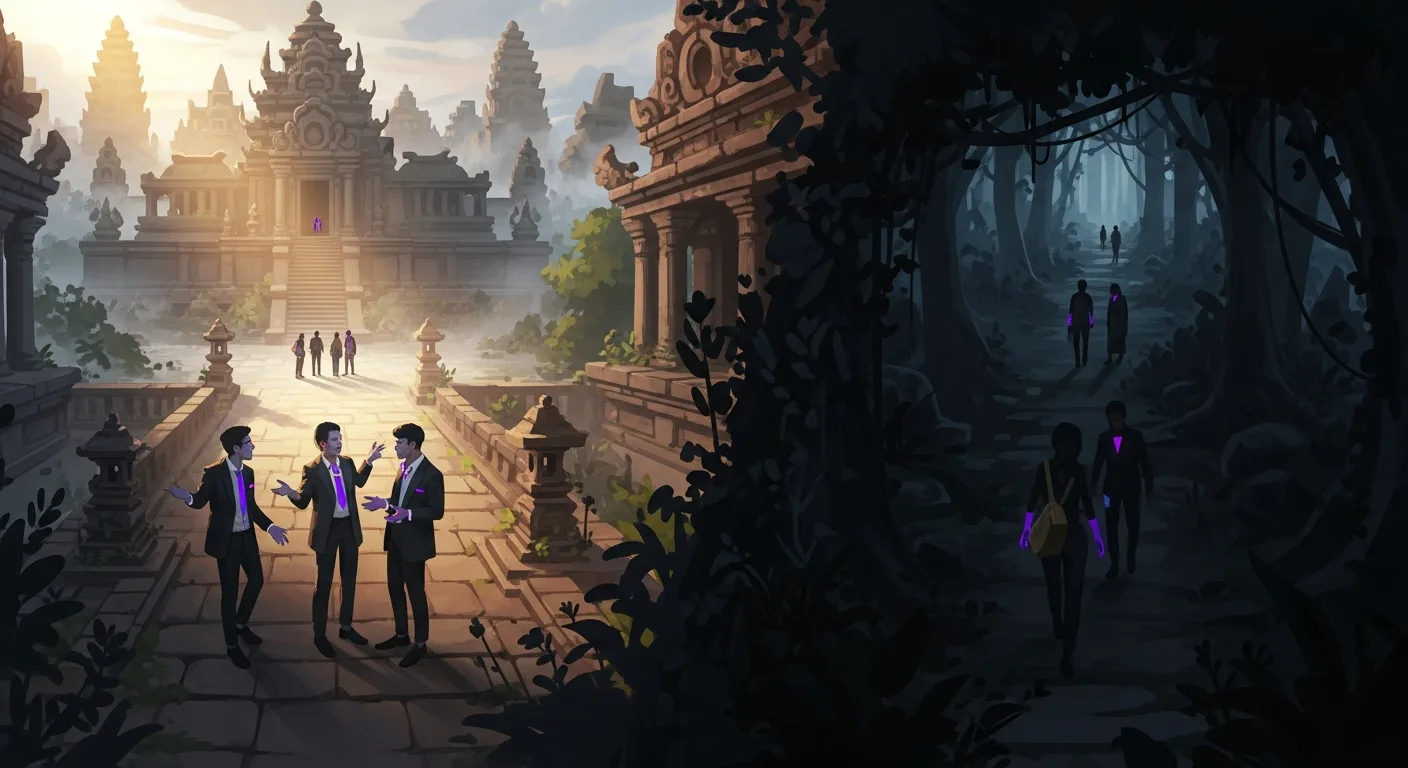
The games vary in tone, intensity, and cultural register. Choosing the wrong aesthetic for your team is the most preventable mistake in this category, and it's almost always avoidable with a single conversation.
Wintervald Hotel Mystery is the most enterprise-appropriate game in the catalog. An isolated luxury hotel in a snowstorm, a private dinner, a body before sunrise, and a team of detectives with one night to name the killer before the road clears. The aesthetic is Agatha Christie meets Knives Out: sophisticated deduction, no office-parody humor, no graphic content. We book Wintervald specifically for finance teams, legal functions, executive offsites, and any group where a whimsical or circus-themed aesthetic would feel mismatched. The murder is stylized and off-screen; the overall tone sits closer to a sophisticated dinner-theatre evening than to a team-building exercise. We've run it for enterprise legal teams of 300+ where the group's natural inclination toward evidence-based argument made Stage 2 the most competitive phase of any event we've run for them. Runs 75-90 minutes in Big Game, or 1-5 days in Marathon.
The murder mystery format is also where HeySparko's three customization tiers (NPC, Logo, and Story) work together most coherently. For the NPC tier, real team leaders (with their permission) become suspects; their actual personality traits seed the character profiles. For the Logo tier, the hotel's visual identity carries your brand colors and logo throughout the game environment. For the Story tier, the crime can tie to a specific company narrative: a product launch that not everyone wanted to succeed, an acquisition that someone internally tried to derail. When the fictional premise mirrors something your team lived through, the investigation becomes more than entertainment.
Customize for your team
TYPE 1
Your team as in-game characters
Real team members, mascots, or characters from your games as NPCs.
TYPE 2
Your brand integrated natively
Logo and brand elements native to game environments — locations, items, UI.
TYPE 3
Your story woven into the game
Company milestones, products, and inside references woven into puzzles, dialogues, and tasks.
One operational note: Story customization for mysteries requires 10 business days of lead time, not because the work is technically complex, but because aligning the crime narrative to your company situation takes a real 30-minute conversation. Plan accordingly, especially for end-of-year events where every vendor's calendar compresses in November.
Under the Big Top is the summer-energy companion to Wintervald: the same deduction mechanic, completely different aesthetic. A traveling circus, a vanished headlining act on the night of the show, and a wonderfully strange cast of suspects. The tone is warm and melancholic in a Big Fish way, not slapstick; closer to vintage-circus atmosphere than to clowns. Strong fit for creative organizations, marketing teams, and any culture that leans into storytelling over competition. The circus aesthetic is globally recognizable; we've run it successfully across 12+ countries without cultural friction.
Book of Awakened Nightmares isn't a murder mystery in the strict sense (it's a folklore-based atmospheric adventure through three worlds inside a cursed book), but the coordination mechanic overlaps heavily. A cabin weekend, a leather-bound book assembled by mistake, and three folklore worlds the team didn't ask to visit. The tone is Tim Burton rather than horror: atmospheric, slightly off-kilter, moody without being frightening. This is the right option when "murder as a premise" creates culture friction, or when you want something closer to Coraline or Pan's Labyrinth than to Clue. Runs 90 minutes in Big Game format.
Apocalypse sits at the opposite energy level from mystery formats: an overnight outbreak, a racing clock, four locations standing between your team and a vaccine. High-intensity, time-pressured, genuinely kinetic. Not a mystery (no deduction required), but the real-time coordination mechanic is the highest-pressure version in the catalog. The right call for engineering teams, sales organizations, and groups that respond well to "we have 80 minutes to prevent the worst-case scenario." The stylized 2D art reads closer to World War Z (the film) than The Last of Us; no gore, no jump-scares.
Stolen Hours is the December adventure: Santa's clock hands scattered across postapocalypse, cyberpunk, steampunk, and biopunk worlds, each requiring a different puzzle approach. Different player strengths surface across worlds, which rotates leadership naturally through the team. Best for groups that like speculative fiction and want something further removed from the standard holiday quiz night. The cyberpunk and biopunk elements are Pixar-stylized, no grimdark.
Last Temple Mystery is the flagship adventure: a Mayan temple expedition with four floors of escalating mythology, puzzle complexity, and team coordination. Not a murder mystery, but the deduction and observation mechanics are directly analogous, and the "expedition together" narrative arc works particularly well for milestone celebrations and for SaaS or tech cultures where problem-solving under pressure is the team's daily language. Scales to 10,000 players in a single Big Game session.
The fastest decision rule: does your team want sophistication or energy? Wintervald Hotel Mystery and Under the Big Top are built for the first. Apocalypse and Last Temple Mystery are built for the second. Book of Awakened Nightmares and Stolen Hours sit between, and both favor atmosphere over competition.
What the research says about team events and engagement
Murder mysteries aren't just anecdotally engaging. The evidence for why structured shared-challenge events move People Ops metrics is increasingly rigorous and practically useful.
Quantum Workplace surveyed executives at companies in its database (covering 700,000+ employees across 8,000+ U.S. organizations) for its 2024 Workplace Trends Report and found that 92% of executives say they have seen increased performance as a result of their engagement efforts. The signal in that number isn't that engagement work matters in the abstract — it's that the people closest to P&L outcomes are now reporting performance lift from the investment. What this means for People Ops is that team events should generate manager-visible moments — shared experiences that managers and executives can reference, reinforce, and build on afterward in their 1:1s. A murder mystery delivers this naturally: the deduction phase and spontaneous role-formation in Stage 2 give managers specific moments to call out in the following week ("I saw how your team handled the evidence contradiction — that's the coordination pattern I want us to develop on the next project"). A passive entertainment event doesn't produce this data point.
Research by Anog et al., published on SSRN in 2023, conducted a systematic review of 60+ studies on structured team-building interventions. The consistent finding across the research base: structured activities increase job satisfaction and reduce voluntary turnover, with the effects amplified when the activity is integrated into a broader engagement strategy rather than treated as a standalone event. This is the operational argument for pairing a murder mystery with a post-event manager debrief or a pulse survey — the event creates the shared reference point, and the follow-up is what converts a good time into a measurable retention signal.
Deloitte's 2024 Burnout in the Workplace report found that 77% of professionals reported experiencing burnout at their current job, with 31% naming lack of recognition as the primary driver — overtaking workload for the first time. The same research found that employees attending two or more company-sponsored engagement events per quarter report 23% lower burnout symptoms. That correlation isn't surprising once you understand the recognition mechanism: a well-run mystery event tells participants that the company invested real effort in creating something worth their time. People who solved the murder together feel seen in a way that a performance review cycle typically doesn't produce.
Microsoft's 2024 Work Trend Index, drawing on 31,000 workers across 31 countries, found that 57% of distributed workers prefer asynchronous engagement options over synchronous live ones. We see this play out directly in our Marathon format completion data: 78-92% completion rates across 500+ companies, with roughly 35% of participants being employees who typically don't attend live virtual events at all. For People Ops teams trying to hit engagement metrics across a globally distributed workforce, the async mystery format isn't the consolation prize — it's the version that reaches the people the live Big Game can't.
The post-event measurement picture holds up too. In our portfolio, mystery-format events consistently generate NPS scores and engagement survey mentions 3-4 months after the event, at higher rates than adventure-format events. Teams remember what they argued about more than what they passively watched.
Frequently asked questions
How long does an online murder mystery for work typically take?
In Big Game format, most HeySparko mysteries run 75-90 minutes from the first scene through to the final verdict — enough time to work through three stages of investigation without losing momentum. Marathon format distributes the same arc across 1-5 days, with each daily episode taking about 30-45 minutes of player time. Teams spanning multiple time zones often find the 3-day Marathon cadence easier to commit to than a blocked 90-minute live window. Either way, the evidence cross-reference phase needs real time. Rushing Stage 2 is where most teams lose the thread before the reveal.
What's the difference between Big Game and Marathon format for a murder mystery?
Big Game is a single synchronous live event: everyone in the same video call simultaneously, hosted by a HeySparko Game Host, with a real-time shared leaderboard. The energy is immediate and collective. Marathon runs the same investigation arc over 1-5 days with daily episode releases and async participation. For teams within 2-3 time zones, Big Game works cleanly. For teams spread across 8 or more time zones, or with employees who reliably miss live events, Marathon is the better answer. Completion rates in our Marathon data run 78-92%, which often beats Big Game attendance for global teams.
How many people can participate in an online murder mystery for work?
HeySparko mystery and adventure games run from 15 players up to 10,000 in a single session. Small groups (15-50) get a close-knit investigation where individual contributions to the deduction are visible and consequential. Mid-size groups (75-500) hit the sweet spot for leaderboard competition — enough teams to make the rivalry meaningful. For large events above 1,000, the group splits into competing squads on a shared leaderboard. We've run Wintervald Hotel Mystery for enterprise audiences above 800 without the deduction structure breaking down.
Do participants need to download or install anything to play?
No downloads, no app installs. HeySparko games run in a standard web browser — players join via a shared link, the game runs in-tab, and teams coordinate through their existing video platform (Zoom, Teams, Google Meet). This matters for corporate-IT environments where machines block software installs; we've run events on Cisco-managed and CrowdStrike-restricted laptops without issues. The browser-based setup also eliminates the 20-minute pre-event tech check that typically consumes a significant chunk of a 90-minute event window.
Can we customize the murder mystery for our company?
There are three customization tiers — NPC, Logo, and Story — available as flat-rate add-ons regardless of group size or game format. NPC customization adapts the game's characters to speak in your company's voice, including internal references and naming conventions. Logo integration places your brand through the game environment — leaderboard, intro screens, key transitions. Story customization rewrites the narrative to tie to your specific situation: a milestone, a product launch, a chapter closing. All three can be combined. Full details and pricing are at /en/pricing. Lead time: any customization needs 10 business days.
How do we measure whether the murder mystery event actually worked?
Every HeySparko event delivers an analytics report within 24 hours: participation rate, team-by-team scores, coordination activity by stage, and an NPS pulse from players. For Big Game this is a single snapshot; for Marathon it's a day-by-day breakdown showing which episodes drove the highest engagement and where teams fell off between days. For leadership readouts, the most useful comparison is participation rate against your previous event — are you reaching the same people, or the ones who skipped before? Post-event NPS and free-response comments reliably surface in the next engagement survey as cultural reference points.