
Over the past four years, remote team events have moved from "nice to schedule" to a real operational category with a budget line, a vendor pool, and a well-mapped set of ways to fail. The People Ops teams we work with are mostly no longer asking whether to run distributed events; they're asking how to run them without spending a full quarter on prep. The gap between a good remote team event and a forgettable one usually shows up in the checklist a coordinator did, or didn't, run before booking. When we compare two events at the same company that landed differently, the difference is almost always upstream of the game choice.
Since 2020, we've delivered virtual team events to 700+ companies across 50+ countries — 1,500+ events in the portfolio so far. Somewhere around event 400 the pattern locked in: distributed events don't fail on the day; they fail on the four-week runway before the day. Miss a step at week -4 and you'll feel it on day -1. So we started keeping a running checklist and handing it to every new People Ops lead we onboard, then refining it based on what broke last quarter.
What's the step-by-step checklist for running a remote team building event that distributed teams will finish? Below is the running version — the one we hand to first-time coordinators, and the one experienced coordinators use to sanity-check their own runbook.
Weeks -4 to -2: the format decision and everything upstream of it

The first choice is the one most coordinators put off until week -1: the format. Big Game or Marathon. This is not a stylistic preference. It's a scheduling reality dictated by the team's time-zone spread. The moment a coordinator locks it in wrong, the rest of the checklist inherits the mistake, and the recovery cost by week -1 is high.
Big Game is a single live 60-90 minute synchronous event, hosted end-to-end by a HeySparko Game Host. It works best when everyone can reasonably join a single window. We've seen it land cleanly for teams with up to a six-hour time-zone spread. Anything wider than that means one office takes a 6 a.m. call, which reads as forced fun and gets whispered about in DMs before the event even starts. That's the moment a distributed event stops being a culture win and starts being a resentment trigger.
Marathon is a 1-5 day async format with daily episode drops. Players engage on their own schedule; the leaderboard is the social pull. In our work with distributed teams above eight-hour spreads, Marathon reaches roughly a third more participants than any forced-synchronous alternative. The people who normally silent-decline live events actually show up when they can play at 3 p.m. local. Completion rates in Marathon land in the 78-92% range across our portfolio at 500+ companies.
Here's the week -4 checklist:
- Confirm total headcount (invited, not "expected")
- Map time-zone spread; count the widest offset in hours
- Pick format: Big Game if spread ≤ 6 hours, Marathon otherwise
- Reserve the calendar block (single window for Big Game, five days for Marathon)
- Choose a game aligned to team culture — Apocalypse for high-energy engineering teams that want a crisis narrative, Bureau of Magical Affairs for onboarding cohorts, Wintervald Hotel Mystery for buttoned-up December events
- Send a save-the-date to the full invite list (not a calendar invite yet — that comes at week -2)
The game-choice item is the one that eats the most calls when it gets rushed. A financial services team we ran with last winter almost booked Apocalypse for their December holiday event. Two weeks in, the CHRO flagged that the crisis-and-vaccine narrative was going to land wrong for their compliance culture. We swapped to Wintervald Hotel Mystery and the event ran with 84% attendance and an 8.6 post-event NPS. Choose the game to match the room, not the vendor's featured list.
Weeks -2 to 0: customization, communications, and the pre-event runway
Week -2 is where the branding decision either gets made or gets skipped. This is the second-most-common failure point we see. Coordinators book the game, then realize six days out that the event is going to feel like "a vendor did this" rather than "we ran this." That distinction matters when the People Ops lead has to defend the budget line item next quarter. It also matters to the CEO, who wants events tied to company milestones, not generic Zoom trivia.
HeySparko's customization tiers — NPC, Logo, and Story — are the levers that turn a good stock event into a branded moment. NPC customization rewrites character dialogue in your company's voice, referencing internal tools or naming conventions the team recognizes. Logo customization threads your brand colors and logo through the game UI, the leaderboard, and the take-home certificate. Story customization rewrites the entire narrative arc so the plot beats map to whatever the team is celebrating or absorbing. Each tier has a 10-business-day lead time, so week -2 is the latest a coordinator can decide without cutting into production time.
Customize for your team
TYPE 1
Your team as in-game characters
Real team members, mascots, or characters from your games as NPCs.
TYPE 2
Your brand integrated natively
Logo and brand elements native to game environments — locations, items, UI.
TYPE 3
Your story woven into the game
Company milestones, products, and inside references woven into puzzles, dialogues, and tasks.
One operational note: NPC + Logo + Story stacked without a briefing call produces a disjointed result. The three levers are designed to reinforce each other. When we ran a full-stack customization for BGaming's anniversary event, the tiers worked because the NPC voice, the visual brand, and the story arc were briefed in one 30-minute conversation, not three separate requests six days apart. The output was one coherent event, not three overlays.
The week -2 to 0 checklist:
- Lock the customization tier (or explicitly choose "stock" — that's a valid answer)
- Send the calendar invite with a clear join link (single-click, no download for the browser-based experience)
- Post a Slack teaser in the main #general or #culture channel: leaderboard preview, hint at the game premise
- Assign a company-side POC to the HeySparko Game Host (name, phone number, availability the day of)
- Test the join link on a corporate-locked laptop (we've tested with Cisco, Crowdstrike, and Zscaler configurations; issues here are rare but non-zero)
- Draft the manager Slack message that goes out one hour before Big Game start, or one hour before Marathon Day 1
The manager Slack message is a small thing that moves numbers. Our data across events in the past two years shows a 12-15 point participation lift when direct managers post a "we're doing this together" note versus when the announcement comes solely from HR. Gallup's 2025 State of the Global Workplace research puts 70% of the variance in team engagement on the direct manager, which means your event's participation rate is more likely to reflect the strength of the manager comms than the strength of the game.
Weeks 0: the event day (or Day 1, for Marathon)
Event day is the shortest section of the checklist and the one People Ops teams over-prepare for. The game runs itself with our host. Your job is to enjoy it and make three specific things happen around it.
For Big Game day-of:
- Post the join link in Slack 10 minutes before start
- Have the CEO or a senior leader drop a 60-second welcome at the top (optional but adds real weight)
- Screenshot the leaderboard mid-game and post it in the culture Slack channel
- Post a "great event, thanks everyone" note within 60 minutes of the wrap, while the energy is still live
- Save the analytics dashboard link the Game Host sends within 24 hours
For Marathon Day 1:
- Post the Day 1 access link at 9 a.m. in the largest office's time zone (the leaderboard fills in as other offices wake up)
- Post a mid-day nudge showing early team scores
- Send an end-of-day team-standing summary in each regional Slack channel
- Preview Day 2's episode with a teaser sentence in the main channel
Marathon coordinators sometimes make the mistake of treating Day 1 as launch-and-done. The engagement drops sharply between Day 1 and Day 2 without a nudge. We measure this in every Marathon: a 30-second Slack message from the People Ops lead on Day 1 evening lifts Day 2 participation by 20-25%. Small effort, outsized return.
What could go wrong (and what we've learned to catch it)
Every checklist section above has a common failure mode. In our work with distributed teams across every industry we serve, the recurring pitfalls cluster into five categories. These are the moments where a distributed event either lands or feels like a wasted budget line, and each one is preventable if you catch it before week -1.
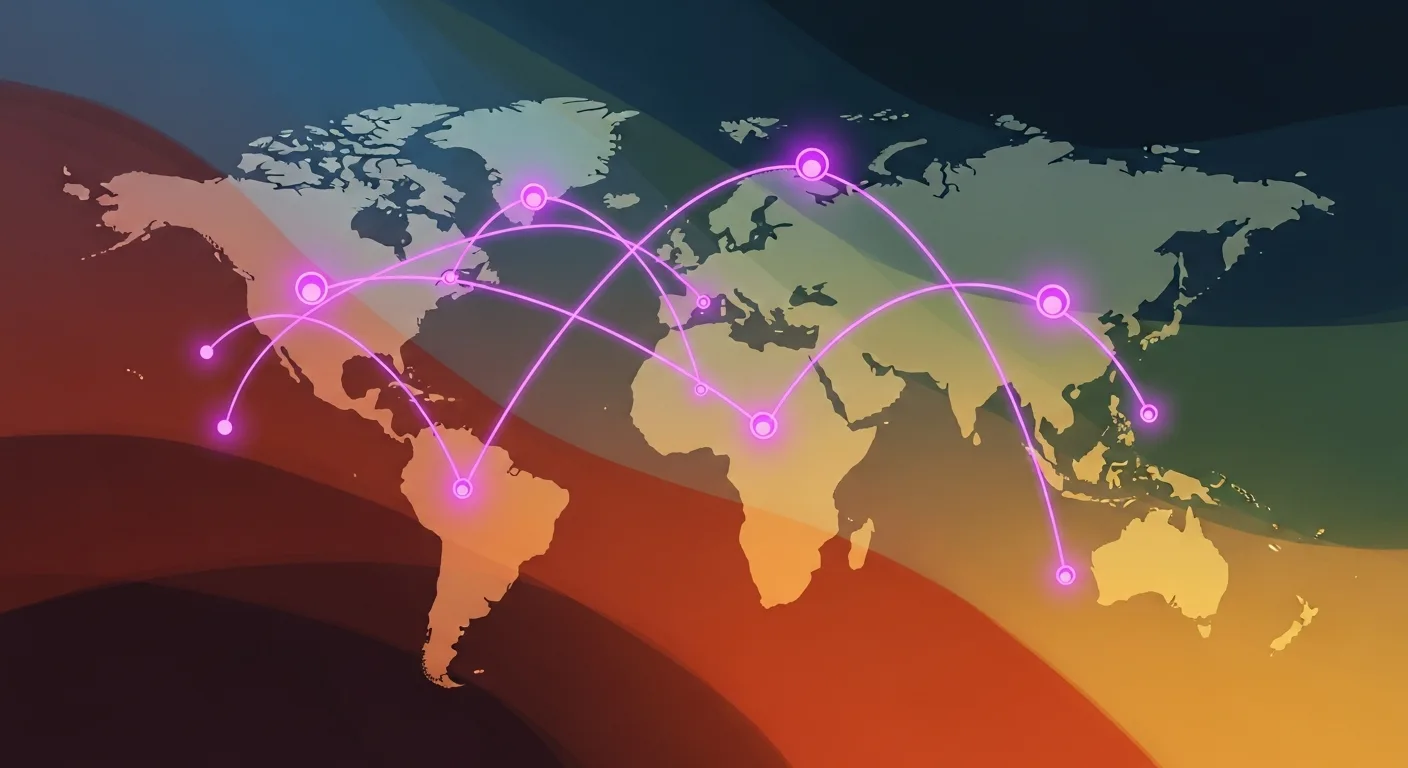
Silent-declining time zones. The 6 a.m. Zoom for the Sydney office is the classic. A team lead tells us "everyone will make it work" — they don't. Sydney silent-declines, resents the announcement, and the CFO reads the participation drop as low engagement rather than bad scheduling. Fix: use Marathon for anything wider than a six-hour zone spread. Or run three Big Game windows, which we've done for global clients with acceptable results, though the scheduling coordination triples.
The wrong game for the room. A creative agency team booking Under the Big Top because the whimsy fits, but their engineering half wanting kinetic action instead. Or an engineering team booking Mission 8-Bit, which is our strongest kickoff pick, for a hospitality client who wanted an elegant December mystery. Fix: match the game to the team's culture, not the coordinator's mood.
Post-event silence. The event ends, everyone claps in the chat, then nothing. No follow-up, no manager Slack, no analytics readout to leadership. Three weeks later the budget owner asks whether it was worth it and the coordinator can't answer. Fix: build the follow-up rhythm into the checklist. Analytics email within 48 hours, a two-paragraph leadership readout, a Slack shout-out to the winning team by Wednesday.
Customization skipped in a moment that needed it. A company hitting a 5-year anniversary running a stock Stolen Hours for December: a competent event that could have been a moment. Story-tier customization on top of the same base game would have tied the "time-restart" premise to the year they'd just closed. Fix: for milestone or narrative-heavy occasions, budget the extra week for at least Story tier.
Booking too late. We can turn a Big Game around in a week if we absolutely have to. Marathon needs at least three weeks to run cleanly. NPC and Story customization need 10 business days. Coordinators who wait until week -1 to start booking end up with fewer game options and no customization. Fix: start the checklist at week -4 minimum, ideally week -6.
What the research says about why this checklist matters
The stakes explain why the operational discipline matters. Gallup's 2025 State of the Global Workplace research found that only 21% of employees worldwide are engaged in their work, with disengagement costing the global economy $438 billion annually in lost productivity, and that 70% of the variance in team engagement is attributable to the direct manager. The engagement problem isn't a mystery; the levers are well-known. What's harder is running the operational rhythm that pulls those levers reliably, quarter after quarter.
That single Gallup number reframes the checklist. Your event's effectiveness is heavily downstream of the manager-comms line item, not just the game choice. Which means the "manager Slack message one hour before" checkbox is arguably the highest-impact item in the whole runway — a five-minute action that swings your participation rate more than any customization tier ever will.
Deloitte's 2024 Global Human Capital Trends report, surveying 14,000 business and HR leaders across 95 countries, pushes the argument further. It found that organizations embracing microcultures are 1.8× more likely to achieve positive human outcomes and 1.6× more likely to achieve desired business outcomes, and that 71% of business and HR leaders say focusing on individual teams and workgroups is the best place to cultivate culture, agility, and fluidity. Team-level events are a microculture intervention. The checklist is how a People Ops lead makes a company-wide event still land at the team-manager level.
Anog et al. (SSRN, 2023) reviewed 60+ studies of structured team-building interventions and found that these interventions increase satisfaction and reduce turnover, with the effects amplified when the interventions are integrated into a broader development strategy. Read: a one-off event moves numbers less than a recurring engagement rhythm. That's why we consistently recommend a quarterly Big Game cadence or a twice-yearly Marathon over a single annual party.
Stitching these three findings into a picture: engagement is low, managers matter, teams-not-companies is where microcultures form, and repeated interventions beat one-offs. The checklist is the mechanic that turns those research findings into a quarterly rhythm your People Ops team can defend to a CFO who wants ROI, not vibes.
The proprietary counterpoint that lives on top of the research: across our own events we see participation ranges much wider than "average engagement" would suggest. Some teams hit 89% while others in the same company hit 51%, and the delta almost always tracks to whether the manager sent the pre-event Slack message. When we run analytics on the same company across two events, the teams whose managers post pre-event are three to four times more likely to be in the top-participation tier the second time around. The variance is manager-driven, exactly as Gallup's number predicts, and the checklist item that unlocks it costs the manager five minutes.
Frequently asked questions
What's the minimum lead time to book a remote team building event?
For a stock Big Game, one week is workable — we've turned events around at that pace when a coordinator's original vendor fell through. For any customization tier (NPC, Logo, or Story), 10 business days is the floor. For Marathon, three weeks lets the pre-event communications land cleanly and the analytics team pre-configure the by-team dashboard. We recommend starting the checklist at week -4. See our pricing page for the booking calendar.
How do we know which format fits our team, Big Game or Marathon?
The single question is time-zone spread. If your team can join one window without anyone taking a 6 a.m. or 11 p.m. call, Big Game gives you the leaderboard-in-the-room energy of a live event. If the widest offset in your team is beyond six hours, Marathon runs async across 1-5 days and reaches roughly 35% more people who normally skip forced live events. We book both formats regularly; the format decision is almost always dictated by the calendar, not by preference.
Does everyone need to install anything to participate?
No. Every HeySparko game runs in the browser. The player joins by clicking a link, entering their name, and picking a team. No account creation, no downloads, no plugins, no admin approval. We've tested with corporate-locked laptops on Cisco, Crowdstrike, and Zscaler configurations. Most IT teams sign off in a five-minute security review. If your team has a stricter policy, we have a technical brief ready to share with your security reviewer within a day.
How do we measure success after the event ends?
The analytics dashboard we send within 24 hours includes participation rate, team-by-team scores, NPS pulse, and coordination heatmaps showing which teams worked together well. For Marathon, the by-day breakdown surfaces which offices sustained engagement past Day 1. Pair that with a three-question pre/post pulse on engagement, belonging, and likelihood-to-recommend, and you have a defensible readout for the leadership update. Most coordinators use those numbers to justify the next event on the calendar.
Can we customize the event with our brand and company narrative?
Yes, three tiers stack. NPC customization rewrites character dialogue in your company's voice. Logo customization threads your brand through the visuals, the leaderboard, and the take-home certificate. Story customization rewrites the plot beats to fit your milestone, launch, or year. Each tier is a flat add-on regardless of headcount, and they compound well when briefed together. The most branded events we run — like Bureau of Magical Affairs with all three tiers for an onboarding cohort — feel more like an internal production than a vendor event.
What game should we pick if we've never run a remote team event before?
For a first-time distributed event, we usually recommend one of three: Bureau of Magical Affairs for a general-purpose whimsical adventure that lands across cultures, Mission 8-Bit for engineering-heavy teams that appreciate a three-stage kickoff arc, or Wintervald Hotel Mystery for buttoned-up finance and legal teams that want a sophisticated whodunit. Each has been tested across 12+ countries. Share your team's culture on a 20-minute call and we'll narrow it further.