
Remote team building events used to be a pandemic patch. Over the past five years they've become a recurring line item on People Ops calendars, booked quarterly, budgeted annually, and defended in Q4 planning cycles alongside benefits and offsites. The shift matters because the buying question has changed. It's no longer "do we need one?" but "which format reaches a team spread across seven time zones without asking someone to take a 6am call?"
Our portfolio: 1,500+ live virtual team events, 700+ companies served, 50+ countries reached, five years of operating data since 2020. That data changed how we answer the format question. So did watching the same three failure modes play out across companies of every size.
The question we hear most from People Ops leads working this problem: how do you run a remote team building event that reaches a distributed team without breaking it into three regional shifts? The rest of this piece is our attempt to answer it, with format tradeoffs, real numbers, and the games we book for the distributed-team scenarios we see most often.
What counts as a remote team building event
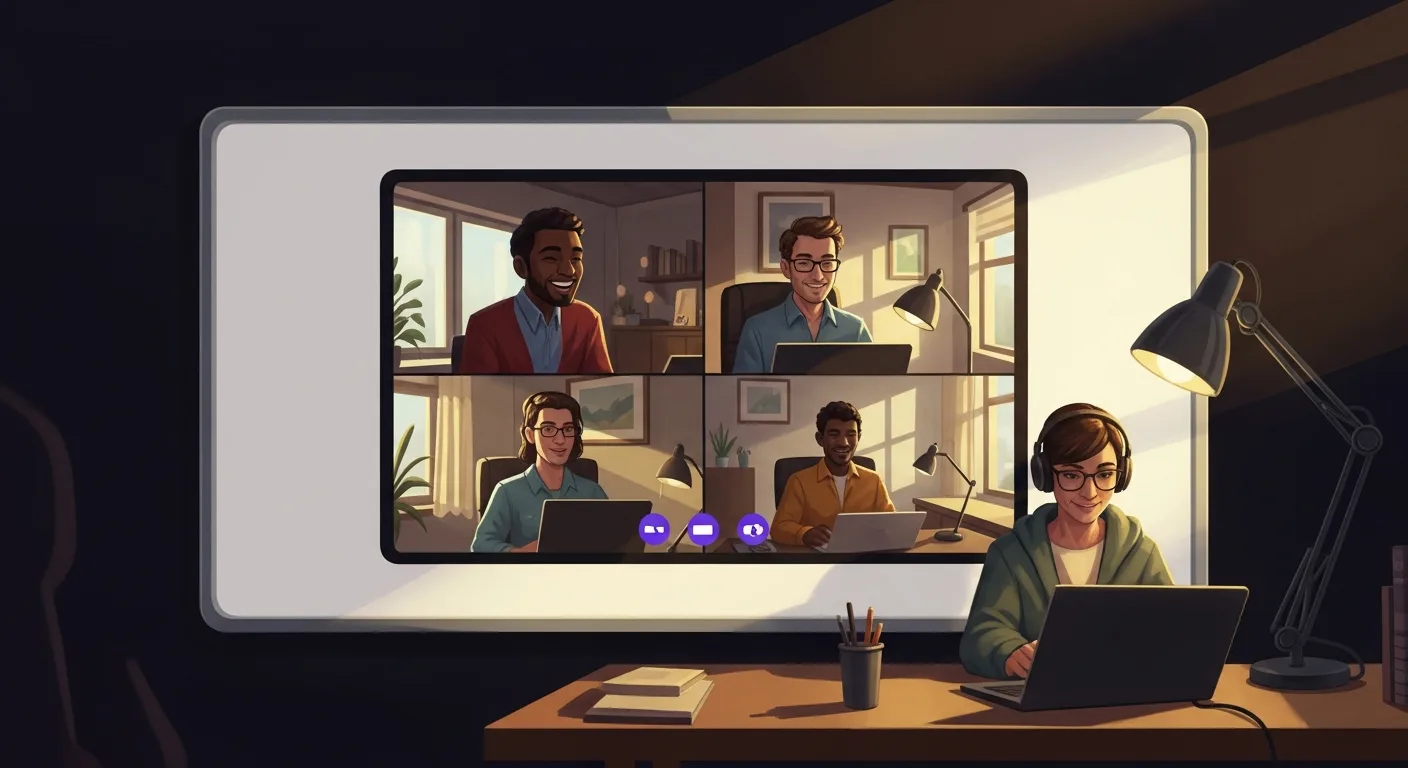
The term covers more surface area than it did a decade ago. Ten years back it meant a Zoom trivia night. Now it can mean a 90-minute live game with 400 people breaking into teams of six, a three-day asynchronous story arc with daily episodes, or a month-long recurring engagement rhythm baked into the People Ops calendar.
For the rest of this piece we're using "remote team building event" to mean a structured, hosted experience with defined start and end points that participants join from wherever they are, using only a browser. That definition rules out unstructured happy hours ("just show up on Zoom"), Slack-based icebreaker bots, and anything requiring an app install. Structured, hosted, browser-based. All three attributes matter for a distributed team, because scheduling constraints and IT-locked laptops kill any event that doesn't respect them.
Within that definition, two formats dominate our booking calendar: Big Game and Marathon. They target different audiences. Picking wrong is the single most common source of "our team-building event didn't land" post-mortems we see.
Big Game: the single live event
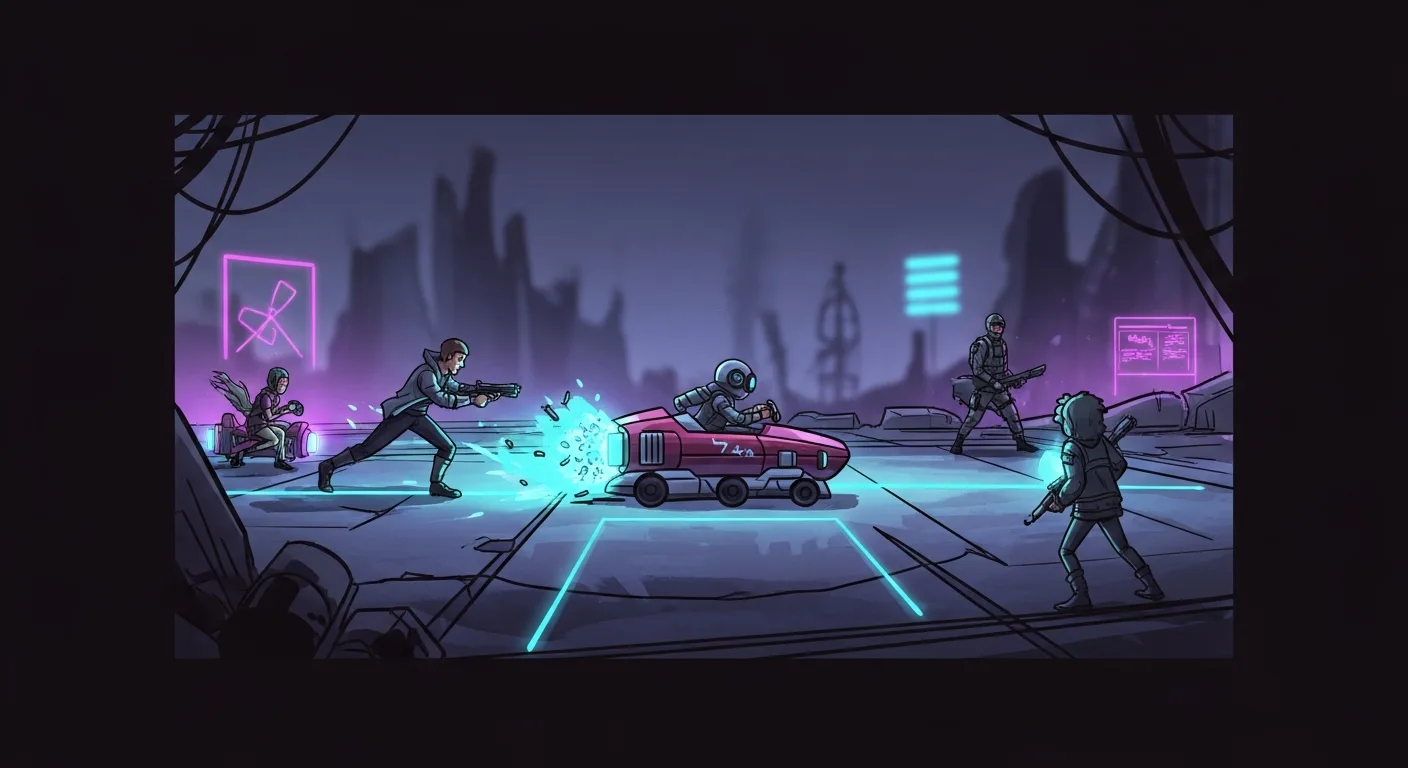
Big Game is a synchronous 60-90 minute event with breakout teams of 4-8 players, hosted end-to-end by a HeySparko Game Host. Everyone joins the same video call at the same time, watches the same narrative unfold, and races the same leaderboard. It's the format most companies picture when they think "virtual team building."
For distributed teams, Big Game works when time zone spread is contained. Roughly a six-hour window. A US-only team, a US-plus-EMEA team scheduling at 2pm Eastern (7pm CET), or a Pacific-plus-Asia team running at 4pm PT (8am next-day JST) all work fine. A team spanning San Francisco, London, Bangalore, and Sydney in one live window does not. Someone always draws the 3am shift, and forced 3am fun is anti-engagement.
The games that shine in this format for distributed audiences tend to be the high-energy ones. Apocalypse is our most-booked Big Game for engineering-heavy remote teams, an overnight-outbreak race across four stages that turns coordination pressure into shared adrenaline. Mission 8-Bit is our default kickoff pick, because its three-stage arc (setup → build → launch) maps onto a quarterly project rhythm and the 8-bit sprite sheet doubles as a post-event Slack keepsake. For a calmer audience — legal, finance, formal enterprise cultures — Wintervald Hotel Mystery is the safer call: a sophisticated whodunit in the Agatha Christie register, no adventure-genre awkwardness.
The failure modes in Big Game are boring and consistent across our bookings. We watch first-time bookers underestimate the pre-event comms. A Big Game with three days of runway hits 55-65% attendance. Same event, two weeks of runway plus a manager Slack message on the day-of, hits 85%+. Same product, wildly different room energy. In our work with People Ops leads at 200-1,000 person companies, the comms cadence is the single biggest lever they underweight.
Marathon: the async format built for time-zone spread
Marathon is the answer when a team spans more than six time zones. It runs 1-5 days. Each morning a new episode unlocks. Players complete it on their own schedule. Nobody takes a 3am call. The Tokyo team plays at 3pm local. The San Francisco team plays at 3pm local. Both climb the same leaderboard. Completion rates in our data run 78-92% at 500+ player companies, higher than the attendance rates we see for forced-live events at the same organizations.
Where does Marathon actually earn its spot? Culture weeks are one. When People Ops needs Mon-Fri programming that doesn't require booking five separate Zoom socials, a week-long Marathon quietly replaces the whole calendar. Quarterly engagement rhythms are another. Marathon becomes the reliable Q1/Q2/Q3/Q4 anchor a People Ops lead can defend upward without pitching a new format each cycle. The third pattern is holiday-season programming. A December Marathon threads through the working week without demanding meeting-block real estate, which is what usually kills a live December event before it ships.
Last Temple Mystery is the strongest Marathon opener we book. Each of its four Mayan temple floors gives a day its own chapter, and the mythology reads globally without any US-only cultural references creeping in. For December engagement pushes we lean on Stolen Hours. It's the genre-bending pick. Postapocalypse, cyberpunk, steampunk, and biopunk worlds. Santa's clock hands stolen and scattered across all four. More imaginative than a Christmas trivia night. For summer and anniversary Marathons we lean on Under the Big Top, whose vintage-circus mystery structure lands especially well as a distributed team's shared-experience story.
Marathon takes real operational load off a People Ops lead's plate, and that's the part most articles undersell. There's no live MC block to protect. There's no "what if the CEO drops off camera at minute 47" contingency to build. Content unlocks on the schedule you set. The leaderboard runs itself. The daily NPS pulse arrives without a manual survey chase. About 35% of Marathon participants across our engagements are people who never show up to live events at the same company. Async formats reach that population. Forced-synchronous formats miss it.
Customization: when the event needs to look like yours
Every Big Game and Marathon booking has three optional customization tiers stacked on top: NPC, Logo, and Story. NPC tunes the game's characters to your company's voice, internal references, jargon, and one supporting character named after a beloved exec. Logo integrates your brand colors, logo, and take-home certificate design into the game UI. Story rewrites the game's narrative arc to your business situation, a spy thriller framed as saving the Q3 launch, or an anniversary Last Temple Mystery framed as the company's own historical chapters. Pricing across the tiers is on our pricing page.
Customize for your team
TYPE 1
Your team as in-game characters
Real team members, mascots, or characters from your games as NPCs.
TYPE 2
Your brand integrated natively
Logo and brand elements native to game environments — locations, items, UI.
TYPE 3
Your story woven into the game
Company milestones, products, and inside references woven into puzzles, dialogues, and tasks.
About 15% of our events use at least one tier, and 5% use all three. Where customization earns its keep is when the event has to defend a budget line to leadership the following quarter. "We ran a fun event" is harder to defend than "we ran the customized event where the CEO showed up as a Wintervald Hotel Mystery suspect and the acquisition-close was written into the finale."
BGaming's multi-year anniversary is the case we cite most often on prospect calls: a fully customized Big Game with all three tiers, about 400 employees across 12+ countries. 89% participation rate, 8.7 NPS on the post-event pulse. The operational insight we took away: cross-functional bonding shifted noticeably in the days after, particularly between engineering and business-ops teams that typically don't cross-pollinate at all-hands. That kind of second-order effect is what customization pays for.
What the research says
Every People Ops lead we talk to has been burned at least once by an engagement stat that turned out to be from a 2015 Stanford study nobody remembers. Here's a curated set of numbers we trust, with the sources named and the load-bearing qualifiers intact.
Owl Labs' State of Hybrid Work 2025 report found that a supportive manager remains a top workplace factor, with 89% of US employees in agreement (US sample only; the UK figure is a similar 90%, but don't blend them). That number lands hardest when you sit with what it implies: engagement isn't won at the event. It's won by the manager cohort around the event. That's why the analytics we care about most from our Big Game and Marathon events are the by-team breakdowns, participation rate per manager pod, not the company average. The gap between the best manager pod and the worst at the same company routinely runs 2-3× in our data. That gap is the actionable signal on the readout.
Microsoft's 2025 Work Trend Index (based on 31,000 knowledge workers surveyed plus Microsoft 365 telemetry) adds the time-zone dimension: 30% of meetings now span multiple time zones, an 8-point absolute increase since 2021. Distributed team formats aren't a niche anymore. They're the median. And they invalidate the "everyone on the same live Zoom" assumption that most virtual team-building products still bake in. If your calendar looks like Microsoft's median, Marathon is the format built for you.
Deloitte's 2024 Human Capital Trends report surveyed 14,000 leaders across 95 countries. Their microcultures finding is worth staring at. Organizations embracing that per-team framing are 1.8× more likely to hit their people outcomes, and 71% of leaders now say the team is the right unit for culture work, not the org. Set that beside the Owl Labs manager number. What both point to is the same thing: team-level events with team-level analytics beat company-wide averages every time we compare them. Marathon happens to be built for that measurement layer. Engagement gets tracked per team across days, rather than per company at one moment.
The academic anchor is Anog et al. (SSRN, 2023), a systematic review of 60+ studies showing structured team-building activities increase satisfaction and reduce turnover, with effects amplified when integrated into a broader development strategy. That last clause matters. One-shot events without a broader rhythm underperform recurring cadences. It's the reason the Marathon-every-quarter pattern we see at our long-tenured client organizations outperforms one-and-done Big Games at teams doing them for the first time.
Our own portfolio numbers slot in where these third-party findings leave gaps. Marathon completion rates land at 78-92% at 500+ player companies, versus attendance rates that typically fall 20-30 points below equivalent live-event RSVPs. About 35% of Marathon participants across our engagements are people who don't show up to typical live-format events, the "lurkers" that async formats reach. That gap is the entire argument for having a Marathon in the format menu.
This isn't an argument that one format wins. It's an argument that format has to match team shape. Picture a tight US-Pacific team of 80. They'll get invested in an Apocalypse Big Game and drift through a five-day Marathon. Now flip the geography. A 600-person team spread across APAC, EMEA, and the Americas will thrive in Marathon and lose someone in every Big Game window we try to schedule. Format is where the real decision lives.
Frequently asked questions
How do I choose between a live event and an async format for my remote team?
The single decision that matters is time zone spread. If your team fits within a six-hour window and can share one live moment, a Big Game will land harder than a Marathon; the shared energy of the leaderboard shifting in real time is the point. If your team spans more than six zones, Marathon is the honest answer. We've run both formats hundreds of times, and the format-fit call is usually made by the geography, not the culture.
What's the smallest team size that makes a remote team building event worth running?
We start Marathon at 50 players and Big Game at 15. Below those thresholds, async loses its social-density payoff and live loses its leaderboard drama. In our experience, the sweet spot for cost-per-engaged-employee is the 75-500 player range for Big Game and the 200-2,000 range for Marathon. See our pricing page for the tier structure across group sizes and formats.
Do participants need to install anything?
No installs, no accounts. Every game runs in a browser tab. We've tested with Cisco-locked, Crowdstrike-locked, and otherwise-restricted corporate laptops without issue. That's a hard product constraint we don't budge on: the moment an event requires an IT ticket for one participant, it stops being a distributed-team format. It becomes a workshop for people whose laptops happen to be permissive. That's a different product.
How much lead time does a remote team building event need?
A Big Game with light customization needs about two weeks. A Marathon with the same needs about three. Full Story-tier customization, the tier that rewrites the narrative arc to your business situation, needs the same 10 business days, so budget three weeks total for a fully-branded Marathon. We've turned around a stock Big Game in seven days when a leadership team demanded it; the output was solid, but the pre-event comms window was tight enough that attendance took the hit.
How do we prove the event was worth the budget after it happens?
The analytics dashboard we deliver within 24 hours of every event has three cuts that defend the budget line best: participation rate by team, NPS pulse by team, and cross-team interaction heat. That last one is the number most People Ops leads underweight in the readout. It's the leading indicator of whether the event moved the "we don't know each other outside our function" needle that engagement surveys usually flag six months later.