
The request that comes in from People Ops leads has shifted noticeably over the past few years. In 2020, it was "help, my team hasn't seen each other in six weeks, we need something for Friday." Now the ask is more precise: a specific format, a specific team composition, a specific outcome to defend on the next engagement readout. What hasn't shifted is the pattern in the reply email. Most People Ops leaders want examples, not frameworks. They want to see what the events look like for teams that resemble theirs — the game, the format, the size, the reason it worked or didn't.
Since 2020, we've delivered virtual team events to 700+ companies across 50+ countries — 1,500+ events in the portfolio so far. Examples that land aren't the ones on a vendor's landing page; they're the ones a People Ops lead can point to and say "that's the shape of what we need." The examples below are grouped by the situation the team is in, not by the game catalog. Adventures for high-energy resets. Mysteries for deduction cultures. Format choices for teams that span more time zones than any single video call can hold.
What do remote team building activities look like when they actually work for a distributed team?
Adventure examples: when the team wants urgency and coordination
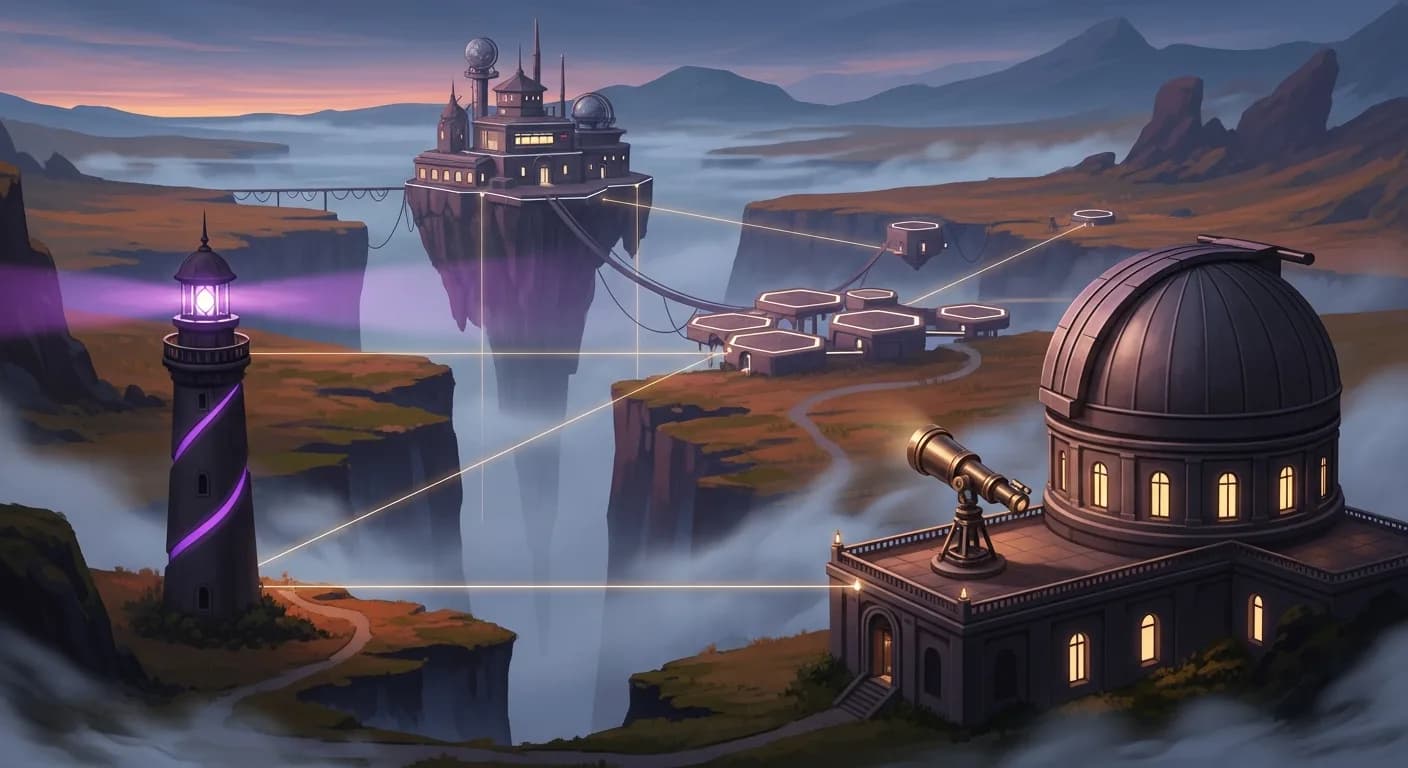
Adventures are the format that most obviously reads as "team building" to anyone who has done one. A shared narrative, a series of coordinated puzzles, a leaderboard that gives the room a spine. They tend to be the right recommendation when the team's mood needs a reset — after a difficult quarter, before a kickoff, or when the last three all-hands felt indistinguishable.
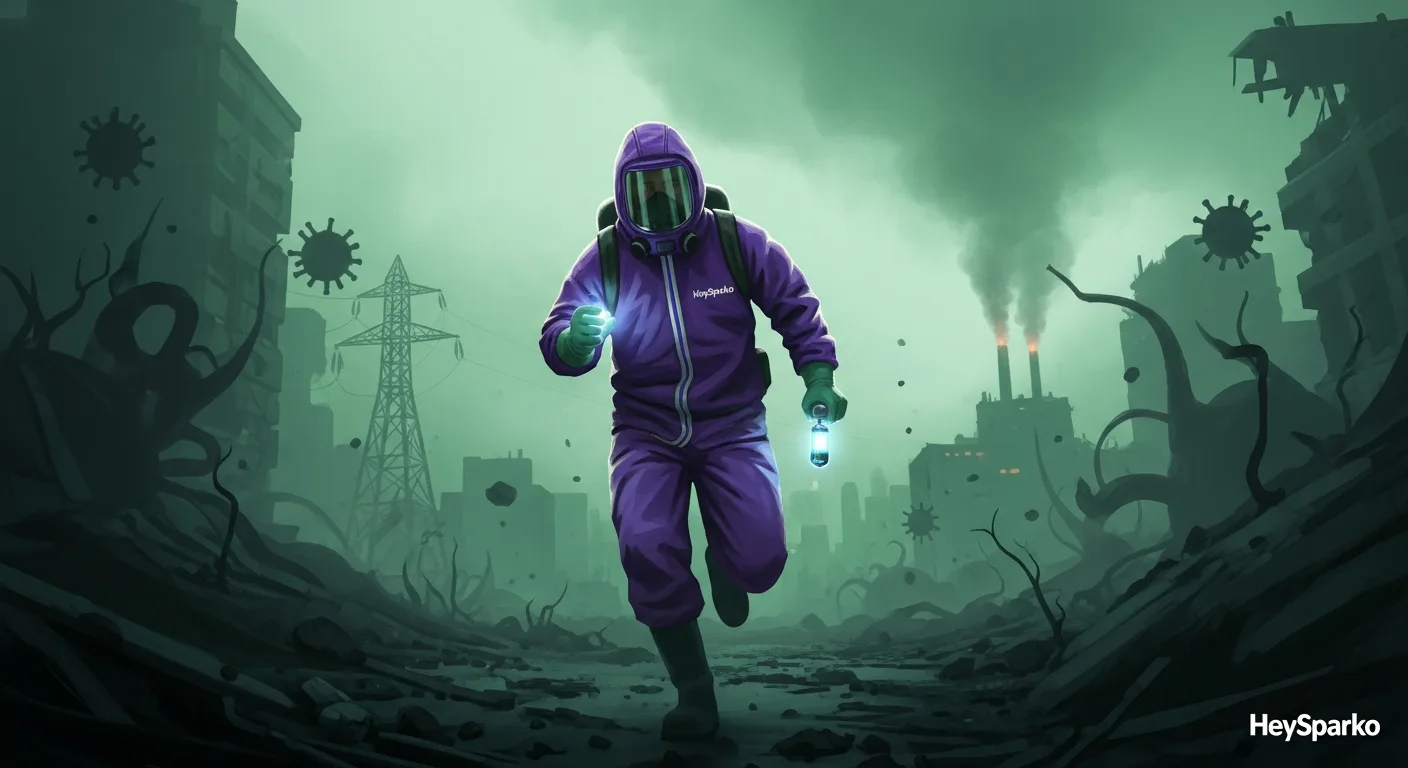
The example that comes up most in our repeat-booking conversations is Apocalypse. A software engineering team we worked with — around 90 people across five time zones, coming off a bad Q2 with two shipped launches that had both slipped — booked it as an 80-minute Big Game for their all-hands opener. The four-stage arc (Research Center, Street, Power Station, Laboratory) puts the team on a clock in a stylized outbreak scenario, racing to synthesize and distribute a vaccine. What surprised the People Ops lead wasn't the participation number, which was strong. It was the after-effect: the two engineering managers who had been reluctant to coordinate on cross-team dependencies started their Monday standup by asking each other the same question the game had made them practice — who's got what, and what handoffs are we missing? We've seen that pattern enough times that Apocalypse is the game we suggest first when the request has a "we need this team to remember they can move together under pressure" flavor.
Mission 8-Bit is the example we point to for teams whose culture leans engineering-nostalgic. A modern virus has hijacked every device; the only working machines are in a retro electronics shop; the team rebuilds a 1980s computer, enters the digital world as 8-bit avatars, and beats the arcade games guarding the source code. The three-stage arc (escape, build, ship) maps onto quarterly project rhythm so cleanly that engineering managers keep re-booking it for Q1 kickoffs. The 8-bit sprite version of each player gets sent as a sheet after the event, which then shows up in Slack avatars for months. A fintech engineering team of 220 ran it as their Q1 opener and reported the sprite sheet as the highest-mentioned artifact in their next quarterly engagement pulse.
For onboarding cohorts and Q1 kickoffs at organizations with a whimsy-friendly culture, Bureau of Magical Affairs is the pattern-match. The premise is that Professor Brum's cauldron sprung a leak and now every object in his mansion has opinions, time anomalies are stranding mages in wrong eras, and Bureau No. 7 has four cases to close in ninety minutes. The reason it works for new-hire cohorts isn't the fantasy — it's that the chaos-plus-paperwork feeling maps onto the actual first-month experience of joining a distributed company. We've had clients use Bureau of Magical Affairs for 100+ person onboarding weeks and watched cohort members reference the case files in their Slack introductions the next day.
Mystery examples: when the team wants deduction over action
Mysteries land differently. There's no clock, no urgency mechanic; the pull comes from wanting to be right about who did it. Teams that lean toward deliberation, whose culture rewards the person who spots the pattern in the meeting nobody else noticed, tend to prefer mysteries over adventures once they've tried both.
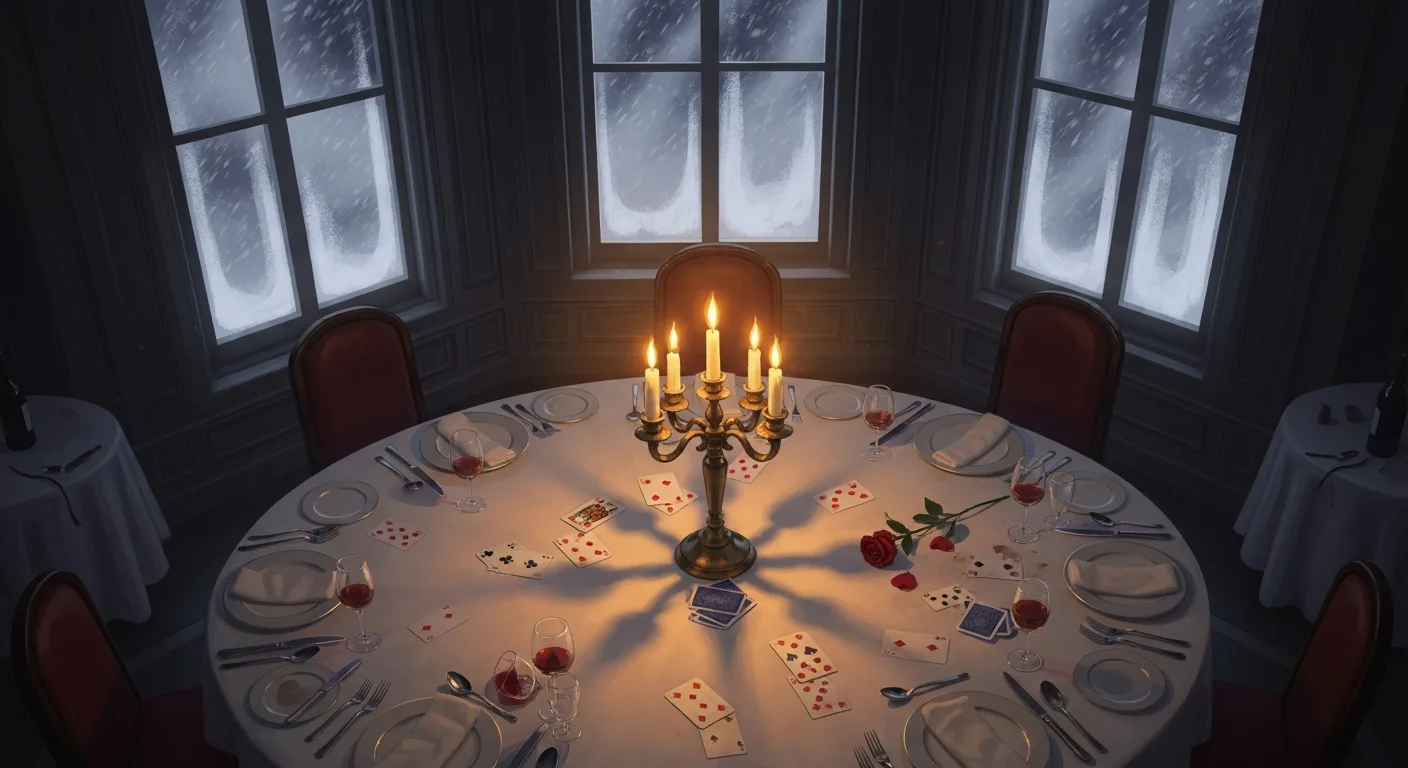
Wintervald Hotel Mystery is the example we use most for buttoned-up enterprise audiences. An isolated luxury hotel, a private dinner, a body before sunrise, a snowstorm trapping the guests for the night. The team plays detectives across three stages: gathering evidence, interviewing suspects, and reconstructing the crime scene in the dining room. The reason it works for enterprise audiences that would find office-parody games off-key is that the aesthetic is closer to a sophisticated dinner-theatre evening than to team-building-as-such. A legal team at a mid-size insurance company — 140 employees, most in one city with about 30 in a European office — ran it as a December event after two years of trivia. The senior partner told the People Ops lead it was the first company event he had voluntarily stayed to the end of. The moment that got repeated in Slack afterward was the reveal, when the leaderboard-leading team learned they had accused the wrong person because the game had planted a plausible-but-innocent suspect early on. The best mysteries need a real twist, and Wintervald Hotel Mystery delivers it reliably.
For summer events and teams with a warmer, whimsy-friendly culture, Under the Big Top is the companion piece. A traveling circus, a missing headliner, a cast of intentionally-quirky suspects — the strongman who's surprisingly gentle, the trapeze couple who haven't spoken in a year, the ringmaster who knows more than he says. Same three-stage deduction structure as Wintervald, completely different aesthetic. The tone borrows from The Greatest Showman and Tim Burton's Big Fish rather than the Agatha Christie register. We've watched creative agencies and marketing teams choose it over Wintervald for that reason — the whimsy reads as inclusive rather than sophisticated, which for that audience is the right pitch.
The pattern across both mystery examples is that they work best in the 50-300 employee range, where the deduction phase has room to breathe and teams have time to argue. Under 30 employees, the mystery structure loses some of the social-density payoff (fewer teams debating means a shorter Stage 2). Above 500, the mystery still works as a Marathon but the live-Big-Game energy gets stretched.
Format examples: matching the shape of the event to the shape of the team
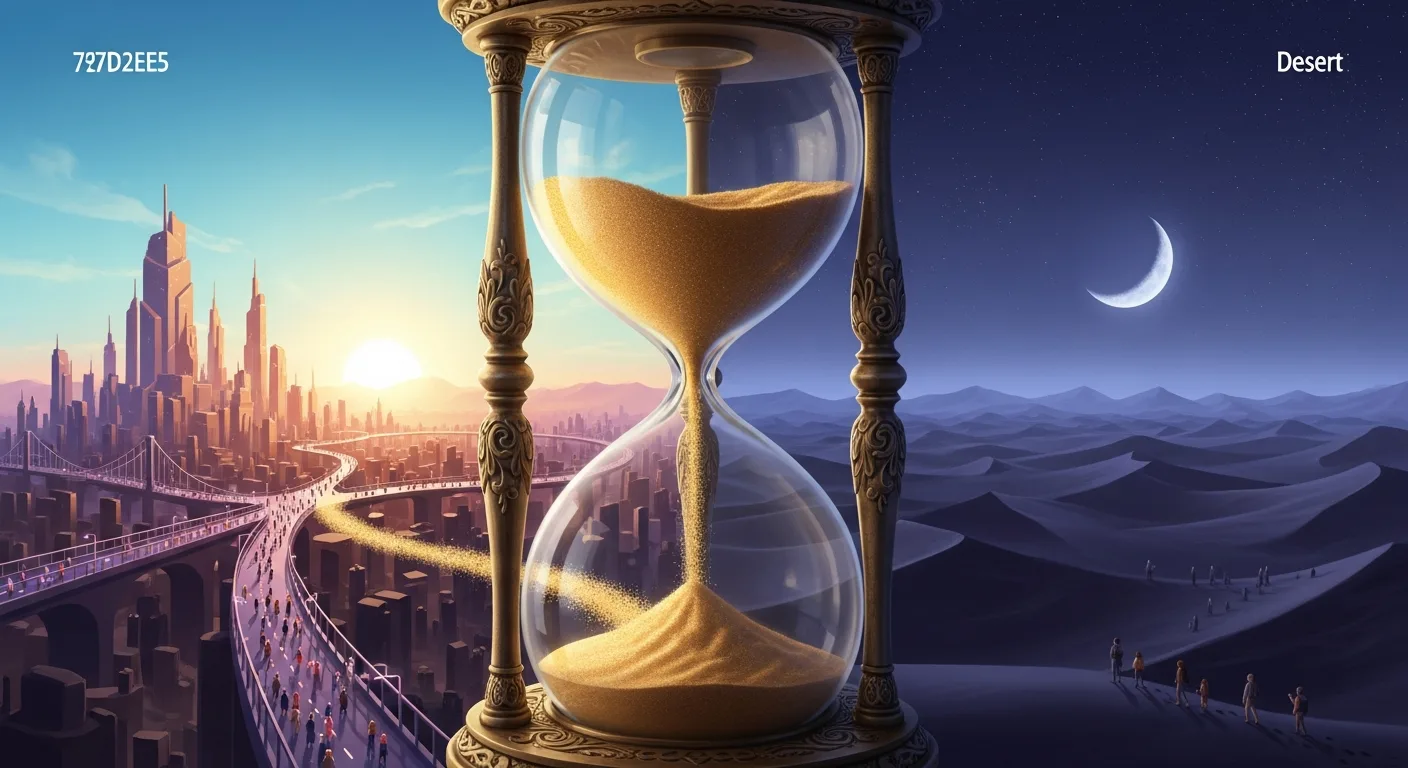
Every example above can run as a Big Game or a Marathon. Which one to pick is usually the decision the People Ops lead makes last, and it's the one that most affects whether the event lands.
The Big Game format is one live event, 60-90 minutes, everyone in the same video call at the same time, a HeySparko Game Host running the whole session while the client team participates as players. It scales from 15 to 10,000 players in a single session, with breakout groups of 4-8 doing the puzzle work and reassembling for shared narrative beats. The energy of watching a leaderboard flip with 200 people reacting simultaneously is what Big Game does that async formats can't. When the team can share a single live window without disadvantaging anyone — roughly a 6-hour time-zone spread — it's usually the right pick.
The Marathon format runs over 1-5 days as daily content drops. Players engage on their own schedule, alone or in teams, at whatever hour fits their local calendar. A shared leaderboard creates pull across days. There's no live MC requirement, no forced live window, no calendar Tetris across regions. In our data, completion rates for opt-in Marathons sit at 78-92% at companies with 500+ participants. For distributed teams that have quietly stopped attending mandatory live sessions, Marathon tends to bring back the 30-40% of the org who had opted out.
The clearest example we have of when to pick which is a hospitality operator with 220 employees, roughly 100 in Central Europe and 120 across four Asian markets. They had been running quarterly Big Games and getting 55% attendance because the window that worked for Warsaw was 10pm in Singapore. We moved them to a 3-day Marathon of Stolen Hours for their December event — a genre-bending chase across postapocalypse, cyberpunk, steampunk, and biopunk worlds, all to bring back Santa's clock hands before Christmas Eve never arrives. Completion sat at 74% in the first run. The Singapore team finished the final episode on Friday afternoon local time; the Warsaw team finished Thursday evening. Neither team took a 6am call. The People Ops lead's readout to leadership included the fact that the Q4 Marathon reached 30% more people than any prior Q4 event, which was the number that got the format re-approved.
Customization is where remote team building examples move from "we bought an event" to "we ran our own event, with help." The three tiers are NPC (character dialogue rewritten in your company's voice), Logo (brand integration through the game interface and take-home artifacts), and Story (the full narrative arc rebuilt around your company's actual situation). Each tier is flat-priced. For a distributed team, customization compounds: a Marathon with the Story tier means every daily episode surfaces the branded storyline, which multiplies brand recall across the week.
Customize for your team
TYPE 1
Your team as in-game characters
Real team members, mascots, or characters from your games as NPCs.
TYPE 2
Your brand integrated natively
Logo and brand elements native to game environments — locations, items, UI.
TYPE 3
Your story woven into the game
Company milestones, products, and inside references woven into puzzles, dialogues, and tasks.
BGaming, an international iGaming company with roughly 400 employees distributed across 12+ countries, is the case we point to when a prospect asks whether full customization is worth the add-on. They ran their multi-year anniversary as a Big Game with all three tiers stacked — NPC, Logo, and Story. Half the company sat in deep-focus product engineering (async-preferring, generally skeptical of company events); the other half in business operations (synchronous, energy-driven). Both segments needed to feel like the event was made for them, not just the other half. The Story tier's hidden fifth era, revealing BGaming's founding moment as the next chapter in the historical arc the team had just played through, is what got mentioned most in the post-event survey free-responses. Participation was 89%, well above the 75% target the People Ops lead had set. Anniversary and milestone events are the moment full customization earns its budget most reliably.
The data behind investing in these events
Gallup's 2025 State of the Global Workplace report is the piece of research every People Ops lead we speak with references at some point in the budget conversation. Its baseline finding is stark: only 21% of employees worldwide are engaged in their work, with disengagement costing the global economy $438 billion annually in lost productivity, and 70% of variance in team engagement is attributable to the direct manager. Two things follow from that framing. First, disengagement is a scale problem, not an edge-case problem — most workforces are disengaged more than they're engaged. Second, the manager is where the strongest lever sits. The best events we've seen aren't run because the events themselves are magic; they're run because the analytics they produce give managers a picture of their own team's coordination, participation, and cross-function contact that they can't get from a monthly one-on-one.
Retention and burnout math is where these events pay for themselves in a language finance teams accept. Deloitte's 2024 Burnout in the Workplace report, surveying 1,000+ US full-time workers, put the burnout rate at 77% of professionals — with 31% naming lack of recognition as the primary driver, an overtake of workload for the top spot. The same report also found that workers attending two or more company-sponsored events per quarter reported 23% lower burnout symptoms. McKinsey's 2024-2025 Future of Work research, surveying 13,000+ employees across seven countries, found that 40% of workers said they were "somewhat or very likely" to look for a new job in the next six months — with the top three quit drivers now ranking as lack of career development, disengagement from work, and poor leadership, ahead of compensation. Events that give a team a shared reference point across the year address the middle driver directly and give managers something to reinforce on the first and third drivers.
The academic anchor most People Ops leads want in the budget deck is Anog et al. (SSRN, 2023). The systematic review synthesized 60+ studies on structured team-building interventions and concluded that they measurably increase satisfaction and reduce turnover, with the effects amplified when the interventions are integrated into a broader development strategy — not treated as standalone morale events. That "integrated into a broader strategy" qualifier is the one worth sitting with. The examples we've described above land best when the People Ops lead has a plan for what happens with the analytics after the event, what the manager conversation is in the following two weeks, and how the event fits into the year's engagement rhythm rather than being a one-off.
Our own numbers behind all this: 1,500+ live virtual events since 2020, 78-92% completion rates for Marathons at 500+ companies, single Big Game sessions that scale from 15 players to 10,000 without breaking. Across 700+ companies in 50+ countries, the strongest predictor of a repeat booking isn't which game the team picked. It's whether the People Ops lead had somewhere to route the post-event analytics — a manager conversation, a survey, a leadership readout. Examples that "worked" are almost always examples where the event was one moment in a longer program, not the whole program.
Frequently asked questions
What is the best remote team building example for a globally distributed team?
Marathon is the pattern we recommend for teams spread across 8+ time zones. A 3-day async event lets the Singapore team play at 3pm local while the New York team plays at 3pm local — same engagement, different clocks. Stolen Hours is the December example we point to most; the same async format works year-round for enterprise teams that want a mystery over an adventure. Completion in this format sits at 78-92% at 500+ companies.
How many people can participate in a remote team building event?
A single Big Game session scales from 15 to 10,000 players without breaking, with breakout teams of 4-8 doing the puzzle work and reassembling for shared narrative beats. Marathon runs comfortably at the same range on the upper end and works from 50 players on the low end. The sweet spot for mystery-format events like Wintervald Hotel Mystery is 50-300 players, where the deduction phase has room to breathe.
Do participants need to install software to play?
No. Every HeySparko game runs in the browser through a link the Game Host sends at the start. It works on corporate-locked laptops, including Cisco and CrowdStrike-restricted machines we've tested on. No app store account, no admin permissions, no login flow at the start of the event. That matters more than teams expect: setup friction at minute zero routinely costs the first 10-15 minutes of a live event before anyone has played a round.
How do you measure whether a remote team building event actually worked?
Every event returns an analytics dashboard within 24 hours covering participation rate, team-by-team scores, NPS pulse, and coordination signals. For Apocalypse, that includes stage decision speed and handoff frequency — patterns HR leaders have used in subsequent manager feedback conversations. The stronger measure over time is whether the People Ops lead has a plan for what happens with the data: a manager conversation, a survey, a leadership readout tied to next quarter's cadence.
How far in advance should we book a remote team building event?
For a standard Big Game or Marathon with no customization, two weeks of lead time is workable. Logo, NPC, and Story tier customization each need ten business days; Story, a fully rewritten narrative, adds a 30-minute briefing call. For anchor moments like anniversaries and December events where you want a booked slot with your preferred Game Host, four to six weeks out is what we recommend so the calendar and the customization arrive together.