There's a budget conversation that happens inside People Ops teams at global companies roughly twelve weeks before fiscal year-close. Someone opens the engagement events line item. The question is always some version of: "what are we doing for the team this year?" Most of the time, the answer is one event, booked in November, scheduled to favor the headquarters time zone, attended by whoever can make Tuesday at 2pm GMT. The Singapore office joins at 10pm. The São Paulo team joins on a Friday afternoon. The event gets strong NPS from the people who showed up fully present. The participation report looks fine. Nobody mentions that half the Pacific-time attendees muted on arrival and checked out by slide two.
Across 50+ countries and five years of distributed-team programs, we've designed and run more than 2,000 virtual team events for 700+ companies. The conversation with People Ops at global companies has shifted noticeably in recent years. It used to be "what's the best virtual game for our team." Now it's "how do we build something that actually holds up across regions and time zones for more than one quarter at a time" — which is a harder question, and the right one to be asking.
How do global companies build a remote team-building program that works across multiple regions and time zones?
The annual event trap, and why distributed companies keep falling into it
McKinsey's 2024 workplace engagement research found that the typical engagement intervention takes 6-9 months to show measurable retention impact. One event per year doesn't fit that window cleanly. You run the event in November, measure engagement in January, and the causal chain is too loose to defend in a Finance review. Two events per year gets you closer. Four events per year — quarterly, rotating format — gives the People Ops team something credible to point at.
The compound effect of repeated engagement is real in ways a single event can't reproduce. CultureAmp's 2024-2025 State of Culture research found that companies running monthly recognition programs see 2.4× higher engagement scores compared to ad-hoc programs. Cadence creates culture. An isolated event, however well-produced, produces a strong NPS score and fades from collective memory by February. A quarterly program produces a pattern, and patterns shape how employees experience their company.
For globally distributed companies, there's a harder layer underneath this. When your team spans 14 time zones, a single annual event can't serve everyone equitably. It's designed for the time zone cluster where most employees sit. Everyone else is told the event is "optional but important" and then informed, via a 9am London invitation, that "optional but important" means 10pm Singapore.
We worked with a software company whose People Ops lead put it plainly: about 600 employees across five countries, three continents, quarterly "team events" that mostly meant one Zoom call per quarter scheduled to favor London, where about a third of the company sat. The feedback after each event ran better from European employees than from everyone else. That's not a coincidence and it's not about the game they picked.
The fix isn't a better game. It's a cadence that uses the right format per quarter, rather than the same format repeated regardless of how the team is actually distributed in that particular window.
Big Game vs. Marathon: what the decision actually turns on
Building a quarterly remote team-building program for a global company means accepting that a single format won't serve every quarter equally. Big Game and Marathon are built for fundamentally different scenarios, and understanding where each belongs in your calendar is the real design challenge.
Big Game puts everyone in the same session simultaneously: 60-90 minutes, a professional Game Host running the show from first puzzle to final leaderboard reveal. The competitive energy of a live event is the format's core feature. You can feel it through Zoom: the moment another team submits an answer you haven't cracked, the tension when Stage 3 opens and two squads are separated by four points. That shared experience doesn't translate to async. It's a different product for a different moment.
Big Game works well for global companies when the time zone spread stays within roughly six hours. London-Amsterdam-Warsaw-Nairobi at 3pm CET is workable. Add Singapore, and you're asking someone to be a good sport at 10pm. Add São Paulo, and now you have a 5am cohort. Some global companies run two parallel Big Game windows (same game, same host, two sessions) and post a combined leaderboard in Slack the following morning. That works when you have enough players per window to sustain competitive energy in each group.
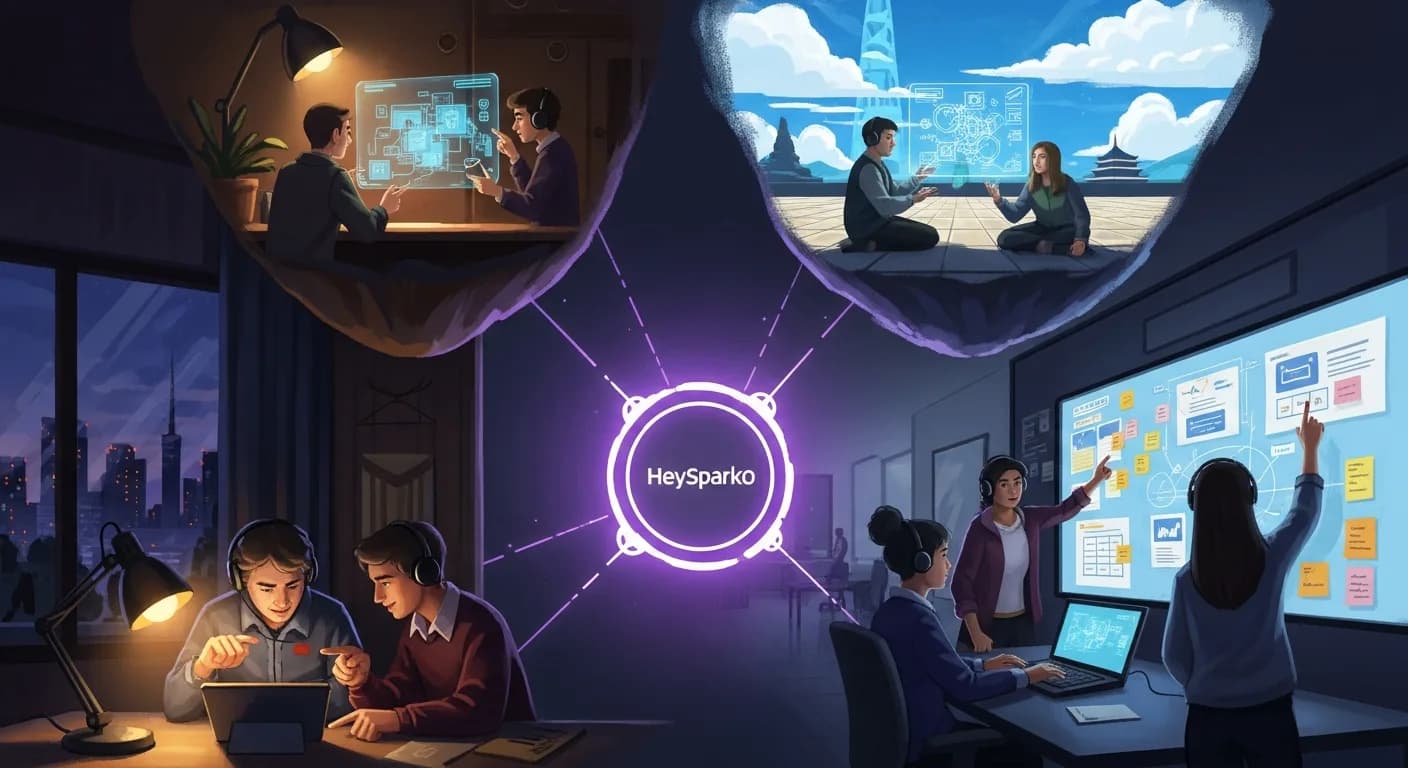
Last Temple Mystery in Marathon format illustrates how the async approach handles global distribution differently. Each temple floor releases over 24 hours. The APAC team completes Floor 1 in their afternoon. The EMEA team completes it that evening. The Americas team finishes it the following morning. All three show up on the same leaderboard. The São Paulo pod can see that the Amsterdam pod is 40 points ahead with 14 hours until Floor 2 unlocks, which means the Slack conversation about strategy is already running, and nobody drew the short straw on their local clock to make it happen.
Across 500+ companies running Marathon events, completion rates hold at 78-92% for opt-in formats. That figure consistently exceeds what forced-synchronous events produce for genuinely distributed teams, for a straightforward reason: the leaderboard creates pull that obligation doesn't. People come back to Day 2 because they want to see if their team has climbed the standings, not because the calendar says they have to.
For a quarterly global program, the structure that most companies land on after enough cycles is roughly two Marathon events and two Big Game events per year. Marathon for the quarters where distribution is widest and no window exists that doesn't disadvantage someone. Big Game for the moments when most of the company shares a geography: an annual summit, a regional kickoff, a holiday party for the offices that happen to share a continent. The format decision is a logistics question before it's a preference question. Once the logistics are answered, the format usually chooses itself.
A fintech we've worked with runs on exactly this rhythm. Eight hundred people across 19 time zones. Q1 is a Marathon during their annual culture week. Each region plays on its own clock, the leaderboard updates in a global Slack channel daily, and the People Ops lead participates as a player rather than running a live session. Q2 falls when most of their leadership is already in one city for a summit, so they run a Big Game on-site. Q3 Marathon ties to their product launch season, with the Story customization tier threading game narrative through the launch context. Q4 closes with two parallel Big Game windows, EMEA and Americas, combined leaderboard posted the next morning. Annual program NPS is 8.4. Total People Ops coordination effort is roughly four hours per event, because the facilitation runs itself.
Five games that work across cultures and time zones
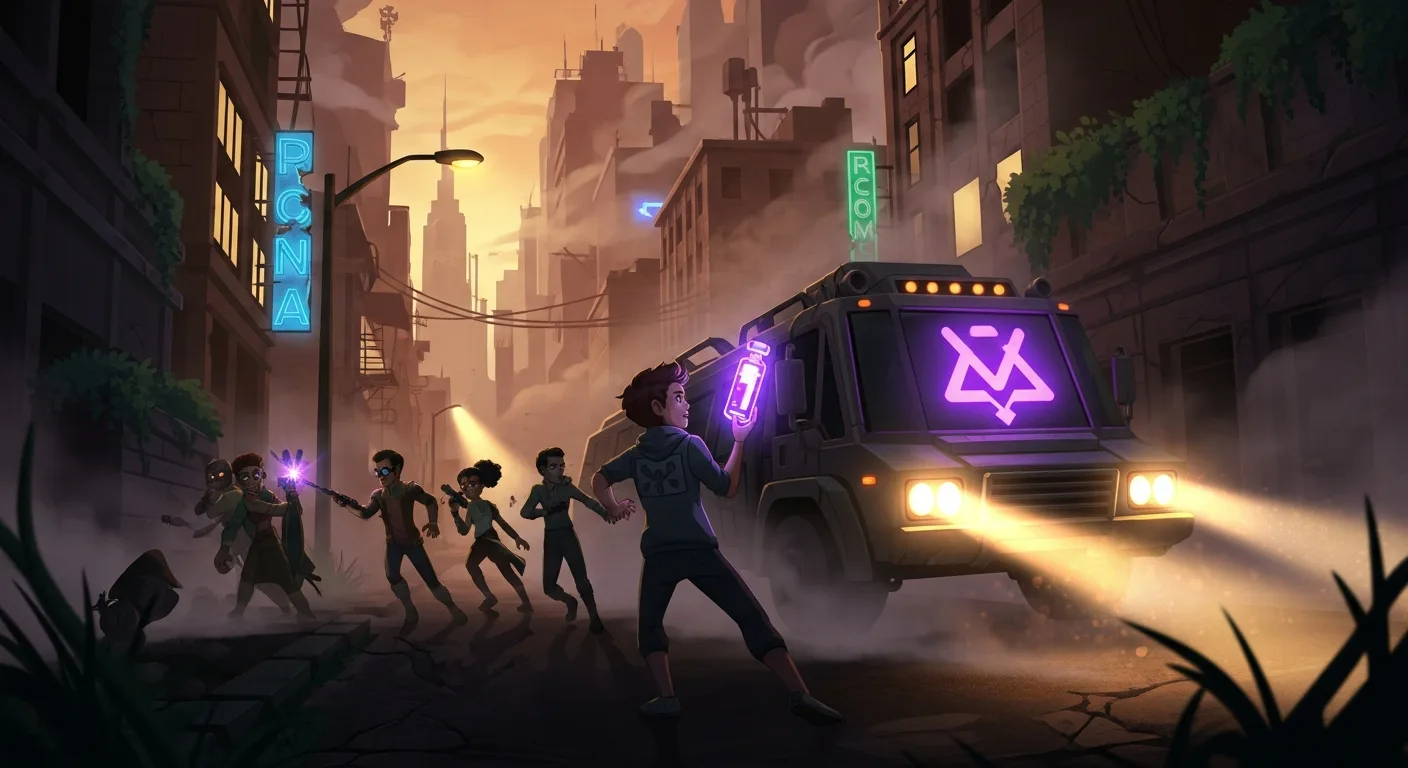
Game selection for global teams requires a filter that single-location events don't face: cultural portability. A game built around one market's pop culture creates a built-in advantage for the employees who share that reference and a friction point for everyone else. Games built on logic, deduction, and coordination travel well because those mechanics don't require a shared cultural context to engage with.
Last Temple Mystery is HeySparko's most-booked game for global audiences and the one that generates the fewest cultural-accessibility complaints. The four-stage Mayan temple expedition builds its own symbolic vocabulary from the opening scene, so nobody arrives needing background knowledge. Observation, symbol decoding, and team coordination are the mechanics. We've run it across 12+ time zones in Marathon format without player-experience degradation. When the mythology is composite and internally taught, nobody is advantaged by where they grew up.
Apocalypse is the highest-energy option in the catalog: a vaccine race across four locations under a real clock, with role-specialization dynamics that surface who takes coordination leadership under pressure. The premise travels globally: crisis response and teamwork are mechanics that need no cultural primer. One honest caveat from our experience: this game rewards teams with an existing working relationship. Groups whose members have mostly operated in parallel rather than together can find the time-pressure mechanics disorienting rather than engaging. For established global teams with six or more months of shared context, it's the most viscerally charged event we run.
Wintervald Hotel Mystery lands the best with enterprise audiences who find adventure framing off-brand for their culture: a three-stage whodunit in a snow-bound hotel, Christie in tone, built on evidence gathering and deduction rather than speed or urgency. The detective mystery genre has deep purchase in European, Asian, and North American fiction simultaneously, which is why Wintervald Hotel Mystery generates low cultural friction even across genuinely diverse international groups. Something interesting happens in the Marathon version: teams develop theory-sharing threads in Slack between episodes. A three-day Marathon for a 300-person global legal team we worked with generated more cross-geography conversation than any prior company event they could name. People who had never spoken on a call were publicly debating suspect alibis across time zones.
Under the Big Top applies the same three-stage deduction mechanic to a vintage circus setting: a missing performer, a cast of richly-drawn suspects, a backstage investigation that rewards careful reading. Circus aesthetics travel well globally; the tone is warm and melancholic rather than slapstick, which means it doesn't misfire in the way that humor-dependent games sometimes do with multilingual audiences. Teams with genuinely varied cultural sensibilities across offices tend to respond more reliably to this game than to anything that relies on a shared comedic baseline.
Stolen Hours is the year-end option: a genre-bending chase through postapocalyptic, cyberpunk, steampunk, and biopunk worlds to recover Santa's stolen clock hands. The premise draws from broad speculative fiction rather than any single holiday tradition, which makes it one of the more naturally inclusive December choices for companies whose employees span multiple religious and cultural backgrounds. The genre references aren't anchored to one market's media history; they're drawn from a visual vocabulary that's genuinely global.
All five of these games run in Marathon format for multilocale deployments, and the async versions are purpose-built multi-day events where each episode carries a narrative beat. The daily leaderboard update creates the pull that brings people back; the rotating cast of cultural and mechanical registers keeps the experience fresh across quarters.
Making a global event feel like it belongs to the whole company
The gap between "a HeySparko event our company ran" and "our event, just with outside production" is where customization lives. For global companies, this gap has real consequences: regional employees often experience company events as things designed for headquarters and distributed to everyone else. Customization changes that dynamic, though the mechanism is different from what most People Ops leaders expect.
HeySparko's three tiers (NPC, Logo, and Story) each work differently at global scale. The NPC tier adjusts in-game characters to speak in your company's voice: referencing your products, your internal language, your actual organizational context. For distributed teams, this is the primary signal that the event is genuinely company-specific rather than vendor-templated. When the game narrator names a product your engineering team shipped last quarter, employees in Bangalore and Boston have the same moment of recognition: the sense that the event was built for them rather than adapted from something generic.
The Logo tier threads your visual brand through the game environment: leaderboard, intro screens, transition moments. For global companies running events as part of an employer brand moment, consistent branding signals organizational investment in a way that a stock event doesn't.
The Story tier carries the most potential for global programs because it connects the event to a shared narrative that transcends office geography. The result we see most often when Story customization is used for milestone events: employees who joined the company most recently, often those in newer international offices, report feeling significantly more connected to the company's founding story after a Story-tier event than after any all-hands deck they've seen. A slide about the company's history is presentational. A game where you're navigating the company's history interactively is a different thing. BGaming, an international iGaming company with employees across 12+ countries, used the full NPC + Logo + Story stack for a milestone anniversary event, with 89% participation across engineering and business-ops teams that historically didn't engage identically with company events. Apocalypse with Story customization, for instance, can tie the "overnight outbreak" premise to something your own company has navigated: a platform crisis, a market the team raced to enter, a launch that required everything.
Customize for your team
TYPE 1
Your team as in-game characters
Real team members, mascots, or characters from your games as NPCs.
TYPE 2
Your brand integrated natively
Logo and brand elements native to game environments — locations, items, UI.
TYPE 3
Your story woven into the game
Company milestones, products, and inside references woven into puzzles, dialogues, and tasks.
One practical note: Story customization requires 10 business days of lead time and a 30-minute narrative brief. For global events spanning genuinely diverse cultural contexts, the briefing surfaces sensitivities worth knowing before production begins. The resulting event is considerably better for it.
What the data says about distributed team engagement programs
Buffer's 2023 State of Remote Work report surfaced a finding that maps directly to global program design. Among remote workers who feel connected, 46% attribute that connection to having met in person; among those who do not feel connected, 56% cite no opportunity to connect socially. For globally distributed organizations, that second sub-sample is the structural problem: most employees will rarely share a room with their colleagues, and the "no opportunity to connect socially" signal is something a People Ops calendar can move. The case for connection events — in-person off-sites where they're feasible, and structured virtual social events for everyone else — sits inside that data point. Events that create real interaction across geographies, even async ones where teammates engage on their own schedule, work directly against the deficit that 56% are naming.
Microsoft's 2024 Work Trend Index, surveying 31,000+ workers across 31 countries, found 57% of distributed workers prefer asynchronous engagement options over live ones. That preference exists independently of time zone logistics — it reflects how distributed workers want to engage, not just what their calendar will tolerate. The empirical case for Marathon format isn't just operational convenience; it's what the majority of your distributed workforce is asking for.
Deloitte's 2023 Human Capital Trends research found 46% of employees felt less connected to their colleagues than before the pandemic. For global teams where "colleagues" already meant people in different countries before remote work became the default, that deficit is compounded by the structural absence of informal, corridor-conversation bonding. Structured events with a shared competitive element that extends over days — a Marathon where the leaderboard conversation runs across Slack channels for a full week — create sustained cross-geography interaction that's genuinely hard to manufacture any other way.
The academic literature supports the program-over-one-off design. Anog et al.'s 2023 systematic review of 60+ team-building intervention studies (SSRN, 2023) found that structured activities consistently increase satisfaction and reduce turnover, with effects significantly amplified when the activities are integrated into an ongoing program rather than run as isolated events. A single well-run event produces strong NPS. A quarterly program produces retention trends — and retention trends are what Finance will listen to.
In our portfolio, the compound effect is visible: Marathon completion rates of 78-92% across 500+ companies, with the higher end tied to companies running quarterly or semi-annual events rather than annual ones. The fatigue effect we anticipated — completion rates declining as the novelty wears off — doesn't appear when game selection rotates. What does hold: Deloitte's 2024 burnout research found workers attending two or more company-sponsored events per quarter report 23% lower burnout symptoms. SHRM's 2024 cost-per-hire calculation puts non-executive departure in the five-figure range per person. For an HR leader building the internal business case, the math between "quarterly program budget for 500 people" and "avoided replacement cost for a handful of people" resolves quickly.
Frequently asked questions
How do global companies build a remote team-building program across multiple regions?
The approach that works most often is treating format selection as a per-quarter logistics question rather than a standing preference. When time zone distribution makes a shared window unfair, Marathon handles it natively: daily content releases, local schedule participation, unified leaderboard. When a moment arises where most of the company shares a geography (an annual summit, a regional kickoff), Big Game captures the live energy that async doesn't replicate. Running both across a year, alternating based on the actual distribution of each quarter, is what turns a single event into a program with compound engagement impact.
What's the difference between Big Game and Marathon for globally distributed teams?
Big Game is synchronous: a professional Game Host runs a 60-90 minute live event, everyone in the same session, real-time leaderboard. It works well when the team is within roughly six hours of each other. Marathon is asynchronous: daily content releases over 1-5 days, players engaging on their own schedule while competing on a shared leaderboard that updates in real time. For teams spanning 8+ time zones, Marathon removes the question of who gets the inconvenient slot while preserving the shared competitive experience. In our data, Marathon completion rates of 78-92% consistently exceed what forced-synchronous events produce for truly distributed teams.
How many employees can participate in a global virtual team event?
Both Big Game and Marathon scale to 10,000 players in a single event. For large global companies (1,000+ employees), we typically structure events as competing squads by region or business unit, all on one unified leaderboard. That keeps the local team dynamic intact while creating cross-geography rivalry that generates genuine engagement: the Warsaw squad versus the Singapore squad on a shared leaderboard creates conversation that a same-office event doesn't. The inter-region debate tends to outlast the event itself in Slack.
Do participants need to install software or create accounts for international team events?
No downloads, no installations, no account creation. HeySparko's player interface is fully browser-based and has been tested across corporate-managed devices in 50+ countries. Players join via a shared link. For Marathon events, daily episode links can arrive by email or calendar invite, with no app required and no push notifications to authorize. The one practical consideration for global teams is internet reliability varying by region, so puzzle mechanics are designed to tolerate brief connection drops without resetting a team's submitted progress.
How much does a global remote team-building program cost annually?
Pricing is tiered by player count and format; full configuration detail is at /en/pricing. At scale (500+ players per event), per-player cost drops materially, and a quarterly program of four events typically runs less per employee per year than a single vendor-managed offsite per department. Customization tiers (NPC, Logo, Story) are flat-fee add-ons per tier regardless of player count, so branding and cultural personalization don't scale with headcount. The Booking Calculator gives an exact price for any configuration before any sales conversation.
How do we measure the success of a global team-building program over time?
HeySparko delivers per-event analytics within 24 hours of completion: participation rate by region, team-by-team coordination scores, day-by-day completion rates for Marathon events, and post-event NPS pulse. For tracking program impact across quarters, the practice we recommend is pairing each event with a simple 3-question pre/post pulse on connection, energy, and alignment. Run the same three questions every quarter, and the trend line across four events becomes the business case for the next annual cycle. Event data tells you who showed up; the pulse tells you whether something shifted.