
Remote team building has moved past the pandemic-necessity phase. People Ops teams we talk to now have budgets, calendars, and specific outcomes they're defending to Finance — not a vague "we should do something." The question isn't whether to run remote events; it's which ones are worth the spend and the calendar block. We've run 2,000+ virtual team events for 700+ companies across 50+ countries since 2020, and we've seen which formats hold up under scrutiny and which ones produce post-event silence in the Slack thread.
In our work with distributed teams, the single most common mistake is picking an activity before deciding on a format. The activity is secondary. The format (who plays when, whether it's live or async, how the leaderboard works) is what determines whether 60% of your team shows up or 20% does.
What remote team building ideas work for distributed teams in 2026, and how do you pick the right format for your group size and time zone spread?
The format decision you have to make first
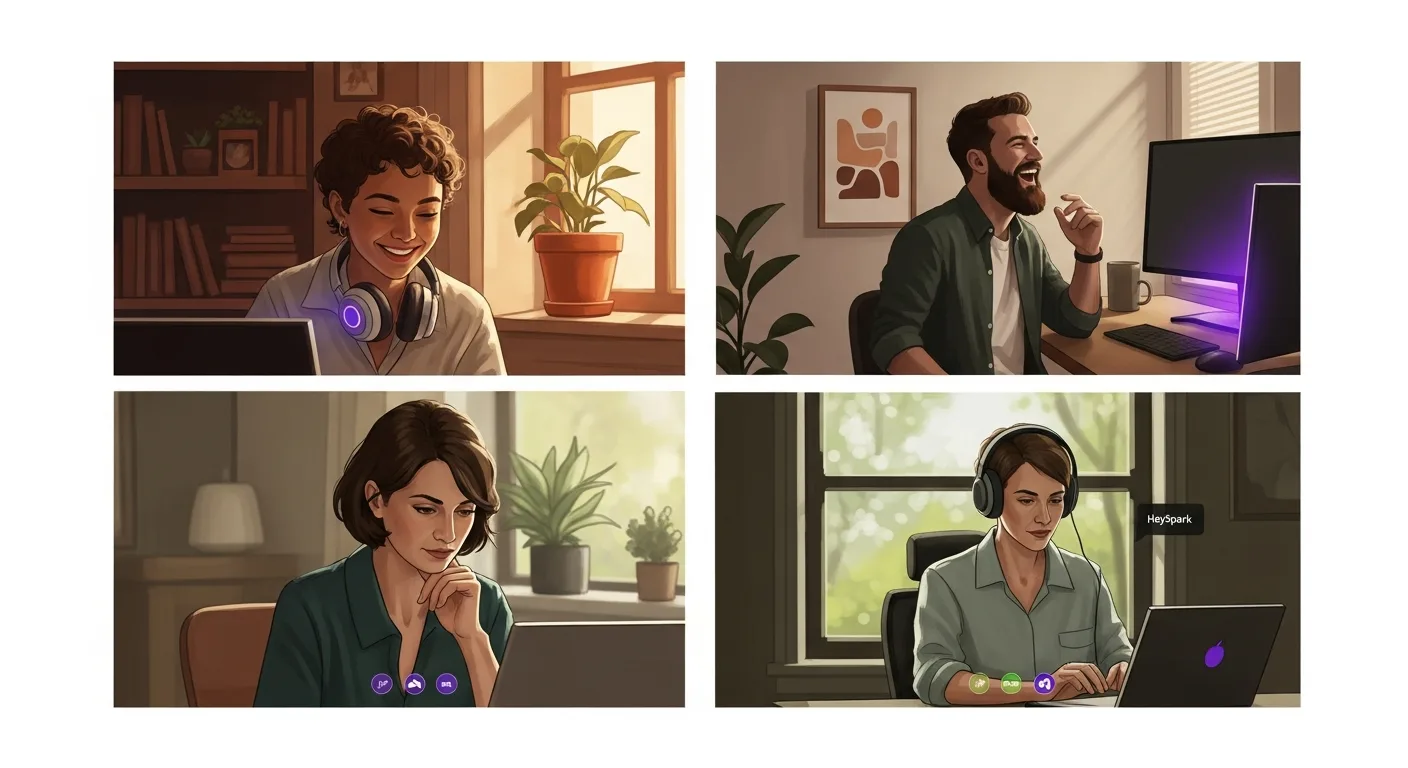
Before you pick an activity, you need to resolve one question: can your whole team share a live window? That answer usually makes the format decision itself.
Big Game is a single synchronous event: 60-90 minutes, everyone on the same video call at the same time, a HeySparko Game Host running the whole thing. The energy of shared presence is real: watching the leaderboard shift as your pod submits a puzzle answer two seconds ahead of a competing team isn't replicable asynchronously. Big Game works cleanly when participants fit within a six-hour time zone spread. US East Coast + US West Coast? Easy. US East Coast + UK? Workable with an afternoon start. US West Coast + Singapore? You're asking someone to take a 6am call, and the social fallout from that often undoes whatever team cohesion the event was supposed to build.
Marathon was built for exactly the scenario Big Game can't serve. It's a 1-5 day async event: daily game episodes release on a schedule, and players engage whenever their workday allows. Tokyo plays at 3pm local; San Francisco plays at 3pm local; both contribute to the same live leaderboard, neither taking an inconvenient call to make it work. In our Marathon events at 500+ companies, completion rates run 78-92% for opt-in events. About 35% of those completers are people who routinely miss live events. They're not disengaged; they're in a time zone that synchronous scheduling systematically excludes.
Owl Labs' 2024 State of Hybrid Work report found that 44% of distributed workers are already collaborating across three or more time zones with their direct team. For those groups, Marathon isn't a compromise format — it's the design that respects how people actually work.
The practical rule: if your team spans more than six hours of time zones, start with Marathon. Reserve Big Game for moments when the synchronous shared experience is specifically the point: a product launch, an all-hands kickoff, a milestone event where the whole company watching the leaderboard in real time matters in itself.
One more thing before the list: customization is available for every format and every game. The three tiers (NPC for characters speaking in your company's voice, Logo for your brand woven into the player experience, and Story for the entire narrative rewritten around a real company moment) are flat add-ons each. They're what separate a vendor event from an event that feels genuinely yours. For a detailed look at pricing across tiers, the HeySparko pricing page has the full breakdown.
Adventures and mysteries: the narrative-arc games
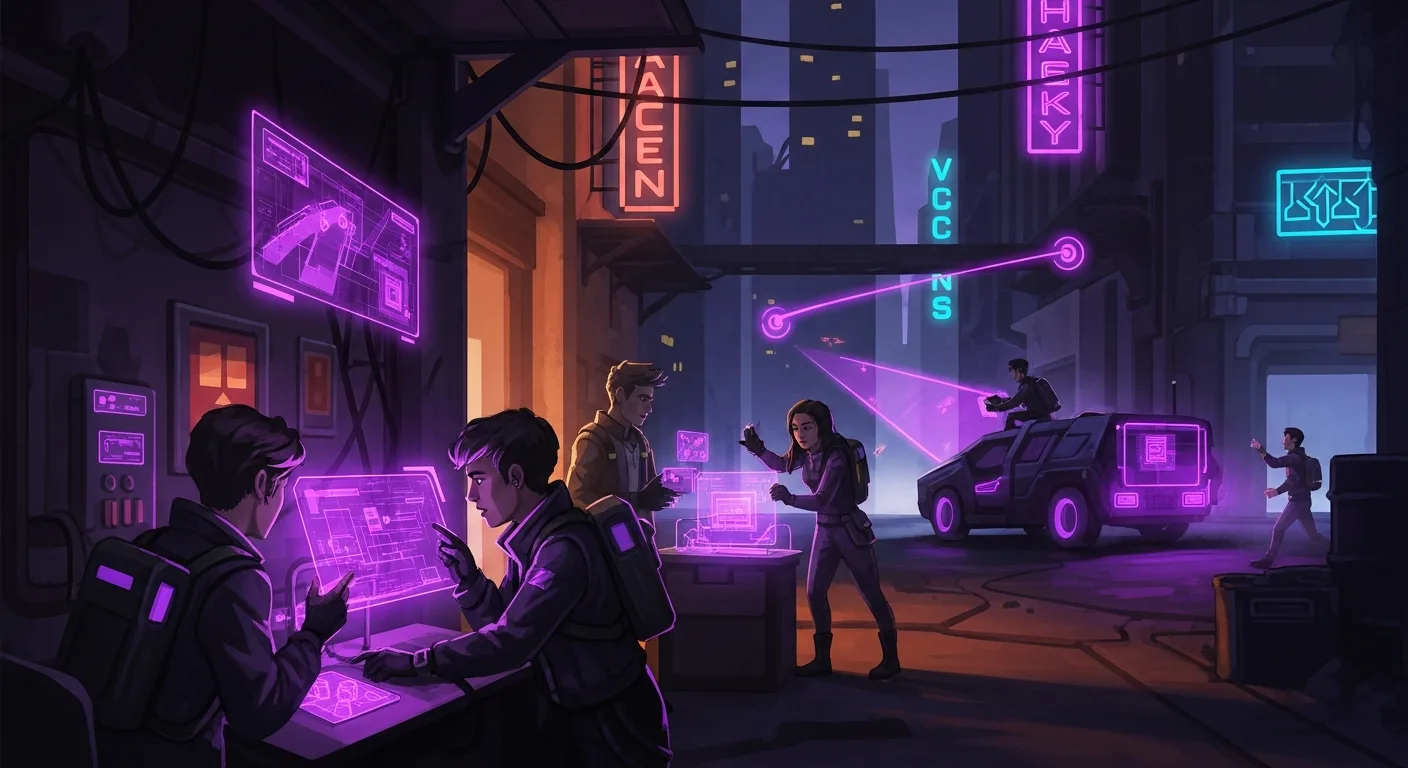
Adventures and mysteries dominate our repeat-booking data because they have somewhere to go. Teams are solving something together, not just answering questions correctly. The shared narrative creates a memory the team can reference months later: the moment your pod cracked Stage 3 while the leaderboard showed you in fourth place. That's a different category of shared experience from finishing a trivia night in second place.
Apocalypse
Apocalypse is the highest-energy game in our catalog and earns it through genuine stakes: an overnight outbreak, four locations between your team and a vaccine, a clock running the whole time. The 80-minute Big Game format puts real urgency on the table, not workday stress, but the energizing kind that leaves teams wanting an immediate replay. The mechanic that matters for People Ops: teams self-organize into specialists by Stage 3 without anyone assigning roles. The person who goes quiet in planning meetings often emerges as the Stage 2 routing lead. We've watched this pattern across enough events to consider it a reliable feature, not a coincidence.
Best fit: tech, fintech, startup, and engineering cultures that like time-pressure events. Halloween and Q4 are peak season, but the game runs year-round. Available in Marathon format for distributed teams that can't share a live window.
Wintervald Hotel Mystery
Wintervald Hotel Mystery is the most enterprise-appropriate game in our catalog: an Agatha-Christie-style whodunit set in a snowbound luxury hotel, three stages of deduction, a deliberately engineered misdirection in Stage 2 that separates teams who read carefully from teams that went with the obvious suspect. The game was designed for buttoned-up cultures that want a sophisticated event rather than an office parody.
What it does for distributed teams: the deduction generates post-event debate that extends well beyond the call. The #general Slack thread about who the actual killer was reliably runs for two or three days after the event, pulling in team members who weren't in the same breakout group. That post-event conversation is relationship infrastructure. People who have never spoken professionally are now arguing about a fictional murder with genuine investment. Runs 75-90 minutes Big Game; Marathon format suits it for global teams where deduction discussions unfold over multiple days.
Under the Big Top
Under the Big Top is a vintage circus mystery: a missing performer on the night of the biggest show, a cast of intentionally strange suspects, and three stages of deduction across backstage tents and animal pens. The aesthetic is warm and melancholic, closer to Big Fish than to slapstick circus stereotypes. Marathon format suits it particularly well because the multi-day investigation rhythm lets players develop and refine suspect theories between episodes rather than rushing a verdict in a 90-minute window.
For distributed teams with international members, the circus aesthetic travels across cultures without requiring shared national references. The game works year-round, though summer is its peak fit. Teams that enjoy The Greatest Showman or Water for Elephants tend to be the core audience here.
Mission 8-Bit
Mission 8-Bit became our most-requested kickoff game because its three-act structure maps too cleanly onto how technical teams think about project phases: escape the hostile office (setup), rebuild a 1980s computer (build), enter the digital world as 8-bit avatars to assemble the killcode (launch). Engineering and SaaS teams recognize the metaphor before anyone explains it.
The post-event detail that makes it hold: the 8-bit sprite versions of team members delivered after the event. Clients use them for Slack avatars, internal swag, and anniversary slides. That artifact is a memento rather than a vendor artifact. It keeps the event alive in daily team culture for months in a way recap emails don't. Runs 90 minutes Big Game; Marathon is available for distributed kickoffs where async suits the team's calendar better than a single live session.
Bureau of Magical Affairs
Bureau of Magical Affairs is the best onboarding game in our catalog, not because we decided it was, but because we recommended it for new-hire cohort events and watched it become the thing orientation participants referenced in their first-month check-ins. The premise is whimsical bureaucracy: your newly-deputized team of Bureau No. 7 agents has four magical cases to close before chaos spreads. The tone is The Office × Men in Black, and the premise is literally the new-hire feeling: too many things on fire at once, unclear instructions, paperwork required.
We've had clients run this as the closing event for 100+ person orientation weeks. Four stages, 90 minutes Big Game. Full customization support across NPC, Logo, and Story tiers.
Stolen Hours
Stolen Hours is the December game for distributed teams that want genre-bending imagination rather than holiday-themed parody. Santa's clock hands are scattered across four fantastical worlds (postapocalyptic, cyberpunk, steampunk, and biopunk), and your team chases through all of them in 90 minutes. The art is Pixar-level stylized, not edgy, and the four-world structure surfaces different player strengths as the team moves through them: some people shine in the gritty postapocalypse stage, others in the cyberpunk decode phase.
For distributed teams with members across 12+ countries, the cultural neutrality matters practically. The premise doesn't center any single holiday tradition, making it one of the most globally inclusive year-end games in our catalog. Also available as Marathon for international teams that can't share a December live window.
Trivia options for lighter-touch events
Not every remote team building moment needs a 90-minute narrative arc. For quarterly all-hands closers, regular monthly touchpoints, and events where the primary goal is shared fun rather than coordination mechanics, trivia packs are the right tool.
Pop Culture Trivia
Pop Culture Trivia is the safe universal choice, with wide-net coverage across music, film, TV, celebrity culture, viral moments, and the cultural fixtures of the last 50 years. Three rounds including a visual iconography round (album covers, movie posters, classic ads) and a cultural crossroads finale. For first-time HeySparko clients or cross-functional events where the theme can't be too narrow, this is the default recommendation.
Music Trivia
Music Trivia does something specific in a live Big Game event: it surfaces which decade each team grew up in, which creates genuine cross-generational conversation. The audio recognition round (melodies, intros, and ambiguous mid-song clips) generates "how do you KNOW that?" moments in team chat that are closer to a real watercooler conversation than most virtual event formats manage. Best for younger teams or companies with strong music-Slack-channel culture. Available in both Big Game and Marathon formats.
Ideas beyond games: remote team building in context
Activities are only one part of a remote team building strategy. The games above deliver the shared-experience layer. What amplifies them is what happens around the event.
Pre-event anticipation. The two weeks before a Big Game or Marathon launch are an underused engagement window. A teaser announcement, a countdown in Slack, a 30-second preview clip. These build anticipation that converts to higher completion rates during the event itself. We've seen completion rates lift 15-20 percentage points in Marathon events where managers actively communicated versus events that launched with a single email and went quiet.
Mid-event manager activation. For Marathon, a manager message at Day 1 launch ("we're currently in sixth place — let's move") and a Day 2 check-in are consistently the highest-impact moves available. The leaderboard creates pull; the manager creates urgency. In our experience running Marathon events across hundreds of engagements, mid-event communication is the single variable that most predictably separates 78% completion from 92% completion.
Post-event recognition. Sharing the leaderboard results in Slack, calling out the winning team in an all-hands, sending individual completion certificates — these extend the event's engagement tail significantly. Deloitte's 2024 Burnout in the Workplace report found that 31% of professionals name lack of recognition as their primary burnout driver. The recognition moment built into a well-run team event is direct burnout mitigation, not just a nice-to-have.
Recurring cadence over one-off events. A single team event builds a moment. A quarterly cadence builds team culture. In our data, the teams with the most sustained engagement improvement are the ones running Marathon or Big Game every quarter with a different game each time — not the ones doing a single elaborate event annually and then nothing for eleven months. CultureAmp's 2024-2025 State of Culture report supports this: companies running monthly engagement events score meaningfully higher on average engagement metrics than those running them ad hoc.
Format matching to audience type. A 50-person startup in two time zones and a 2,000-person global financial services company need completely different formats. The startup gets Big Game with a full shared-window energy; the global FS company gets Marathon with manager activation baked in. We often spend more time on this format decision in a 20-minute walkthrough than we spend on game selection, because picking the wrong format is the mistake that produces silence in the post-event Slack thread.
What the data says about remote team engagement
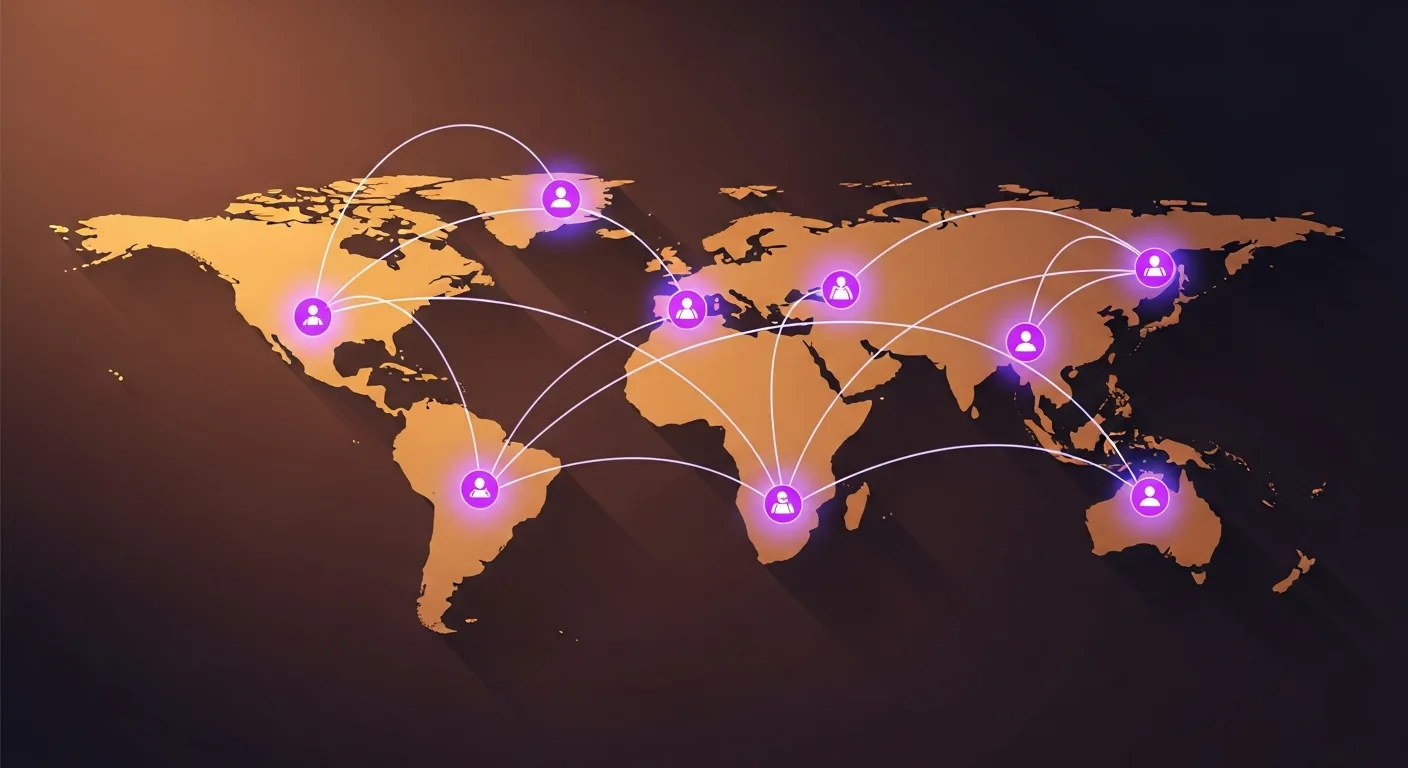
The research on remote teams and engagement has been consistent enough over the past three years that it's worth treating as settled rather than emerging.
Buffer's 2023 State of Remote Work report found that among remote workers who feel connected, 46% attribute that connection to having met in person; among those who do not feel connected, 56% cite no opportunity to connect socially. Read together, those two numbers are the direct case for treating team events as connection infrastructure rather than entertainment. The disconnected aren't asking for a better Slack channel — they're naming the absence of a shared moment, in-person or virtual. For remote teams where People Ops can't fly everyone to an off-site every quarter, that's exactly the gap a well-run Big Game or Marathon fills: the social opportunity the disconnected half is explicitly asking for, and the shared-experience anchor the connected half says held them together in the first place.
Deloitte's 2025 Global Human Capital Trends report surveyed 14,000+ business and HR leaders across 95 countries and found that 88% of executives now rank belonging in their top three HR priorities — up from 53% in 2020. The word "belonging" is doing significant work there. Belonging, unlike engagement, is something people feel or don't feel; it's not a survey score. For remote teams, the activities that create belonging are specifically the ones where people have a shared experience they can reference — where someone in Dublin and someone in Vancouver can say "remember when our pod solved Stage 3 with two minutes left?" and both of them know exactly what the other one is talking about.
Microsoft's 2024 Work Trend Index found that 57% of distributed workers prefer asynchronous engagement options over live ones. We see that in our own data: Marathon completion rates at 78-92% consistently outperform what forced-synchronous events produce at organizations with 8+ time zone spread. The 35% of Marathon completers who rarely or never show up to live events aren't outliers — they're what async-design reaches that synchronous formats can't.
A systematic review by Anog et al. (SSRN, 2023) covering 60+ studies found that structured team-building activities increase satisfaction and reduce turnover with effects amplified when integrated into a broader development strategy. That last clause matters for how HeySparko events work best: not as a standalone vendor purchase, but as the shared-experience layer inside a People Ops strategy that includes manager activation, pre-event communication, and post-event recognition. The event is the moment. Everything around it is the work.
Frequently asked questions
What remote team building activities work best for large groups over 500 people?
For groups above 500, Marathon format is almost always the right call. A single Big Game session at 500+ is technically possible — we've scaled Big Game to 10,000 players with squad splits and a shared leaderboard — but the time zone coordination required for a live event gets costly above 300-400 participants. Marathon's async design means 600 employees in four time zones all engage on their own schedule while chasing the same leaderboard. Games like Apocalypse and Bureau of Magical Affairs both scale cleanly to 500+ in Marathon format, with completion rates in our data averaging 78-92%.
How do you run remote team building across multiple time zones without making someone take a 6am call?
The direct answer is Marathon format — specifically designed so that players in Tokyo, London, and New York all engage at their own 3pm rather than someone's 6am. Daily episodes release on a schedule; the leaderboard updates in real time regardless of when each player completes their session. For Big Game (single live event), the practical window for global teams is to run two sessions: one for APAC-EMEA overlap, one for Americas. We've done three-window Big Games for enterprise clients, but the coordination cost climbs fast. For 8+ time zone spread, Marathon is the honest recommendation.
How long does it take to plan and set up a remote team building event?
For a standard Big Game with no customization, ten business days is a workable lead time — enough for a 30-minute briefing call, headcount confirmation, and logistics. Marathon with no customization is similar. The BGaming anniversary event we ran with NPC + Logo + Story stacking had a four-week lead time, and that was a well-briefed client who submitted a clean brief on Day 1. The minimum for a well-run, customized event is 10 business days. For recurring quarterly events, the second and third events take 5-7 business days since the format, customization, and logistics are already established.
What's the difference between a Big Game and a Marathon for remote teams?
Big Game is a single live 60-90 minute event — everyone on the same call at the same time, a HeySparko Game Host running the whole thing. The energy of shared presence is real, but it requires your team to find a shared window. Marathon is a 1-5 day async event: daily game episodes release on schedule, players engage whenever their workday allows, and a shared leaderboard creates pull without requiring simultaneous presence. For remote teams with a time zone spread under six hours, Big Game gives you the shared-moment energy. For teams with wider spread or strong opt-in culture preferences, Marathon reaches more of your team with less scheduling pain.
Do employees need to download any software to play?
No. Every HeySparko game — Big Game or Marathon — runs entirely in the browser. Players join via a link, no account creation required, no app install. This matters operationally for enterprise clients: we've tested on Cisco- and CrowdStrike-restricted corporate laptops, and browser-based access has never been a blocker. For People Ops teams managing 500+ participants across multiple IT environments, the no-install requirement removes the single most common day-of-event logistics failure we see at competitors who rely on native apps.
How do you measure whether a remote team building event worked?
Post-event analytics are built into every HeySparko event: participation rate, team scores, NPS pulse, and a by-team breakdown that's directly useful for the manager's engagement readout. For Marathon, analytics span the full event — which days had highest engagement, by team and manager, where completers dropped off. The measurement question we'd push back on slightly is "did the event work?" in isolation. Engagement interventions typically take 6-9 months to show measurable retention impact in the HR research literature; a single event is a data point, not a program. Pair the event with a pre/post three-question pulse, share results with managers the next day, and track whether cross-functional interaction patterns change in the weeks after. That's the measurement stack that makes a single event defensible to leadership.
Get started
The format question — Big Game or Marathon, with or without customization — is almost always resolvable in a 20-minute conversation once we know your team size, time zone spread, and what you're trying to accomplish. We can work through game selection, participant structure, and timing in the same call, with no extended discovery process required.
If you want to see the games before committing, the call includes a live walkthrough of whichever format fits your team best. We've made this format decision with teams ranging from 25-person engineering pods to 6,000-person global all-hands events. Happy to talk through the trade-offs.