


Summer offsite season is the budget conversation that tends to happen quietly, in a Slack DM between Head of People and the Finance partner, in the second week of June. The venue quote came in at high three figures per head. The team is now 220 people instead of the 140 it was a year ago. Three direct reports work from Lisbon, Manila, and São Paulo and would each need a return flight booked the day after a US visa interview. The People Ops lead, who pitched the offsite in February, is wondering whether to defend the line or replace it with something that does the same job for one-fifth the cost. What are the best alternatives to a traditional summer offsite when the travel budget has been halved and the team is too distributed to gather in one room? Across our portfolio, the answer most People teams are landing on in 2026 is to replace the venue with a virtual program, and the playbook below is what that decision looks like in operational detail.
Across 50+ countries and five years of distributed-team programs, we've designed and run more than 1,500 virtual team events for 700+ companies. The summer offsite is the corporate ritual that has changed shape most visibly in that window. The reasoning is rarely "we hate offsites." It is "we ran the math, we ran the calendar, and the version we used to run no longer works at our team's shape or our company's burn rate." The case for virtual as the replacement is not aesthetic. It is the cost-per-engaged-employee math, the seven-day window the team is actually available, and what the post-event survey scores look like four weeks later.
The cost math is the conversation, not the connection argument
Most People leaders we talk with in June are not asking "is virtual as good as in-person." They are asking how to keep what the offsite did — the shared experience, the cohort moment people reference for months — without the line item the offsite needs. A US-domestic offsite for 150 people in 2026 lands somewhere in the low to mid six figures all-in once you total travel, lodging, venue, F&B, programming, and the two days of lost productivity on either side. International team add-ons (visa support, longer travel days, expanded per diems) push the same event deep into six figures easily.
A virtual summer event covering the same 150 people, including a HeySparko Big Game with full Story customization, lands in the low five figures. The cost-per-engaged-employee math runs roughly an order of magnitude in favor of virtual, depending on customization scope. That is the actual cost gap. It is wider than most People leaders quote internally because the comparable spend they remember is the 2018 offsite, not the 2025 one. Hotel rates have outrun inflation. Domestic flight pricing has reset on a higher band. Per diems for international teams now run double what the templates from three years ago assume. See /en/pricing for the Booking Calculator that surfaces the exact virtual configuration.
There are still reasons to spend the offsite line. Founding-team retreats. Sales kickoffs where a face-to-face matters for compensation conversations. The first all-hands after a major acquisition. We do not argue every offsite should go virtual. We do argue that the default summer offsite — the recurring annual ritual that lives in the calendar mostly because it has always lived there — is the one most worth examining. For the recurring annual event, the budget math now points the other way for most distributed teams.
Pick the format before the activity
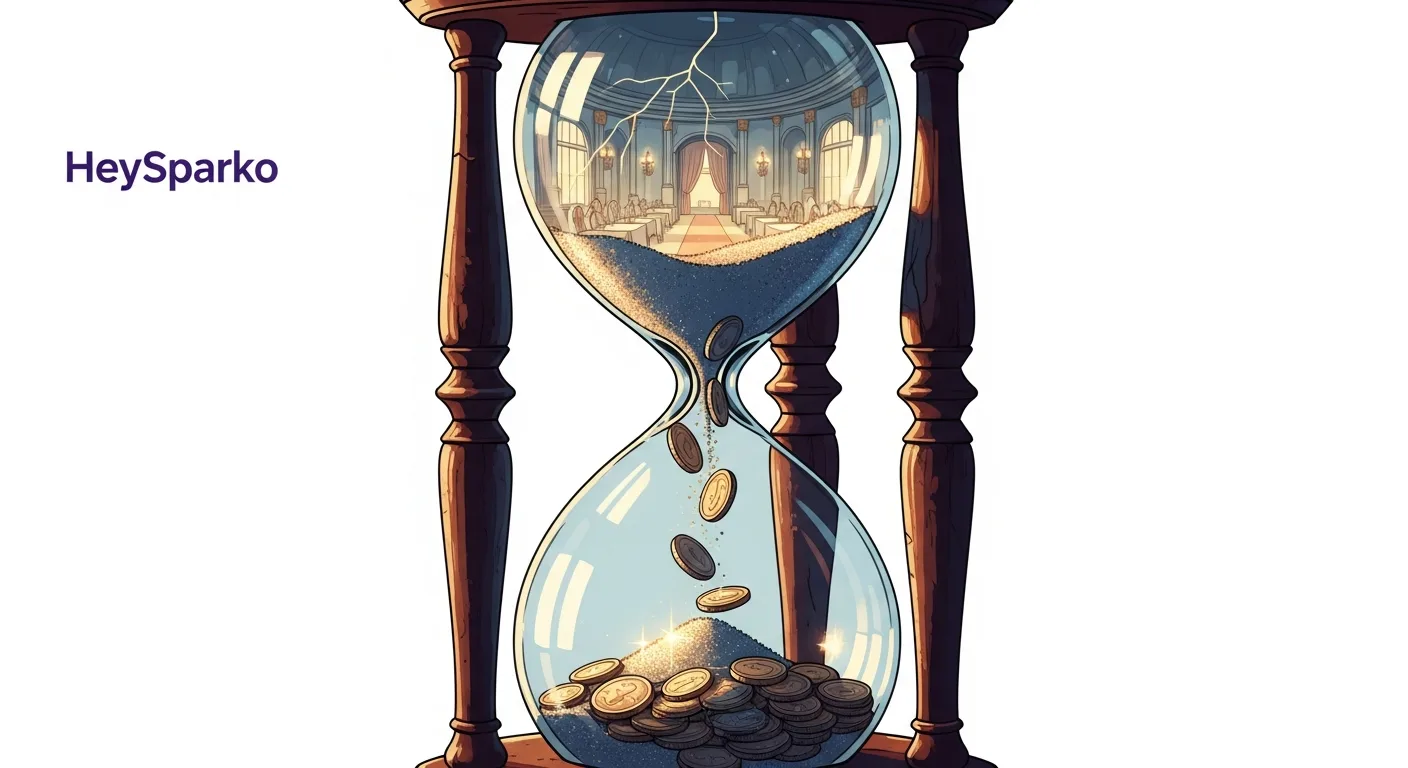
The first decision in any virtual summer event playbook is not the game. It is the format. The format choice constrains everything else — which games breathe, which calendar windows work, how customization scales, what the prep timeline looks like. Two formats live in the HeySparko catalog, and they are not interchangeable.
Big Game is a single live event, 60-90 minutes, hosted end-to-end by a HeySparko Game Host. Players join a shared Zoom (or equivalent), get sorted into breakouts of 4-8, and play a structured experience with a shared leaderboard. The format scales to 10,000 players in one session. For summer events at companies whose teams sit within roughly a six-hour time-zone spread, Big Game lands the moment as a single decisive cohort event the team references when they come back from PTO in late August.
Marathon runs 1-5 days, async, with daily episodes and a shared leaderboard. Players engage on their own schedule. Completion rates we see at 500+ companies fall between 78% and 92%. Roughly 35% of finishers are people who would have skipped a live summer Zoom. For teams stretched across eight or more time zones, Marathon is the right call almost every time. It turns the event into a week-long arc that runs alongside staggered PTO and ongoing work rather than competing with them for a single calendar slot.
The decision is rarely close. The team's time-zone spread tells you which format to pick. We use a single rule on prospect calls: if the team has more than a six-hour spread between its westmost and eastmost members, Marathon wins. If the team can comfortably hold one live window without forcing someone to take a 6am or 11pm call, Big Game wins. The cost difference between the two is modest enough that it almost never drives the format decision; the calendar reality does.
The four summer-ready experiences we book

Twenty-one games sit in our catalog. The four below are the ones we recommend most often for summer offsite replacements. Each fits the season — energy that holds against vacation Slack statuses, a tone that works in July without being summer-themed — and each scales cleanly across either format.
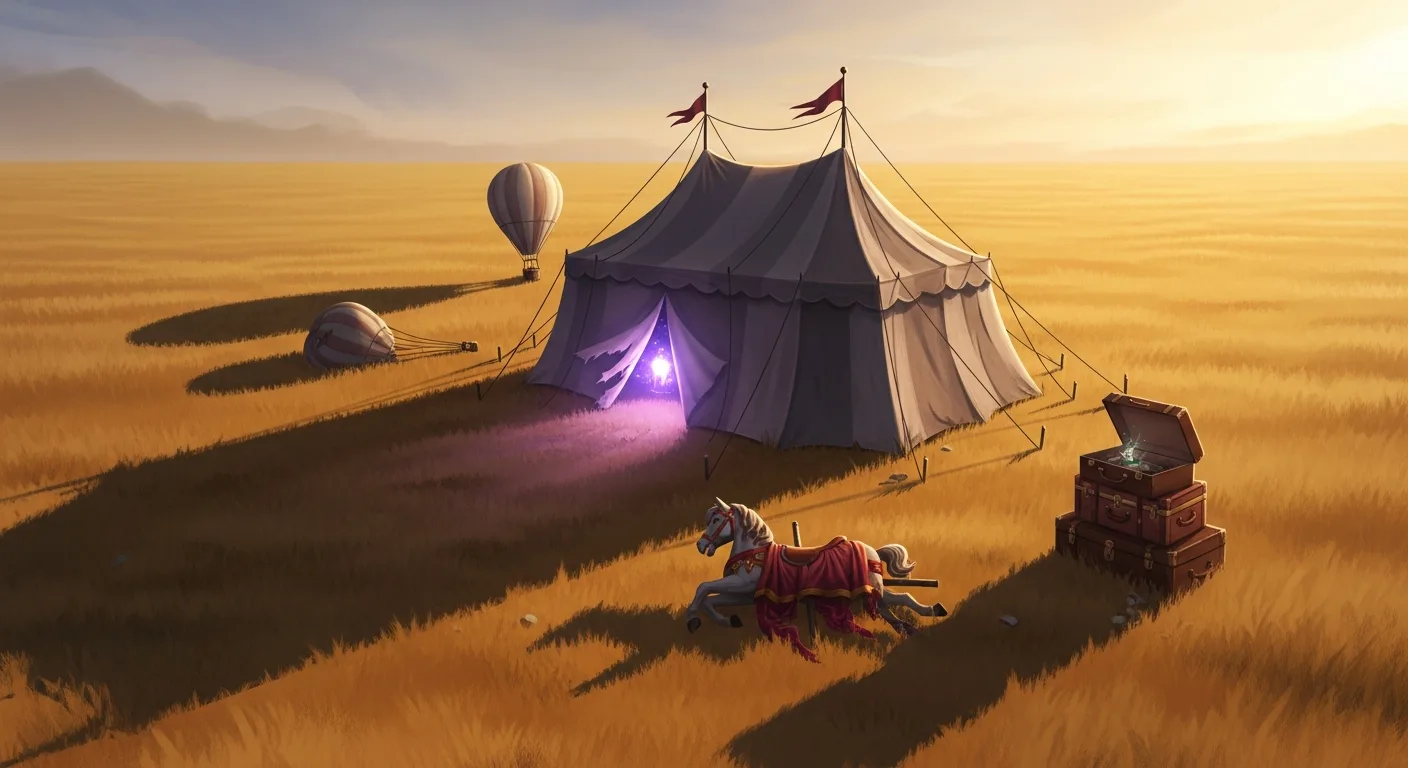
Under the Big Top is the most explicitly summer-coded game in the catalog. Vintage traveling circus, a vanished headlining act, three stages of deduction with a wonderfully strange cast of suspects. The whimsy is warm and melancholic, not slapstick — closer to Big Fish than to circus stereotypes. Summer is the moment of the year when this aesthetic feels right rather than off-season, and we book it heavily for June-August events at companies with whimsy-friendly cultures. Marathon format suits it especially well, because the multi-day investigation rhythm gives the team time to debate suspect theories between PTO days.
Apocalypse is the high-energy summer pick. An overnight outbreak, four stages, eighty minutes of stress-tested coordination as the team races to develop and distribute a vaccine before the last research lab falls. It is not graphic — stylized 2D throughout, anxiety not horror — and tests cleanly across the international teams we run it for. For engineering-led companies who want a summer event that feels like a real puzzle rather than a structured ice-breaker, Apocalypse delivers the urgency without the cringe. The role-specialization mechanic shines in the 20-35 player range, but the squad-split structure scales it to thousands cleanly.
Bureau of Magical Affairs is the year-round flagship that doubles as a strong summer pick when the team is heavy on new hires from the spring cohort. The premise is bureaucracy-meets-magic — closer to The Office × Men in Black than to fantasy — and the new-hire feeling of "everything is on fire, also there's paperwork" is the literal game premise. Onboarding cohorts who joined in March and April have a different summer event need than tenured teams, and Bureau of Magical Affairs is the one we recommend most often for that audience.
Wintervald Hotel Mystery is the counter-intuitive summer pick. The snow-and-hotel framing reads as a December game on first glance, but for buttoned-up enterprise teams — legal, finance, the C-suite — the elegance of the Christie-flavored mystery is the right register year-round. We book it for summer events at companies whose culture would find the circus framing of Under the Big Top too whimsical and the urgency of Apocalypse too intense. The murder is stylized and off-screen; the experience is closer to a sophisticated evening of dinner-theatre than to a corporate icebreaker.
When customization is worth the line item
Customization is where the virtual summer event stops feeling like "we bought a vendor event" and starts feeling like the company ran its own. Three add-on tiers sit on top of any HeySparko game, each at the same flat add-on cost, and they layer cleanly. The NPC tier rewrites character dialogue in the company's voice, weaving in internal references and naming conventions. The Logo tier puts the brand into the game environment, with colors on the UI, logo on the leaderboard and intro splash, and a branded take-home certificate. The Story tier rewrites the entire narrative arc to fit the company's situation, often tied to a launch, milestone, or chapter closing.
Stacking all three runs roughly 30% of the cost of a mid-size virtual event and roughly 1% of a comparable in-person offsite. For the summer event that replaces an annual offsite the team would have called "ours" rather than "the vendor's," the customization spend is the part of the budget that turns the cost-per-head argument into a defensible recurring line item. /en/pricing carries the current customization rates.
Customize for your team
TYPE 1
Your team as in-game characters
Real team members, mascots, or characters from your games as NPCs.
TYPE 2
Your brand integrated natively
Logo and brand elements native to game environments — locations, items, UI.
TYPE 3
Your story woven into the game
Company milestones, products, and inside references woven into puzzles, dialogues, and tasks.
We typically recommend all three tiers for replacement offsites at companies above 200 people and one or two tiers for smaller teams. The Story tier is the most differentiating: a "spy thriller about saving the Q3 launch" or "the Bureau is investigating what happened to the founding charter" lands as a meaningful narrative the leadership team can speak to in the all-hands intro, not as a generic team-building bolt-on. BGaming's anniversary event — about 400 employees, distributed across 12+ countries — ran Adventure Through the Ages with NPC, Logo, and Story all stacked. The participation rate came in at 89% on a baseline target of 75%, and the post-event Slack channel stayed active into the following month.
The six-week playbook, week by week
Summer events that work tend to start six weeks before the live date. Shorter timelines are workable; the trade-off is customization scope and the depth of the pre-event runway. The cadence below is what we hand to People Ops leads who ask for a project plan.
Week -6 — Format decision and lock. Head of People + a Finance partner agree on the format (Big Game vs Marathon) and the customization tier, and approve the budget. Game choice can wait one more week, but the format and budget decisions cannot. The People Ops lead owns the meeting; the HeySparko booking calculator is the artifact that ends the discussion.
Week -5 — Game choice, calendar block, customization brief. The People Ops lead picks the game (four-game shortlist above), books the live window or the Marathon week, and submits the customization brief. For a Story-tier customization, the brief is a one-page narrative arc tied to the company's situation. Lead time on Story, Logo, or NPC is 10 business days.
Week -4 — Calendar invites and pre-event communications draft. The People Ops lead drafts the announcement email and the calendar invite. The IT lead confirms browser access for any locked-down endpoints; HeySparko games run in-browser with no install, but the IT confirmation prevents the one Slack thread that derails an event launch.
Week -3 — Manager enablement. Direct managers across the org are briefed on the event and given a one-page enablement note. The manager's pre-event Slack message is the single biggest lever on participation; teams whose managers post in their team channel five days out see attendance roughly 15 points higher than teams whose managers stay quiet.
Week -2 — Final customization review and dry run. The Head of People reviews the Story tier customization with the HeySparko Game Host. For NPC tier with a named character (often the CEO), the named exec confirms the dialogue brief. A 30-minute dry run with the Game Host walks the People Ops lead through the live experience.
Week -1 — Reminder communications and asset distribution. Two reminder emails go out, three days and one day before the event. Team channels get a final ping with the join link. For Marathon, the leaderboard preview is shared internally to seed competitive energy.
Event week. Big Game runs as a single live event; the Game Host MCs end-to-end and the People Ops lead participates as a player. Marathon runs across 3-5 days with daily content drops. Mid-event NPS pulse goes out on Day 2 for Marathon events.
Week +1 — Analytics review and post-event communications. HeySparko sends the analytics report within 24 hours of event close. The Head of People reviews participation rate, NPS, by-team breakdown. The leadership Slack message acknowledges winning teams publicly. The pre/post engagement-survey delta is captured if the company runs one.
What could go wrong
Every summer event playbook has a recognizable shortlist of failure modes. We have seen each of these break a virtual offsite replacement, and the prevention is straightforward when the team knows the pattern.
The CEO does not show up. The single largest predictor of low participation is the CEO opting out of the event. Manager attendance follows the CEO; team attendance follows the manager. The fix is securing the CEO's calendar at Week -5, not at Week -1, and giving them a speaking role for the first three minutes of the event so the line on their calendar is non-skippable.
The format and game choice mismatch the team's reality. A Big Game booked for a team with a 14-hour time-zone spread will leave half the team out. A Marathon booked for a 40-person team with a six-hour spread loses the social density that makes async work. Going back to the format decision in Week -6, the rule is single: time-zone spread first, format second, game third.
Customization is briefed too late. A Story-tier customization briefed in Week -2 instead of Week -5 either gets rushed or gets cut. Either outcome leaves the event feeling less "ours" than it could have been. The fix is locking customization scope at the format decision in Week -6.
The pre-event Slack message never happens. Manager enablement that exists on paper but does not translate into actual messages in team channels is the second-largest participation killer after CEO absence. The Week -3 manager brief should include a template message and a specific deadline for posting it.
No post-event acknowledgment. A virtual summer event that ends at the final scoreboard and never gets referenced again becomes a forgotten event by Friday. The fix is the leadership Slack acknowledgment within 24 hours, the analytics report shared with the People team within 48 hours, and the team-channel referral to next quarter's program by the end of the following week.
What the data says
The case for a virtual summer event holding up against an in-person offsite has executive-side, academic, and operational evidence behind it. The executive-side number we cite most often is from Quantum Workplace's 2024 Workplace Trends Report, which surveyed executives at companies across its database of 700,000+ employees and 8,000+ U.S. organizations. The headline finding: 92% of executives say they have seen increased performance as a result of their engagement efforts. The number matters because executives are the people approving event budgets, and the lift they report is the lift that defends the recurring line item. The Quantum Workplace framing pairs cleanly with our experience. When the People team can show the CFO an executive-level engagement signal alongside the cost-per-engaged-employee math, the conversation about the summer event line stops being annual.
The academic side has its own take. Anog et al. (SSRN, 2023) pooled 60-plus studies on team-building interventions and landed on a finding that maps cleanly onto the summer-offsite question: structured activities lift satisfaction and cut turnover, but the lift is bigger when the activity sits inside a broader development arc rather than standing alone. Read against the offsite vs virtual decision, this is the case for cadence over one-shot spectacle. A solo July offsite generates a smaller lift than a virtual event treated as one node in a quarterly engagement rhythm. The cost-per-engaged-employee math compounds when the recurring program runs four virtual events for less than the cost of one annual in-person offsite.
The distributed-team angle has its own research backing. Microsoft's 2025 Work Trend Index, drawing on a 31,000-knowledge-worker survey paired with Microsoft 365 telemetry, documented that 30% of meetings now span multiple time zones, an 8-point absolute increase since 2021. The implication for summer events is again operational. A growing share of the team a People leader needs to gather is no longer reachable through a single live window, and the offsite-by-default ritual has not caught up. The Marathon format was built for the team shape Microsoft is describing.
The connection-deficit angle rounds out the picture. The Buffer State of Remote Work 2023 report surveyed 3,000+ remote workers across 90+ countries and found that among those who do not feel connected to their team, 56% cite no opportunity to connect socially as the reason. The number cuts against the assumption that connection-building requires physical proximity. What it requires is intentional structure, and a virtual summer event with a hosted Game Host and a real narrative arc delivers that structure at one-tenth the cost of the proximity-based version.
Our own portfolio numbers stitch into the same argument. Across the 1,500+ virtual events we have facilitated, Marathon completion rates run between 78% and 92% at companies above 500 employees. The 35% of completers who are people who would have skipped a live event is the most underrated proprietary stat we have, because it is the segment most in-person offsites lose entirely. The 89% participation rate from the BGaming anniversary event is the upper bound of what fully-customized virtual events have hit in our portfolio.
Frequently asked questions
How much does a virtual summer event actually cost compared to a traditional offsite?
For a 150-person event, the cost gap runs roughly an order of magnitude in favor of virtual. A US-domestic offsite at that headcount typically lands in the low to mid six figures all-in once travel, lodging, venue, F&B, and lost productivity are tallied. A HeySparko Big Game for the same 150 people, including stacked customization, lands in the low five figures. International team add-ons widen the gap further. See /en/pricing for the exact Booking Calculator.
What's the difference between Big Game and Marathon for a summer offsite alternative?
Big Game is one live event, 60-90 minutes, hosted end-to-end and best for teams within a six-hour time-zone spread. Marathon runs 1-5 days async, scales across 24 hours of time zones, and lands completion rates between 78% and 92% at companies above 500 people. For summer events at distributed teams, Marathon is the right call most of the time because PTO and time-zone spread compound against a single live window.
How many people can a single virtual summer event include?
The format scales to 10,000 players in one session for Big Game, and Marathon handles the same headcount with a longer run time. The 5-10 person floor is soft; smaller groups also use the format. The sweet spot for summer events is the 75-500 band, where cost-per-engaged-employee bottoms out and the social density of the leaderboard holds without splintering into too many breakouts.
Do team members need to install software to participate?
There's nothing to install. HeySparko games run in-browser through a join link, and we have tested the player across the corporate-locked endpoints People teams worry about most. The IT confirmation we put at Week -4 of the playbook is closer to a ten-minute check than a deployment project. International team members on locked machines join the same way US team members do, with no plugin, no account creation, and nothing for IT to vet beyond the meeting tool you were planning to use anyway.
How do we measure success after the summer event?
Participation rate, post-event NPS pulse, and the by-team breakdown of engagement are the standard analytics HeySparko sends within 24 hours of event close. For the manager-engagement variance argument, the by-team data is the most useful artifact; it shows which managers showed up and which did not, which is the most actionable signal for the People team. Pair the event with a pre/post 3-question engagement pulse if the company runs one.
What happens if half the team is on PTO during the summer event week?
This is the failure mode the Marathon format was built for. With 1-5 days of async play and a shared leaderboard that pulls people back across the week, staggered PTO stops being a problem and becomes a feature — team members on PTO Monday can finish on Thursday, and the leaderboard keeps the cohort moment alive across the calendar. A hospitality client we ran last August at about 250 employees hit 71% Marathon completion across an EMEA-distributed team with significant PTO overlap.