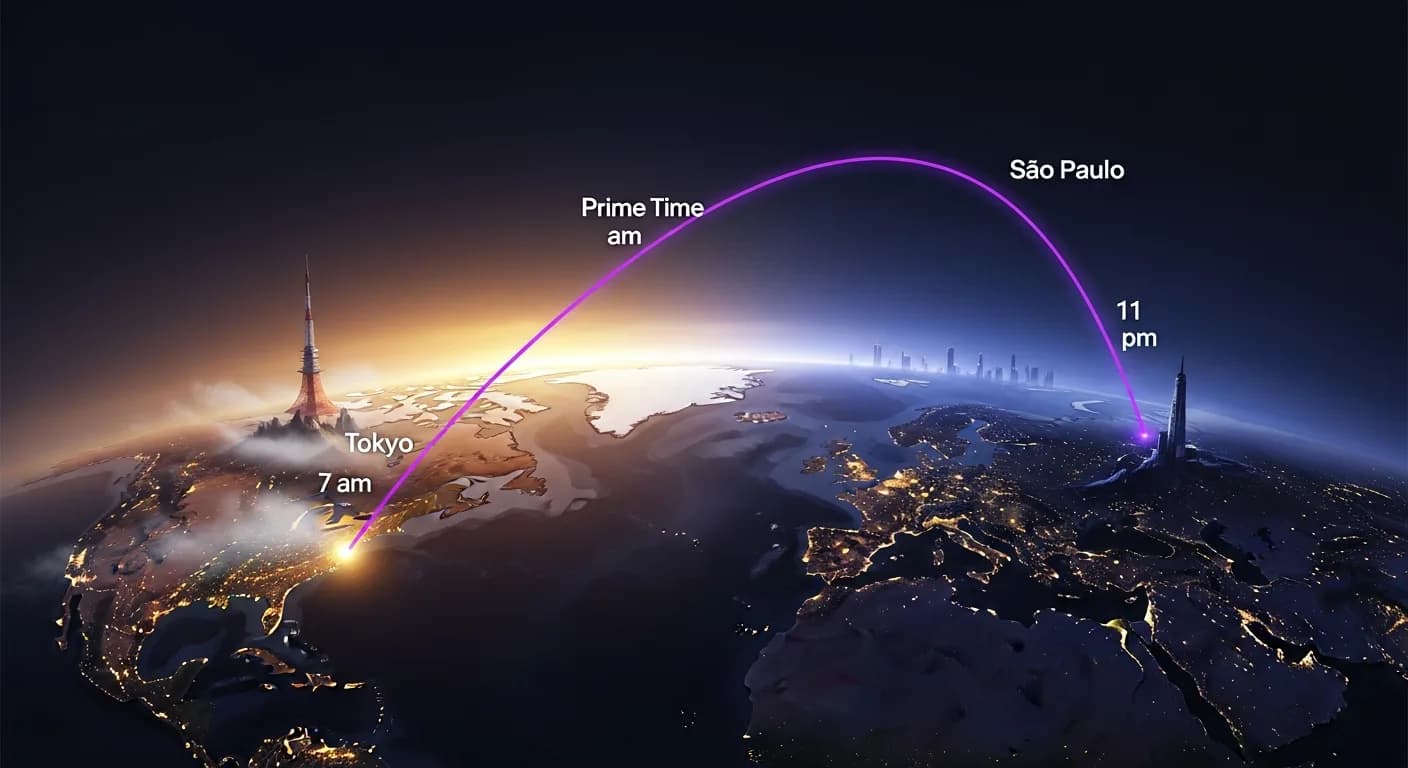

There is a specific failure mode we see repeatedly when companies try to run their first cross-time-zone team event: they pick a live format, spend two weeks wrestling with a scheduling grid that leaves Tokyo at 7am and São Paulo at 11pm, and ultimately run a "prime time" event for North America while everyone else attends under duress or not at all. The result is a participation report that flatters no one and a People Ops team that quietly adds "global team events" to the hard-problems list.
Across 50+ countries and five years of distributed-team programs, we've designed and run more than 2,000 virtual team events for 700+ companies. The time-zone question comes up on almost every discovery call involving a distributed team, and the answer is rarely "pick a better time slot." It's usually a format question, and most HR leaders don't realize they have a format choice at all.
How do you run team building across time zones without scheduling someone out of the experience?
Why the scheduling problem is actually a format problem
The instinct when facing a 12-hour time-zone spread is to look for a meeting window that minimizes pain. You'll find one eventually (usually 8am Pacific / 4pm London / 11pm Singapore), and someone is still losing. That's not a scheduling failure; it's a structural constraint that scheduling cannot solve.
The format decision is what determines whether your team can participate at all. HeySparko runs two distinct event formats, and they serve very different team configurations:
Big Game is a single synchronous event: 60 to 90 minutes, everyone joins the same call at the same time, a live Game Host runs the whole experience. The energy is high, the leaderboard shifts in real time, and there's a shared moment quality that asynchronous events genuinely can't replicate. It works beautifully when your team's time-zone spread is contained to roughly 6 hours. For a US-only team, or a European team, or a team anchored in one region with a small remote satellite, Big Game is almost always the right call.
Marathon is a 1-to-5-day async event with daily content drops. Players engage on their own schedule, within their own business day, while a shared leaderboard creates the social pull that keeps people coming back. No one takes a 6am call. Tokyo plays at 3pm Tokyo time; San Francisco plays at 3pm San Francisco time. Same game, same story arc, same leaderboard. Our completion rate data across 500+ companies sits at 78-92% for Marathon events, which is higher than the attendance rates we see at mandatory live events in the same organizations.
The decision usually makes itself: if your team can share a live window without disadvantaging more than 15-20% of participants, run a Big Game. If the spread is wider, Marathon is the only format that doesn't force a trade-off.
Step 1: Map your actual time-zone distribution before picking anything
Before you touch a game catalog or a calendar invite, map where your headcount sits. Not the office locations, but where people work from. Remote-first companies often have timezone distributions that surprise their own HR teams.
The specific question to answer is: what's the maximum time difference between any two participants? If that number is under 6 hours, you have Big Game as a real option. If it's 8+ hours, you're in Marathon territory unless you're willing to run the event in two separate windows (which we see some companies do; it works, but it costs you the shared-leaderboard energy of a single simultaneous experience).
A fintech team we worked with recently (about 600 people distributed across North America, London, and Singapore) mapped their distribution and found that 40% of their headcount was within the EMEA window and 60% in the Americas. They ran a Marathon over three days rather than two Zoom calls, and their final participation rate was 71% company-wide. The People Ops lead told us afterward that their previous live events had never broken 55% attendance even when mandatory.
Step 2: Choose format based on group size and spread — then pick the game
Once you've settled on format, game selection matters more than most HR leaders expect. Not all HeySparko games suit all audience types or all team configurations.
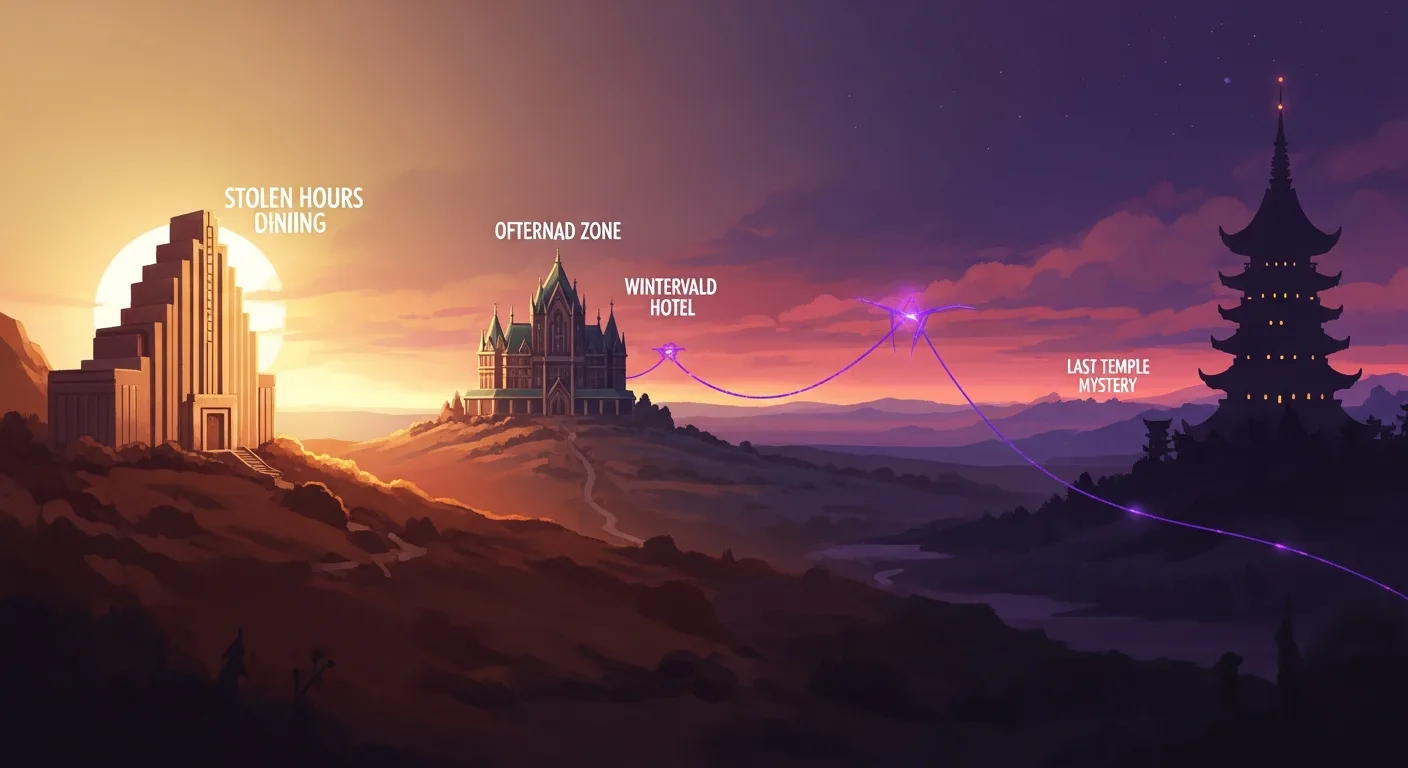
For larger groups running a Marathon across many time zones, games with strong narrative arcs hold people's attention across the multi-day format. Last Temple Mystery runs in daily floor-by-floor releases. Each floor builds on the previous one, and people return because they want to know what happens on the next floor, not because they feel obligated. We've tested Last Temple Mystery across 12+ time zones in Marathon format and the engagement pattern holds.
Bureau of Magical Affairs works particularly well for async-first teams because each case file is a self-contained episode that rewards attention but doesn't require that you remembered every detail from the previous session. We recommend it for new-hire cohorts that span multiple regions. The game's premise (everything is on fire, also there's paperwork) maps to the onboarding experience in a way that generates genuine inside jokes across the team.
For synchronous Big Game windows (teams within a manageable time-zone spread), Apocalypse generates the kind of real-time coordination pressure that doesn't work in async. The vaccine-race structure needs a live group, because Stage 2 routing decisions happen in minutes and the leaderboard energy is the point. We've run Apocalypse for tech teams from 25 to several thousand players in a single session; it's the highest-energy game in the catalog for a reason.
Step 3: Plan the pre-event communication window with timezone equity in mind
This step gets skipped more often than any other. For a Big Game, you need everyone to know about the event at least 7 days out. But if your announcement goes out at 10am Pacific on a Friday, your Singapore team won't see it until Monday morning their time, and your lead time just shrank by two days on one side.
For Marathon, pre-event communication is operationally different. The announcement matters, but what drives participation is the Day 1 nudge. For a global team, that nudge should land during each region's morning, not at a single universal time. We build this into the Marathon cadence automatically: the Day 1 email and the Day 2 mid-event pulse can be scheduled per-timezone, so your Tokyo participants get the same "Day 1 is live" message at 9am JST that your New York participants get at 9am ET.
In our experience, the gap between a Marathon that reaches 78% completion and one that reaches 92% is almost always in the mid-event communication, specifically whether the Day 2 nudge lands within the participant's working hours or not.
Step 4: Customize the experience to create shared cultural context across regions
When teams span multiple countries and work cultures, a generic off-the-shelf event can feel like a vendor product rather than a company event. This is where HeySparko's customization tiers earn their value in global-team contexts.
The Story tier rewrites the game's narrative to fit your team's actual situation. If your distributed team just closed a milestone or hit a headcount number or is navigating a product launch, that context becomes the game's stakes. Players in Singapore and players in São Paulo are solving the same fictional problem that mirrors their real one. That shared narrative context is what creates the "we" feeling across distance.
The NPC tier is particularly resonant for teams where regional cultures differ significantly: characters in the game can speak to industry-specific context that the whole team recognizes, without leaning on cultural references that are opaque to half the room.
For teams running a Marathon, customization compounds across days. Participants encounter branded elements and custom narrative repeatedly, which deepens the sense that this event was made for them specifically.
Step 5: Build the post-event moment for distributed teams
A Big Game for a co-located team ends with a visible shared moment: the leaderboard reveal, the winning team's celebration, the general energy of the room winding down together. For distributed teams, that moment is harder to manufacture but no less important.
For Marathon events, we recommend a short optional live wrap-up (15 minutes maximum) at the end of Day 3 or Day 5. This isn't a mandatory attendance call; it's a leaderboard reveal and a brief "here's what happened" recap that gives people who want the synchronous closure moment a way to get it. We see 40-55% of Marathon participants join these wrap-ups voluntarily, which tells us people want the shared ending even if they needed the async journey to get there.
For Big Game events with a global team running in two windows, a combined leaderboard announcement, shared via Slack or email, serves the same function. The winning team is announced to everyone at the same time, which creates the shared competitive moment without requiring a third Zoom call.
Under the Big Top lends itself to this kind of wrap-up particularly well: the final reveal of the circus mystery has a theatrical quality that works in a 10-minute recorded video just as well as it does live.
Step 6: Use the analytics to improve the next event
Every HeySparko event includes an analytics dashboard delivered within 24 hours of the event close. For distributed teams, this data is the most actionable insight you'll get into how your team engaged, not how they said they engaged in a survey.
The by-team and by-region participation breakdowns are where the time-zone problem shows up in data. If you see systematically lower engagement from one region, the fix is usually in the pre-event communication cadence or the window choice, not in the game itself. We've helped teams identify that their APAC participants were consistently less engaged in Marathon events not because they didn't want to participate, but because the Day 1 content dropped at 11pm their time rather than 9am.
Wintervald Hotel Mystery and Stolen Hours both perform well as follow-up Marathon events after an initial Last Temple Mystery run. Teams that have already participated in one Marathon understand the format and don't need the Day 1 orientation, which means the Day 1 engagement numbers are typically higher on the second event.
What the research says about distributed team engagement
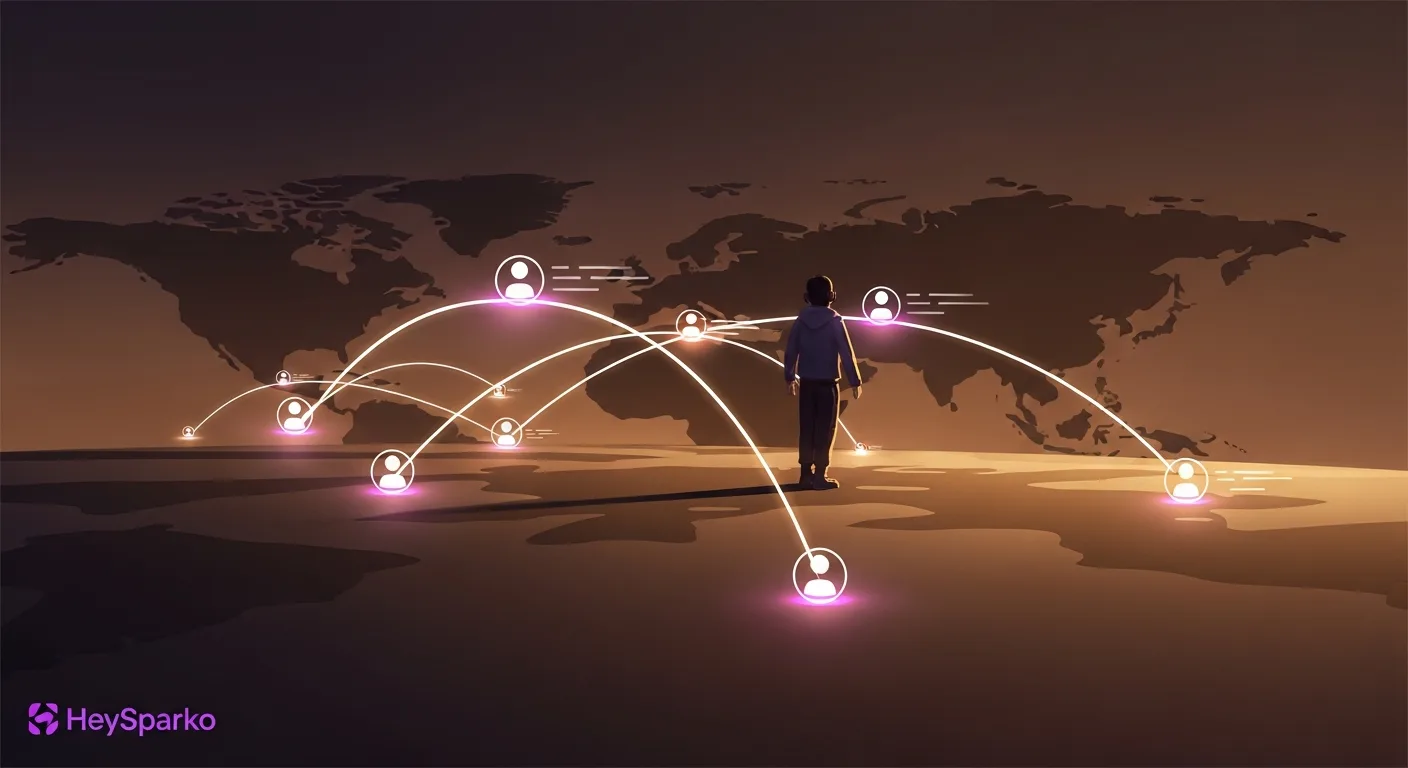
The operational pattern we see across our portfolio is consistent with what the research shows about distributed team engagement, and the research is surprisingly specific about the time-zone problem.
OECD's 2024 analysis of global workforce patterns found that the average global team spanning 3+ time zones shares only 2.5 hours of overlap in standard business hours. For teams spanning 6+ time zones, the same analysis estimates a 15-20% reduction in synchronous productivity compared to same-zone teams. That number alone explains why mandatory live events in wide-spread teams generate the resentment patterns People Ops leaders describe — you're asking for 90 minutes of synchronous engagement from a team that has fewer than 3 hours of synchronous overlap in a full workday.
Microsoft's 2024 Work Trend Index put a specific number to the preference shift: 57% of distributed workers prefer asynchronous engagement options to live ones. That doesn't mean they don't want to connect with their colleagues — it means they want to connect on their own terms, within their own work rhythm. The Marathon format was built for exactly this reality.
The evidence for why this matters beyond scheduling convenience comes from Microsoft's 2025 Work Trend Index (Breaking Down the Infinite Workday), which — based on a 31,000-knowledge-worker survey combined with Microsoft 365 telemetry — found that 30% of meetings now span multiple time zones, an 8-point absolute increase since 2021. That isn't a fringe-case constraint anymore; it's the operating reality for nearly a third of all collaborative work. For HR leaders, that shift means a team event format that ignores time-zone spread is now actively excluding a structural slice of the workforce — and connection events are one of the few levers that have a direct, measurable effect on whether distributed employees feel like part of the same team.
The academic evidence backs this up: Anog et al.'s 2023 systematic review on SSRN examined 60+ studies on structured team-building interventions and found that they consistently increase satisfaction and reduce turnover — with the effects amplified when integrated into a broader engagement strategy rather than treated as one-off events. That last point is the insight most HR leaders miss when planning a single global event: the ROI compounds when the format repeats, because each subsequent event builds on the team's existing shared vocabulary.
Deloitte's 2023 Human Capital Trends report added the connection dimension: 46% of employees reported feeling less connected to colleagues compared to before the pandemic. For globally distributed teams, that disconnection is structural, not situational. It won't resolve with a single annual event — but a quarterly Marathon cadence, run across time zones without scheduling friction, is the kind of consistent touchpoint that actually moves connection scores over time.
We see this in our own data. Teams that run a Marathon quarterly, rotating across Last Temple Mystery, Bureau of Magical Affairs, and Apocalypse, show completion rates that climb from the first event to the second and third, because participants know what to expect and come in ready to engage.
The format frequency question also touches retention directly. Workhuman and Gallup's 2024 joint research found that workers who receive meaningful recognition at least monthly are 20 times more likely to be engaged than those who don't. A quarterly Marathon with a publicly announced leaderboard and a Slack shout-out for the winning team is a structured, repeatable recognition mechanism — not a substitute for manager recognition, but a company-level signal that shows up in engagement survey scores over time.
For the HR leaders in this audience who need to justify the budget: the math is straightforward. SHRM's 2024 cost-per-hire calculation puts the cost of a non-executive departure well into five figures. A quarterly Marathon for a 300-person global team is a fraction of a single departure's cost. If it moves your engagement score by even half a point — which CultureAmp's 2024-2025 State of Culture data suggests correlates with a 31% reduction in voluntary turnover — the ROI calculation is the kind that Finance will approve without argument.
Frequently asked questions
How do you run a team building event for employees in multiple time zones?
The answer is almost always format selection before calendar work. For teams with a 6-hour or smaller time-zone spread, a live Big Game works well: schedule for overlap hours and everyone attends simultaneously. For teams spanning more than 6-8 hours, Marathon is the format that removes the scheduling burden entirely: content drops daily, players engage within their own working day, and the shared leaderboard creates the social connection without forcing anyone into a 6am or 11pm session. We see 78-92% completion rates in Marathon events at distributed companies.
What is the best virtual team building activity for global remote teams?
For global teams specifically, we recommend Marathon format games with strong narrative arcs. Last Temple Mystery and Bureau of Magical Affairs are the two we book most for internationally distributed teams. Both hold attention across multiple days of async play, both work regardless of time zone, and both have been tested across 12+ countries with consistent engagement. The key is that the daily story progression creates a reason to return, rather than relying on mandatory attendance to drive participation.
How many time zones can a virtual team building event cover?
With Marathon format, the practical limit is 24 hours, because players engage within their own business day, so there's no time zone too distant to participate. We've run Marathon events for teams spanning Singapore, London, and Chicago in the same event without asking anyone to stretch their schedule. Big Game events work best within a 6-hour spread; beyond that, you either run multiple windows (which is possible but loses the single shared leaderboard energy) or you shift to Marathon. Our largest single-event players have included teams across 19+ time zones on the same leaderboard.
Do employees actually complete async team building activities, or do they ignore them?
Completion rates in our Marathon events run 78-92% across 500+ companies, which is typically higher than the attendance rates these same organizations see at mandatory live events. The mechanic that drives completion is the leaderboard: people return to check standings and compete for position, not because they're required to. The 35% of participants who skip live events but engage in Marathon are what we call "async-native" participants, and they prefer engagement on their own terms. A well-run Marathon with mid-event nudges and a clear leaderboard announcement typically outperforms any mandatory-attendance format for genuine engagement.
How do you create a sense of shared experience for a team that never meets in person?
Three elements matter most. First, a shared narrative: a game with a real story arc that everyone follows together, even if they play it at different times, creates shared conversational material in a way that generic trivia doesn't. Second, a visible leaderboard that everyone can check at any time creates the "what's the score?" pull that drives Slack messages between teammates who've never shared an office. Third, a post-event moment, even a 15-minute optional wrap-up call for the leaderboard reveal, gives people who want the synchronous closure a way to get it. Wintervald Hotel Mystery and Under the Big Top both work well for this: the mystery reveal creates a shared "wait, THAT was the killer?" moment that spans time zones. Book of Awakened Nightmares is the option we suggest when a team responds better to slow-burn tension than to urgency — its atmospheric ensemble beats build across the multi-day Marathon arc rather than peaking in a single live moment.
How much lead time does a global virtual team building event need?
For a standard Marathon with no customization, 10-14 days is workable, which gives us time to configure the event, set up the per-timezone communication schedule, and get the invitations out with enough lead time for your team to clear their calendars. If you want Story or NPC customization, allow 10 business days: the customization requires a briefing call and a content review cycle. For Big Game events, the same 10-14 day window applies. The most common mistake we see is a People Ops team reaching out 5 days before an event they've had on the calendar for a month. Check our pricing page for configuration options and lead-time guidance.