

New hires lose their sense of connection faster than most onboarding timelines predict. The first week is usually dense with practical logistics (system access, tool walkthroughs, compliance training, manager introductions), and then, somewhere around week three, the new hire quietly realizes they know the org chart but don't know anyone on it. The structure they were given was built for information transfer. Nobody built structure for relationship formation.
Since 2020, we've delivered virtual team events to 700+ companies across 50+ countries — 2,000+ events in the portfolio so far. Onboarding cohort events are where we see the widest gap between what the program is designed to do and what the new hire experiences. A 45-minute "welcome Zoom" with a vendor-run icebreaker isn't team building. An all-hands that new hires attend as spectators isn't either. Connection doesn't form in broadcast mode.
What team building activities work best for new hire onboarding — and how do you run them without adding months of planning overhead to an already packed events calendar?
Why the first event matters more than the onboarding deck
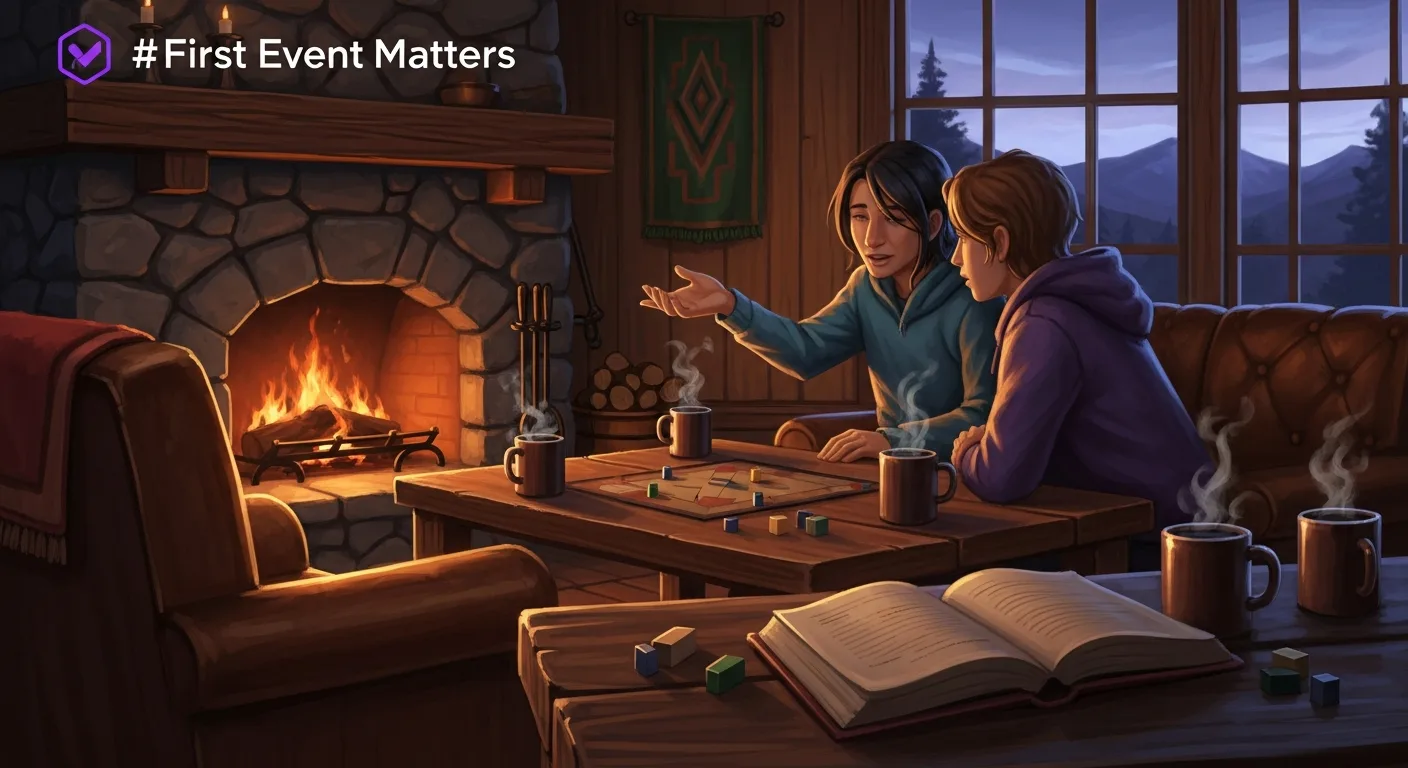
The research on early-tenure connection is fairly direct: employees who form at least three strong working relationships in their first 90 days have meaningfully better retention at the one-year mark. But most onboarding programs are structured entirely around information transfer: what the company does, how the tools work, what the policies say. Information transfer is a presentation. Relationship formation requires something structurally different: a shared task under mild pressure, where the team has to communicate and coordinate to accomplish something genuinely novel.
This is the design principle that separates effective onboarding team events from the ones that feel like a vendor obligation. The team has to do something. Not watch something, not fill out a survey afterward. Do something that requires talking to each other in conditions that don't yet have established social scripts.
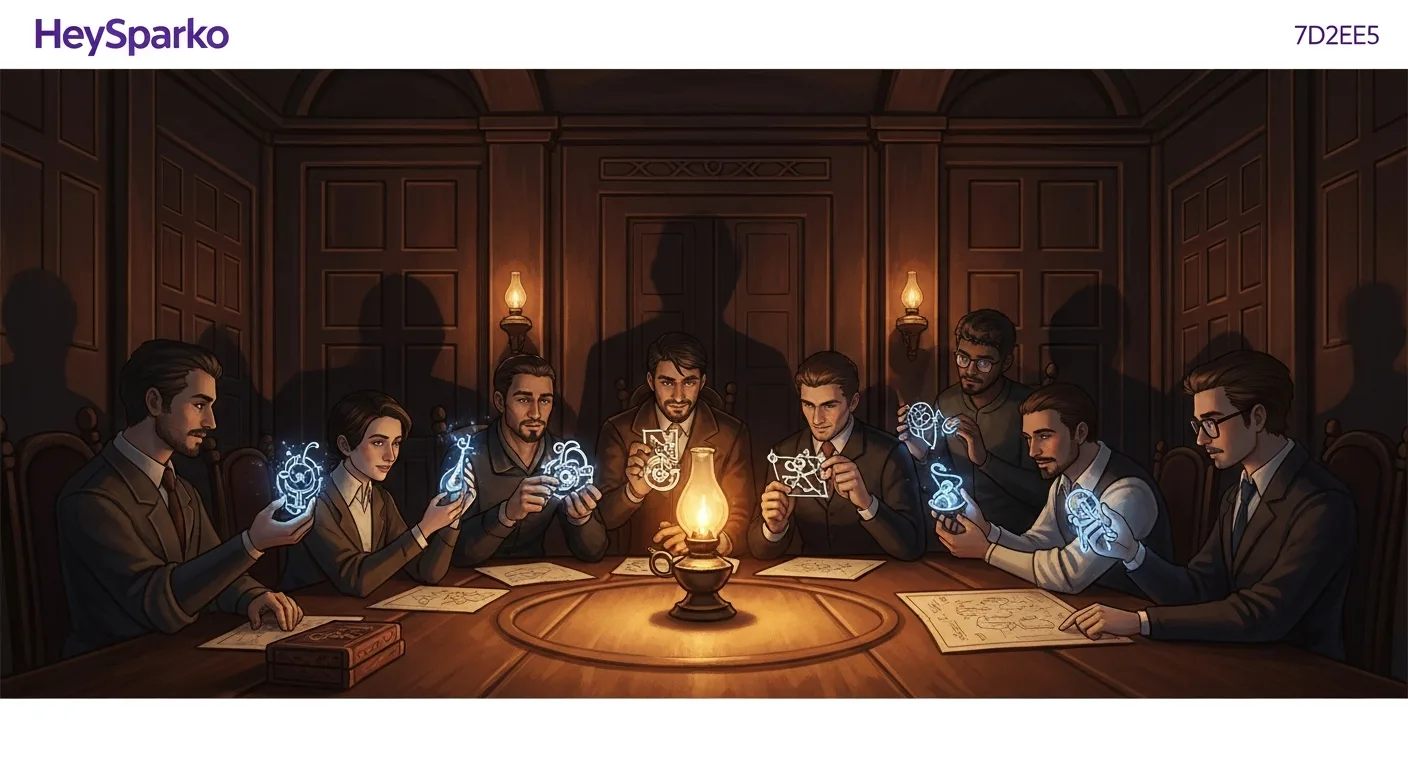
Bureau of Magical Affairs is the game we recommend most often for onboarding cohorts. Its premise (four magical bureaucratic emergencies, ninety minutes, newly-deputized Bureau agents) is whimsical on the surface. What it produces is a team that has had to coordinate roles, disagree about strategy, and hand off decisions quickly under time pressure. Those micro-interactions are exactly the behavioral patterns new hires and their managers need to establish early, and they're far harder to build from a slide deck.
We worked with a technology company that had been running onboarding as a three-day in-person program. When hiring pace outgrew the physical facility and the cohort moved to fully remote, 90-day attrition climbed noticeably. Their fix: a Mission 8-Bit Big Game at the end of orientation week, for every cohort of 15-40 new hires. The three-stage arc of the game (escape the office, rebuild the retro machine, ship the killcode) mapped intuitively onto the "we're all figuring this out together" energy of a new hire's first week. Within two hiring cycles, 90-day attrition returned to baseline. The content of orientation week hadn't changed. What changed was the structured coordination experience at the end of it.
Timing matters as much as the event itself. An onboarding team event works best either at the end of the first week (while first impressions are still forming) or at the end of the first month, when new hires have started to feel the gaps in their working relationships. Both windows are defensible. What underperforms is the ad hoc event scheduled three months in, when the new hire has either built their connections already or quietly started looking elsewhere.
Big Game or Marathon — the format decision for your cohort
The format question is less about preference than it is about your cohort's geographic reality.
If your onboarding cohort is broadly time-zone-aligned (within a 6-hour spread, or clustered in the same region), the Big Game format is almost always the better call. A single live event at the end of orientation week creates a social moment with a clear memory anchor. "We did the mystery game on Friday" gives the cohort a shared reference that makes the Monday morning Slack conversation feel like a continuation rather than another cold start. The Game Host runs the entire 60-90 minutes; your team participates as players, not organizers. There's no prep burden on People Ops beyond a calendar invite and a Zoom link.
For distributed onboarding cohorts (new hires in multiple continents, time zones that don't overlap cleanly, or remote employees who will never share a convenient live window), the Marathon format changes the calculus. Over 1-5 days, new hires engage with daily game episodes on their own schedule. The leaderboard creates social pull across the cohort without requiring anyone to take a 6am or 11pm call. Across our data, Marathon-format events reach approximately 35% more participants than their live equivalents at the same companies. The people who "couldn't make the Zoom" still finish the Marathon, because async removes the scheduling penalty.
In our work with a global tech company running distributed onboarding cohorts, the live event had a consistent problem: APAC hires participated at significantly lower rates than their Europe and North America counterparts. Every orientation session was built around a window that worked for two thirds of the world and asked the other third to join at an inconvenient hour. Moving the cohort team event to a 3-day Marathon changed that directly. Completion rate across the full cohort reached 72%, and the leaderboard teams that naturally formed were genuinely cross-regional: Singapore, London, and two US cities in the same squad, competing against teams with similar geographic mixes. That kind of cross-regional peer formation almost never emerges from a single live window.
Bureau of Magical Affairs runs as both Big Game and Marathon with equal strength, which is a practical advantage for teams whose cohort format varies month to month. For cohorts that want higher urgency and prefer their pressure time-compressed, Apocalypse in Marathon format gives the team a four-day escalating stakes arc; new hires report they know more about their teammates' problem-solving styles after running it than they would have from a week of Slack interaction. For cohorts that respond better to slow-burn tension than to urgency, Book of Awakened Nightmares offers a quieter, atmospheric mystery-adventure with ensemble narrative beats — a softer intensity that still surfaces how new hires think under uncertainty.
Which games actually work for onboarding cohorts

The game selection for an onboarding event comes down to two variables: the culture's comfort with different aesthetics, and what behavioral dynamics the event needs to surface. Here's how the onboarding-relevant games in our catalog break down.
Bureau of Magical Affairs is the highest-recommended onboarding game in our catalog, and the reason is in the premise. The chaos-meets-bureaucracy setup (too many emergencies, too little time, brand new to the role) is a direct mirror of first-week onboarding feelings. New hires are already living that premise when they show up. The game gives it a shared, humorous container. Teams that run Bureau for onboarding consistently report the event as the first moment they felt like a team rather than a collection of people who happened to start the same week.
Apocalypse works particularly well for engineering, fintech, and startup cultures where urgency and problem-solving pressure are part of the job identity. The four-stage vaccine-race structure rewards coordination and task-switching, and the post-event analytics give managers specific behavioral observations: who led under pressure, who deferred, who bridged the handoff between stages. For cultures that are comfortable with the aesthetic (stylized emergency rather than horror, closer to World War Z than The Last of Us), it's one of the highest-engagement onboarding options we have.
Wintervald Hotel Mystery is the right choice for enterprise, legal, finance, or any culture where the word "whimsical" would generate polite skepticism. The Agatha Christie-flavored deduction mystery is the most formal game in the catalog, and it rewards quiet, analytical thinkers, the new hires who might not speak up in a group icebreaker but will absolutely form and defend a deduction theory. We've run it for onboarding at professional services firms and large financial institutions; the response from People Ops is that it reached the introverted high performers that every other event missed.
Under the Big Top is a strong choice for summer onboarding cohorts and for companies with warmly creative cultures. The vintage circus mystery creates deduction debates that feel low-stakes but are genuinely revealing about how new hires process ambiguous information, useful behavioral signal for their managers without the pressure of a competitive urgency mechanic.
Mission 8-Bit is specifically suited to cohorts that will be working together on a defined quarterly project. The three-stage arc (escape the hostile office, rebuild the retro machine, ship the killcode) is a literal product-launch metaphor, and the 8-bit sprites that players receive after the event become a team artifact. Managers of engineering and product teams have used the post-event sprite sheet as the team's Slack avatar pack for the quarter. That kind of material residue is rare in team events and unusually sticky.
Stolen Hours is the genre-bending option for December onboarding cohorts or January reset events. The four-world structure (postapocalypse, cyberpunk, steampunk, biopunk) deliberately surfaces different player strengths in each world, which means the cohort's range of problem-solving styles gets more visibility than in a single-aesthetic game. It's particularly effective as a mixed-cohort event where new hires join established team members.
What to get right around the event itself
Three operational decisions that most People Ops managers underinvest in:
Team composition within the event. The default for onboarding events is cohort-only: new hires with new hires. That's the right call for a week-one event. A second event in week four or five that mixes the new cohort with established team members does different work. When experienced colleagues run Mission 8-Bit or Stolen Hours alongside new hires, the new hires get to observe how seasoned teammates handle ambiguity and make decisions under time pressure. That behavioral modeling is a form of cultural transfer that a structured 1:1 or an employee handbook doesn't deliver.
The 48-hour follow-up. Most onboarding events end when the event ends. Companies that extract the most durable value from team-building events have managers do a brief debrief, 10 minutes in the next 1:1, or an async Slack message after the event: "What did you notice about how your new teammates approached that?" The question makes the experience retrievable. HeySparko's post-event analytics include by-team coordination scores and individual engagement data; managers who review those numbers with their new hire in the first 48 hours report stronger early engagement scores for those employees than managers who don't follow up.
Customization for cohorts joining a company at a meaningful moment. For new hires starting during a product launch, a headcount milestone, a rebrand, or a strategic pivot, the three customization tiers do work that a generic event cannot. The NPC tier puts real internal voices into the game characters, giving new hires immediate grounding in the company's tone and inside language. The Logo tier wraps the game environment in the company's visual identity, so the event feels like something the company owns rather than a vendor product. The Story tier rewrites the game's narrative arc to tie directly to the company's actual situation. New hires who play a Story-tier onboarding event leave it knowing concretely what the company is trying to accomplish right now, which most orientation programs fail to communicate in any memorable way.
Customize for your team
TYPE 1
Your team as in-game characters
Real team members, mascots, or characters from your games as NPCs.
TYPE 2
Your brand integrated natively
Logo and brand elements native to game environments — locations, items, UI.
TYPE 3
Your story woven into the game
Company milestones, products, and inside references woven into puzzles, dialogues, and tasks.
When all three tiers combine, an onboarding event becomes a piece of the company's culture rather than a line item in the events budget. The new hire's first substantial shared experience with the team is something built for that team, at that company, at that moment. We've run fully customized onboarding events for companies at Series B, at 1,000-employee headcount milestones, and at rebrands; the consistent new hire survey feedback is that the event made the company's actual story tangible in a way that day-one orientation slides never quite managed. Pricing and customization options are detailed at /en/pricing.
What the data says about onboarding and team connection
Buffer's 2023 State of Remote Work report found that, among remote workers who feel connected, 46% attribute that connection to having met in person; among those who do not feel connected, 56% cite no opportunity to connect socially. For onboarding, that second number is the operationally useful one — connection failure tracks directly to absent social structure, not to a personality mismatch or a bad hire. The implication for People Ops is straightforward: a structured connection event isn't a nice-to-have on top of orientation week — it's the social infrastructure new hires are explicitly telling researchers they need. An in-person off-site delivers it when geography allows; a live Big Game or async Marathon delivers it when geography doesn't. A manager who watched Apocalypse reveal how their new hire handles pressure under a deadline has real observational data to work with in subsequent 1:1s. A manager who ran a slide-based orientation doesn't.
Deloitte's 2023 Human Capital Trends report found that 46% of employees felt less connected to their colleagues compared to before the pandemic — and this was years after distributed work had normalized into standard operating procedure. For new hires who joined the workforce during or after 2020, the pre-pandemic baseline of in-person coffee conversations and spontaneous desk-side relationships never existed. Disconnection isn't a regression for these employees; it's the starting condition. The onboarding program has to compensate for an absence of organic social infrastructure that previous generations of employees built passively over shared office time.
The academic evidence aligns with what we see in practice. Anog et al.'s systematic review of 60+ team-building studies (SSRN, 2023) found that structured team-building activities reliably increase satisfaction and reduce turnover, with the strongest effects occurring when activities are integrated into a broader development strategy rather than run as isolated one-off events. The key finding: standalone events produce short-term positive affect. Integrated events — timed to milestones, followed up by managers, connected to the broader engagement calendar — produce measurable retention impact. The distinction is structural, not cosmetic.
Microsoft's 2024 Work Trend Index adds a specific data point directly relevant to format decisions: 57% of distributed workers prefer asynchronous engagement options over live ones. For onboarding, this is a substantive argument for Marathon-format events with distributed cohorts. New hires who prefer async aren't disengaged — they're often among the most thoughtful contributors in the cohort. A format that accommodates their working style consistently gets better participation than one that requires a live window they may not have or may not be comfortable in.
Across the 2,000+ events we've facilitated since 2020, the onboarding events with the highest self-reported connection scores share two characteristics: the game requires real coordination, not passive participation, and the manager uses the post-event analytics to follow up with the new hire within 48 hours. The first variable is a design choice made at booking. The second is a management behavior that People Ops can coach for. Both are within reach of any team that treats onboarding as a retention investment rather than a compliance calendar.
Frequently asked questions
What team building activities work best for new hire onboarding?
Adventure and mystery formats outperform trivia and passive icebreakers for onboarding cohorts because they require coordination rather than individual performance. In our experience, Bureau of Magical Affairs is the most effective onboarding game we offer — its four-stage chaos-meets-bureaucracy structure gives new hires a chance to self-organize, surface their working styles, and build rapport through a shared challenge in under 90 minutes.
How many people can join an onboarding team-building event?
HeySparko's formats scale from small cohorts of 15 players up to 10,000 in a single session. For onboarding specifically, cohort sizes between 20-100 tend to produce the best dynamics — large enough to form diverse teams with genuinely different perspectives, small enough that the social relationships stay legible. Organizations running high-volume onboarding for hundreds of new hires monthly typically run simultaneous parallel sessions of 30-60 players, each with its own dedicated Game Host.
Should new hires team build only with their cohort or also with existing employees?
Both serve distinct purposes and the strongest onboarding programs use both at different moments. A cohort-only event in week one lets new hires build peer relationships without the performance anxiety of being evaluated by established colleagues. A mixed event in week four or five — where the cohort joins an existing team — gives new hires the chance to observe how experienced teammates handle ambiguity under coordination pressure. That behavioral modeling is cultural transfer that a presentation can't replicate.
What's the difference between Big Game and Marathon format for onboarding?
A Big Game is a single live event, 60-90 minutes, everyone in the same session at the same time. Best for time-zone-aligned cohorts who can share a live window; it creates a clear social anchor the cohort references afterward. A Marathon runs over 1-5 days with daily content releases and async participation. Best for distributed cohorts spanning multiple time zones, or for cultures where mandatory live events drive low attendance. In our data, Marathon-format onboarding events reach roughly 35% more participants than the live equivalents at the same companies.
Do participants need to download software or create an account to join?
No. Every HeySparko event is fully browser-based — players join via a shared link with no installation and no account creation required. This matters particularly for onboarding, where new hires often have corporate-locked laptops with restricted install permissions. We've tested on environments with CrowdStrike and Cisco endpoint restrictions; the platform works without IT exceptions. The last thing a new hire's first week needs is a support ticket triggered by the team event.
How do we measure whether the onboarding team-building event worked?
HeySparko provides a post-event analytics dashboard covering participation rates, by-team coordination scores, and an NPS pulse from players immediately after the event. For onboarding specifically, the downstream signal that matters most is 30-day and 90-day retention for the cohort, tracked through your HRIS. The event analytics give managers actionable behavioral data — who led which phase, which teams coordinated well under pressure — that translates directly into more informed early 1:1 conversations. Managers who use that data in the first 48 hours consistently report stronger early engagement for those new hires.