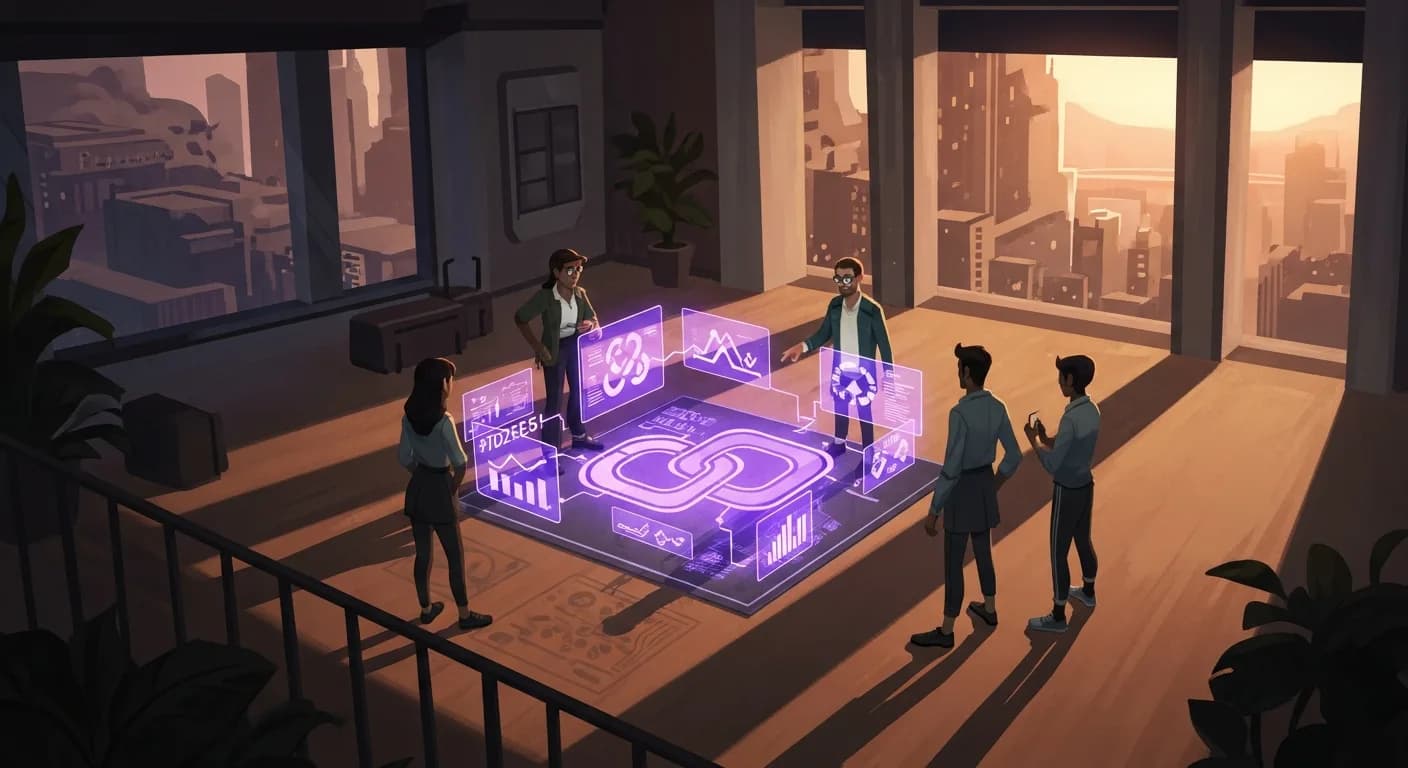

SaaS teams are distributed by design. That's not a problem to solve — it's the structure. Engineering hires globally from day one. Product managers span continents. Customer success covers twelve time zones so the on-call chart looks clean. What this structure creates, over time, is a genuine connection gap: people working on the same roadmap who've never been in the same room, who know each other's GitHub handles before they know each other's cities. When People Ops starts asking how to close that gap, the format answer matters more than most engagement budgets reflect.
We've run 2,000+ virtual team events for 700+ companies across 50+ countries since 2020. A disproportionate share of those clients are SaaS companies — Series B through D, 150 to 2,000 employees — and the same format mistakes surface in nearly every first engagement. The wrong synchrony assumption. Game content that doesn't fit an engineering culture. Or a vendor who sold the event without asking whether Singapore and Amsterdam can share a Thursday afternoon.
The question we hear most often from SaaS People Ops leaders isn't "what game should we run?" It's "how do we get our distributed engineering team to actually show up and care?" The game selection matters less than the format decision, and the format decision is almost entirely driven by time zone spread and opt-out culture. Getting that sequence right is what this article covers.
What is the best team-building format for a distributed SaaS company with engineers across multiple time zones?
Why generic team building fails for SaaS teams
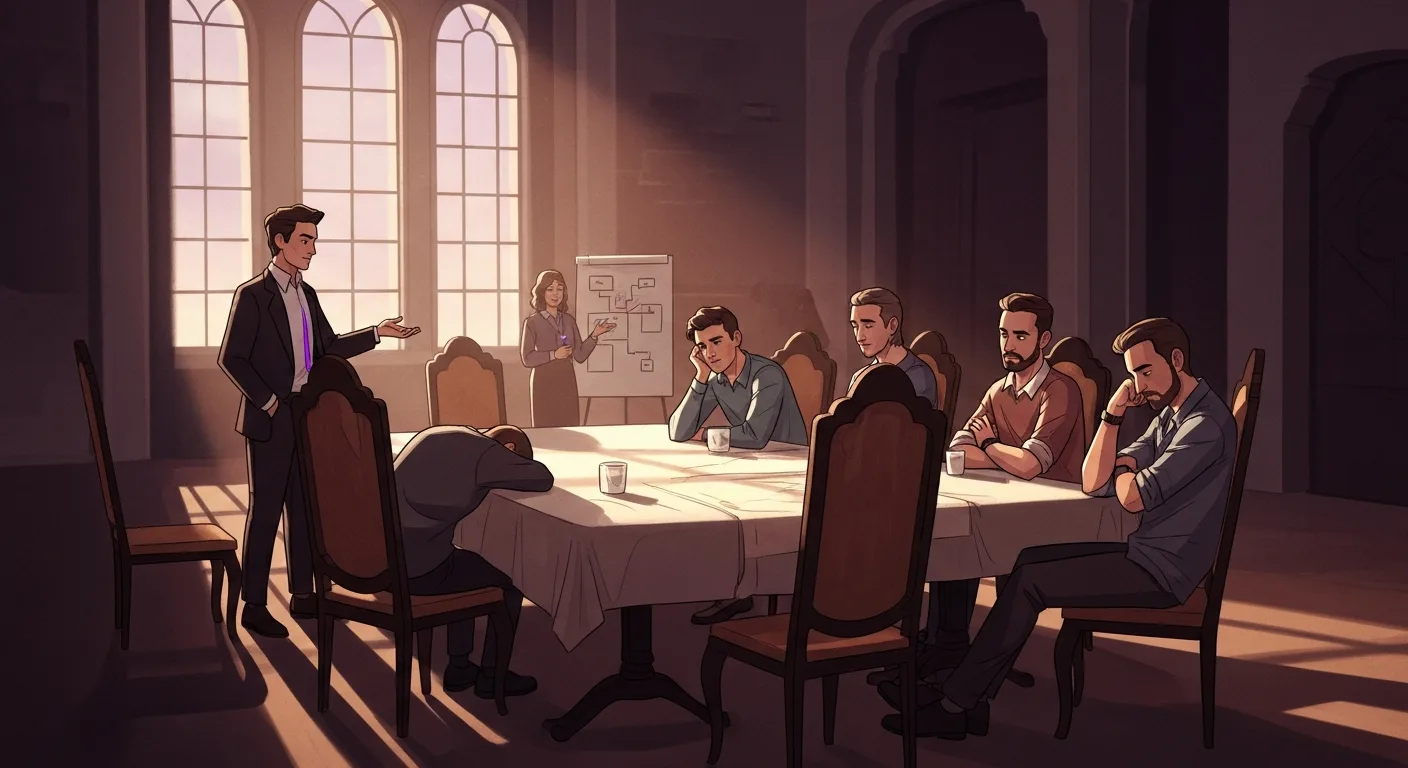
The failure mode we see most often: a company books a Friday afternoon event, half the engineering team declines or silently no-shows, the half who attend mostly humor the host, and the People Ops manager spends the following Tuesday defending the budget in a Slack thread. The event wasn't necessarily bad. The format was wrong for this audience.
SaaS teams have a structural tension that most team-building vendors don't design for. Business operations tends to run on meetings and synchronous energy; engineering tends to run on focus time and async tools. A mandatory live event at 3pm Thursday asks engineers to break deep-work windows, creates timezone inequity for the teammate in Seoul, and signals that the event was designed for someone else. The opt-out pattern that follows isn't disengagement — it's a rational response to a bad format fit.
We see this pattern most clearly at Series B and C companies, typically in the 200-500 employee range, where a remote-first engineering culture is already established and People Ops is trying to build connection across a team hired distributed from day one. At one SaaS company we work with — around 350 people across four time zones, product and engineering heavy — the first Big Game we ran hit 64% participation. Moving to Marathon format the following quarter pushed that to 81%. Same game quality. Different synchrony model.
What doesn't work for engineering-heavy SaaS teams:
- Mandatory synchronous events scheduled during deep-work hours
- Generic content with no narrative hook — it rarely converts the engineers who already skip the happy hours
- Events that treat a 12-hour timezone gap as a footnote rather than a design constraint
What does work: formats designed around async participation where possible, or live events with enough narrative energy to earn 90 minutes on the calendar voluntarily. The distinction sounds simple; the execution is where vendors differ.
Big Game vs. Marathon: how to make the right call
The format decision is the most consequential one, and it mostly makes itself once you know the team's timezone spread and opt-out culture.
Big Game is HeySparko's synchronous live format: a single event, 60-90 minutes, a Game Host running the entire session, teams competing on a shared leaderboard in real time. Everyone is on the same call, in breakout teams of 5-8, experiencing the same story beats at the same moment. The energy is high — live leaderboard shifts create the kind of shared reaction that async formats cannot replicate. Big Game works best when your team can coordinate a shared window: groups within roughly a 6-hour timezone spread, kickoffs where attendance is part of the occasion, or events like a company anniversary where the live shared experience is the point.
Marathon was built for the cases where Big Game's synchrony assumption breaks down. It runs over 1-5 days, releasing daily episodes that players complete on their own schedule. Someone in Tokyo plays at 3pm local; someone in Chicago plays the same episode that evening. Both are on the same leaderboard, following the same story, competing without sharing a Zoom window. We see 78-92% completion rates in Marathon events at 500+ companies — typically stronger numbers than forced-synchronous events at the same organizations, because the opt-in model changes who shows up.
Three questions usually settle the format decision:
Timezone spread. Are all participants within a 6-hour window? If yes, Big Game is viable. If no, and for most SaaS engineering orgs the answer is no, Marathon almost always performs better.
Event type. Is this a one-time occasion (kickoff, anniversary, holiday party) or a recurring engagement program? Single occasions often warrant the shared energy of a Big Game; quarterly programs benefit from Marathon's lighter operational footprint.
Opt-out culture. Does the engineering org already have an established pattern of skipping mandatory live events? If yes, Marathon's async model converts that audience at meaningfully higher rates than requiring synchronous attendance.
A fintech SaaS we worked with last year — around 600 people, engineering and product heavy, distributed across North America, Eastern Europe, and Southeast Asia — ran their Q4 engagement program as a 3-day Marathon. The People Ops lead told us they'd tried a synchronous Big Game the prior year and got under 50% participation from the technical org. The Marathon ran 77% completion with no mandatory-attendance framing. The leaderboard was the only nudge anyone needed.
One thing worth naming: the formats aren't competing products. Teams that run a Big Game for their holiday party and a Marathon for their quarterly engagement program aren't doubling up — they're using each format for what it does well. The holiday party wants the shared energy of a live moment. The quarterly program wants sustained participation across the team, including the third of engineers who would never join a Friday Zoom social.
Games that land for engineering and product cultures

Once you've settled the format question, game selection matters. Not because any HeySparko game is a wrong choice for SaaS teams (they all scale to 10,000 players and run in the browser without any software install), but because narrative fit drives the engagement ceiling. The game that lands for a creative agency doesn't always land for a 200-person engineering org.
For quarterly kickoffs and product launches: Mission 8-Bit is the most-requested kickoff game in our catalog for a reason. Its three-stage arc — escape the hostile office, rebuild the retro machine, enter the digital world and ship the killcode — maps onto quarterly project rhythm so cleanly that engineering teams recognize the metaphor without being told. The three-act structure (setup, build, launch) is the actual shape of a sprint cycle, which gives the game a credibility with technical audiences that most team-building content lacks. The 8-bit sprite sheets players receive post-event have turned up as Slack avatars, sticker packs, and quarterly retrospective slides at a half-dozen SaaS companies we've worked with.
For onboarding cohorts: Bureau of Magical Affairs is the game we recommend for new-hire orientation weeks more than any other. The premise — too many magical emergencies at once, also Bureau paperwork — is the literal feeling of a first week at a fast-moving product company. We've run it for 100+ onboarding cohorts across the tech sector. New hires who experience it as a group tend to form cross-functional bonds that a standard icebreaker deck doesn't reach, partly because the game puts them in a shared chaotic situation before they've learned who the safe people are to talk to.
For general all-hands or milestone events: Last Temple Mystery is the reliable flagship. The four-floor Mayan temple expedition handles groups from 15 to 10,000, works in both Big Game and Marathon formats, and bridges mixed audiences because the puzzle mechanics reward coordination and observation rather than any domain-specific knowledge. It's the game that works when you're not sure whether the room skews engineering or business ops — it tends to bridge them because the puzzles surface different strengths in different people.
For high-energy moments — Q4 kickoffs, post-launch events, teams who just shipped something difficult — Apocalypse delivers a focused urgency that other formats don't match. The team races a real clock to develop and distribute a vaccine across four stages, and the role-specialization that emerges by Stage 2 is genuinely interesting to observe. Engineering teams find their natural coordinators and ICs during the process; the handoff patterns that appear under pressure are the same ones you want visible in actual sprint work. It's stylized, not graphic — tested across 12+ countries with strong comfort feedback.
For more formal enterprise SaaS cultures (finance functions, legal teams, customer-facing orgs at enterprise software companies), Wintervald Hotel Mystery fits the brief better. A sophisticated whodunit set in a snowbound hotel, Knives Out-adjacent in tone, with deduction mechanics that reward careful reading and deliberate team discussion rather than speed and energy.
For December and end-of-year events: Stolen Hours is the unconventional option for SaaS teams who'd rather skip another holiday trivia night. A genre-bending chase across postapocalyptic, cyberpunk, steampunk, and biopunk worlds to recover Santa's stolen clock hands. The Pixar-tone art keeps it warm. The four world-shifts surface different player strengths in ways that single-narrative games don't — useful for engineering teams where role diversity runs deep and the person who leads in the cyberpunk stage isn't necessarily the same one who leads in the steampunk stage.
When customization makes the event feel like yours
When the event needs to feel like a company event rather than a vendor product the company purchased, the NPC, Logo, and Story customization tiers let you bring your brand inside the game. NPC rewrites the characters to speak in your company's voice, using internal language, references, and naming conventions. Logo integrates your brand colors and marks into the game environment throughout. Story retunes the narrative arc to your company's actual situation — a launch upcoming, a milestone just hit, a chapter closing.
Customize for your team
TYPE 1
Your team as in-game characters
Real team members, mascots, or characters from your games as NPCs.
TYPE 2
Your brand integrated natively
Logo and brand elements native to game environments — locations, items, UI.
TYPE 3
Your story woven into the game
Company milestones, products, and inside references woven into puzzles, dialogues, and tasks.
We worked with BGaming on their multi-year company anniversary — around 400 employees, distributed across 12+ countries, engineering and business development both in the room. They ran a fully customized event with all three tiers: real team members became character guides across each stage, and the company's founding story appeared as a hidden final chapter that only resolved if the team completed the game. Participation hit 89% against a 75% target. The People Ops lead described the cross-functional conversations afterward as noticeably different from previous years — engineers and business-ops colleagues "referencing the same event in the same way" for weeks, which they hadn't seen from prior anniversary formats.
Customization is most valuable when the event has to land as a company milestone, not just an activity line item. It's an add-on choice, not a quality gate — stock HeySparko events work well for most SaaS teams. But when leadership needs the event to carry a specific narrative, or when the team is large and distributed enough that shared cultural reference matters more than shared presence, customization earns its cost. See /en/pricing for current tier options.
What the data says about distributed team connection
The strategic argument for team-building investment in a SaaS company isn't about fun. It's about the connection infrastructure that retention depends on.
The Buffer State of Remote Work 2023 survey asked remote workers directly about their experience of connection. Among those who feel connected at work, 46% attribute that connection to having met in person at some point. The more instructive figure comes from the other direction: among those who do NOT feel connected, 56% cite no opportunity to connect socially as the reason. That 56% is a sub-sample — it applies to workers already trending toward disconnection, not to all remote employees. For SaaS People Ops teams, that framing matters: the investment isn't a nice-to-have for general satisfaction, it's a direct response to a named cause reported by the people you're most at risk of losing.
The academic literature supports the case for recurring programs over one-off events. Anog et al. (SSRN, 2023) conducted a systematic review of 60+ team-building intervention studies and found that structured activities reliably increase satisfaction and reduce voluntary turnover, with the effect amplified when events are integrated into a broader development strategy rather than scheduled in isolation. For SaaS People Ops, the implication is that quarterly cadence outperforms annual events on retention signal — the compounding effect comes from regularity, not from any individual session.
On the burnout dimension of the retention equation: Deloitte's 2024 Burnout in the Workplace report found that 77% of professionals report burnout at their current job, with lack of recognition now ranking ahead of workload as the primary driver. Workers who attend two or more company-sponsored events per quarter report 23% lower burnout symptoms than those who don't. For SaaS engineering teams where attrition frequently follows unrecognized effort, that 23% gap is the operational argument for quarterly event cadence — not as morale theater, but as a sustained signal that the company sees the work.
In our own data: Marathon-format events at distributed companies reach approximately 35% more of the "lurker" population — people who don't show up to typical mandatory live events — compared to synchronous alternatives. For an engineering org with an established opt-out pattern, that gap represents the portion of the team a well-designed program reaches that a poorly-designed one won't.
Frequently asked questions
What team-building format works best for a distributed SaaS company?
Time zone spread is the deciding factor. For teams within a 6-hour window, a Big Game — a 90-minute live event with a hosted narrative and real-time leaderboard — delivers higher shared energy and a memorable synchronized moment. For teams spanning 8 or more time zones, Marathon performs better: 1-5 days of async daily episodes with a shared leaderboard that creates pull without forcing anyone onto a 6am call. In our experience, distributed engineering cultures see completion rates 20-30 points higher in Marathon format compared to synchronous alternatives at the same companies.
How many people can participate in a virtual team event?
Both Big Game and Marathon scale from 15 to 10,000 players in a single event. Small teams (15-50) get a tighter coordination dynamic where individual contributions are visible across the group. Larger groups (500+) split into competing squads on a shared leaderboard, keeping the social energy live across the full organization. There's no installation requirement — players join via browser link on any modern laptop, including corporate-locked devices. The leaderboard structure holds up at almost any size, which is unusual for narrative-driven virtual events.
Do participants need to download anything to play a HeySparko game?
No. Every HeySparko game runs entirely in the browser — no app download, no account creation, no IT clearance beyond the standard web access employees already have. This matters for engineering teams at companies with strict device management policies. Players receive a link, click it at event time or during their Marathon window, and play. The only technical requirement is a modern browser, which is a lower bar than most enterprise vendor platforms and removes the usual "I couldn't get it to work on my work laptop" attrition before the event starts.
What's the difference between Big Game and Marathon for a SaaS team?
Big Game is one synchronous live event: the full team on a video call at the same time, competing in real time, with a Game Host running the session from start to finish. Marathon spreads the same narrative content across 1-5 days, with daily episodes that players complete on their own schedule — no shared Zoom window, no timezone exclusion. The leaderboard updates as episodes are completed, creating competitive pull without requiring attendance. For SaaS teams with significant timezone spread or an engineering culture that opts out of mandatory live events, Marathon typically outperforms Big Game on actual participation. We see 78-92% completion rates in Marathon events where synchronous formats at the same companies have run 40-55%.
How do we measure the impact of a virtual team-building event?
HeySparko delivers a participation analytics report within 24 hours: participation rate, team-by-team breakdown, coordination scores by stage, and a post-event NPS pulse. Marathon events include multi-day analytics showing which episodes had highest engagement and where completion dropped off by team or manager — data that points to the manager-effectiveness gaps People Ops is often trying to locate anyway. The measurement approach we've seen work best pairs HeySparko's analytics with a 3-question pre/post pulse survey, run independently, measuring connection score before the event and again 4-6 weeks later. That structure gives Finance a trackable signal and gives People Ops a metric to carry across multiple quarterly programs.
What does team building for a SaaS company typically cost?
Pricing is tiered by player count and event duration, with no per-event setup fee beyond the base rate. The cost-per-engaged-employee decreases as group size grows — mid-size events in the 100-500 player range tend to hit the best efficiency on that metric. Customization add-ons (NPC, Logo, Story) are flat-rate regardless of group size. The Booking Calculator at /en/pricing shows the full configuration and exact price before you contact us. We built it that way because SaaS teams and their finance partners shouldn't need to get on a discovery call just to see what something costs.