

Virtual team building has moved well past the "emergency alternative to the office party" framing. People Ops budgets now routinely include it as a line item, vendor RFPs have gotten more specific, and the tolerance for generic quiz-and-Zoom-happy-hour combinations has essentially bottomed out. The teams getting the most from their event budget — the ones whose post-event NPS holds weeks later — tend to share one thing: they resolved the format question before they started browsing game catalogs.
Five years into running virtual team building as a category — 1,500+ events for 700+ companies across 50+ countries — we've watched the failure modes repeat enough to predict most of them.
The most common one isn't a bad game or a misallocated budget. It's a format mismatch: a live synchronous event booked for a globally distributed team, a 6am call for the Singapore office, resentment in the analytics by Thursday. The game was fine. The format wasn't.
How do you choose the right virtual team building activity when your team spans multiple time zones?
The mechanics of virtual team building
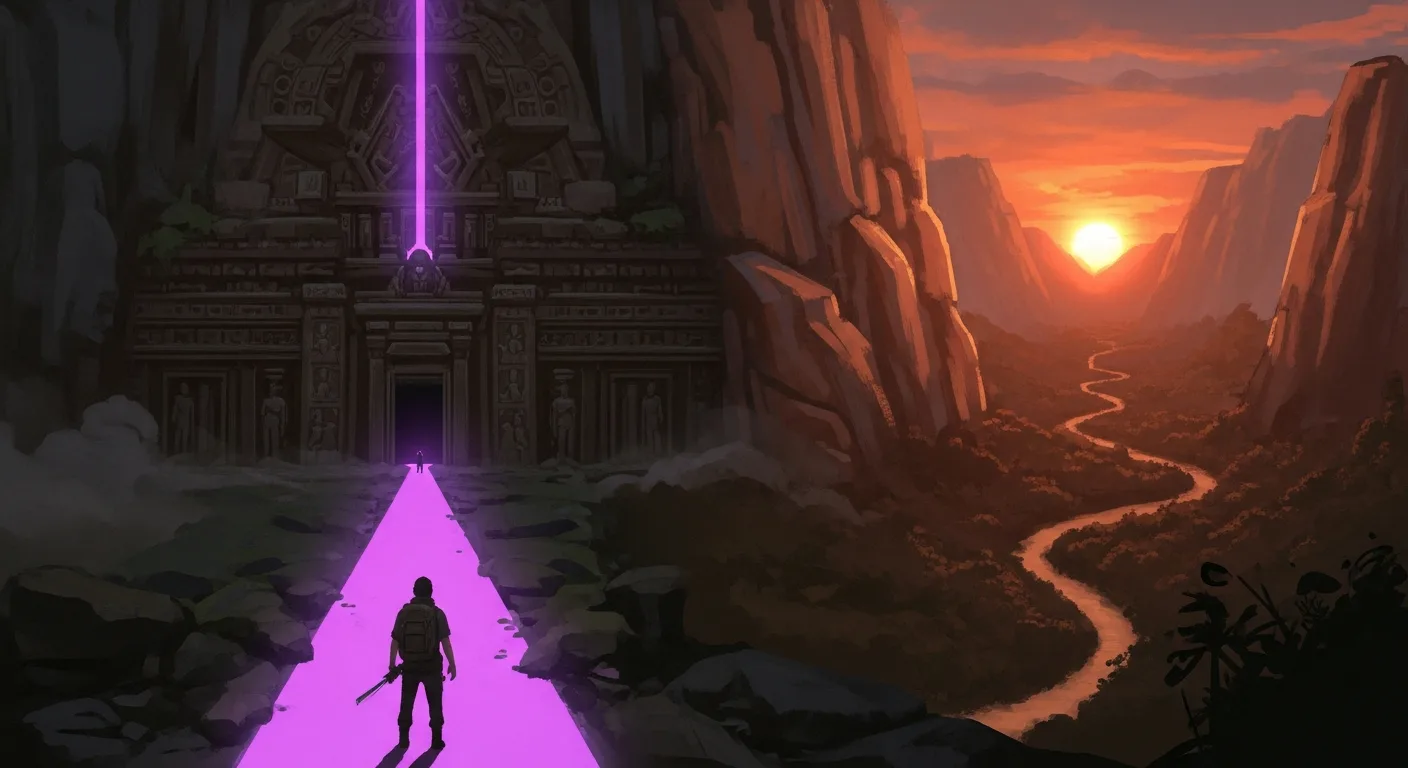
The HeySparko catalog is built around two formats — Big Game and Marathon — and the practical difference between them shapes nearly everything about what an event can realistically deliver.
Big Game is a single live synchronous event, 60-90 minutes, with a professional Game Host running the whole thing from start to finish. Players split into breakout teams of 4-8 and work through story beats, puzzles, and challenges, submitting answers through a browser-based app that requires no install and no account creation. The leaderboard updates in real time. At 10,000 players, it's still one live room with one host and one shared moment when the leaderboard shifts.
What players actually do in that room depends on the game. In Last Temple Mystery, teams navigate four floors of a Mayan temple through logic, observation, and coordinated deduction. In Apocalypse, the team races against an overnight outbreak to develop a vaccine across four city locations, where routing decisions in Stage 2 directly reshape the puzzle layout in Stage 3. These are narrative experiences with real mechanical stakes, not trivia nights wrapped in an adventure premise.
Marathon runs differently in nearly every dimension. It spans 1-5 days, releasing daily content episodes that unlock on schedule but let players engage whenever they want. Your Tokyo team plays at 3pm local; your San Francisco team plays at 3pm local. No one sacrifices their morning or their evening. The leaderboard is always live, which creates competitive pull between episodes — we see team channels discussing suspect theories and puzzle reasoning at hours no live event format could reach.
In our data, opt-in Marathon events at 500+ companies run 78-92% completion rates. That figure includes a segment that rarely shows up to mandatory live events. Roughly 35% of people who complete a Marathon would have skipped a Big Game scheduled at an inconvenient local time. For engineering-heavy organizations with significant APAC presence, that segment can represent a third of the entire headcount.
Both formats share the same operational advantage: no install, no account creation, no IT preparation required. Bureau of Magical Affairs — our year-round adventure where newly-deputized Bureau agents handle four cascading magical emergencies — runs over a browser link on corporate-locked laptops. We've run it for cohorts of 200+ new hires without a single IT ticket.
Matching the format to your team's actual situation
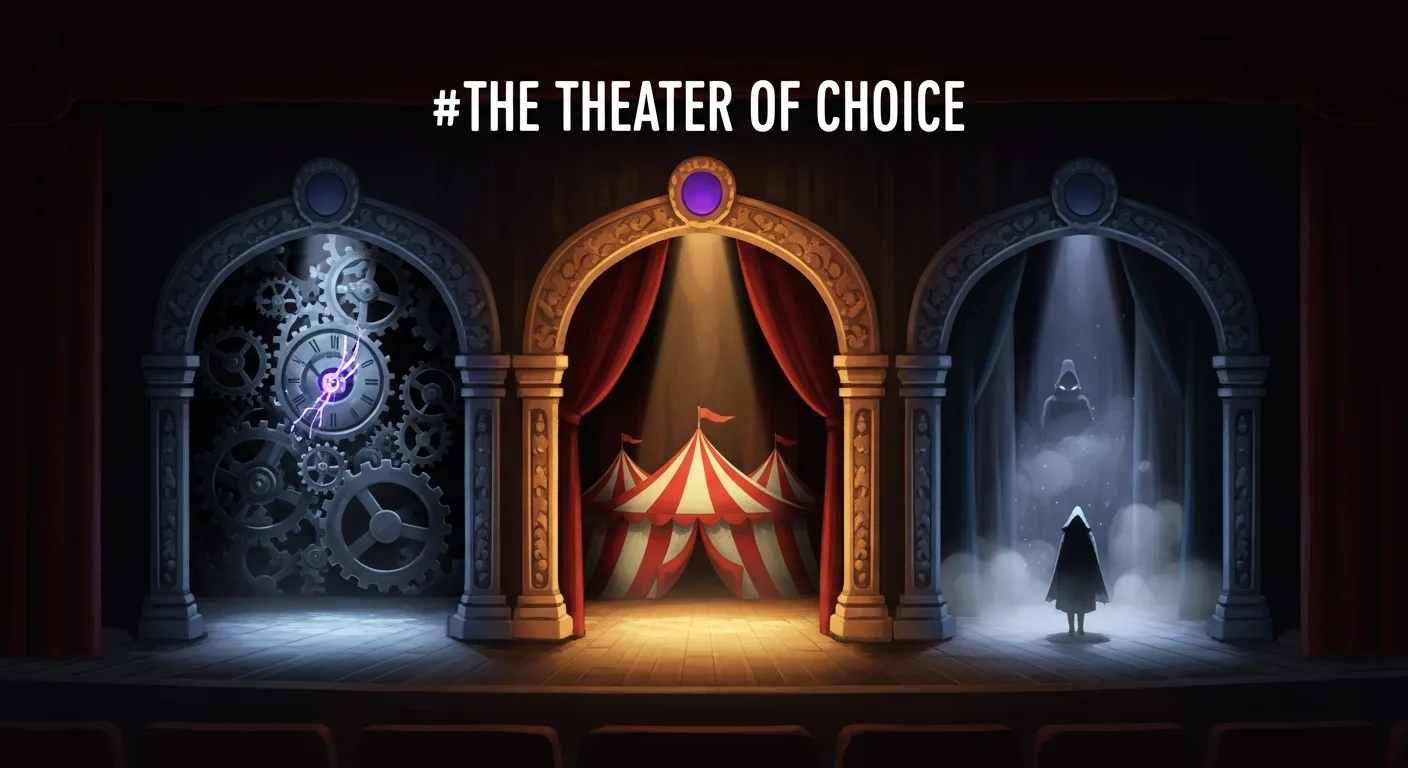
The format decision usually resolves itself once two questions are on the table: how spread is the team across time zones, and what is the cultural relationship with mandatory synchronous events?
A team inside a 6-hour time-zone spread is a strong Big Game candidate. The energy of a live synchronous event — watching the leaderboard update, hearing teams react to a mid-game plot twist — is genuinely better for groups that can share a window without disadvantaging someone. A hospitality company we worked with ran a Big Game for their 240-person EMEA team; the live event created a shared reference point the team mentioned for months afterward. They scheduled it at 4pm London, tolerable as far east as Warsaw. The format held.
A team with 12+ time-zone spread, or a culture where mandatory live events generate pushback, is a Marathon candidate. We've seen the pattern repeat at distributed tech companies where engineering sits in APAC and business operations sits in North America. The Big Game looks appealing — contained, shareable, easy to report on. But when the Singapore team is blocking their evening to attend a game they weren't consulted on, the engagement investment registers as a scheduling imposition. The post-event NPS carries that.
For those situations, a multi-day investigation like Wintervald Hotel Mystery — a snowbound hotel whodunit across three stages of deduction — or the vintage circus investigation in Under the Big Top works across time zones without the live-window problem. Each day's episode releases on schedule; teams work through it whenever it fits. The competitive leaderboard pulls people back. We've had participants in Marathon events checking standings at midnight local time, not because they were required to, but because they were invested in whether their team was ahead.
Group size adds another dimension to the decision. Big Game's highest-energy live experience typically runs strongest under ~400 players; larger groups split into competing squads on a shared leaderboard, which works but changes the character of the event. Marathon handles large-group scale more naturally because the daily-release structure doesn't require a mass-simultaneous-attendance moment.
There is no default-correct format. "We always do a live event" and "we always go async" are both constraints that prevent the right call. The format question should precede the game question every time.
Game selection: tone, complexity, and cultural fit

Once the format is clear, game selection comes down to three variables: tone, narrative complexity, and how much ambiguity the team's culture can comfortably absorb.
Tone is the quickest filter. Apocalypse — a vaccine race across four city locations under a real-time clock — is energizing for engineering and fintech teams that enjoy time pressure and coordination mechanics. It's stylized rather than graphic; it tests routing decisions and specialist-role formation more than it tests knowledge. It's the game we recommend most for sales kickoffs that want a "we solve hard things under pressure" through-line. Running it for a buttoned-up enterprise compliance function, however, creates friction by Stage 2. For those audiences, Wintervald Hotel Mystery hits the right register: sophisticated, deduction-heavy, closer to a private detective evening than to a crisis simulation.
Narrative complexity matters for first-time clients and onboarding cohorts. Bureau of Magical Affairs is the game we recommend most for new-hire orientation weeks — we've run it for over 100 such cohorts at tech companies — because its premise maps directly onto the new-hire experience. The magical chaos of Bureau No. 7 (objects with opinions, time anomalies, frogs that cause comas) mirrors the first-week feeling of "too many things on fire, there's also paperwork." The tone is warm and whimsical; the mechanics are substantial enough that experienced teams don't feel under-challenged.
For year-end events, the choice between Wintervald Hotel Mystery and Stolen Hours splits along cultural lines. Wintervald works for enterprise audiences where office-parody holiday formats feel off: finance functions, legal teams, any culture that would enjoy an Agatha Christie novel more than a workplace comedy. Stolen Hours is the genre-bending alternative — Santa's clock hands scattered across postapocalypse, cyberpunk, steampunk, and biopunk worlds, tied to a 90-minute chase. The engineering team that found Wintervald's deliberate deduction pace too slow will often love Stolen Hours' rapid world-switching. We've seen these two December games split cleanly by culture; the question is whether the room prefers mystery or adventure.
Under the Big Top occupies its own category. It's the summer game for whimsy-friendly cultures, with a three-stage vintage circus investigation that works particularly well in Marathon format, where the multi-day investigation rhythm mirrors an actual unfolding case. A media company we worked with ran it as a five-day Marathon in late July; the suspect-theory discussions in their team Slack channel ran for four days straight before the finale unlocked.
The useful sequence: map the team's cultural energy (high-pressure vs. reflective, whimsical vs. sophisticated, adventure vs. mystery), confirm the format (live vs. async), then select the game. That order gets to the right answer faster than starting with the game catalog and working backward.
What the data says about virtual team building activities
The most persistent objection from Finance when HR Leaders bring recurring engagement programs to budget review is that the ROI is unclear. The research has gotten sharper on this question.
Gallup's 2025 State of the Global Workplace report puts global employee engagement at 21% — flat for two years. The same report's most-cited finding is that 70% of variance in team engagement is attributable to the direct manager, not the company or the role. That framing matters for how engagement events fit into the picture. They're not substituting for management; they're creating shared-experience infrastructure that managers can build on. Without that infrastructure, the gap between a strong manager's team and a weak manager's team tends to widen.
Atlassian's Teamwork Lab February 2024 study — tracking 1,600+ gatherings since August 2022 across roughly 25,000 data points — found that intentional team gatherings boost team-connection scores by an average 27%. For new graduates, the lift runs from 74% pre-gathering to 96% post, a 22-point jump. The same research found the effect decays to baseline over approximately four months, implying three gatherings per year is the cadence that sustains the connection benefit rather than allowing it to erode between events.
That four-month half-life is the data backbone behind the quarterly engagement program recommendation. It's not arbitrary scheduling preference; the connection benefit from a single event has a measurable shelf life, and a once-per-year event program is spending budget to build something that disappears before the next cycle.
The academic literature supports the pattern. Anog et al. (SSRN, 2023) conducted a systematic review of 60+ studies and found that structured team-building activities reliably increase satisfaction and reduce turnover, with effects amplified when activities are integrated into a broader development strategy rather than treated as isolated events.
The retention math sharpens the cost argument. SHRM's 2024 cost-per-hire calculation puts a non-executive departure in the mid-five-figures range including recruiting, onboarding, and ramp time. A quarterly engagement program for a 300-person team clears the financial bar if it prevents two or three departures in the year. The events don't have to be the primary cause of retention; they need to be part of the system that makes the team feel worth staying in.
What we see in our own portfolio adds texture to the industry numbers. Marathon completion rates of 78-92% in opt-in events tell us something specific about workforce composition: there is a segment in most distributed companies that will engage deeply with a well-designed async experience but won't attend a mandatory live event at a time that doesn't fit their local calendar. For companies with significant APAC engineering presence, that segment can represent 30-40% of the technical workforce. Excluding them from the engagement design because the only format on offer is synchronous is a planning mistake, not a cultural reality.
For events where brand ownership matters — company anniversaries, milestone celebrations, customer-facing programs — customization amplifies the effect in ways that standard events don't. The three available tiers (NPC, which rewrites the game's character voice using your company's language and inside references; Logo, which integrates your visual brand across the game environment; and Story, which rewrites the narrative arc to fit your specific situation) each function as a flat add-on. BGaming ran their multi-year company anniversary as a fully customized Big Game for approximately 400 employees, combining all three tiers. Participation hit 89% against a 75% target. Engineering team members who rarely engage with company-wide events showed up in the free-response feedback of the following month's engagement survey. The customization shifted the event from "vendor product we licensed" to "something BGaming made."
Customize for your team
TYPE 1
Your team as in-game characters
Real team members, mascots, or characters from your games as NPCs.
TYPE 2
Your brand integrated natively
Logo and brand elements native to game environments — locations, items, UI.
TYPE 3
Your story woven into the game
Company milestones, products, and inside references woven into puzzles, dialogues, and tasks.
Deloitte's 2024 Burnout in the Workplace report puts a direct frame on event frequency: workers attending two or more company-sponsored events per quarter report 23% lower burnout symptoms than those who attend none. The causation runs in both directions — engaged people attend events AND report lower burnout — but the correlation is consistent enough to bring into a budget conversation without overstating it.
Frequently asked questions
How many people can participate in a virtual team building activity?
Both HeySparko formats scale to 10,000 players in a single session. For Big Game, the highest-energy synchronous live experience works best under roughly 400 players; larger groups split into competing squads on a shared leaderboard, which scales cleanly. Marathon handles large groups more naturally because players engage on their own schedule, so there is no mass-simultaneous-attendance requirement. We've run events for groups of 15 and for groups of several thousand across both formats in the same year.
What's the difference between Big Game and Marathon formats for virtual team building?
Big Game is a single live event, 60-90 minutes, everyone synchronous, with a professional Game Host running it start to finish. It works best when the team can share a live window without disadvantaging someone by time zone. Marathon runs over 1-5 days with daily content releases; players engage whenever they want, any time zone. The leaderboard creates competitive pull without the scheduling burden. For global teams with 8+ time-zone spread, Marathon is almost always the right call; for teams within a 6-hour window, Big Game's shared-energy advantage is genuine.
Do participants need to download software or create an account?
No install and no account creation required. Every HeySparko game runs in-browser on any device with a modern browser, including corporate-locked laptops. The browser-based design covers both Big Game and Marathon formats across all adventure and mystery titles. People Ops teams name this as a reliable operational advantage — there is no IT ticketing process between deciding to run an event and distributing the link to participants. The barrier to joining is essentially zero once the link is shared.
How do we measure the impact of a virtual team building event?
HeySparko delivers an analytics report within 24 hours: participation rate, team-by-team scores, coordination heat maps by game stage, and an NPS pulse sent to all players. For longer-horizon measurement, pair the event with a three-question pre/post pulse survey to track connection scores. The Atlassian Teamwork Lab 2024 research gives a useful benchmark — a well-run gathering should lift team-connection scores by roughly 27% on average. Marathon's multi-day analytics add a layer Big Game can't: daily engagement patterns, return rates, and where teams dropped off before the finale.
How do we choose between an adventure game and a mystery game?
Adventures — like Last Temple Mystery or Apocalypse — tend to favor coordination under pressure and forward momentum. Mysteries — like Wintervald Hotel Mystery or Under the Big Top — favor deduction, evidence synthesis, and deliberate pacing. In our experience, the split usually comes down to culture: high-tempo engineering and sales teams tend to prefer adventure energy, while more analytical or deliberate cultures often rate mysteries higher. When in doubt, we ask: does the team want to race, or does it want to solve?