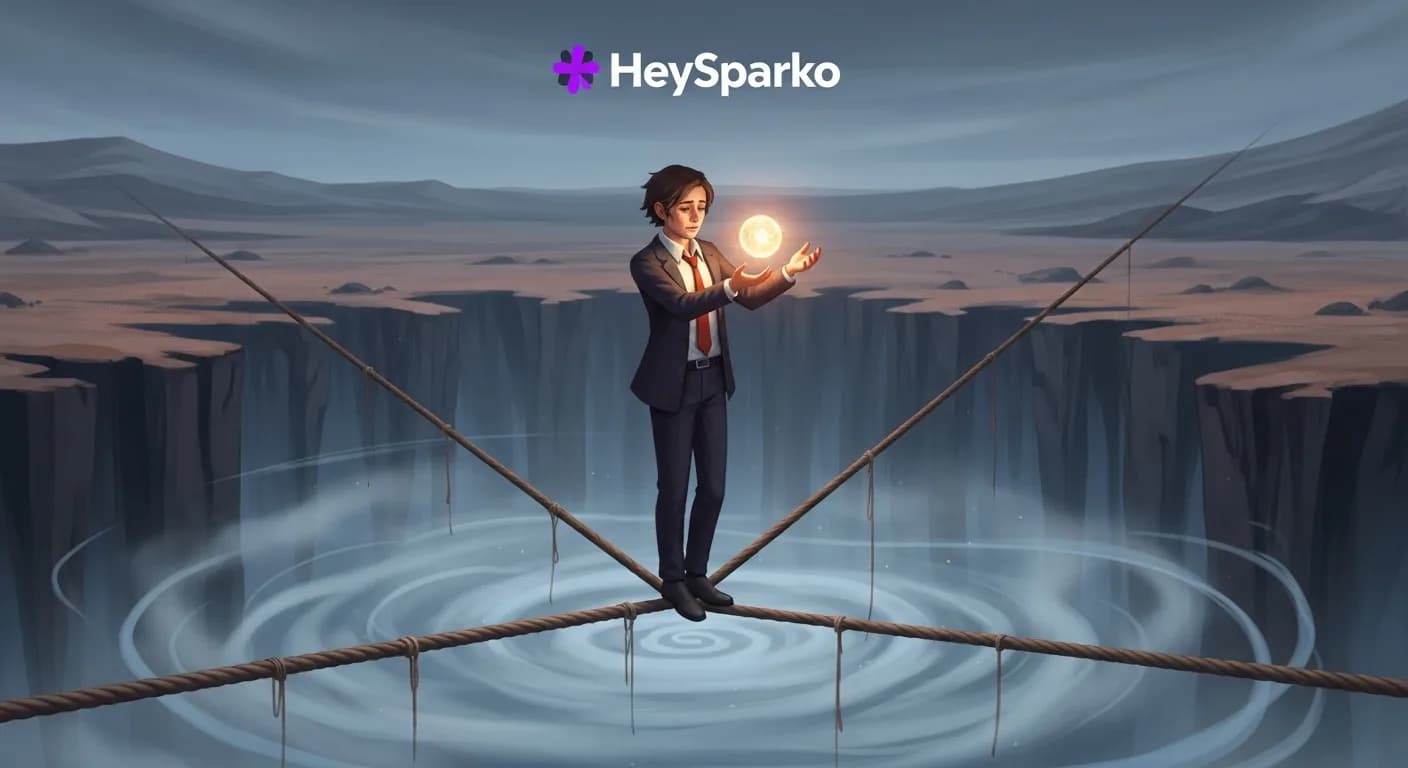

Customer success has quietly become one of the most structurally over-loaded functions in distributed software companies. Over the past five years, the CS org has absorbed work that used to live in three places — account management, technical support, and post-sale onboarding — and turned it into one role that holds the customer's emotional weight across the entire lifecycle. Most CS teams are distributed by design, and most of them spend their day in one-to-one calls absorbing whatever the customer brought. By 4pm on a Thursday, they have performed empathy as a full-time job for eight hours.
Since 2020, we've delivered virtual team events to 700+ companies across 50+ countries — 1,500+ events in the portfolio so far. A meaningful slice were customer success-specific: onboarding cohorts for new CSMs, mid-year resets for renewal teams, recognition events after the team saved a flagship account. The patterns that work for a 200-person sales org do not transfer cleanly to a CS team that's been on calls all day. Reps want connection, but not another performance; structure, but not another deck; a game that asks them to think with a different part of their brain than the one doing customer empathy since 9am.
So what virtual team building games actually work for customer success teams that already spend most of their day holding the emotional weight of someone else's escalation?
Why customer success teams need a different event design than sales or engineering
Three things make customer success teams unlike most other functions when you're picking a virtual event for them.
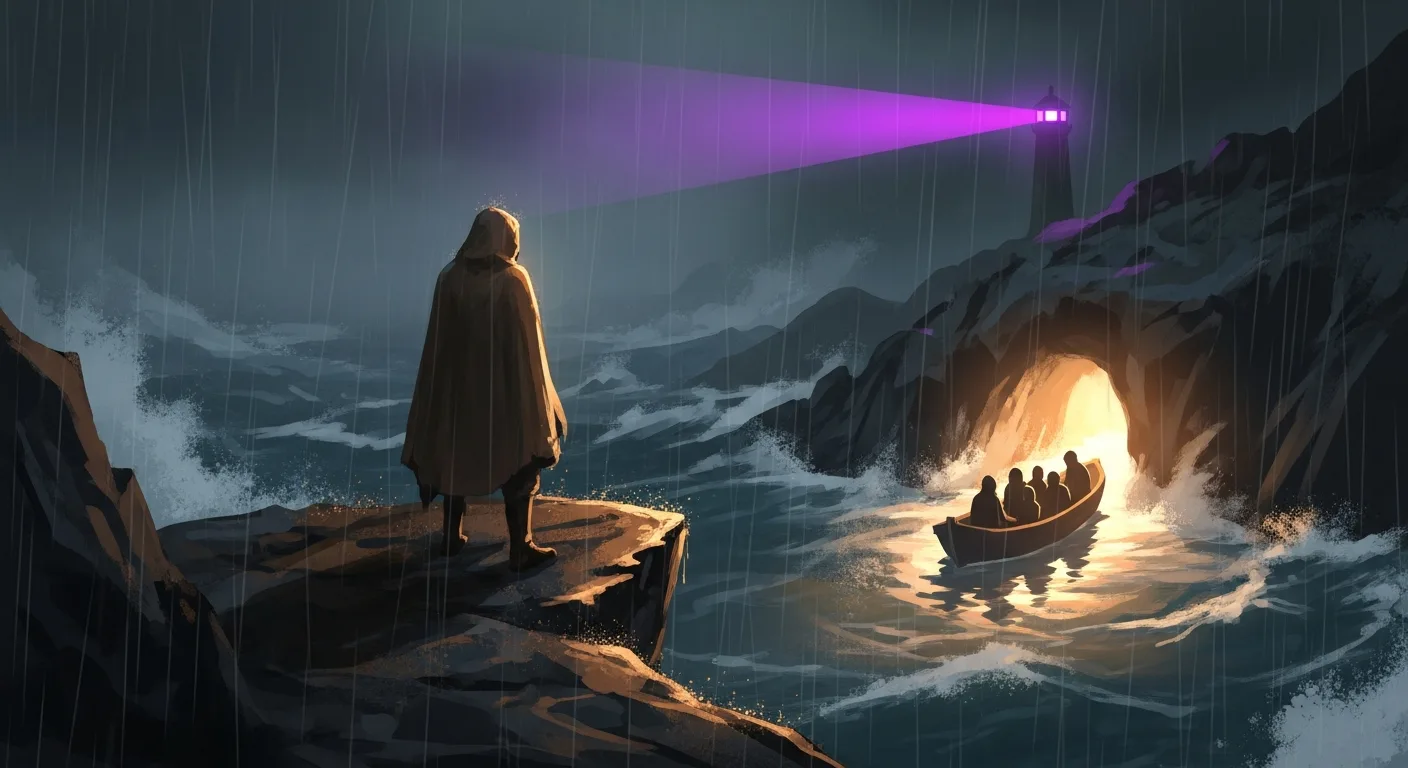
The first is the empathy-fatigue dimension. CSMs spend their day absorbing customer frustration, churn-risk anxiety, escalation handoffs from sales, and internal coordination with product on edge-case bug reports. The cumulative emotional load is real and cumulative. A team event that asks them to "be vulnerable" or "share something personal" lands as one more empathy task for people who have been doing it all day. What lands instead is an event where the energy flows toward the team: a game where someone else holds the narrative, the puzzles ask for analytical thinking rather than feelings, and the team's only job is to think together about something that has nothing to do with renewals or product roadmaps.
The second is the cross-pod isolation pattern. Most CS orgs are organized by segment (SMB, mid-market, enterprise), region, or industry vertical. Inside a pod, CSMs know each other well. Across pods, they barely overlap — the enterprise CSM and the SMB CSM may have never been on a single call together in two years of working at the same company. We've seen the right kind of virtual event dissolve those pod boundaries for an hour or three days, putting a mid-market CSM from EMEA next to an enterprise CSM from New York on the same randomized breakout team. The cross-pod conversations that start during the game continue in Slack for weeks afterward. That post-event Slack tail is where most of the lasting value lives.
The third is the calendar-density problem. CS calendars are mostly booked. Renewal calls, QBRs, escalations, internal pipeline syncs, customer onboarding hand-offs. Asking a CSM to block 90 minutes for a live event during business hours costs them either preparation time for a customer call or the call itself. Marathon format tends to fit CS teams better than most other functions for exactly this reason: the 30-45 minute daily episodes can be played at 10pm from the couch, not during the workday when the calendar is genuinely contested.
Big Game versus Marathon for a customer success team's rhythm
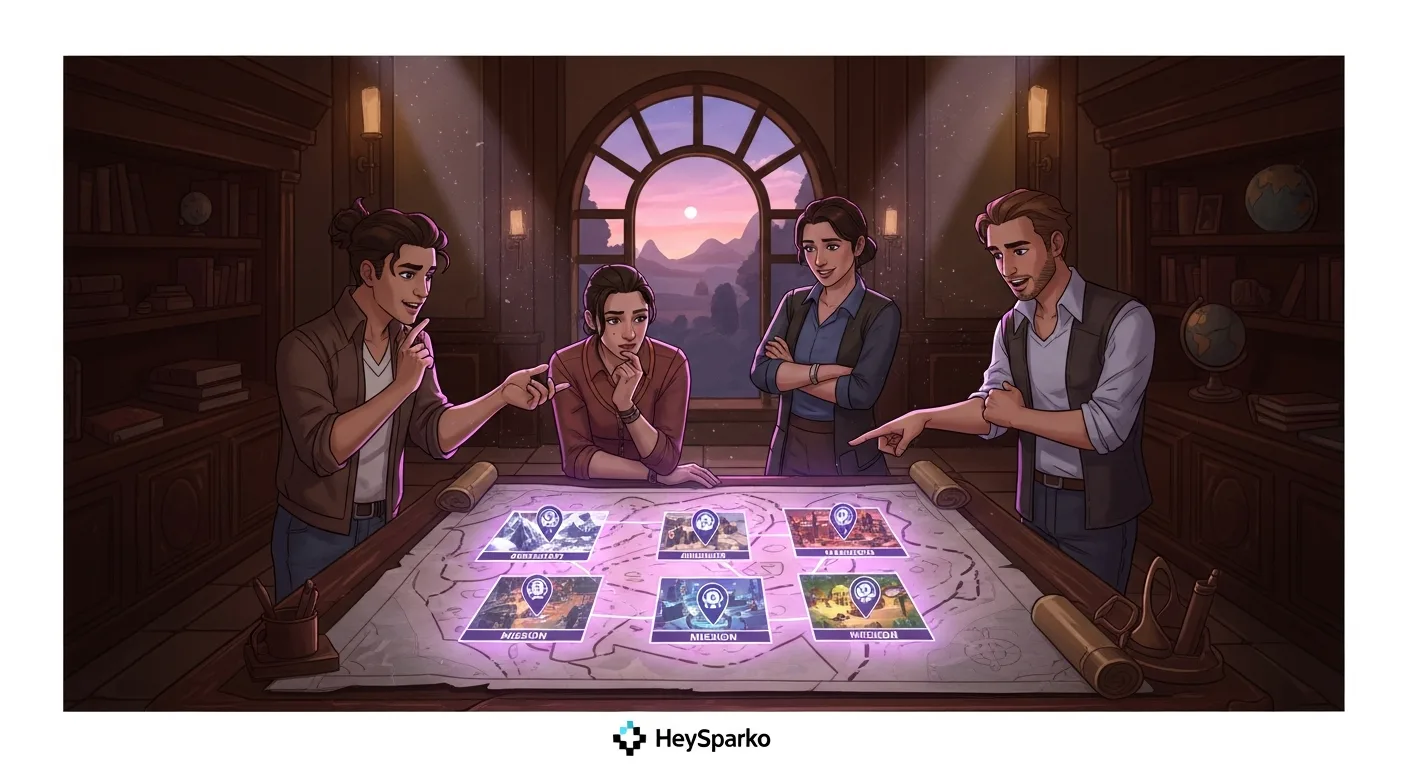
The single biggest design call for any CS team event is the format. Two real options, and the right one depends almost entirely on how the team is distributed and what the calendar context looks like in the booking window.
Big Game is the 60-90 minute live event. Everyone on the same Zoom, same time, hosted by a HeySparko Game Host who runs the whole experience while the CS team participates as players. It's the right call when the team is within a 6-hour time zone spread and you can credibly block a single window — most often after a renewal cycle closes, before a new fiscal year begins, or as the closing moment of a multi-day CS offsite. The shared-leaderboard energy of a live event is genuine and hard to replicate any other way; the team that's been on solo customer calls all year gets a single hour where they're a unit again. Big Game is the format we book most often for CS team kickoffs, year-end retention celebrations, and post-launch cool-down moments.
Marathon is the 1-5 day async format. Daily episodes drop into a shared leaderboard, players engage on their own schedule, and one narrative arcs across the days. This is the right call for distributed CS orgs spanning 8+ time zones, for engagement programs that need to span a week or longer (Spirit Week, post-launch cool-down, mid-year reset), or for any team whose calendar is too contested to credibly block a live window. The Marathon format runs about 78-92% completion rate across the engagements we've seen at 500+ companies. For CS teams the completion numbers tend to sit at the upper end of that range, because the format respects the rep's calendar instead of compounding the pressure on it.
The format decision usually makes itself once you write down two facts on paper: how many time zones the CS team spans, and how heavily the team's calendar is contested across the next eight weeks. If both numbers are manageable, Big Game is the easier sell to the team. If either one is tough, Marathon is the only option that won't cost you the participation rate. Don't pick the format based on which one sounds easier to organize. Pick the one your team will actually show up to in the state of mind you want them in.
Six games that fit how customer success teams work

CS teams want pacing, a narrative they can sink into for a while, and a reason to coordinate that isn't another deal review or churn-risk debrief. Six games in our catalog reliably land for CS audiences, each for a different sub-flavor of CS team event.
Bureau of Magical Affairs — for onboarding cohorts and "everything is on fire" CS culture
Bureau of Magical Affairs is the game we recommend most often for new CSM onboarding cohorts. The premise — a magical investigation bureau dealing with four open cases at once while the paperwork piles up — is structurally close to the lived experience of a new CSM in their first 90 days. Four chaotic open cases, no clear priority order, the bureaucratic overlay of CRM updates and account-plan refreshes, all happening at once. The 90-minute Big Game format gives a new CS cohort a shared narrative for a week of work that otherwise feels like uncategorized chaos. We've watched onboarding cohorts use the game's case-file metaphor in their CRM hygiene conversations for months afterward.
Wintervald Hotel Mystery — for the enterprise CSM team that wants something elegant
Wintervald Hotel Mystery is the most enterprise-appropriate game in our catalog. A snowbound luxury hotel, a private dinner, a body before sunrise, a snowstorm trapping the detectives for one night. Knives Out in flavor, not anything graphic. The deduction mechanic asks the same kind of thinking enterprise CSMs do every day: reading subtle signals across multiple data points, cross-referencing contradictions between what a champion says and what their boss says, building a narrative from incomplete information. The match between the game's mental model and the CSM's actual work makes it land easily, which is why we book it for enterprise CSM teams more often than any other mystery. It works particularly well as the closing event of a strategic CS offsite or the year-end gathering for a strategic-accounts pod.
Apocalypse — for the post-launch cool-down or the "we just saved that account" moment
Apocalypse is the highest-energy adventure: an overnight outbreak, a vaccine race, four locations between the team and the cure, 80 minutes of pressure. It's the right call when a CS team has just been through something genuinely hard — a difficult escalation that the team coordinated on, a launch week with too many customer fires, a quarter where the renewal numbers were ugly. The catharsis of running a fictional crisis after a real one is reliably energizing rather than draining. The cross-pod coordination that emerges in Stage 3 — when CSMs self-organize around the synthesis puzzle — gives leaders genuinely useful intel about who's quietly load-bearing inside their org.
Mission 8-Bit — for the kickoff that mirrors the customer lifecycle
Mission 8-Bit is structured as three acts: escape, build, ship. A modern virus crisis, a rebuilt 1980s computer, an 8-bit final boss guarding the source code. The three-stage arc maps almost too cleanly onto the CS lifecycle that CSMs already think in (onboarding → adoption → renewal). The reps recognize the rhythm without anyone naming it out loud. Each player gets an 8-bit sprite of themselves at the end, which most CS teams turn into Slack avatars for renewal-quarter team channels by the next morning. A cheap memento with real replay value in the team's social channels for weeks afterward.
Under the Big Top — for the mid-year reset or the summer engagement window
Under the Big Top is the warm-whimsy companion mystery: a vintage circus, a vanishing headliner, a wonderfully strange cast of suspects. Same deduction mechanic as Wintervald Hotel Mystery, entirely different aesthetic — Big Fish in tone, not anything slapstick. We see CS leaders book this game for mid-year all-hands when the team is heading into the slower summer weeks and the room is half on PTO. The deduction structure pulls people back to the leaderboard between vacation days; the team gets genuine engagement across what's usually a dead month for CS programs.
Stolen Hours — for the year-end retention celebration that needs to feel different
Stolen Hours is the genre-bending December adventure: Santa's clock hands scattered across postapocalypse, cyberpunk, steampunk, and biopunk worlds, the team chasing through all four to bring back time before Christmas Eve never arrives. It's the un-cliche move for a CS team year-end event — sci-fi instead of holiday-trivia, four-world structure that surfaces different teammate strengths, Pixar-warm art keeping the tone friendly rather than gritty. Particularly good for CS teams that have just closed out a strong NRR quarter and want a celebration that feels imaginative rather than corporate.
Customization that makes the event the CS team's, not the vendor's
Three customization tiers — NPC, Logo, and Story — turn any of the games above into something that feels like an in-house production instead of an off-the-shelf vendor event. NPC tier replaces character voices with internal references: your CRO becomes a recurring narrator who shows up between stages, the favorite product names appear in the dialogue, the inside jokes from your team's Slack channels land on screen. Logo tier integrates brand colors and assets across the game environment so the experience visually reads as yours rather than ours. Story tier rewrites the narrative arc to reflect a moment the CS team is actually living through — a renewal quarter you barely survived, the year you finally hit gross retention parity, the launch that the CS team carried alongside product.
Customize for your team
TYPE 1
Your team as in-game characters
Real team members, mascots, or characters from your games as NPCs.
TYPE 2
Your brand integrated natively
Logo and brand elements native to game environments — locations, items, UI.
TYPE 3
Your story woven into the game
Company milestones, products, and inside references woven into puzzles, dialogues, and tasks.
For CS teams, the tier that tends to land hardest is Story. CSMs spend their entire workday holding customers' stories; the event lands differently when the team's own story is the one being reflected back at them on the screen for an hour. Customization needs 10 business days of lead time, so it is not a same-week ask — plan it into the calendar early. Full tier pricing detail lives on the pricing page; we don't try to walk anyone through tier choices in the booking flow.
What the data says about customer success engagement
The number worth sitting with first comes from McKinsey's September 2023 Quarterly piece on employees who destroy value versus those who build it. McKinsey's research found that employee disengagement and attrition cost a median S&P 500 company $228 million to $355 million annually in lost productivity, totaling $1.1 billion-plus over five years. The same research found that only 4% of employees are "thriving stars" delivering disproportionate value — and those thriving stars cluster in distributed work: 45% remote, 36% hybrid, 19% in-person. For a CS leader trying to defend an engagement-program budget against a finance org that wants to cut "non-essential" line items, that's the most useful single citation available right now. The cost of disengagement isn't abstract; it's a quarter-billion-dollar median number for large public companies. And the distribution of where high performers actually live makes the case for treating a distributed CS team as a structural advantage rather than a coordination problem to manage around.
Two more numbers anchor the picture for CS leaders specifically. Deloitte's 2024 Burnout in the Workplace report surveyed 1,000+ US professionals and found that 77% report burnout at their current job, with "lack of recognition" overtaking workload as the primary driver. 31% of respondents named recognition gaps as the single most important cause of their burnout. CS roles are particularly exposed to recognition gaps because the wins are private (a renewal closed quietly, an escalation handled cleanly before it reached the CRO) while the losses are loud (a churn announcement, a one-star G2 review on a Monday morning). A well-designed quarterly virtual event with team-level recognition baked into the post-event analytics is one of the cheapest mid-tier-recognition mechanisms a CS org has available — and one of the few that scales without the CS leader having to write personalized thank-you notes to 80 CSMs each quarter.
The third frame is Microsoft's 2024 Work Trend Index, drawing on a 31,000-knowledge-worker survey across 31 countries, which found that 64% of workers say they're struggling with the pace and volume of work. For CS teams, that translates into a concrete operational constraint: any team event that adds calendar load gets pushback, often privately rather than directly. The Marathon format mitigates this — players engage on their own schedule, the daily episode runs about 30-45 minutes, and the leaderboard creates pull without anyone being told to attend. We've watched the format reach roughly 35% of "lurker" CSMs — the reps who quietly skip standard live engagement events — and convert them into active participants over the course of a Marathon week.
Academic literature reinforces the operational case. Anog et al. (SSRN, 2023) reviewed 60+ studies on structured team-building interventions and found consistent effects on satisfaction and reduced turnover, with the strongest results when team-building was integrated into a broader development strategy rather than treated as a one-off morale moment. That fits what we've seen in our own portfolio: a one-off Big Game produces a great Thursday afternoon and a minor lift in the next monthly pulse. A Marathon connected to a manager-coaching arc, a recognition cadence, and a leadership-readout produces measurable retention impact in the next quarter. The events are an amplifier on the surrounding manager system, not magic of their own.
The retention math is what sealed the case for one CS leader we worked with last fall — a mid-market SaaS team of about 90 CSMs distributed across four regions, running an engagement program for the first time in two years. SHRM's 2024 cost-per-hire calculation puts the all-in replacement cost for a non-executive role well into the five figures once you fold in recruiting, ramp time, and lost productivity during the gap. For a 90-person CS org running at industry-average voluntary attrition, even a 2-3 percentage point reduction in annual quits rate pays back the whole engagement-program budget several times over within the first year. The cheapest CSM hire is the one you didn't need to make.
Frequently asked questions
How long does a virtual team event for a customer success team usually take?
For Big Game format the standard window is 60-90 minutes — long enough for a real narrative arc, short enough that the team doesn't feel the calendar pressure. A Marathon program runs across 3-5 days with each daily episode taking each rep about 30-45 minutes of engagement. We default to Big Game for one-off events like onboarding cohorts and year-end celebrations; Marathon is the better call for distributed CS teams or for engagement programs that span a full week.
What's the best virtual team building game for a CS onboarding cohort?
Bureau of Magical Affairs is the game we recommend most often for new CSM onboarding cohorts. The premise — a magical investigation bureau juggling four open cases at once plus the paperwork — structurally mirrors the early CSM experience of holding too many customer threads at the same time. The 90-minute Big Game format gives a new cohort a shared narrative they reference for months afterward, and the case-file mechanic carries cleanly into the team's early CRM-hygiene conversations.
How many customer success reps can join a single virtual team building event?
Both Big Game and Marathon formats scale from 5 to 10,000 players in a single session. For a CS team event, the sweet spot for engagement is breakouts of 4-8 reps per pod, with the leaderboard aggregating across all the pods. We've run sessions for 30-person regional CS teams and for thousand-person global CS orgs; the format holds at both ends. Above 1,000 participants we usually split into two parallel rooms with one shared leaderboard merged across them.
Do CSMs need to install any software to participate?
No. Every game runs in a browser via a link the host shares at the start of the event. There's no app to install, no account to create, no IT ticket to file. The platform has been tested against the usual enterprise endpoint security stack — Cisco AnyConnect, Crowdstrike Falcon, Zscaler — and works on corporate-locked laptops without permission requests. CSMs join via the link, see the game in their browser, and submit answers without touching their laptop's permissions.
How do we measure whether the event worked for the CS team?
Three things to look at, in order. First, the by-pod participation rate, which is your manager-engagement signal and tracks the McKinsey thriving-stars distribution directly. Second, the post-event NPS pulse, which the platform runs automatically and reports back within 24 hours. Third, the engagement-survey lift in the cycle following the event. The pod-level breakdown is the part most CS leaders end up using in their quarterly readouts to RevOps and the CRO.