


Executive team building used to mean an annual offsite at a resort, a few rounds of cocktails, and a half-day of facilitator-led exercises that quietly accomplished little. That model presumed leaders could clear their calendars for two days and would be in the same physical room. Neither holds for most senior leadership teams anymore. The modern executive group sits in three or four time zones, runs board prep alongside customer escalations, and has been through enough vendor-led "engagement programs" to recognize a template from the first slide. The bar for an event that earns executive attention is unusually high, and the design choices that work for an all-hands rarely scale up to the leadership team intact.
Five years into running virtual team building as a category — 1,500+ events for 700+ companies across 50+ countries — we've watched the failure modes repeat enough to predict most of them. Generic icebreakers, mandatory live sessions stretched across incompatible windows, vague "team-bonding" framing, scripts that read like vendor copy. These are the patterns that get a CFO scrolling email by minute fifteen, and once a senior leader checks out of an event, the rest of the room follows fast. The leadership-team events that succeed look different on every axis: format, narrative depth, hosting, and what the agenda quietly calls "customization."
What virtual team building games actually work for executive teams?
Why Executive Audiences Need a Different Design
The first instinct most People Ops teams have when planning a leadership event is to take a format that worked for the all-hands and shrink it. The trivia night that landed for the engineering org becomes the proposed event for the executive team. That instinct misses the underlying difference: executive audiences aren't a smaller version of the wider company. They're a separate demographic with stronger filters, sharper attention to design craft, and less patience for the small tells that reveal a low-effort plan.
In our work with leadership teams across SaaS, financial services, and B2B platform companies, three signals reliably cause executives to disengage early. The first is vocabulary. Words like "team bonding," "energizer," and "icebreaker" telegraph low-effort design before anything has started. Most C-suite leaders have sat through enough off-sites to associate those words with the worst examples they've seen. The second is content depth. Trivia-night formats and personality-quiz exercises don't fail because executives are humorless. They fail because the puzzles are too thin to occupy a group that spends its working days making consequential decisions; the structural mismatch reads as condescension. The third is the synchronous mandate. A leadership team distributed across Europe, North America, and APAC has no shared window that works equitably; if the event requires everyone to be on the same call at the same moment, attendance turns into a quiet audit of who's willing to take a late call for what's framed as fun.
A hospitality client we worked with last fall — a leadership group of about thirty across four EMEA cities and a US flagship — opened the discovery call with "anything other than a trust exercise." They had run two prior vendor events. Neither had landed. The CEO had a standing veto on anything that smelled performative. What worked was a single ninety-minute Big Game built around Wintervald Hotel Mystery, with the suspect roster lightly customized to mirror their organizational structure. The post-event observation was specific: it was the first vendor session where the CFO had stayed engaged through the end. That's the bar for executive design — not "did people show up" but "did the highest-skepticism person in the room give the event the full ninety minutes."
The Format Decision: Big Game or Marathon for Leadership Teams
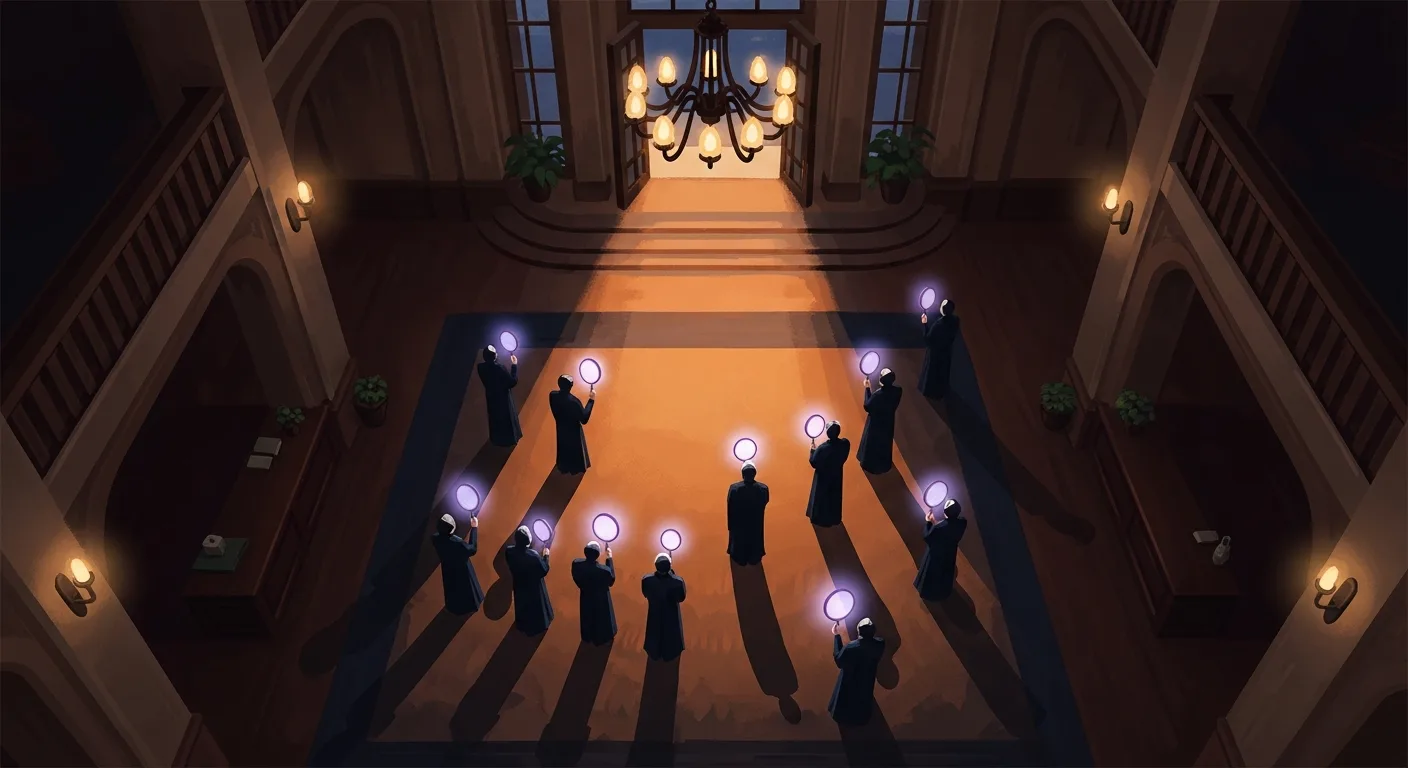
For executive events, the format choice is usually the single highest-impact decision. The two HeySparko formats target genuinely different leadership situations, and conflating them is one of the most common ways the event misfires before it starts.
Big Game is a single live event of sixty to ninety minutes, hosted by a HeySparko Game Host, with everyone present at the same time and the leadership team competing in breakout teams of five to eight. For an executive group, this is the format that earns its keep when the event is anchored to a defined moment: a leadership offsite (in-person or virtual), a quarterly all-team gathering with the leadership group at the core, an anniversary celebration, an onboarding event for newly-promoted execs. The shared live experience and the moment-by-moment leaderboard shift produce a kind of cohesion that async formats genuinely can't replicate. We've seen this most cleanly at companies whose leadership team is geographically concentrated within a six-hour spread; one live session with strong hosting tends to generate a sharper shared memory than five separate watercooler conversations. The smaller-group dynamic (10 to 30 leaders) also benefits from the hosting infrastructure built for thousand-player events. A 30-person Big Game with a professional Game Host running it feels significantly more produced than the same group on a hosted-by-someone-internal Zoom social.
Marathon runs over one to five days with daily content drops; players engage when their schedule allows; the shared leaderboard keeps the competition alive across the week. For executive teams distributed across three or more continents, this is the better default. Asking a Tokyo-based COO to take a 10pm call so the US team can attend a 9am session is the kind of small request that erodes goodwill over time, especially when an async alternative was available the whole time. Across Marathon events at 500+ companies, completion rates land in the 78-92% range on a fully opt-in basis. For senior leaders, async tends to perform even stronger because the format respects what executive calendars actually look like: board prep, customer escalations, fundraising calls, all landing at unpredictable hours that no synchronous window can accommodate.
The practical split is reasonably crisp. If the executive team is contained within a six-hour time-zone spread and the event is tied to a specific moment, default to Big Game. If the leadership team spans more than six hours of time-zone distance or has an established culture of opting out of mandatory live sessions, default to Marathon. Both formats use the same browser-based player with no install required, which removes the most common IT friction at companies running tight device-management policies. The choice is about how the executive team's reality maps onto event design, not about which format is "better" in the abstract.
One scale note worth surfacing: both formats handle leadership-team-sized groups (10 to 50 people) as well as they handle company-wide events with thousands of players. The hosting and analytics layers don't degrade for small groups; if anything, the per-team attention from a professional Game Host scales up at smaller player counts.
The Games That Land for Executive Cultures
Format choice settles half the question. Game selection settles the other half. Five games in the HeySparko catalog cover almost every leadership-team scenario we've designed for; the matching is less about which game is "best" and more about which fits the cohort and the moment.
Wintervald Hotel Mystery is the game we book most often for executive events. The premise — an isolated luxury hotel, a guest murdered after a private dinner, a snowstorm trapping the leadership team with the killer for one night — sits closer to a sophisticated dinner-theatre evening than to anything that reads as "team building." The Agatha Christie tone works because it's adult content presented with craft, not whimsy. We've used Wintervald Hotel Mystery for legal-team offsites, CFO-network events, and the December gathering of an enterprise leadership team where the CEO had explicitly vetoed anything with "Christmas" in the title. The three-stage deduction structure (investigation, suspect interviews, crime-scene reconstruction) gives the group genuine puzzle work rather than a quiz. For most executive teams asking "what's the safe pick that won't embarrass anyone," this is our answer.
Last Temple Mystery is the strongest fit for milestone moments — company anniversaries, founding-team reunions, leadership-team celebrations after closing a funding round. The Mayan-temple expedition arc (four floors of puzzles, mythology that surfaces team coordination patterns) maps naturally onto narratives leadership teams want to tell about themselves. The Storm Floor in particular, a sequence-based puzzle where teams must move together or fail together, produces the kind of leadership-team moment that gets referenced months later in board reports. Marathon format for Last Temple Mystery works well for international leadership groups because each floor unlocks for a 24-hour window; Tokyo and San Francisco compete on the same leaderboard without anyone taking a late call.
Apocalypse is the option for executive teams that want a crisis-simulation feel. A vaccine race across four locations during an overnight outbreak; routing decisions in Stage 2 that reshape the Stage 3 puzzle layouts; a live timer in the final synthesis phase. For a leadership team running through a high-pressure quarter, the game's coordination mechanics offer something closer to a wargame than a social. We've seen executive groups in fintech, AI infrastructure, and B2B platform engineering pick Apocalypse precisely because the team wanted to feel collective time pressure in a low-stakes setting before applying it to a real launch week. The art style is stylized 2D throughout, with no gore and no horror, which keeps the game appropriate even at relatively buttoned-up enterprises.
Bureau of Magical Affairs is the year-round choice when a leadership team is welcoming new C-suite members or building a recently expanded leadership group into a real working unit. The premise — a magical investigation bureau handling four simultaneous bureaucratic emergencies, from sentient furniture to time-stuck mages — mirrors the chaos-with-paperwork feeling of executive operations in a way that's gently self-aware. The whimsy is balanced by genuine puzzle depth. For a CHRO building cohesion across a leadership team that hasn't yet developed shared shorthand, Bureau of Magical Affairs generates the kind of cross-functional moments that show up in the weeks afterward as informal Slack threads between executives who hadn't directly collaborated.
Stolen Hours suits leadership teams that enjoy speculative-fiction aesthetics or want a year-end event with imagination rather than tradition. The premise (Santa's clock hands stolen and scattered across four genre worlds: postapocalypse, cyberpunk, steampunk, and biopunk) sounds wild on paper, and the Pixar-style art keeps it warm rather than edgy. The world-shifting mechanic surfaces different player strengths across the team, which tends to produce post-event observations along the lines of "I had no idea our COO was that quick in the cyberpunk decoding stage." For a leadership group looking for a December event that isn't another holiday-cocktails replica, Stolen Hours gives the team an actual story to share later.
Customization at Executive Scale
The HeySparko customization tiers — NPC, Logo, and Story — matter more for executive events than for almost any other audience, because executive cohorts are unusually attuned to small details that signal whether an event was made for them or generated from a template. The default-game version of a HeySparko event is already engaging, but for a leadership-team event the customization decisions are what shift the experience from "we hired a vendor" to "we ran our event with help."
The NPC tier adapts character dialogue to your company's voice, weaving in internal references, naming conventions, and the tone of how leadership actually talks to each other. For executive events, NPC customization typically means the suspect roster in Wintervald lightly mirrors the leadership team's actual makeup, or the Bureau case files reference the kinds of operational fires the executive group has already fought together. The Logo tier integrates your brand into the game environment — your colors, your logo, your visual language carried throughout the experience. For board-facing or investor-facing executive events, this is the difference between an event that feels polished and one that visibly came from a third party. The Story tier rewrites the entire game narrative around your specific situation: a Series B closing, a five-year anniversary, the integration of an acquired company, a leadership transition. We've seen Story-customized events land especially well as the closing moment of a multi-day leadership offsite, since the narrative ties the strategy work earlier in the week to a shared experience that's directly about the company's actual trajectory.
Customize for your team
TYPE 1
Your team as in-game characters
Real team members, mascots, or characters from your games as NPCs.
TYPE 2
Your brand integrated natively
Logo and brand elements native to game environments — locations, items, UI.
TYPE 3
Your story woven into the game
Company milestones, products, and inside references woven into puzzles, dialogues, and tasks.
An international iGaming client we worked with — BGaming, around 400 employees across engineering and business-ops — ran their multi-year anniversary as a fully customized Adventure Through the Ages with NPC, Logo, and Story tiers stacked together. Participation came in at 89% against a 75% target; NPS landed at 8.7 on the post-event pulse. The headline numbers aren't the relevant detail for executive-event design, though. The more telling data point showed up a month later in the engagement-survey free-response field: engineering team members explicitly called out the cross-functional bonding generated by playing alongside business-ops counterparts during the event. For executive cohorts, where the value of a single event compounds in the quality of cross-functional conversation it enables, that's the harder metric to design for, and it's the one customization most often unlocks.
One operational note for executive customization: every tier (NPC, Logo, or Story) needs a ten-business-day lead time, enough to rewrite the narrative properly. If the executive event is inside a fortnight, run a stock game with excellent hosting rather than rush a customization brief. Hosting itself does most of the work; customization elevates it, but isn't required for a strong outcome.
What the Research Says About Executive Engagement
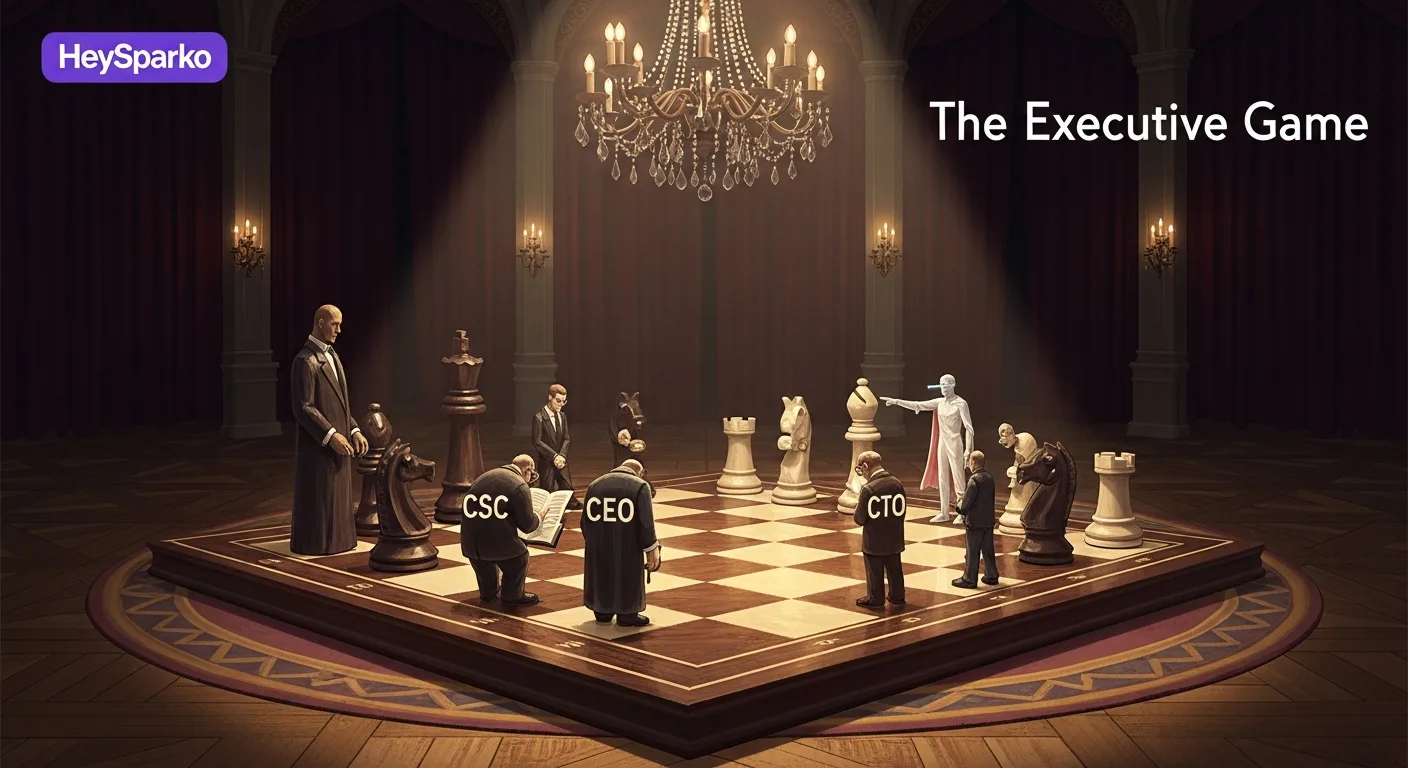
The budget conversation for executive engagement work tends to be contested differently than the conversation for general team events. The argument has to defend the line item against finance scrutiny while also acknowledging that the people approving the spend are themselves the audience. The research base on this is more useful than most People Ops teams realize, especially when the case is being made to a CFO or a CEO who wants more than vendor-marketing language.
Owl Labs' State of Hybrid Work 2025 report, surveying US workers across hybrid and remote arrangements, found that a supportive manager remains a top workplace factor, with 89% of US employees in agreement. The implication for executive-event design is direct. The leadership team's own felt sense of being supported by peers and by the systems around them is what propagates downward through the organization. If the C-suite event itself feels phoned-in, the message that ripples out is not "leadership invests in engagement" but "leadership tolerates the same low-effort programming we ask everyone else to attend." For the People Ops teams designing executive engagement, the bar is set by what the executive team would want to see if they were anywhere else in the org chart. Designing down from that bar is harder, and it produces better events than designing up from generic team-building defaults.
The academic evidence supports the same picture. Anog et al. (SSRN, 2023), in a systematic review of 60+ team-building intervention studies, found that structured team-building activities increase satisfaction and reduce voluntary turnover, with effects amplified when activities are integrated into a broader development strategy rather than run as one-off events. For executive teams, this is the argument for a recurring cadence — a Marathon every two quarters, a Big Game tied to the rhythm of the strategy cycle, a customized event aligned to milestone moments — rather than a single annual event treated as the one time the leadership group gets to engage outside business meetings. The research base is unusually clean here: isolated events produce a short-lived lift; embedded cadences produce compounding cultural returns.
Microsoft's 2025 Work Trend Index (Breaking Down the Infinite Workday) found that 30% of meetings now span multiple time zones, an 8-point absolute increase since 2021. For executive teams the share is typically higher; leadership groups have always been more globally distributed than the rest of the org, and the trend has only accelerated as companies internationalize earlier in their growth arcs. The design relevance is operational. Any executive engagement program that depends on synchronous attendance is selecting against the same distributed-leadership reality the rest of the work is built around. Marathon format directly addresses this; Big Game can work when the leadership team falls within a multi-hour shared window, but past a four or five-time-zone spread the math stops being kind to anyone, and the format conversation should default to async.
Deloitte's 2024 Burnout in the Workplace report, surveying 1,000+ US full-time professionals, found that 77% report burnout at their current job, with lack of recognition now overtaking workload as the top driver. For executive audiences this is the more important pattern to internalize: leadership groups most often experience burnout as the absence of acknowledgment from peers and from the rest of the organization. Engagement events that explicitly recognize the work the leadership team has put in over a quarter, rather than treating the event as a generic team gathering, address the recognition gap directly. That recognition mechanism is what makes recurring events compound — each one becomes a small public moment that the leadership team's effort is being seen, by each other and by the wider org watching the cadence.
Pulling those threads together: across the 1,500+ events we've run since 2020, the leadership-team engagements that produced the strongest outcomes shared three traits. They were tied to a specific moment the executive team cared about (an anniversary, a milestone, a strategy cycle inflection). They used the format that matched the team's actual distribution rather than forcing synchronous attendance on people who couldn't realistically attend. And they included some layer of customization that made the event feel like it belonged to the company, not to the vendor. The retention math closes the argument. Senior leaders are the most expensive people in the organization to replace, and an engagement budget that retains even one VP-or-above per quarter is paying for itself several times over against any standard cost-of-departure analysis a CFO would run.
Frequently Asked Questions
What's the best virtual team building game for an executive group?
Wintervald Hotel Mystery is the most-requested option for executive events. The Agatha Christie tone reads as adult content presented with craft, which lands well with senior leadership teams that have low patience for whimsy. For milestone moments, Last Temple Mystery works particularly well because the four-floor expedition arc maps onto the narratives leadership teams want to tell about themselves. For more imaginative end-of-year moments, Stolen Hours offers a genre-bending alternative that avoids cocktails-and-clichés territory entirely.
Is Big Game or Marathon the better format for a leadership team?
For executive teams contained within roughly six hours of time-zone spread, Big Game produces the shared live moment that async formats genuinely can't replicate. For leadership groups distributed across three or more continents, Marathon is the better default. Marathon completion rates run 78-92% in our data on a fully opt-in basis, and async respects the unpredictable executive calendar (board prep, customer escalations, fundraising) in a way mandatory live sessions never quite manage to.
How long should a virtual team building event for executives run?
Big Game runs sixty to ninety minutes total for a leadership-team session, hosted end-to-end by a HeySparko Game Host. Marathon spans one to five days of daily content drops, with each session asking individual executives for about thirty to forty-five minutes of engagement total. The shorter end works for quarterly cadences; the longer end suits anniversaries, leadership offsites, and major milestone moments where the event should feel genuinely substantive and not transactional.
Do executive events need customization to be worthwhile?
Stock games work fine for routine executive engagement. Customization becomes worthwhile when the event ties to a specific moment the company is moving through — a leadership transition, a major milestone, a strategy cycle inflection point. The Story tier especially earns its place at those moments, since the narrative becomes the carrier of the message rather than another agenda item competing for attention. For one-off events with no specific anchor, hosting quality matters more than customization depth does.
How do we measure whether a virtual executive event worked?
HeySparko delivers a post-event analytics report within 24 hours covering participation rate, coordination scores by stage, team-by-team breakdowns, and an NPS pulse from players. For executive events specifically, the coordination data is often the most operationally useful output, since it surfaces patterns about how the leadership team works together under pressure that don't show up anywhere else. Pair the report with a brief pre/post pulse on engagement to show measurable movement to the wider executive team.
How far in advance should we plan a virtual executive event?
Lead time depends on the customization scope you're after. Stock games comfortably need two to three weeks of planning runway. NPC, Logo, and Story customization each need a ten-business-day lead time. For leadership offsites where the event needs to land alongside other strategic work, six weeks of lead time is a comfortable cushion that gives both the production team and the leadership-team participants room to prepare.