
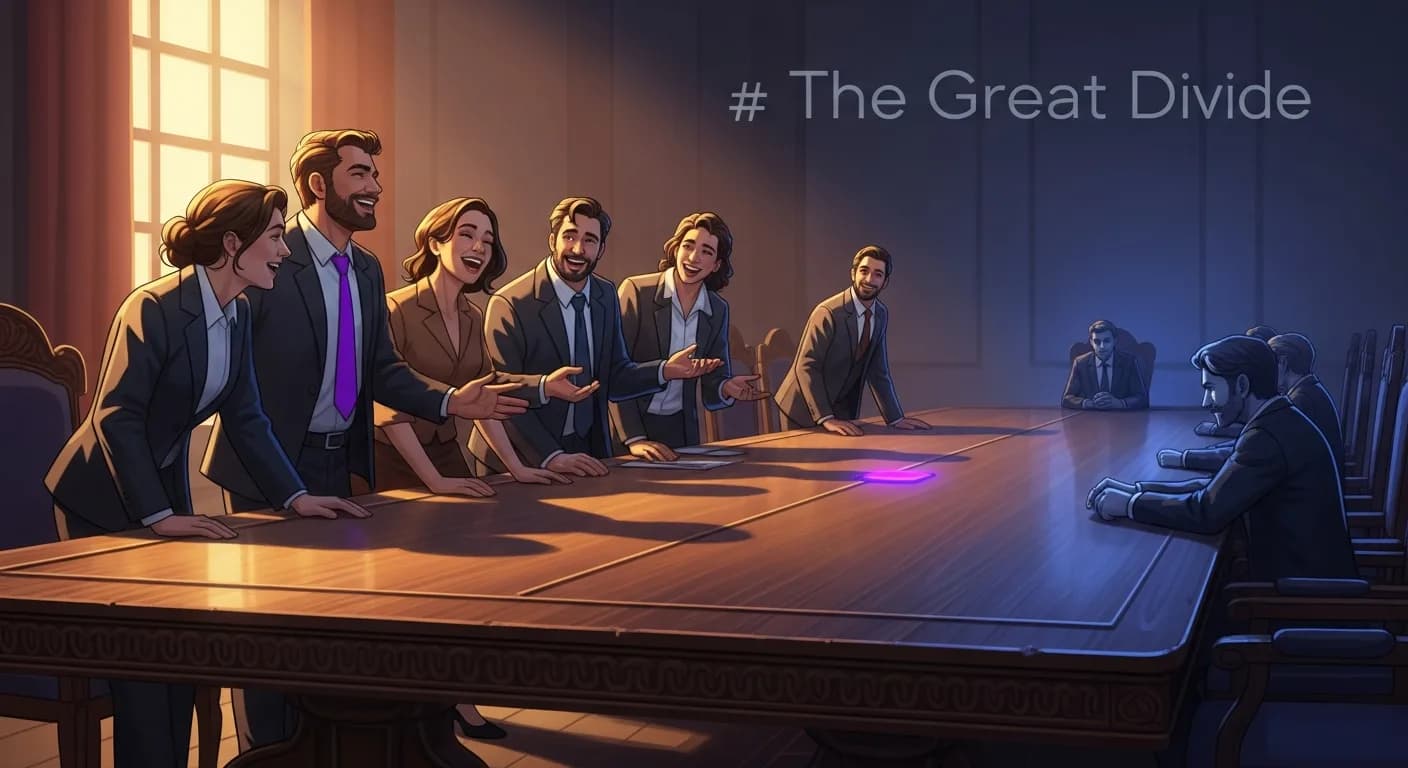

Hybrid is the structural compromise most companies landed on after the great office argument settled down. Two days in, three days out. Or three in, two out. The exact split varies. The calendar shape doesn't. People Ops leaders we work with are funding hybrid programs as a permanent line on next year's budget now, not as a transitional fix. And the trouble shows up the first time they try to run a single team event that's supposed to include everyone. Half the team walks into a conference room together. Rest opens a laptop in a kitchen. Same invitation. Same start time. Wildly different experience.
We've run 1,500+ virtual team events for 700+ companies across 50+ countries since 2020. Here's the thing nobody tells you at the booking stage: hybrid isn't an engagement problem. It's a fairness problem. The teams already want to participate. What they need is an event where the in-office crowd doesn't quietly win every coordination beat just because they happen to be sitting next to each other. Get that asymmetry wrong and the remote half spends the following three days watching the conference-room selfie circulate on Slack, slowly realizing they were in a different event than the headline implied.
What virtual team building games actually work for hybrid teams, and how do you stop the in-office subset from dominating the event?
The asymmetry problem nobody mentions in the booking call

A hybrid event isn't one event. Mechanically it's two events sharing a leaderboard. The in-office group is doing a small in-person gathering, with sidebar conversations, body language, the easy back-and-forth of a room. The at-home group is on a video grid, decoding tone through audio compression, typing into chat instead of leaning over. Anything that rewards quick informal coordination, like shouting an answer across a table, is gravity pulling the leaderboard toward the office.
Most vendors do nothing about this. They run their standard live event, ask everyone to join the same call, and treat the in-office subset as a polite operational note. "Some folks will be joining from a room." The result is a structural penalty on remote participants who are doing exactly what your company asked them to do when they took the role. We've sat through enough post-event debriefs with People Ops leads to see the same pattern repeat. Overall engagement numbers come back fine. The remote subset answers the post-event pulse politely, the way professional people do. And then next quarter's team-cohesion score quietly drops, because half the team learned that "team event" means "the office did something while the rest of us watched."
The fix isn't elaborate. A few specific design choices that travel together. First: every player in their own digital pod, regardless of where they physically are, so the conference room doesn't become its own breakout by default. Second: pick games where puzzles require information that has to be combined across the team, not information someone can shout out across a table. Third: for events that span more than one calendar boundary, default to async daily-episode formats. The East Coast remote contributor should not be writing answers at 6:30am while the West Coast in-office team is still finishing lunch. None of these are exotic. Put them in place and a hybrid event stops being a fairness problem. It starts being what it was supposed to be all along, which is a shared reference point the whole team can talk about a week later, regardless of which day was their office day.
Big Game or Marathon: which format respects the hybrid calendar
Format sits upstream of game choice. For hybrid teams the decision rarely turns on size and almost always on how scrambled the calendar is between in-office days and remote days.
Big Game is one live event, 60-90 minutes, hosted entirely by a HeySparko Game Host while your whole team plays. It's the right pick when you can pin the event to a confirmed in-office day for one group and a guaranteed at-desk slot for the rest. Six-hour time-zone spread or less. Culture where a calendar block doesn't compete with three other meetings. A North America-only hybrid team running an event tied to a Tuesday in-office day works cleanly. A North America plus EMEA team trying to find one window that doesn't push someone past 7pm does not.
When the window does work, Big Game brings something Marathon can't. Live leaderboard tension everyone is feeling at the same moment. Chat blowing up at minute 78. The instant the in-office team and the at-home team finish the same final stage and trade reactions on the same channel. That shared real-time energy is the whole point of the format, and for a hybrid kickoff or holiday party it's exactly what the event is for. One mistake to avoid: do not let the in-office subset gather in a single conference room and join on one camera. Put each in-office player on their own laptop. Their own browser tab. Their own video tile. That single choice removes the structural advantage and turns the event into a fair contest.
Marathon is the format we built for teams that can't share a clean live window without disadvantaging someone. One to five days of async daily episodes, leaderboard-driven, no live host needed. For hybrid teams whose office days are staggered across the week, engineering Tuesday and Thursday, sales Wednesday and Friday, executives whichever day a meeting demands, Marathon stops trying to force a single shared moment. Each person plays their pod's episode when their day allows. Singapore plays at 3pm local. Austin plays at 3pm local. Same leaderboard. Across 500+ companies running opt-in Marathon events with us, we see 78-92% completion rates, which routinely beats what forced-synchronous events produce for teams whose calendars don't share the same week shape. Roughly 35% of those completers are people who almost never show up to a live event. Marathon reaches the segment of your hybrid roster that any single live window quietly excludes.
For most hybrid-first organizations, the honest call is to default to Marathon for quarterly culture-building. Reserve Big Game for moments when the live energy is the actual point. A launch. An annual all-hands. A milestone celebration tied to a date everyone is already protecting on the calendar.
One operational note worth saying out loud. The most common Marathon mistake isn't picking the wrong game. It's going dark mid-event. A manager Slack message at Day 1 launch ("we're 6th out of 14 pods, let's move") plus a brief Day 2 check-in lifts completion rates by 15-20 points over events that send a launch email and then disappear. For hybrid teams where managers see half their reports in person and half on a screen, the Slack message has to land for both sides equally. Which means writing it for the people not in the room first.
Six games we keep recommending for hybrid teams
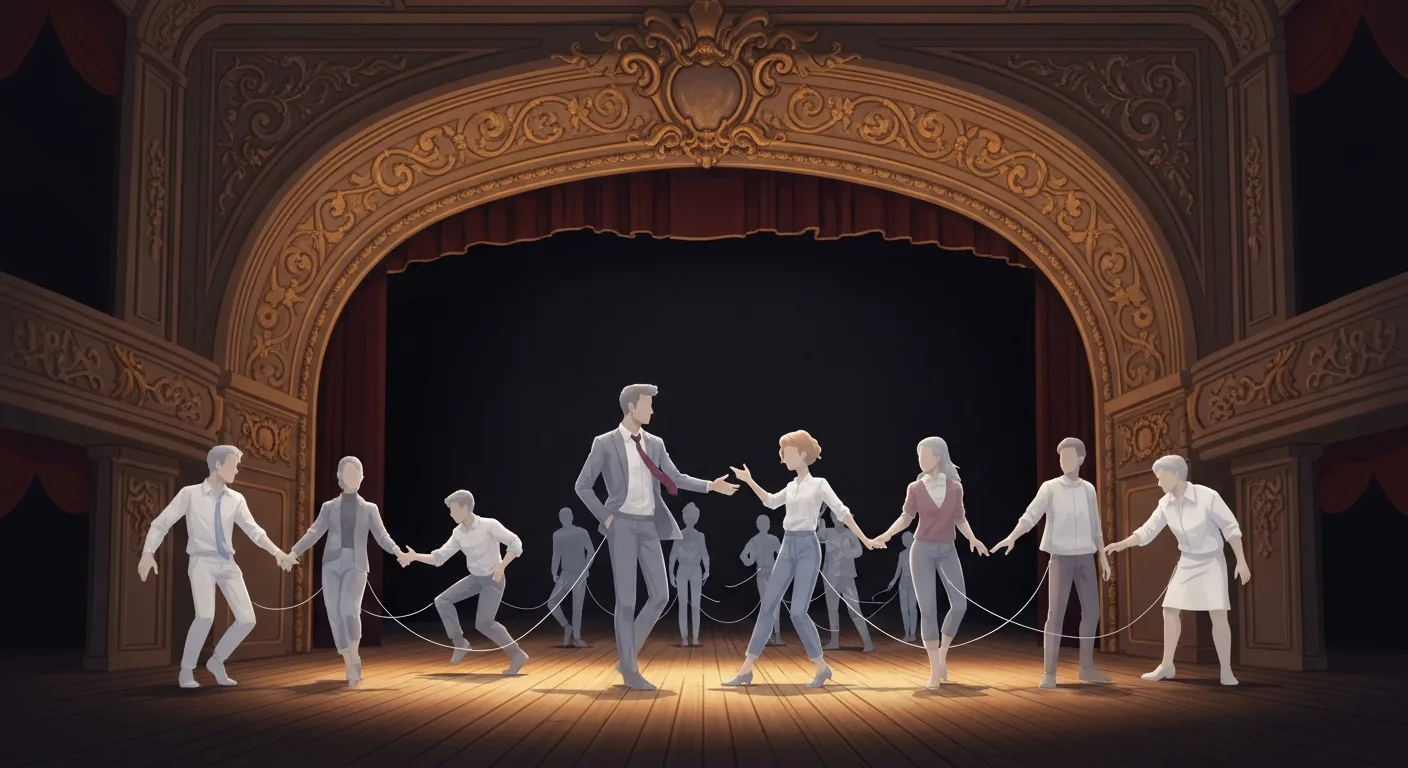
These six run in both Big Game and Marathon formats, which keeps them flexible across whatever hybrid calendar shape your team has settled into. Each one does something for hybrid teams that less-tested games don't. What each one does differs by mechanic.
Apocalypse drops the team into an overnight outbreak. Four locations stand between them and a vaccine. Eighty minutes. What makes it work for hybrid teams is role specialization. By Stage 3, most teams have self-organized into logistics, synthesis, and communications without anyone formally assigning roles. That emergent structure shows up the same whether a player is at a conference table or a kitchen one, because the role assignments emerge from puzzle progress, not from who's sitting closest to whom. For an HR leader trying to understand how a hybrid team coordinates when their manager has never watched them solve a hard problem together, the post-event analytics surface the natural project leads and ICs without an in-office bias coloring the data. The visuals are stylized rather than gory, and we've tested it across twelve-plus countries with near-zero pushback.
Wintervald Hotel Mystery is the sophisticated December pick when your hybrid team includes finance, legal, or executive functions that want elegance without office-party humor. Snowbound luxury hotel. A guest dead after a private dinner. Three stages of Agatha-Christie-style deduction. The mechanic that pays off for hybrid teams: the deduction structure generates a Slack debate that runs for days after the event ends. The #general thread about whether the obvious suspect was a misdirect pulls in people who never normally interact. That's cross-org weak-tie building of the kind hybrid teams struggle to do passively. The event ends but the conversation doesn't, which is the part that builds memory and the part the office-day proximity can't manufacture on its own.
Under the Big Top is the summer companion to Wintervald. Same deduction mechanic, completely different aesthetic. A traveling circus. A missing performer. Three stages of investigation across backstage tents and animal pens. The circus is universally recognizable in a way most premises aren't, which matters when your hybrid team includes members from four or five national backgrounds. Marathon format suits it especially well; the multi-day investigation rhythm gives pods time to develop and refine suspect theories between episodes rather than rushing a verdict before lunch. Frequently booked for hybrid teams whose office schedules are too scattered for a single live window to land.
Mission 8-Bit is the year-round pick for hybrid engineering and product teams. Three-act structure: escape the hostile office, rebuild a 1980s computer, enter the 8-bit digital world to assemble a killcode. That maps onto how technical teams think about quarterly project phases. Setup, build, ship. The post-event artifact is the part we keep hearing about months later. Each player gets their own 8-bit sprite as a personal sheet, and those sprites become Slack avatars, internal swag, anniversary deck slides. For hybrid teams where the in-office wall doesn't always have a team photo on it, the sprite sheet is the digital substitute. It keeps the event alive in everyday team culture for both halves of the roster, not just the ones who walked past the wall on Wednesday.
Bureau of Magical Affairs is our highest-recommended pick for hybrid onboarding cohorts. A tough audience to design for. New hires need to meet people fast, learn how the company operates in practice, and form some baseline of trust with peers they may never share an office floor with. The premise is newly-deputized agents handling four magical bureaucratic emergencies in 90 minutes. Maps onto the first-month new-hire feeling so directly the metaphor lands without explanation. The whimsy is warm and grounded, closer to The Office meeting Men in Black than to fantasy fiction, which keeps it accessible for hybrid cohorts whose tastes vary widely. The four-case structure also lets large cohorts split into competing Bureau squads on a shared leaderboard, which scales to fifteen onboarding pods as cleanly as it does to one team of seven.
Stolen Hours is the December alternative when the hybrid team wants imaginative escape rather than holiday-themed parody. Santa's clock hands are scattered across postapocalyptic, cyberpunk, steampunk, and biopunk worlds. The team chases through all four. The art is Pixar-stylized, never edgy, and the premise sits at an angle to any single holiday tradition. That cultural neutrality is a practical advantage for hybrid teams whose members across multiple countries don't all share the same December calendar. The four worlds also surface different player strengths as teams move through them; some people thrive in the gritty postapocalypse stage, others in the cyberpunk decode phase. Natural role rotation that's especially useful for hybrid teams whose members have only met some of each other's non-work capabilities.
Where customization earns its keep for hybrid teams
For hybrid teams whose engagement programs are defending a recurring line item, the customization tiers work differently than they do for a one-off office party. Each tier is a flat add-on, priced per tier rather than per player. A Logo pass folds your brand colors and logo into the game environment so the event reads as yours rather than as a vendor product on a call. NPC customization rewrites characters in your company's voice and sometimes features real team leadership as in-game roles, which lands particularly well when the CEO is willing to play a suspect or a guide. Story customization rewrites the entire narrative arc to fit a company situation. An anniversary. A launch. A milestone the hybrid team has been building toward together across office days and remote days both.
Customize for your team
TYPE 1
Your team as in-game characters
Real team members, mascots, or characters from your games as NPCs.
TYPE 2
Your brand integrated natively
Logo and brand elements native to game environments — locations, items, UI.
TYPE 3
Your story woven into the game
Company milestones, products, and inside references woven into puzzles, dialogues, and tasks.
We worked with BGaming on an anniversary event for about 400 employees. Story-tier customization, turning the four-era arc of a historical adventure into BGaming's own growth history. Participation came in at 89% against a 75% target. NPS landed at 8.7 on the post-event pulse. The part that surprised the People Ops lead the most: engineers who don't usually engage with culture programming called the event out in the next month's engagement survey free-response. That population is typically quiet on culture surveys. For HR leaders defending recurring spend to a Finance partner, a branded event is easier to justify than a generic one, and the per-tier flat price keeps the customization fee a small fraction of the total event budget once you're at mid-size or enterprise scale. See /en/pricing for the full configuration walkthrough.
What the research says about hybrid-team connection
The research on hybrid teams has gotten clearer over the past two years, and the picture it draws supports a specific argument about why structured events matter more for hybrid than for either pure office or pure remote teams.
Quantum Workplace's 2024 Workplace Trends Report, surveying executives at companies in a database covering 700,000+ employees across 8,000+ U.S. organizations, found that 92% of executives say they have seen increased performance as a result of their engagement efforts. That number lands differently for hybrid teams. The executives approving the budget for a quarterly engagement program are the same people the program is supposed to be justifying itself to. The lift isn't a hopeful HR projection. It's the people writing the checks reporting what they observed. For an HR leader making the case for a recurring hybrid event, that source carries different weight than a vendor's own data, because the witness and the budget-approver are the same person.
Atlassian's Teamwork Lab published a study in February 2024 called Intentional Togetherness. They tracked 1,600+ team gatherings since August 2022, generating roughly 25,000 data points. Headline finding: intentional team gatherings boost team-connection scores by an average of 27%. For new graduates specifically the lift runs from 74% pre-gathering to 96% post, a 22-point swing. The detail that mattered most for our format-decision thinking was the decay curve. Connection lift returns to baseline over roughly four months. Implying about three gatherings per year is the optimal cadence. For hybrid teams in particular, that finding reframes the annual-event default. One December event is enough to spike connection briefly. It can't carry the team through the eleven months of office-day-and-remote-day alternation that follow. A quarterly cadence keeps the curve from dropping, even when each individual event is modest.
The starting condition for hybrid-team engagement is documented elsewhere. Microsoft's 2025 Work Trend Index found that 30% of meetings now span multiple time zones, an 8-point absolute increase since 2021. That number is based on Microsoft 365 telemetry combined with a 31,000-knowledge-worker survey. For hybrid teams whose office days are designed to bring people physically together inside the same metro, the implication is hard to dodge. A real share of collaborative work happens outside that physical proximity anyway. The event you book has to work for the calendar that exists, not the calendar your real estate decisions imagine.
Deloitte's 2024 Human Capital Trends report, surveying 14,000+ business and HR leaders across 95 countries, reframed the question another way. 71% said that focusing on individual teams and workgroups, what the report calls "microcultures," is the best place to cultivate culture and agility. Not treating culture as a single company-wide program. Hybrid teams are microcultures by definition. Each team makes its own daily compromises about which days are in-office, who joins from where, how the workload syncs. The implication for engagement programming is direct. Events that hit the company-wide level only, the December all-hands, the annual offsite, leave hybrid microcultures unsupported between them. Team-level recurring events, sized to the pod that's actually doing the work, are the lever the Deloitte data points at.
The academic literature points in the same direction. Anog et al. (SSRN, 2023) reviewed 60+ studies on team-building interventions and concluded that structured team-building activities increase satisfaction and reduce turnover, with effects amplified when integrated into a broader development strategy rather than treated as standalone events. For hybrid teams specifically, that "broader strategy" framing is the strongest argument we have for recurring quarterly events over an annual one-off. The engagement signal compounds across a cadence in ways a single December event doesn't produce. The muscle memory of "this happens here" carries between gatherings.
The retention argument is worth making once explicitly, for HR leaders defending the spend to Finance. SHRM's 2024 cost-per-hire calculation puts the average cost of a non-executive departure between fifteen and twenty-one thousand dollars when recruiting plus ramp time are counted. A quarterly engagement program that reduces voluntary turnover by even one or two points across a 400-person hybrid team covers many multiples of its event budget. The math isn't complicated once it's laid out that way.
Our own portfolio numbers line up with the research. The 78-92% Marathon completion rates we see come from companies that build the format into a quarterly rhythm rather than treating each event as a one-off. The companies that treat the event as an annual booking see lower participation the second time around, regardless of how well the first one went. Cadence is the variable that builds the cultural expectation. For hybrid teams that's the lever that has to move first.
Frequently asked questions
How do you stop in-office players from dominating a hybrid team event?
Put each player on their own laptop and in their own video tile, including the ones sitting together in the conference room. That choice alone removes most of the structural advantage that comes from being able to shout an answer across a table. From there, mix the pods so each four-to-eight-player breakout includes both in-office and remote members. The in-office subset stops being its own team. It becomes individual players who happen to share a building. Across our portfolio, hybrid events using this setup see leaderboard finishes that aren't correlated with physical location anymore.
What's the right format for a hybrid team that meets in person twice a week?
Depends on whether the in-office days are coordinated across the whole team or staggered by function. If everyone is in on the same two days and the time-zone spread is under six hours, Big Game scheduled on one of those shared in-office days works well. If office days are staggered (engineering Tuesdays, sales Wednesdays), Marathon is the cleaner pick by some distance. It doesn't require a shared window, lets each pod play their daily episode whenever it fits, and routinely produces our 78-92% completion rates. The decision usually makes itself once you map the actual schedule.
How many people can join a hybrid team building event?
Both Big Game and Marathon scale from 5 to 10,000 players in a single instance. For hybrid teams the sweet spot sits between 50 and 500, where the leaderboard creates real competitive pull and pod composition stays balanced. Above 500 we split the roster into competing squads on a shared leaderboard, which keeps individual pods small enough for genuine coordination to happen. Smaller groups under 30 can run either format; below that, hybrid mixing matters less because everyone already knows everyone in the room and on the screen.
Do hybrid team members need to install anything to participate?
Nothing. Every HeySparko game runs in a standard browser tab. No software install, no account creation, no IT ticket required to get cleared. Players join through a single link. In-office laptops use the same link as home laptops. The in-game web app handles team naming and answer submission. This matters specifically for hybrid teams because corporate-locked office machines often can't install the apps other platforms ask for, while home machines tend to have fewer restrictions. A browser-only setup keeps the experience identical on both sides.
How do we measure whether the hybrid event actually worked?
Three measurable signals come out of every event. The post-event analytics dashboard reports participation rate, by-team breakdown, NPS pulse, and coordination chat heat. For the cross-event picture, we recommend a pre-and-post three-question pulse, the standard team-cohesion and recent-connection questions on a seven-point scale, run a week before and a week after. The third signal is qualitative: Slack thread activity referencing the event in the seven-to-fourteen days after. Hybrid teams that produce chatter past Day 3 are the ones where the event built lasting connection rather than a one-day spike.