


Startups run their first serious virtual team-building event within eighteen months of Series A, and the pattern shows up in our onboarding calls almost every week. The moment a founding team crosses forty-plus people, the People lead starts asking about a scalable engagement rhythm that does not depend on the founder walking the floor. Most of the early-stage teams we work with have already been through one of two failure patterns: a one-off Zoom happy hour that felt awkward inside the second breakout, or a full off-site whose travel cost the founder still remembers in the wrong Slack channel.
We've run 1,500+ virtual team events for 700+ companies across 50+ countries since 2020. The startup segment is the fastest to buy, the sharpest on price, and the fastest to churn if the event does not land. That combination is why the wrong game or the wrong format at Series A tends to end a whole engagement program, not just one event. Which virtual team building games actually work for startups when the budget is tight, the team is under 100 people, and half of them are hybrid?
How startups approach virtual team building differently
The two words most People teams under-index in the startup context are "founder-time" and "recurring." Founder-time is the currency that decides whether an event lands. If the CEO's calendar is not blocked, direct-report attendance follows, and team attendance follows the manager. Recurring is the shape of the program that turns a one-off spend into a defensible line item. A single mid-four-figure event at seed-stage feels like a real fraction of monthly burn, but the same spend as a quarterly rhythm reads as an engagement program the CFO can name in the board update.
Three questions come up on almost every prospect call with People Ops leads at Series A and B companies. Does this scale as we hire fast? Does the founder need to MC it? Can we run it in a browser without asking IT to whitelist another tool? The honest answer to all three is yes. The format decision that follows is not the game. It is Big Game versus Marathon, and it is more consequential than most first-time buyers assume.
Startup teams have a distinctive coordination pattern. Twenty to eighty people, three to six functions, at least a third fully-remote, another third hybrid, and one office concentration in whichever city the founding team lives. That shape makes forced-synchronous events a bad fit. Someone always takes the 6am call or the 11pm call, and after two quarters of that the People lead loses the room. The startups shipping a working engagement program tend to lean async by default and reserve live events for milestones that genuinely warrant them, like a Series A close, a launch celebration, or the welcome for a new hire cohort.
Big Game and Marathon are different products for different problems
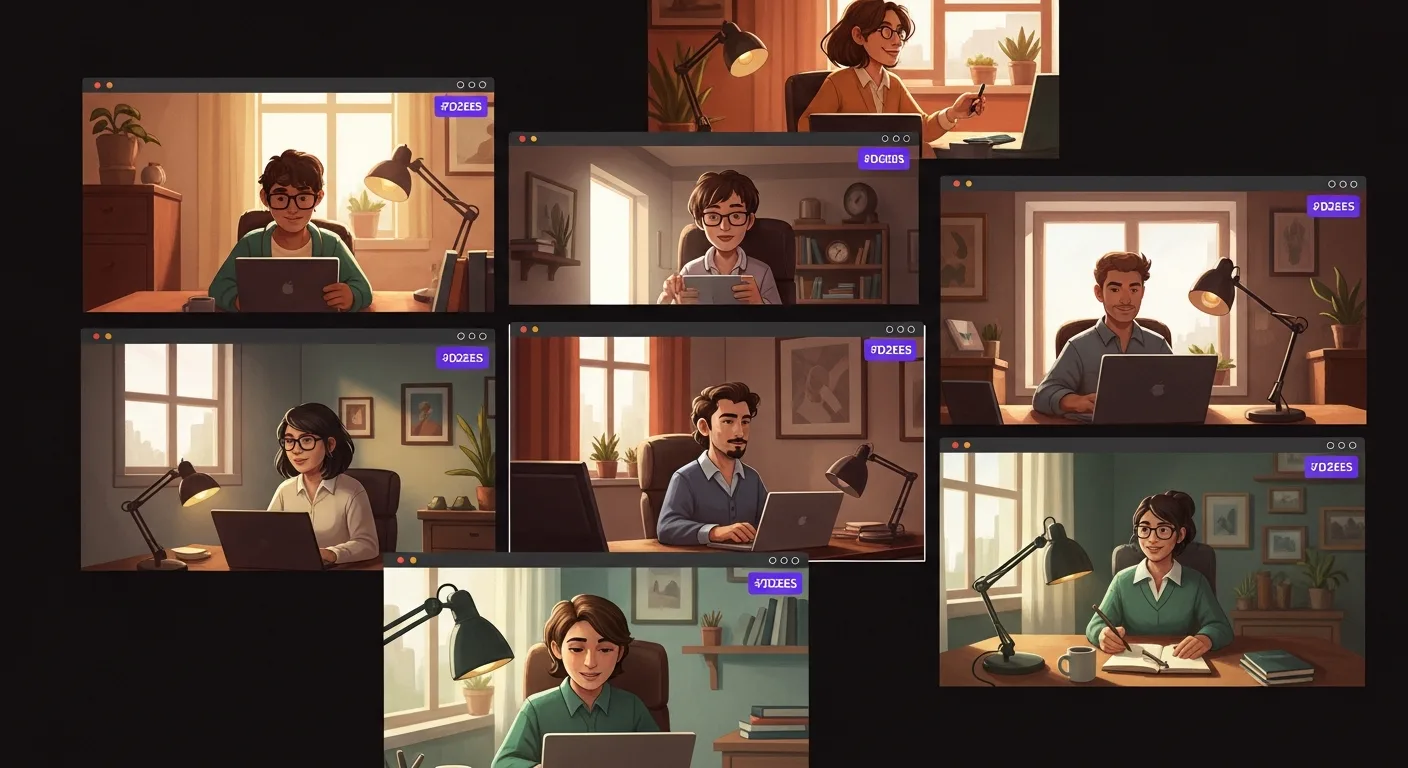
Two formats sit in the HeySparko catalog and they answer different questions. A Big Game is a single live event, 60-90 minutes, hosted end-to-end by a HeySparko Game Host. The team joins a shared Zoom, gets sorted into breakouts of 4 to 8 players, and plays a structured experience with a live leaderboard. For a Series A startup with a fifty-person team clustered inside a six-hour time-zone window, a Big Game lands as the cohort moment the whole company references for the next quarter. The energy in the shared room compounds when everyone watches the leaderboard shift at the same second.
A Marathon runs 1-5 days, async, with daily episodes and a shared leaderboard. Players engage on their own schedule. Completion rates we see at 500+ companies land between 78% and 92%. Roughly 35% of finishers are people who would have skipped a live Zoom. For a distributed Series B team with a Lisbon lead, a Toronto engineering group, and a Singapore go-to-market pod, Marathon is the correct call almost every time. It turns the event into a week-long arc that lives beside staggered PTO and shipping work instead of competing with them for a single calendar slot.
The startup wrinkle is that the format choice interacts with the hiring plan. A twenty-person team growing to fifty by Q4 has different needs than a stable fifty-person team. We tell fast-growing teams to plan for Marathon as the recurring rhythm and slot a Big Game against real milestones: closing the round, hitting product-market fit, the first anniversary. That layout absorbs new hires without breaking the pattern. A Series A HR-tech startup we worked with last year ran three Marathons across the calendar year plus one Big Game for the founding-team anniversary. Attendance stayed above 70% on every event. The two hires who joined in Q3 said the Marathon was the first company event where they felt they had shared context by day two.
Six games we book most often for startup teams
Twenty-one games sit in our catalog. Six of them land more often than the others when the buyer is a startup People lead. Each one solves a different founder-scale problem, and the debate on a prospect call is almost always which of two shortlist picks better fits the team's culture, not "is any of this right."
Mission 8-Bit is the kickoff game we recommend most often for engineering-heavy startups. The three-stage arc, escape the hostile office, rebuild the retro machine, ship the killcode, maps onto a quarterly product-launch cadence so cleanly that the metaphor lands before the first puzzle. Engineering teams appreciate that the game has real coordination mechanics rather than trivia dressed up as narrative. The 8-bit sprite delivery after the event becomes a Slack-avatar meme that lives in the workspace for months. We book Mission 8-Bit for Q1 kickoffs at Series A engineering-first companies more than any other adventure in the catalog.
Bureau of Magical Affairs is the highest-recommended game for onboarding cohorts. The premise, magical bureaucracy meets workplace comedy, closer to The Office × Men in Black than to fantasy, is the literal new-hire feeling. Startup founders who care about onboarding retention book this game for cohorts as small as six. The four-case structure gives a mixed group a shared reference frame within ninety minutes that would otherwise take a month of standups to build. When a Series A People lead asks us how to make the March cohort feel like they belong before their thirty-day review, this is the first game we name.
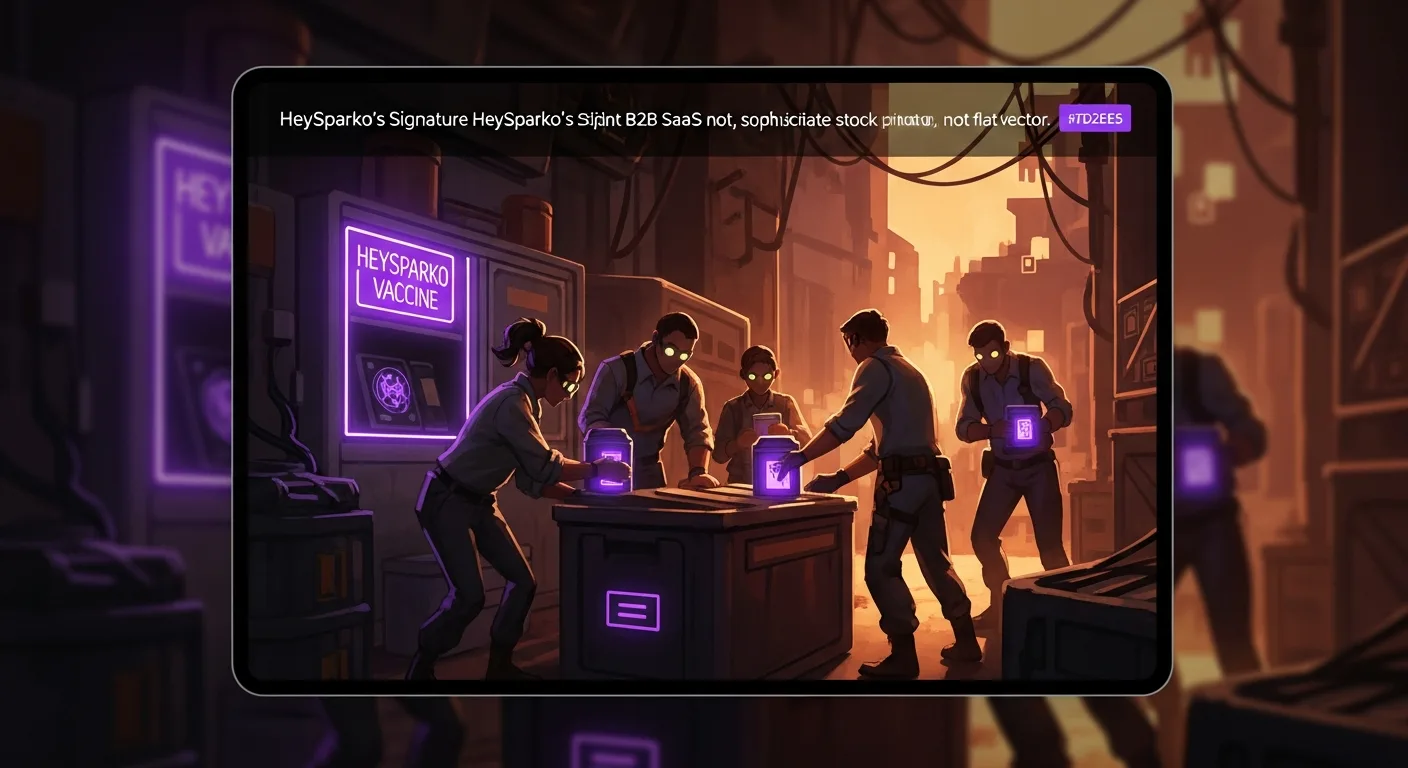
Apocalypse is the game we recommend when a startup wants a high-stakes event without the enterprise polish. An overnight outbreak, four stages, eighty minutes of stress-tested coordination as the team races to develop a vaccine before the last research lab falls. The energy is closer to a Series B all-hands with real momentum than to an ice-breaker. The role-specialization mechanic surfaces which players self-select into leadership under pressure, a signal the People lead cares about, particularly at teams still finalizing IC-to-manager tracks. It reads well for engineering-heavy cultures and remains one of our strongest Halloween picks.
Under the Big Top is the summer-anchor mystery in our catalog. A vintage traveling circus, a vanished headlining act, three stages of deduction with a wonderfully strange cast of suspects. The whimsy is warm and melancholic rather than slapstick, closer to Big Fish than to circus stereotypes. Startups with product-and-design cultures often love the aesthetic. The Marathon format suits it especially well, because the multi-day investigation rhythm gives a small distributed team room to debate suspect theories in a Slack channel between PTO days. The teams that love Under the Big Top love it disproportionately.
Wintervald Hotel Mystery is the sophisticated year-round pick. An isolated hotel, a private dinner, a body before sunrise, a snowstorm trapping the team with the killer for one night. The Christie-flavored deduction plays well for startups whose founders sell into the enterprise-buyer side of B2B, meaning legal-tech, fintech, or compliance-heavy verticals. The murder is stylized and off-screen; the experience reads closer to a sophisticated evening of dinner-theatre than to a corporate ice-breaker. We book Wintervald Hotel Mystery for Series B holiday parties at buttoned-up cultures at roughly the same cadence as we book Stolen Hours at genre-friendly startups.
Stolen Hours is the December wildcard for teams that would find a Christmas-themed office-parody event too on-the-nose. Santa's clock hands are stolen and scattered across postapocalypse, cyberpunk, steampunk, and biopunk worlds, and the team chases through all four. Startups with sci-fi-and-fantasy-friendly cultures love the range of aesthetics inside a single game. It also re-themes cleanly as a January-reset event, and the "time-restart" premise turns the same game into a founding-year-anniversary or new-year-kickoff frame without a rebuild.
When startup customization earns its spot at the budget table
Three customization tiers sit on top of any HeySparko game, and they layer together cleanly. The NPC tier rewrites character dialogue in the company's voice, weaving in internal references and naming conventions. The Logo tier puts the brand into the game environment, with colors on the UI, logo on the leaderboard and intro splash, and a branded take-home certificate. The Story tier rewrites the entire narrative arc to fit the company's situation, tied to a launch, a milestone, or the chapter of the founding story the team is living in.
Customize for your team
TYPE 1
Your team as in-game characters
Real team members, mascots, or characters from your games as NPCs.
TYPE 2
Your brand integrated natively
Logo and brand elements native to game environments — locations, items, UI.
TYPE 3
Your story woven into the game
Company milestones, products, and inside references woven into puzzles, dialogues, and tasks.
For most seed-stage startups, the answer is a single tier for the first event and a reassessment after the post-event debrief. Logo is the most common first pick. Series A companies with strong internal language and founder-visible NPC candidates tend to add the NPC tier for the second or third event. The Story tier is where the real differentiation lives, and we recommend it for Series B teams celebrating a milestone or launch where the narrative should carry meaning past the ninety minutes. The BGaming anniversary event our team ran with all three tiers stacked, roughly 400 employees across a dozen-plus countries, hit an 89% participation rate against a 75% target and left a post-event Slack channel alive into the following month. See /en/pricing for the current tier configuration and the Booking Calculator.
What the data says about startup engagement spend

The startup context sharpens the engagement-ROI argument, not softens it. Small teams feel every departure disproportionately, and every hour of ineffective collaboration compounds against a runway measured in months rather than years. Atlassian's State of Teams 2024 report, drawing on 5,000 knowledge workers and 100 Fortune 500 executives, estimates that 25 billion work hours are lost annually to ineffective collaboration inside the Fortune 500, and 93% of executives say teams could deliver similar outcomes in half the time if collaborating more effectively. The 25-billion-hour figure is an extrapolation from executive opinion rather than a hard-metric ceiling, but the direction is the point. For a fifty-person startup, the equivalent framing is not billions of hours. It is the four hours per week the average IC spends waiting on a decision that never lands, and the ninety minutes of a virtual event that surfaces the same coordination gap in a low-stakes environment where the team can practice reading each other.
The academic backing lines up cleanly. Anog et al. (SSRN, 2023) pooled sixty-plus studies on team-building interventions and found that structured activities lift satisfaction and reduce turnover, with the effect amplified when the activity sits inside a broader development strategy rather than standing alone. Read against the startup context, this argues for cadence over spectacle. One virtual event integrated into a quarterly rhythm compounds more than four one-off events booked reactively when a founder notices the team feels flat.
The retention math is where the CFO conversation typically resolves. SHRM's 2024 cost-per-hire calculation puts the all-in cost of a non-executive departure between fifteen and twenty-one thousand dollars, once recruiting spend and ramp time are included. For a fifty-person startup, one prevented departure per year offsets the annual engagement-event line item comfortably. Two prevented departures make the program self-funding by seed-stage math. Deloitte's 2024 Burnout in the Workplace study, surveying 1,000 US full-time workers, found that workers attending two or more company-sponsored events per quarter report 23% lower burnout symptoms than those attending none. In our own portfolio the counterpart signal is the completion-rate stat: 78-92% Marathon completion at 500+ companies is the number we point to when a founder asks whether async will drop off after Day 1. It does not. The leaderboard holds pull across the full week.
The distributed-team angle rounds out the picture. Microsoft's 2025 Work Trend Index, based on a 31,000-knowledge-worker survey paired with Microsoft 365 telemetry, found that 30% of meetings now span multiple time zones, an 8-point absolute increase since 2021. The signal for startups is operational. The team a founder built to be twenty people in one city is now twenty-eight people in four cities, and the coordination surface has changed underneath the engagement plan without the engagement plan noticing. The startups that ship engagement programs that survive the transition tend to be the ones that treat time-zone spread as the primary variable, not headcount.
Frequently asked questions
How much does a virtual team building event cost for a startup?
The line item at Series A and B scales with headcount and format rather than a per-seat retail price, and the Booking Calculator on /en/pricing surfaces the exact configuration before any conversation with a sales rep. For a fifty-person Big Game with a single customization tier, the spend lands in the low-four-figure range. Marathon programs and stacked customization push it higher. Cost-per-engaged-employee bottoms out for startups at the 75-250 player band.
Do we need a founder or a manager to host the event?
No. A HeySparko Game Host MCs the entire experience end-to-end, from the sixty-second welcome through the final scoreboard. The founder participates as a player, which is the pattern we recommend at startups where the People lead cannot afford to burn founder-time on facilitation. The Game Host has typically run the specific game fifty times or more, so the pacing is dialed in and the CEO gets to be part of the team rather than running the day.
How many people is the right size for a startup team-building event?
The format scales from five to ten thousand players in a single session, and the coordination sweet spot at startup scale is the 20 to 80 player range. Below twenty, the social density of the leaderboard thins out and the game feels like a group of friends rather than a team event. Above eighty, the founder-visibility of individual breakouts drops, and a Marathon format tends to serve the same headcount better than a single live Big Game slot.
Can the game work if the team is spread across many time zones?
That is exactly the failure mode the Marathon format was built for. Marathon runs 1-5 days async with daily episodes and a shared leaderboard that pulls people back across the week without requiring anyone to take a bad-hour call. Roughly 35% of Marathon finishers are people who would have skipped a synchronous event, and completion rates land between 78% and 92% at companies above 500 employees. For distributed Series B startups, Marathon is the correct default.
What does the People lead get after the event that helps defend the budget?
Every HeySparko event ships a post-event analytics report within twenty-four hours of close. Participation rate, by-team breakdown, NPS pulse, and coordination-heat signals are the standard artifacts. For a startup People lead who needs to defend the recurring line item to a CFO, the by-team breakdown showing which managers drove attendance is the single most useful data point. Pair the report with a pre/post three-question engagement pulse if the company runs one.