

Virtual team events have moved out of "discretionary goodwill" territory and into budget lines with their own procurement cycles. HR leaders running those cycles are no longer asking whether the category is worth it. They are asking what it costs, what drives the variance, and how to present a number to Finance that will survive the Q2 review. The pricing question is legitimate, and the answer is genuinely variable. A 50-person synchronous game and a 2,000-person multi-day distributed program are not comparable — and treating them as if they were is how teams end up with a budget that doesn't match the event they needed.
Since 2020, we've delivered virtual team events to 300+ companies across 50+ countries — 1,500+ events in the portfolio so far. The pricing conversation goes well when HR teams come in knowing which three variables drive cost. It goes poorly when they're comparing apples to motorcycles across vendor quotes that don't specify what's actually included. This guide covers what shapes the number, what reasonable budgets look like across common configurations, and where the spend-to-impact ratio is strongest.
How much does a virtual team building event cost for a company of 200-500 people?
What Drives a Virtual Team Event's Price
A common misconception: you're paying for the game. You're not. You're paying for the configuration — specifically, how many people, which format, and whether you're adding customization. Get those three variables right and the price quote becomes predictable. Change any one of them significantly and you're looking at a different event in a different cost range.
Headcount is the primary axis. Per-player pricing means a 100-person event lives in a fundamentally different bracket than a 1,000-person event, even when the format and game are identical. Fixed production costs spread across more players as the group scales, which drives per-player rates down. Large events are often better value per engaged employee than small ones, even when the invoice looks bigger.
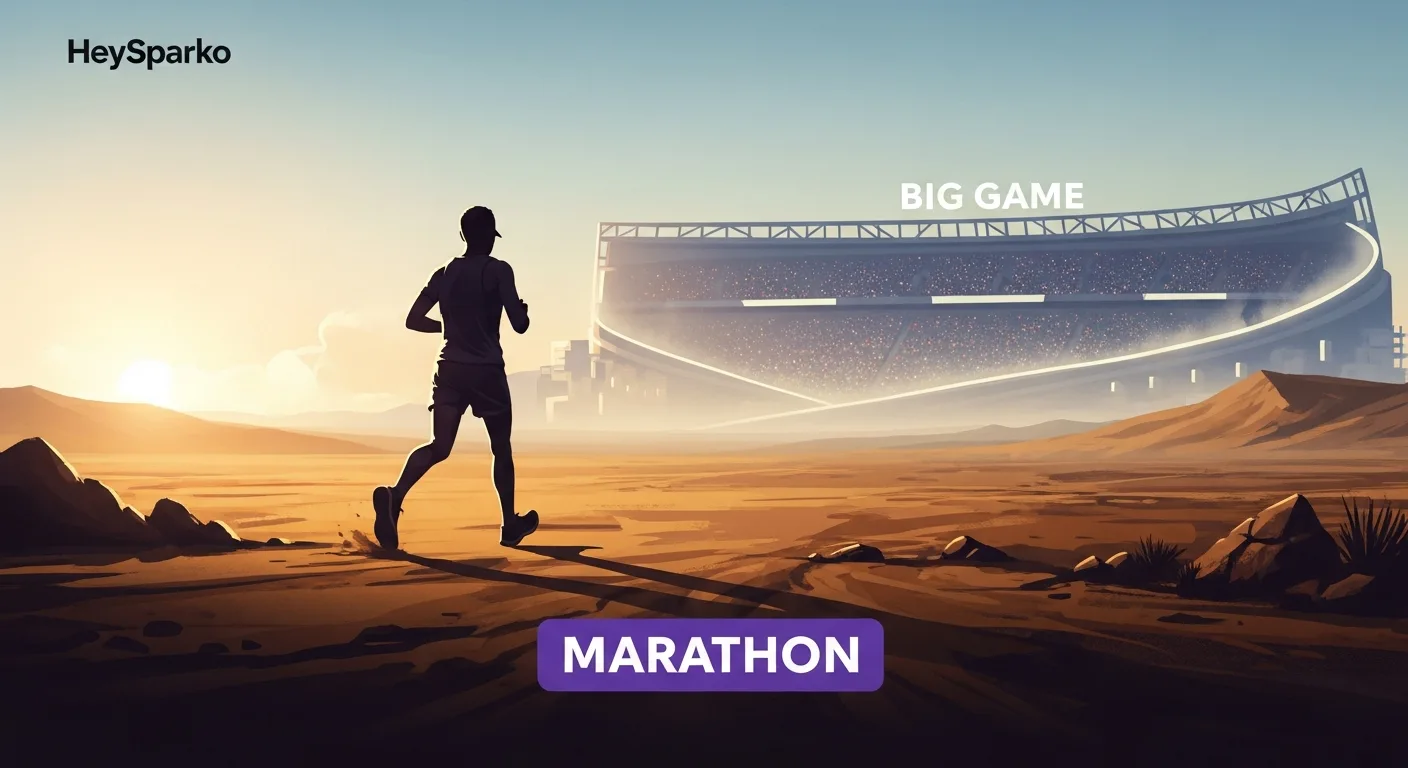
Format — Big Game versus Marathon — creates the second axis, and it matters more than most teams expect. These aren't variations on the same product. They're different experiences built for different team situations, and choosing the wrong one is the most common source of "we spent the money and it didn't land the way we expected." The format decision should happen before the budget conversation, not after.
Customization is the most predictable lever of the three. Three tiers exist — NPC, Logo, and Story — each at a flat $500 regardless of player count or format. Stack all three and you've added $1,500 to the event. Finance finds this line item easy to evaluate, which is part of why the add-on structure is flat.
Wide ranges across HeySparko's full catalog run from roughly $1,500 for a small 15-50 player Big Game to $25,000+ for large-scale multi-day Marathon programs with full customization. For the most common mid-size configurations:
- Big Game, 50-100 players: $1,800-$3,500
- Big Game, 200-500 players: $3,500-$8,000
- Big Game, 500-2,000 players: $7,000-$18,000
- Marathon (3-day), 200-500 players: $6,000-$14,000
- Marathon (5-day), 200-500 players: $9,000-$20,000
- Marathon (3-5 day), 500-2,000 players: $14,000-$30,000+
- Customization add-ons: $500 per tier, $1,500 maximum
These reflect base pricing without customization. The HeySparko pricing page has a calculator that shows the exact number for your specific configuration before you need to speak with anyone.
Big Game vs. Marathon: When Format Changes the Financial Logic

The format question is where most pricing conversations go sideways. Two companies with identical headcount can land in entirely different budget ranges — and entirely different ROI outcomes — because one chose the synchronous format and one chose the async format without evaluating which one could actually reach their team.
Big Game is a single live 60-90 minute synchronous event. Everyone joins the same video session at the same time. A HeySparko Game Host runs the entire thing; your team participates as players, not organizers. The energy of a live shared moment — watching the leaderboard shift as teams race through Apocalypse, or the collective suspense of the final reveal in Wintervald Hotel Mystery — is genuinely different from async play. When your team's time zones fall within a 6-hour spread, Big Game is usually the right call. One production run, one session, one cost.
The constraint is the scheduling math. For teams with an 8+ hour time zone spread, any single window disadvantages someone. We worked with a 400-person fintech spread across 12 time zones that had run two Big Game events. Participation was 55% and 58% respectively. The missing 40-45% were not disengaged — there was simply no workable session window for their locations. When they switched to Marathon for their Q3 event, completion hit 74%.
Marathon spreads engagement across 1-5 days with each day unlocking a new game episode. Players engage when their local schedule allows; the shared leaderboard creates pull without requiring synchronous attendance. The cost reflects the multi-day production: you pay for duration and player count, not a single event window. At 500+ players on a 3-5 day format, Marathon consistently delivers the lowest cost-per-engaged-employee of any HeySparko configuration. Our completion rates across 500+ companies run 65-78% — opt-in, no schedule mandate, no one dialing in from a hotel bar at 6am because their time zone lost the coin flip.
The practical question for format selection is not "which format do we prefer?" It's whether you can get 80%+ of your team into a single session without disadvantaging anyone's location. If yes, Big Game is the cleaner budget conversation. If no, the comparison isn't Big Game versus Marathon — it's Marathon versus a Big Game that 40% of your team will miss.
Both formats support all three customization tiers and deliver post-event analytics reports. The pricing page shows configuration-specific cost side by side.
The Customization Tiers: What Each One Does
The common objection when customization comes up in the budget conversation: "is this really necessary?" The honest answer is no. A stock HeySparko event is already a complete, high-engagement experience. What customization changes is whether the event feels like something the vendor built or something the company built with support. That distinction matters differently depending on what you're trying to accomplish.
NPC customization means the game's narrator and supporting characters speak in your company's voice — using internal references, naming conventions, and the kind of inside language that makes employees stop mid-puzzle and feel genuinely recognized. For an engineering team playing Mission 8-Bit, the shopkeeper might reference actual codebase conventions. For a new-hire cohort in Bureau of Magical Affairs, the Bureau No. 7 case files can reference real operational challenges the cohort will face in their first 90 days. The effect is hard to replicate with a stock event; you either have it or you don't.
Logo tier integrates your brand throughout the game environment. Leaderboard headers, transition screens, the take-home completion certificate. If the event doubles as a brand moment — a customer-facing program, a recruitment event, a partner engagement — Logo tier is the minimum viable investment to make the event yours rather than a vendor's.
Story tier rewrites the narrative arc entirely. The setting, stakes, and mission language map to something real for your team. BGaming, an iGaming company we worked with for their multi-year company anniversary, ran their event with full Story customization. The narrative arc traced the company's founding story across the game's chapters, with a reveal at the finale that reflected the milestone they were actually celebrating. 89% of their ~400-person team participated — well above the 75% target they'd set going in.
Customize for your team
TYPE 1
Your team as in-game characters
Real team members, mascots, or characters from your games as NPCs.
TYPE 2
Your brand integrated natively
Logo and brand elements native to game environments — locations, items, UI.
TYPE 3
Your story woven into the game
Company milestones, products, and inside references woven into puzzles, dialogues, and tasks.
The shift between a stock event and a fully branded one is visible in every screen of the player experience:
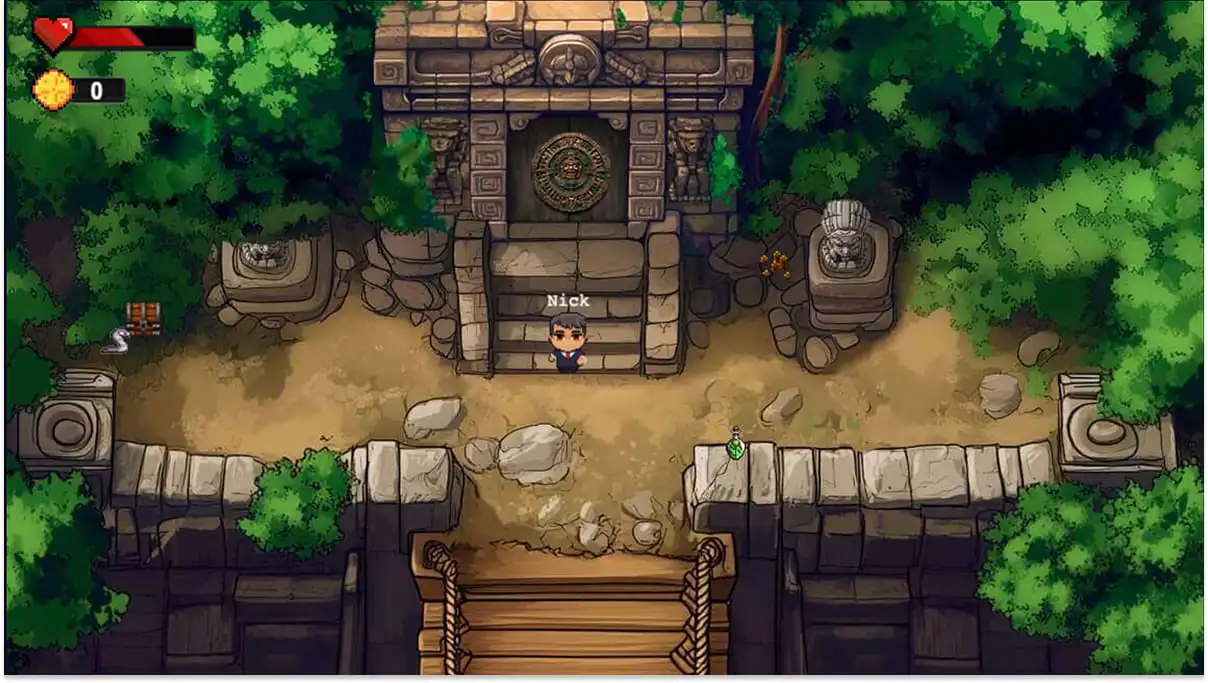
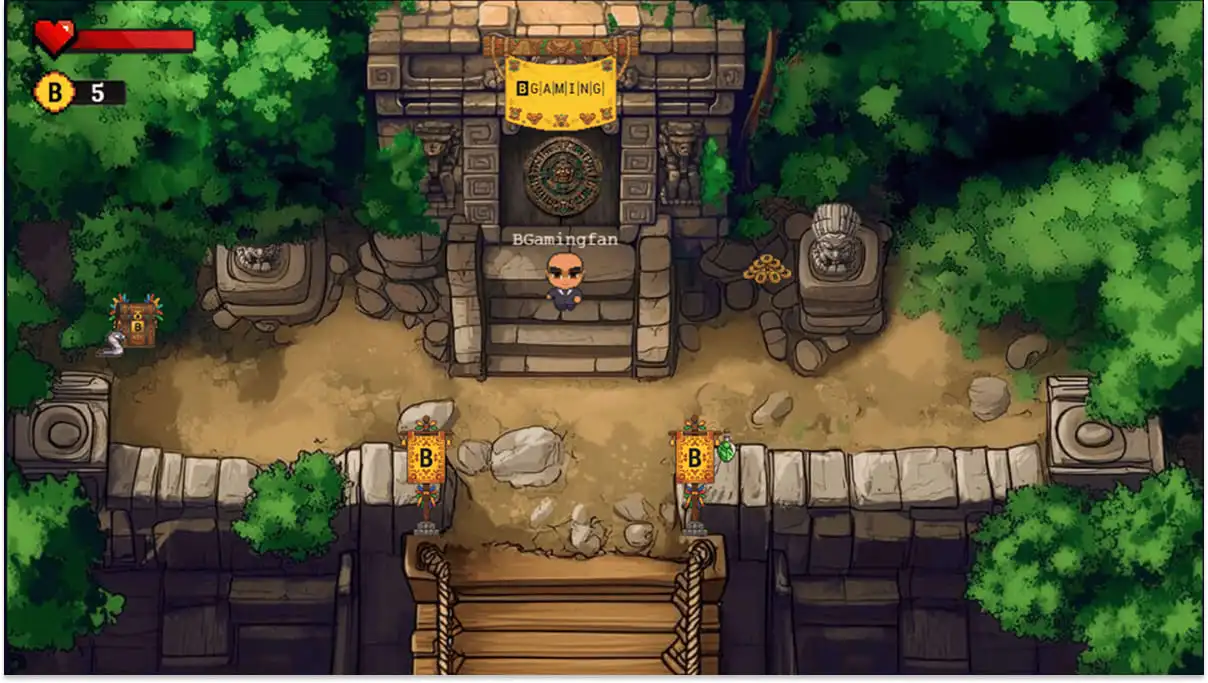
Where customization pays most is recurring programs. At the second or third event in a quarterly or annual series, the NPC characters and Story arc have accumulated history that a stock game simply can't build. The $500-$1,500 add-on becomes a smaller fraction of the annual program budget when you're amortizing it across multiple events.
Lead times determine whether customization is even possible on your timeline: Logo requires at least 7 days, NPC requires 14, Story requires 21 for the briefing call and iteration cycle. For Q4 events, build these into the plan before the budget gets approved — a last-minute Story request in November is the most consistent friction point in our December bookings.
Games Across the Catalog: Fit Matters More Than Price
Within any configuration, game selection is the most consequential choice for whether the event lands. It costs nothing to choose correctly and significantly damages outcomes when you get it wrong.
For engineering teams, sales organizations, and anyone who wants coordination under real time pressure, Apocalypse puts players through a four-stage vaccine crisis. The mechanics reward delegation and role specialization — by Stage 3, most teams self-organize into specialists without being told to. Halloween-season bookings are peak, but it runs year-round for Q1 kickoffs and stress-tested team-building moments. Not the right call for formal enterprise cultures that need something quieter.
If your audience is a finance team, a legal function, or a C-suite that has been burned by a "fun" company event before, Wintervald Hotel Mystery is the game that reliably doesn't generate complaints. A snow-bound whodunit with sophisticated deduction mechanics, three evidence-gathering stages, and a final reveal that typically fools at least half the room. No forced humor. December is peak, but it works year-round.
Under the Big Top is the summer-season option — a vintage circus mystery with the same three-stage deduction structure as Wintervald, warmer aesthetic, and a traveling-troupe premise that lands particularly well for anniversary events. If your company's culture leans toward warmth over edge, this fits naturally where Wintervald might feel too austere.
Bureau of Magical Affairs is our top recommendation for onboarding cohorts. Four open cases, Bureau No. 7, and a premise — too many emergencies, also bureaucratic paperwork — that mirrors the new-hire experience in ways that tend to produce genuine recognition rather than polite laughter. The four-case structure handles groups of 75-500 well; the analytics by case file give a useful look at coordination patterns in a cohort you're still learning.
Mission 8-Bit runs for tech-leaning cultures and maps well onto project rhythms. Three-stage arc: escape the hostile-device office, rebuild a 1980s computer at a retro electronics shop, enter the digital world as 8-bit avatars and neutralize the virus. The quarterly-kickoff framing (setup → build → ship) is why engineering managers keep booking it for Q1. The 8-bit sprite sheets delivered post-event have a habit of ending up as Slack avatars.
Stolen Hours is the December option for teams that find standard holiday events predictable — a multi-world chase across postapocalypse, cyberpunk, steampunk, and biopunk settings to recover Santa's stolen clock hands. Pixar-style art throughout, no grimdark. Strong for Marathon format with distributed global teams because each world's puzzle style surfaces different player strengths across the async days.
What the Data Says About This Budget
The engagement budget conversation usually requires a translation layer between "people will enjoy this" and "this is a defensible investment." The research behind that translation is worth knowing in detail.
Start with where things actually stand. Gallup's State of the Global Workplace 2025 report puts it plainly: only 21% of employees worldwide are engaged in their work, with disengagement costing the global economy $438 billion annually in lost productivity. And 70% of variance in team engagement is attributable to the direct manager — not the culture program, not the compensation band, not the return-to-office policy. The manager. What this means practically: a structured team event that generates per-team analytics gives you visibility into the manager-level engagement gap that your quarterly survey average buries. The HeySparko analytics report breaks completion rate, NPS, and coordination metrics by team. That's the resolution level you need to act on the 70% finding.
SHRM's 2024 cost-per-hire research puts the average cost per non-executive departure at $15,000-$21,000, including recruiting and ramp time. For a 200-person team with 10% annual voluntary turnover, that's $300,000-$420,000 in annual departure costs. Preventing two exits pays for a year of quarterly events at most mid-size company configurations. Nobody is claiming a single event prevents specific exits — the causal chain is more complex than that. But the financial stakes are large enough that engagement investment deserves real evaluation rather than reflexive skepticism from Finance.
In Deloitte's 2024 Global Human Capital Trends survey across 95 countries, 71% of business and HR leaders named individual teams and workgroups as the best place to cultivate culture, agility, and fluidity. Not the all-hands meeting. Not the company-wide initiative. The team level. The same research found organizations taking that team-level approach were 1.8× more likely to achieve positive human outcomes and 1.6× more likely to hit desired business outcomes. That data doesn't prove events cause those outcomes — it points to where the lever is. Team-level interventions outperform company-level ones. Events are the most scalable team-level intervention most HR leaders can execute.
Anog et al. (SSRN, 2023), in a systematic review of 60+ studies, found that structured team-building activities increase satisfaction and reduce turnover, with effects amplified when integrated into a broader development strategy. The single-event versus recurring-program distinction matters here. One Big Game is measurably better than no event. A quarterly Marathon with consistent pre-event communication and post-event manager follow-through compounds the effect in ways a single event can't.
In our own Marathon data across 500+ companies, completion rates run from 65% to 78%. The variable that explains most of that spread isn't the game or the team size. It's the manager's behavior in the 48 hours surrounding the event. A single Slack post from a manager on Day 1 morning lifts team completion by 12-18 percentage points in our experience. The event's price is fixed. What adjusts the outcome is the organizational context you build around it.
Frequently Asked Questions
How much does a virtual team building event cost for 200 people?
For a 200-person Big Game with no customization, expect $3,500-$6,500 depending on game and format specifics. A 3-day Marathon for the same group typically runs $6,000-$12,000. Customization adds $500 per tier (Logo, NPC, or Story), so a fully customized event adds $1,500 on top of either format's base price. The HeySparko pricing page has a calculator that shows the exact number for your configuration before you need to speak with anyone.
What is the difference between Big Game pricing and Marathon pricing?
Big Game is priced on player count alone — one production run, one live session, one analytics report. Marathon is priced on player count and duration combined. At 200+ players, Marathon's per-player cost is slightly higher per day, but the format spans 3-5 days and creates proportionally more engagement touchpoints. For teams with wide time zone spread, Marathon is often the only format that reaches the full headcount without forcing anyone into an off-hours session, which changes the effective ROI math entirely.
Does the price per person go down for larger groups?
Yes, per-player cost drops as headcount increases across both formats. Small events (15-50 players) carry the highest per-player rate; mid-size events (75-500) sit in the value sweet spot; events at 1,000+ see a sharp per-player reduction with volume. Customization tiers remain flat at $500 each regardless of group size, which means the $500 Logo add-on on a 500-person event is a much smaller percentage of the budget than the same add-on on a 50-person event. Branded events get cheaper to justify at scale.
What does NPC customization change about the game experience?
NPC customization rewrites the dialogue and persona of the game's narrator and supporting characters to speak in your company's voice — internal references, role-specific language, and the kind of specificity that makes people pause mid-puzzle and realize this wasn't built for a generic corporate audience. Game mechanics stay the same. Hosting structure stays the same. What changes is whether the characters feel like they know your team or came from a stock script. Minimum lead time is 14 days; the briefing call takes about 30 minutes.
How far in advance do we need to book?
A standard Big Game with no customization can move in 5-7 business days, though 2 weeks is more comfortable for host scheduling. Logo customization requires at least 7 days; NPC requires 14 days; Story customization requires 21 days for the briefing call and iteration cycle. For Q4 holiday events, December dates fill 4-6 weeks out — if you're planning a December event, the booking conversation should start in mid-October. Available slots by format are visible on the pricing page.
How do we measure whether the event budget was worth it?
Three signals are worth tracking: participation rate from the post-event analytics report (broken down by team, not just a company-wide average); the NPS pulse we send within 24 hours; and if you run quarterly engagement surveys, the delta between the survey immediately before the event and the one 4-6 weeks after. Marathon formats give you a daily engagement breakdown — which day had the highest completion, which teams fell off after Day 1, where the leaderboard created visible pull. Participation rate by team is the cleanest single number to bring to Finance.