
The scheduling problem for distributed team events is not new, and neither is the standard workaround. Most People Ops teams find the least-bad live window, accept that Singapore draws the short straw, hit 60-65% attendance, and call it a success. The assumption underneath is that synchronous engagement is the real thing and async is a compromise for when scheduling fails. Over the last four years, that assumption has become harder to hold. Microsoft's 2024 Work Trend Index found that 57% of distributed workers prefer asynchronous engagement options over live ones — a majority preference, not a fringe one. At the same time, the formats available for asynchronous team building have matured significantly: from "do this puzzle when you have a moment" into structured, multi-day events with live leaderboards and post-event analytics that rival what live formats produce.
1,500+ virtual events later — across 300+ companies in 50+ countries since 2020 — the patterns are more consistent than most People Ops leaders expect. The companies that have moved to structured asynchronous team building, with daily content drops and a shared leaderboard, report higher participation than the same team's live events. The people who never show up to mandatory live events often complete all three episodes of a Marathon. The analytics make clear why: no scheduling pressure, and the leaderboard creates pull instead of obligation.
The question worth addressing directly: How do you run an asynchronous team-building event that people complete — not just start on Day 1?
What asynchronous team building actually looks like
Asynchronous team building is not sending everyone a puzzle link on Monday and hoping people respond by Friday. That version exists. It's sometimes called a "self-paced activity." The technical definition of async is correct. The engagement results are predictably weak.
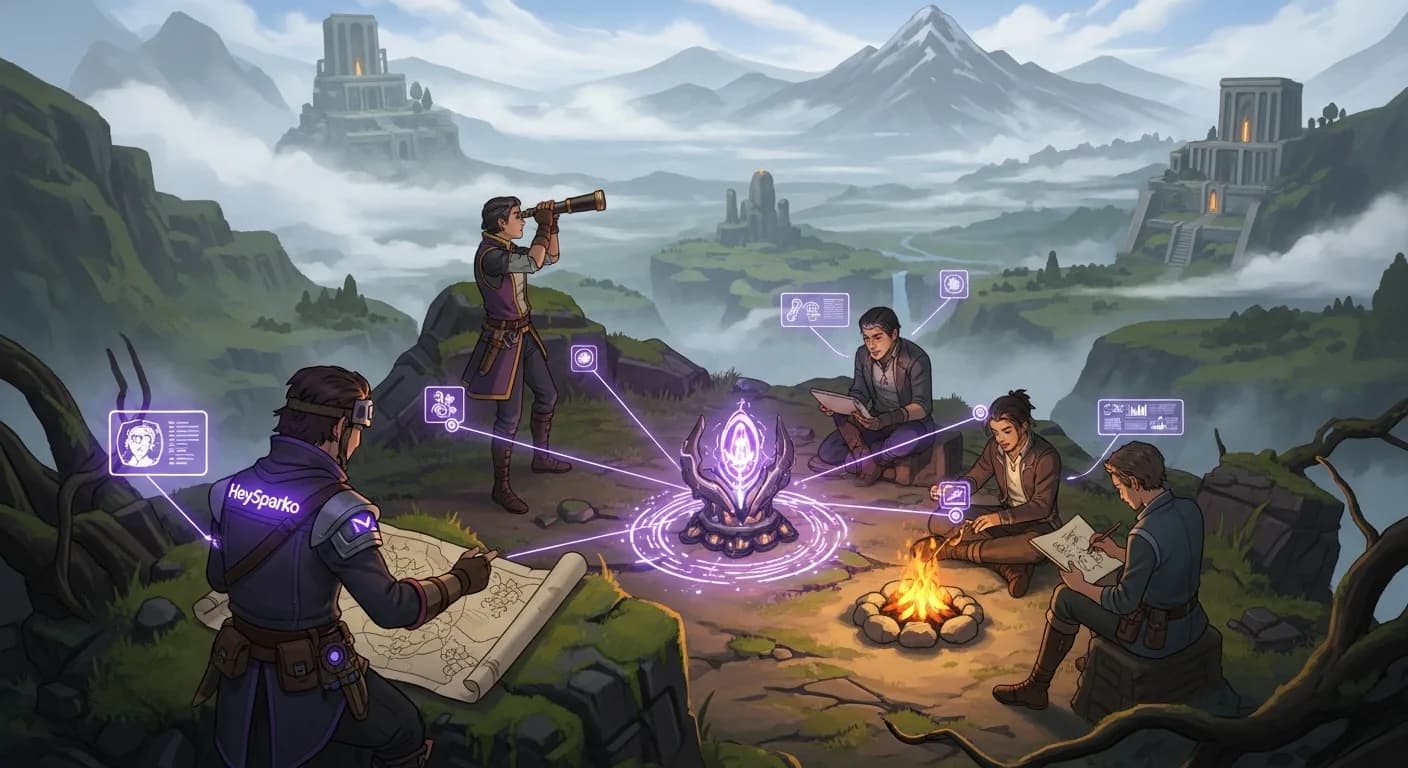
What works is a format where content releases on a deliberate schedule, a shared leaderboard updates in real time, and the competitive pull of seeing your team's score does the work that a mandatory Zoom block would otherwise have to do. At HeySparko, this is the Marathon format: 1-5 days of daily game episodes, each unlocking at the start of the business day, each advancing a narrative arc that connects across the whole event.
A standard 3-day Marathon runs like this: Day 1, Episode 1 unlocks. Players join via a browser link (no download, no account creation) and spend 30-45 minutes on the first round of puzzles tied to the game's story. The leaderboard populates as teams submit answers. Day 2, Episode 2 drops. The narrative deepens. The Slack channel for "Team Jaguar" gets active because someone in Singapore figured something out and wants to share it before Denver wakes up. Day 3 is the finale. Stragglers from Day 1 catch up because the story has momentum and they want to see how it ends. The day after the finale, the analytics report lands in the HR Lead's inbox: participation rate, completion rate, team-by-team breakdown, post-event NPS.
The structural difference from an unstructured async activity is the daily cadence. It creates natural conversation moments without forcing everyone into the same window. The team in Tokyo plays at 3pm their time. The team in Denver plays at 3pm theirs. The leaderboard shows both, and neither team had to take a 6am call to be in it together.
In our work with a fintech (roughly 450 employees split across London, Singapore, and Austin), this pattern played out precisely. Their live team events consistently landed at 60-65% participation because the APAC time window was genuinely inconvenient for US employees and vice versa. They ran a 3-day Marathon instead. Participation reached 79%. Seventeen people who had never attended a single live company event completed all three episodes. Their People Ops lead noticed because the analytics report made it visible, and that data point became the justification she used to get the next event's budget approved.
BGaming, the international iGaming software company distributed across 12+ countries, ran their company anniversary with us as a fully customized Big Game. The occasion and their coordination capacity made that format the right call for that specific moment. But for sustained quarterly engagement across a 12-country footprint, the Marathon format is what fits the ongoing operational reality. That distinction between occasion-driven and program-driven choices is the core of the format decision.
Big Game or Marathon: the format decision that actually matters
The format choice usually resolves itself based on two factors: how many time zones the team spans and how much the culture will tolerate mandatory scheduling.
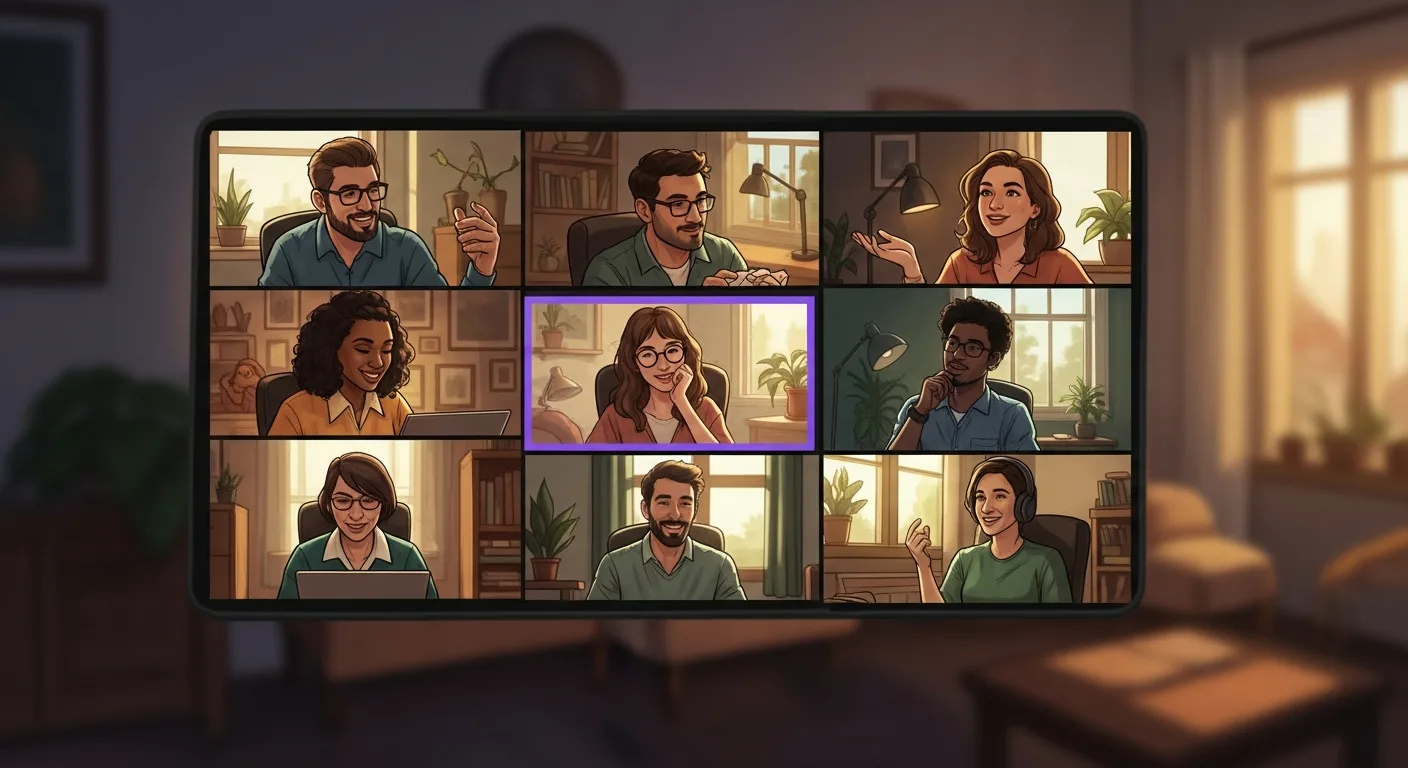
Big Game is a single live 60-90 minute event, hosted by a HeySparko Game Host, with everyone on the same call at the same time. The energy of a Big Game is its product. Shared leaderboard shifts visible to everyone simultaneously. The host's voice setting the pace and energy. Teams cheering in breakout rooms while watching scores update. At its best, Big Game produces the closest thing to an in-person shared moment that virtual formats achieve.
Big Game is the right call when:
- Your team's time zones are within a 6-hour spread, or you're running 3-4 regional windows for a global team
- You're running a specific occasion event: holiday party, annual kickoff, milestone celebration
- The live shared-moment quality is part of what you're selling internally to leadership
Marathon is the right call when:
- Your team spans 8+ time zones and no single live window serves everyone without disadvantaging someone
- Your culture has started pushing back on mandatory synchronous commitments
- The engagement program needs to sustain over a week rather than deliver a single two-hour block
- You want to reach the segment that never shows up to live events, typically 25-40% of a distributed company
The psychological difference matters more than the format description suggests. A Big Game produces live energy in the room, time-bounded and shared. A Marathon produces engagement over time, opt-in and self-paced, with the leaderboard as the social glue. Both are real products; they serve different objectives. A company running an annual all-hands rally usually wants the Big Game. A People Ops team trying to build consistent engagement across a quarter usually wants the Marathon.
We've facilitated this transition with many distributed companies over the years. The first Big Game is typically the holiday party or kickoff. The first Marathon is typically the Spirit Week or quarterly engagement cycle. Once both have been run for the same team, the sequencing becomes intuitive: occasions get Big Game, programs get Marathon.
The scheduling math reinforces this. OECD's 2024 analysis of global workforce patterns found that teams spanning 3+ time zones average just 2.5 hours of shared standard business hours per day. A mandatory 90-minute live event for a global team consumes most of that coordination window, and still excludes the people whose overlap doesn't align with the event window. A Marathon sidesteps this entirely.
Which games run best as async Marathons
The games that work best in Marathon format share one quality: narrative momentum. Each episode advances something (a mystery being unraveled, an investigation deepening, a chase escalating) that makes returning for the next episode feel like a choice rather than a task.
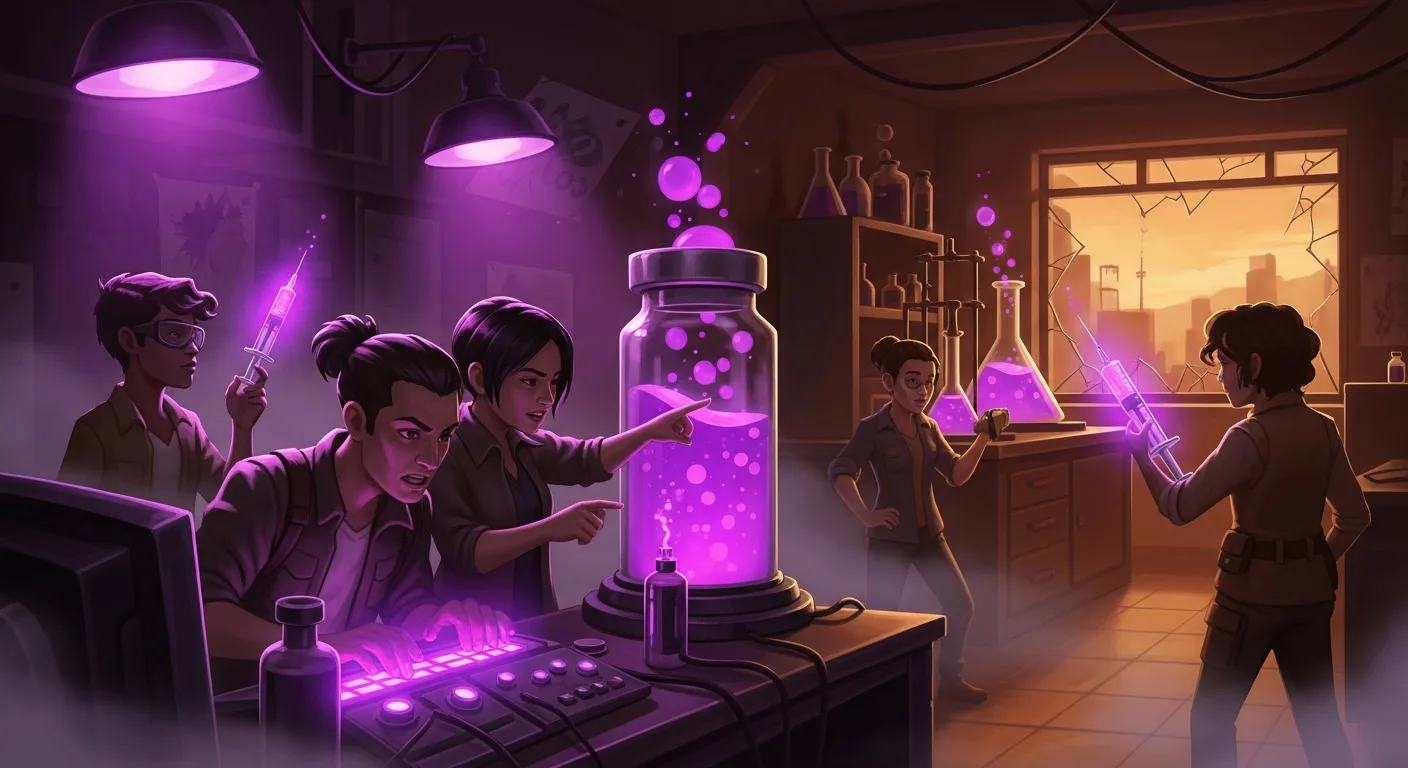
Apocalypse runs the most effective Marathon we offer for teams that want high-energy adventure. The premise (a racing vaccine development mission as an overnight outbreak spreads across four locations) creates genuine suspense across three days. Episode 1 puts the team inside the Research Center, establishing stakes and coordination mechanics. Episode 2 moves through the Streets and Power Station, where role specialization starts to emerge naturally across the squad. Episode 3 is the Laboratory finale: the team has invested two days in this world and the finale pays off proportionally. We've run Apocalypse as a Marathon with engineering and fintech teams particularly often, because the time-pressure mechanic maps naturally to how those cultures approach problem-solving.
Bureau of Magical Affairs is the Marathon we recommend most consistently for onboarding cohorts. The four-case structure (philosophical chaos at Brum's Mansion, time anomalies in the Chrono-Lift, forest stealth-puzzles in Episode 2, a sky observatory finale) gives each Marathon day a fresh entry point while the overarching case thread connects them. New hires who haven't yet built cross-functional relationships find natural conversation openings in the Bureau's chaos. We've run it for 100+ new-hire cohort weeks. The reason it lands for onboarding specifically is that the premise (too many things on fire at once, plus the paperwork) is something every new hire already recognizes from their first weeks.
Last Temple Mystery is the strongest choice for international teams running Marathon format. The Mayan-temple expedition across four floors holds engagement well across a multi-day event because the mythology is deliberately composite rather than culturally specific, so it travels well across 12+ time zones without needing localization. The Storm Floor in particular creates a natural conversation moment between Day 2 and Day 3: teams who fail the coordination mechanic together almost always start cross-team Slack threads that outlast the event itself. Adventure Through the Ages is the adjacent pick when a team wants exploratory variety over a single setting — the multi-era structure gives each Marathon day its own visual world, which suits squads that prefer narrative range to urgent coordination.
For teams that prefer a mystery over an adventure, Wintervald Hotel Mystery delivers the Agatha Christie deduction experience across three Marathon days and works particularly well for enterprise audiences who want sophistication over kinetic energy. The investigation structure (gathering evidence on Day 1, running suspect interviews on Day 2, reconstructing the crime scene on Day 3) gives each episode a clear investigative purpose. Teams develop actual suspect theories between episodes. The reveal on Day 3 lands differently when the team has invested real deductive effort across two preceding days.
Under the Big Top is the summer option: a traveling circus, a missing headlining performer, and a wonderfully strange cast of suspects. The same three-stage deduction mechanic as Wintervald, with a warmer aesthetic. It works particularly well for teams in creative or design-adjacent cultures that want something that doesn't scan as "standard corporate team building." The multi-day investigation rhythm suits async format because the backstage evidence trail creates natural places to pause, debate with teammates, and return.
Stolen Hours is the December Marathon game for teams that want something more imaginative than holiday trivia. The premise (Santa's clock hands scattered across postapocalypse, cyberpunk, steampunk, and biopunk worlds) creates unusually volatile leaderboard dynamics across three days because different player strengths surface in different world-contexts. Teams that aren't leading going into Day 3 have a realistic shot at the finale, which keeps late-game participation high even among squads that fell behind early.
One operational note that applies across all Marathon games: the mid-event communication makes a measurable difference. A Marathon without a Day-2 nudge (a manager Slack message, a leaderboard update email, a short note from the People Ops team) sees a sharper drop between Episode 1 and Episode 2 completion. The nudge doesn't need to be a participation mandate; social proof that people are playing is enough. The difference between a 65% completion rate and a 78% one often comes down to this single touchpoint.
What the data says about async engagement
The evidence for asynchronous team building isn't only operational. The third-party research points in a consistent direction.
Atlassian's State of Teams 2024 report estimates that 25 billion work hours are lost annually to ineffective collaboration within the Fortune 500, and finds that 93% of executives say teams could deliver similar outcomes in half the time if collaborating more effectively. That framing matters for distributed teams specifically — the time-cost of bad coordination is the problem most People Ops leaders are trying to solve, and Marathon format treats events as collaboration-tuning rather than just morale time. Every Marathon delivers a by-team, by-manager breakdown of participation and completion rates, which is the clearest view of where the coordination gap lives — typically more useful than a company-wide engagement average that can't isolate where the friction sits.
Deloitte's 2023 Human Capital Trends survey found that 46% of employees felt less connected to their colleagues compared to pre-pandemic levels. That number hasn't fully recovered despite years of investment in virtual team events. The connection deficit in distributed teams is structural rather than temporary — it persists because most event formats don't fit the way distributed work runs. A format requiring everyone online at the same moment is solving a different problem than the one most distributed teams face.
Microsoft's 2024 Work Trend Index number bears repeating in this context: 57% of distributed workers prefer asynchronous engagement over live events. That's not a niche survey population — it's 31,000 knowledge workers across 31 countries, representing a majority preference that most companies are still routing against by defaulting to mandatory live events.
Academic validation points in the same direction. Anog et al.'s 2023 systematic review, published on SSRN, analyzed 60+ studies on structured team-building interventions and found that effects on employee satisfaction and turnover reduction are measurable and real — with the key qualifier that those effects amplify when team-building is integrated into a broader development strategy rather than treated as a one-off. A Marathon as part of a quarterly engagement cycle outperforms a Marathon as an isolated event. The program context matters as much as the event itself.
From our own data across 500+ companies running the Marathon format: 65-78% of participants complete all episodes in a structured, leaderboard-driven event. That range holds across group sizes from 50 to 5,000+. Roughly 35% more participants engage with Marathon compared to forced-synchronous alternatives for the same team. These are typically the people who never make it to live windows, who participate for the first time because the format doesn't require it.
The financial-justification case follows from the retention research directly. CultureAmp's 2024-2025 State of Culture report shows that companies with above-median engagement scores have 31% lower voluntary turnover than below-median companies. SHRM's 2024 cost-per-hire research quantifies what that means in practice: a single non-executive departure costs significantly more than a full team engagement event once recruiting and ramp time are factored in. The math for defending a team-building budget to Finance runs in one direction once those two data points are on the same page.
Frequently asked questions
What's the difference between asynchronous team building and just sending everyone a self-paced activity?
The difference is structure and social pull. A self-paced activity drops content and waits. There's no shared momentum and no reason to return. Marathon format runs on a daily content schedule with a shared leaderboard that updates in real time. Teams see each other's scores between episodes, which creates competitive pull that self-paced formats can't replicate. That mechanism drives 65-78% full-event completion rates: not the puzzles themselves, but the leaderboard that makes everyone want to see how they finished.
How many people can participate in an async team-building Marathon?
Marathon format scales from 50 players to 10,000+, using the same browser-based platform with no download required. Smaller groups (50-150 players) get a tight-knit dynamic where every team knows the others by name. Larger groups split into competing squads with a unified company leaderboard. We've run Marathon events for distributed fintech companies, iGaming teams spanning 12+ countries, and enterprise onboarding cohorts at software companies. The format mechanics don't change with group size; only the squad count scales.
How long does a Marathon async team-building event take to run?
The standard 3-day Marathon requires minimal operational lift compared to a live event. Each episode takes 30-45 minutes for most players, within a 24-hour open window, so players choose when they engage. There's no MC coordination, no multi-window scheduling, and no day-of live-event tech check. Minimum lead time is 7 days for a standard Marathon; 14-21 days for customized versions with NPC or Story-tier customization. The post-event analytics report generates automatically and arrives the morning after the finale.
Do participants need to download software or create an account?
No. The entire Marathon experience runs in a standard web browser: no app, no account creation, no IT approval. Players join via a link that works on corporate-locked laptops, personal devices, and tablets. This matters for global teams where IT policy variation across countries would otherwise create participation barriers. When we ask HR Leaders about past vendor frustrations, "made people download something" consistently ranks in the top three complaints. The browser-based approach also means there's no version-mismatch issue for players returning on Day 3.
How do we measure the success of an asynchronous team-building event?
Every Marathon event includes an automatic post-event analytics report: participation rate per episode, completion rate across all days, team-by-team and manager-pod breakdowns, and a post-event NPS pulse. The by-manager breakdown is often the most actionable output for HR Leaders — it surfaces the engagement gap between manager cohorts directly, without a separate survey cycle. McKinsey's 2024 workplace research notes that engagement interventions typically take 6-9 months to show measurable retention impact; the NPS data is the leading indicator to track.
Is async team building suitable for holiday events and special occasions?
Yes, and for holiday-week activations, Marathon often outperforms a single live event. A December Spirit Week Marathon keeps the company calendar active when live-event attendance drops due to travel and PTO. Wintervald Hotel Mystery and Stolen Hours are both designed for December and run well across three to five Marathon days. For year-round occasions (anniversaries, onboarding cohorts, quarterly cycles), Last Temple Mystery and Bureau of Magical Affairs are the consistent choices. Pricing by player count and event duration is on the HeySparko pricing page.