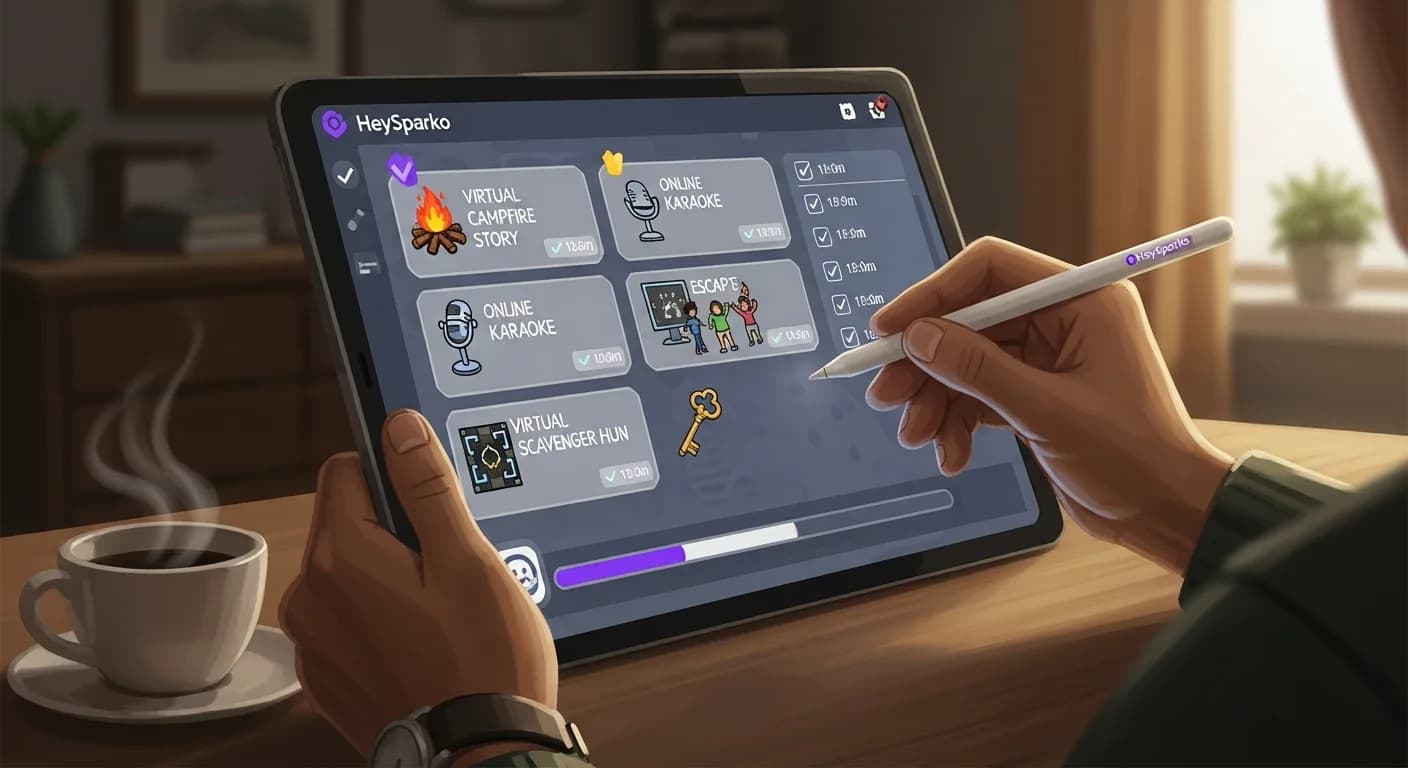

Over the past five years, virtual team events have moved from "we grabbed this in March 2020 and kept it" to a recurring line in People Ops budgets with its own vendor shortlist, briefing process, and post-event reporting expectations. Our portfolio: 1,500+ live virtual team events, 300+ companies served, 50+ countries reached, five years of operating data since 2020. The single most common planning mistake we see isn't picking the wrong game — it's planning in the wrong order. The game gets chosen first (usually because someone Googled "virtual escape room"), the audience constraints get figured out after, and by the time the event runs, the format is working against itself.
We've watched 200-person engineering teams get booked into synchronous formats that can't handle their 9-time-zone spread. We've seen People Ops leads spend five weeks coordinating a live event for a team that explicitly opts out of live events. Getting the sequence right (constraints first, format second, game third) cuts planning time from 12 hours to 90 minutes. It usually produces a better event too.
How do you plan a remote team building event for a distributed team without the usual logistical chaos?
Why remote team events fail in the same three ways
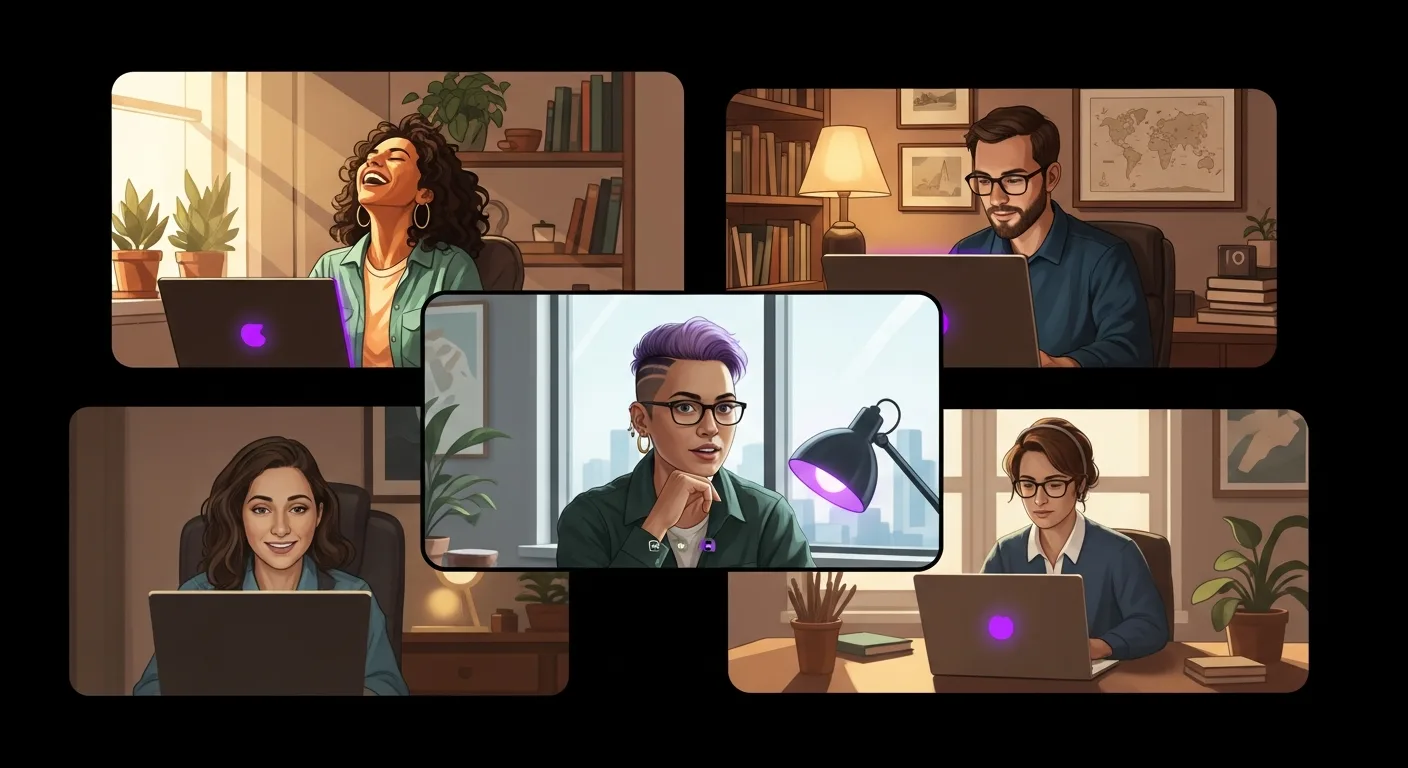
Every People Ops manager who has booked a remote team event more than once has a failure story. The link breaks. The attendance lands at 40% despite 100% RSVPs. The event runs 20 minutes over and nobody knows how to end it. After running 1,500+ events, we see the same failure modes repeating.
Forced live windows on global teams. Picking a synchronous event for a team spread across 8 time zones means someone joins at 6am, someone joins from their car, and the "engagement" event becomes the subject of the next week's scheduling complaints. The fix isn't finding a better time; it's switching formats. A team with that geographic spread needs asynchronous structure, not a better calendar slot.
Game chosen before audience constraints are understood. "Virtual escape room" sounds right, but if your team is 70 engineers with strong async preferences and no appetite for scripted live entertainment, a host-driven format that depends on collective energy falls flat. The game should match the audience; the audience profile should come first. We've had clients come to us after a competitor's event left their engineering team cold, and in almost every case the game was fine. The format just didn't fit.
No follow-through data after the event. The event runs, people leave, someone posts "that was fun!" in Slack, and by Thursday it's gone. People Ops managers who get recurring budget approval for team events show up to the next leadership meeting with participation rates, by-team breakdowns, and post-event NPS. Events without reporting land as a line-item expense. Events with reporting land as a People program worth renewing.
The managers who avoid these failure modes share one behavior: they plan backward from constraints, not forward from game ideas.
Big Game or Marathon: the format decision you make before everything else

Before you look at a game catalog, choose a format. This is the step most event planners skip, and it makes every subsequent decision faster.
HeySparko runs two formats, and they're built for different situations.
Big Game is a single live synchronous event: 60 to 90 minutes, everyone on the same video call, hosted by a HeySparko Game Host. The energy of a shared real-time moment is real: when the leaderboard updates mid-event and a team you didn't expect is suddenly in first place, the collective reaction is something async simply cannot replicate. Big Game works best when your team is within a 6-hour time zone window, when you need the event-energy of a kickoff or a holiday party, or when you want a clearly packaged experience with a start time, an end time, and a winner.
Marathon is a 1-5 day asynchronous format: daily content releases, a live leaderboard visible to everyone, players engaging on their own schedule. No one takes a 6am call. Your Tokyo team plays at 3pm local; your San Francisco team plays at 3pm local. The leaderboard creates pull without forcing a shared window. Marathon completion rates in our data run 65-78% for opt-in events at 500+ companies — consistently higher than attendance rates for mandatory live alternatives at comparable team sizes. Marathon is built for teams spread across 8+ time zones, for cultures where mandatory live events create pushback, and for recurring engagement programs that need structure over multiple days.
Most of the time the format choice is obvious within the first 10 minutes of a planning conversation. A team spread across 14 countries with 20% live-event attendance last year is a Marathon. A US-based sales team of 120 people that wants a kickoff moment for Q2 is a Big Game. The decision rarely requires extended analysis.
One note for Marathon clients: asynchronous doesn't mean isolated. We typically recommend a short optional live wrap-up call at the end (15 to 20 minutes, completely voluntary) for the teams who want to celebrate their completion together. The completers almost always show up.
The remote event planning sequence, step by step
This is the actual playbook. Each step feeds the next, and doing them out of sequence is how you end up spending six hours on logistics that would have taken 30 minutes if you'd answered the format question first.
Step 1: Map your constraints before you look at any vendor
Two numbers matter: audience size and time zone spread. Know both before you open a vendor website.
For audience size: under 50 players is a small event with the highest per-player cost. 50-500 is the sweet spot for most games in our catalog: large enough for meaningful leaderboard competition, contained enough for a host to read the room. Above 500, the event needs to be structured so team-level competition replaces individual dynamics; the leaderboard scales better than any single-room experience. Above 1,000, expect a multi-squad structure with parallel team competitions connecting to a shared overall ranking.
For time zone spread: if your team is within 6 hours of each other, Big Game is viable. If the spread is 8+ hours, Marathon is the honest choice unless you're willing to run multiple live windows. We do run multi-window Big Games for very large global clients (two or three 90-minute sessions staggered across regions, all sharing a leaderboard), but it costs more to coordinate and the host runs the same event twice. For most distributed teams, Marathon is simpler and the participation data supports it.
Step 2: Read the cultural fit before you pick a game
Time zone spread is a structural constraint. Cultural fit is softer, and easier to get wrong.
The questions that matter: Is your team opt-in-first (skeptical of mandatory fun, more likely to show up when they choose to) or community-oriented, showing up because they genuinely want to? Does your culture prefer high-energy competitive framing, like the pressure-cooker pacing of Apocalypse or the retro-tech three-act structure of Mission 8-Bit, or do they gravitate toward more deliberate, collaborative formats like the deduction-heavy Wintervald Hotel Mystery? Is there a specific occasion (holiday, company anniversary, Q1 kickoff) that the game needs to anchor?
We've run Bureau of Magical Affairs with engineering teams who loved the workplace-chaos-meets-magic premise because it landed as genuine comedy. The same format fell noticeably flat with a formal financial services team where the whimsy felt jarring. Getting the culture read right before you select a game is the difference between an event that gets Slack messages on Monday and one that gets politely forgotten.
Step 3: Brief the vendor in 30 minutes, not 6 calls
A vendor who needs three discovery calls before they can give you pricing has a process problem, not a diligence one. The brief we work from: team size, time zone spread, event date or preferred window, and a 3-sentence description of what you're trying to accomplish. "Q2 kickoff, engineering team, 120 people, we want the team to feel energized going into the quarter" is enough to make a game recommendation and confirm pricing in a single conversation.
The things that don't belong in a vendor brief: your company's complete history, your full org chart, a 15-slide RFP. Good vendors scope off constraints and objectives. Documentation is for handbooks, not event briefings.
Step 4: Choose the game based on culture, not catalog descriptions
Once format and constraints are clear, game selection is narrower than it looks. You're choosing along two axes: energy level (high-stakes adventure vs. deliberate mystery) and occasion fit (seasonal anchor vs. year-round).
For high-energy, crisis-framing experiences: Apocalypse is an 80-minute vaccine race across four locations, with strong Halloween and Q4 fit, particularly popular with engineering and fintech teams who want real stakes. Mission 8-Bit is a 90-minute retro-tech three-stage arc (escape the office, rebuild a 1980s computer, enter the digital world and ship the patch) that maps precisely onto quarterly project rhythm. It's the best-in-catalog choice for Q1 kickoffs with technical teams.
For deliberate, deduction-forward experiences: Wintervald Hotel Mystery is an isolated-hotel whodunit with a sophisticated Agatha Christie tone, the most enterprise-appropriate game in the catalog, strong for December events, year-end wrap-ups, and anniversary milestones where the setting needs to feel considered rather than casual. Under the Big Top brings the same deduction mechanic to a vintage circus setting (warm whimsy rather than gritty stakes), strong for summer events and anniversary celebrations at companies with more playful cultures.
For onboarding cohorts or teams with mixed energy preferences: Bureau of Magical Affairs works year-round because the premise (newly deputized agents handling four simultaneous magical bureaucratic emergencies) mirrors the new-hire experience of "everything is on fire, also there's paperwork." We've used it for 100+ new-hire orientation cohorts and it lands across a wide range of company cultures.
For December events where the team wants something more imaginative than a standard holiday format: Stolen Hours is a genre-bending adventure where teams chase Santa's stolen clock hands across four worlds (postapocalypse, cyberpunk, steampunk, and biopunk). The rapid genre shifts surface different player strengths and work particularly well when your December audience has seen every standard holiday format already. For teams that want exploratory narrative variety without the urgent-coordination pressure, Adventure Through the Ages moves the same kind of multi-setting structure into a historical time-travel frame, with a slower discovery pace that suits year-round programming rather than seasonal anchors.
Step 5: Decide on customization before locking the date
HeySparko's three customization tiers, NPC (custom characters written in your company's voice, with internal references and naming conventions), Logo (brand integration across the game environment, leaderboard, and completion certificate), and Story (a custom narrative arc tied to your specific situation, from a product launch to a company anniversary), all have minimum lead times that affect your date selection.
Logo needs 7 days. NPC needs 14 days. Story needs 21 days. If you're planning an anniversary event and want the Story tier (usually the right call for milestone events, because the narrative can frame the company's actual history as the game's plot), you need to know that before you commit to a date 10 days out. Missing the lead time means running a stock event when you intended something your team would feel was built specifically for them.
Customize for your team
TYPE 1
Your team as in-game characters
Real team members, mascots, or characters from your games as NPCs.
TYPE 2
Your brand integrated natively
Logo and brand elements native to game environments — locations, items, UI.
TYPE 3
Your story woven into the game
Company milestones, products, and inside references woven into puzzles, dialogues, and tasks.
About 15% of HeySparko events use at least one customization tier. For high-stakes events like annual all-hands kickoffs and company milestone celebrations, that proportion is closer to half. Per-tier pricing is flat and mix-and-match (see /en/pricing for the current rate): for an event where the right customization turns a "we bought a vendor day" into "we ran our own event with help," the production cost lift is modest relative to the impression change.
Step 6: Build the pre-event communication sequence
One of the biggest variables in remote event engagement is what happens in the two weeks before the event. We've watched the same game run at 40% attendance and at 85% attendance for teams of comparable size, and the difference was almost entirely pre-event communication, not the game itself.
The sequence that consistently works: a calendar invite with real context sent 14 days out (not just "Team Event - HR," but a sentence explaining what the event is and why it matters to the team); a teaser announcement 7 days before that names the game and builds anticipation; a logistics message 48 hours out with the join link and team assignments; and a day-of message from a manager directly to their reports. That last element moves the needle more than most People Ops leads expect. A manager sending "looking forward to it, see you there" to their team adds 15-20 percentage points to attendance. A company-wide Slack announcement from HR adds almost nothing by comparison.
For Marathon events, the sequence extends across the full run: pre-event announcement email, a daily nudge generated by the leaderboard itself, and a mid-event message on Day 2 if completion is tracking below target. We handle most of this through the platform; the People Ops lead's job is the first announcement and the manager activation.
Step 7: Capture the post-event data before the memory fades
The People Ops managers who secure recurring engagement budgets show up to leadership with numbers. Participation rate, post-event NPS, by-team breakdown, which departments engaged most heavily. This data is what converts "we ran a team event" into "we have an engagement program that's working."
HeySparko delivers the analytics report within 24 hours of the event. Use it in your next leadership update. We've had clients pull the participation breakdown directly into quarterly board slides to justify renewing their annual program. A single clear data point ("87% of the company participated in Q1, up from 62% last year") does more for the engagement budget than any narrative description of how much fun the event was.
For Marathon events, the analytics include day-by-day completion rates and team-level engagement breakdowns, which give you the additional signal of which managers drove participation and which pods opted out. That's People program intelligence, not just event reporting.
What the data says about remote team building
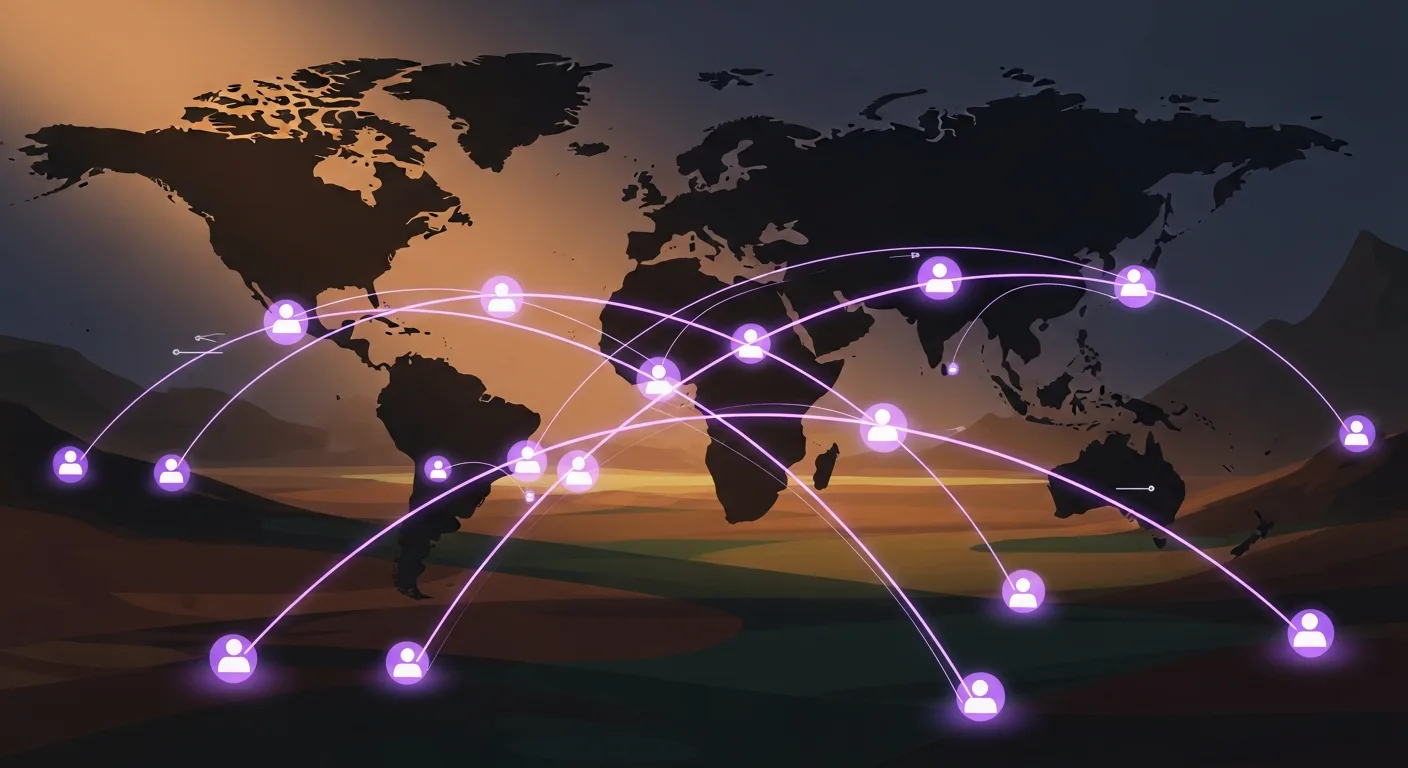
The business case for remote team building isn't intuitive for most Finance teams reviewing a People Ops budget. A virtual team event sits somewhere between "nice to have" and "discretionary." The research argues otherwise, and the numbers are worth knowing before your next budget conversation.
Atlassian's 2024 Teamwork Lab research on intentional togetherness found that intentional team gatherings boost team-connection scores by an average 27%; for new graduates the lift is from 74% pre-gathering to 96% post (+22 points); the effect decays to baseline over ~4 months, implying ~3 gatherings per year is optimal. This is the number that changes how engagement events should be framed and scheduled: a quarterly cadence isn't a "nice to have" rhythm — it's the empirical half-life of the connection lift, and a budget conversation framed around ~3 deliberate gatherings per year lands very differently than one framed around a single annual offsite.
Deloitte's 2023 Human Capital Trends survey found that 46% of employees felt less connected to colleagues than before the pandemic, a number that hasn't fully recovered five years in. For distributed teams where informal connection never happened in the first place — no hallway conversations, no shared lunch — structured events aren't a supplement to organic relationship-building. They're the primary mechanism.
Microsoft's 2024 Work Trend Index found that 57% of distributed workers prefer asynchronous engagement options over live ones. That number aligns directly with what we see in Marathon completion data: 65-78% completion rates across 500+ companies, including roughly 35% of participants who typically opt out of mandatory live events entirely. The async format doesn't lower the participation bar — it removes the scheduling constraint that was already preventing participation.
The academic evidence supports the practitioner data. A 2023 systematic review by Anog et al. (SSRN) covering 60+ team-building intervention studies found that structured activities measurably increase team satisfaction and reduce voluntary turnover — with effects amplified when the intervention is integrated into a recurring development strategy rather than treated as a one-off. This is the argument for quarterly engagement events over annual ones: the retention signal compounds across events, and the per-event cost-per-engaged-employee decreases as the format becomes familiar.
One number worth building directly into any budget justification: SHRM's 2024 cost-per-hire calculation puts a non-executive departure at 15,000 to 21,000 dollars in recruiting and ramp time — and that's a conservative estimate that excludes productivity loss during the ramp period. A single prevented departure at a 100-person company more than covers a full year of quarterly team events. The math doesn't require optimistic assumptions to work.
Frequently asked questions
How much lead time do I need to plan a remote team building event?
For a stock Big Game with no customization, 7-10 days is workable if the date is available. For a Marathon, two weeks gives you enough runway to build the pre-event communication sequence properly. If you want customization, add time on top of the event date: 7 days for Logo, 14 days for NPC, 21 days for Story. We've run events booked 3 days out, but the pre-event communication suffers and attendance shows it. Ten days is the honest minimum for an event that performs at the participation level you'll want to report on.
What's the difference between Big Game and Marathon format?
Big Game is a single live 60-90 minute event — everyone on the same call at the same time, hosted by a Game Host, with real-time leaderboard energy. Marathon is 1-5 days of asynchronous daily content — players engage on their own schedule, connected by a shared live leaderboard. Big Game works when your team is within a 6-hour time zone window and you want an event moment. Marathon works when they aren't, or when your culture resists mandatory live attendance. For distributed teams, Marathon consistently outperforms forced-synchronous alternatives in both participation rate and post-event NPS.
How many people can participate in a remote team building event?
HeySparko events scale from 5 players to 10,000 in a single session. The practical sweet spot for most Big Game formats is 50-500 players — large enough for meaningful leaderboard competition, contained enough for the host to shape the energy. Above 500, events move into multi-squad structure. Marathon scales more naturally at the high end: the async format removes the single live-window bottleneck, so 1,000-10,000 player events work well when the team is geographically distributed across multiple time zones.
Do participants need to download software or create an account to join?
No installation and no account creation required. Every HeySparko event runs in a standard browser — participants click a link, enter their name, and they're playing. We've tested this on corporate-locked machines running Cisco and CrowdStrike endpoint protection. The link-and-go flow removes the "participants can't download the app" problem that causes day-of logistics scrambles. For large events, we recommend sending the join link 48 hours early so IT can confirm access on any restricted machines before the event starts.
How do we measure the success of a remote team building event?
HeySparko delivers a full analytics report within 24 hours: participation rate, post-event NPS pulse, by-team breakdown, and engagement data by stage or day. For Marathon events, the report also includes daily completion rates and which teams led at each episode. The two numbers most useful in leadership reporting are overall participation rate and post-event NPS — they convert an anecdotal "it went well" into a program metric you can track quarter over quarter. For ongoing programs, watching the participation trend across events shows whether the format is building engagement or plateauing.
What if our team has already done virtual team events and is skeptical?
Skepticism usually comes from one of two prior experiences: a Zoom trivia night that felt generic, or a format the team felt was mandatory rather than chosen. For the first case, narrative adventure games land differently than trivia formats because they require team coordination rather than individual general knowledge — the experience is collaborative, not competitive in the "who studied most" sense. For the second case, Marathon format is built for opt-in cultures: no required scheduling, leaderboard-driven return, and roughly 35% of participants in our data are people who skip mandatory live events.