
The word "new" has quietly overtaken "fun" in the opening line of most People Ops event briefs we've received this year. It signals two things at once: the team has run virtual events before, and the last one didn't quite land. Sometimes the shortcoming was the game itself. More often it was the mismatch, a trivia pack booked for a group that had done trivia twice already, a live event that lost the Singapore office at 9am local, a stock adventure that never learned the company's language. "New" is rarely a request for novelty as a virtue. It's a request for something that clears the specific bar the previous booking didn't.
Five years into running virtual team building as a category — 1,500+ events for 700+ companies across 50+ countries — we've watched the failure modes repeat enough to predict most of them. The "we ran trivia for a marketing team that spends its Fridays making trivia jokes" failure. The "we booked a live event with the Sydney office scheduled at 11pm" failure. The "we picked a game the CEO thought was clever, then watched the engineering half of the room stop reacting by minute twenty" failure. The eight games below are the ones we book when someone tells us the brief says "new" and means it.
Which virtual team building ideas hold up for a distributed team in 2026 without repeating what everyone else has already run?
What "new" is really asking for
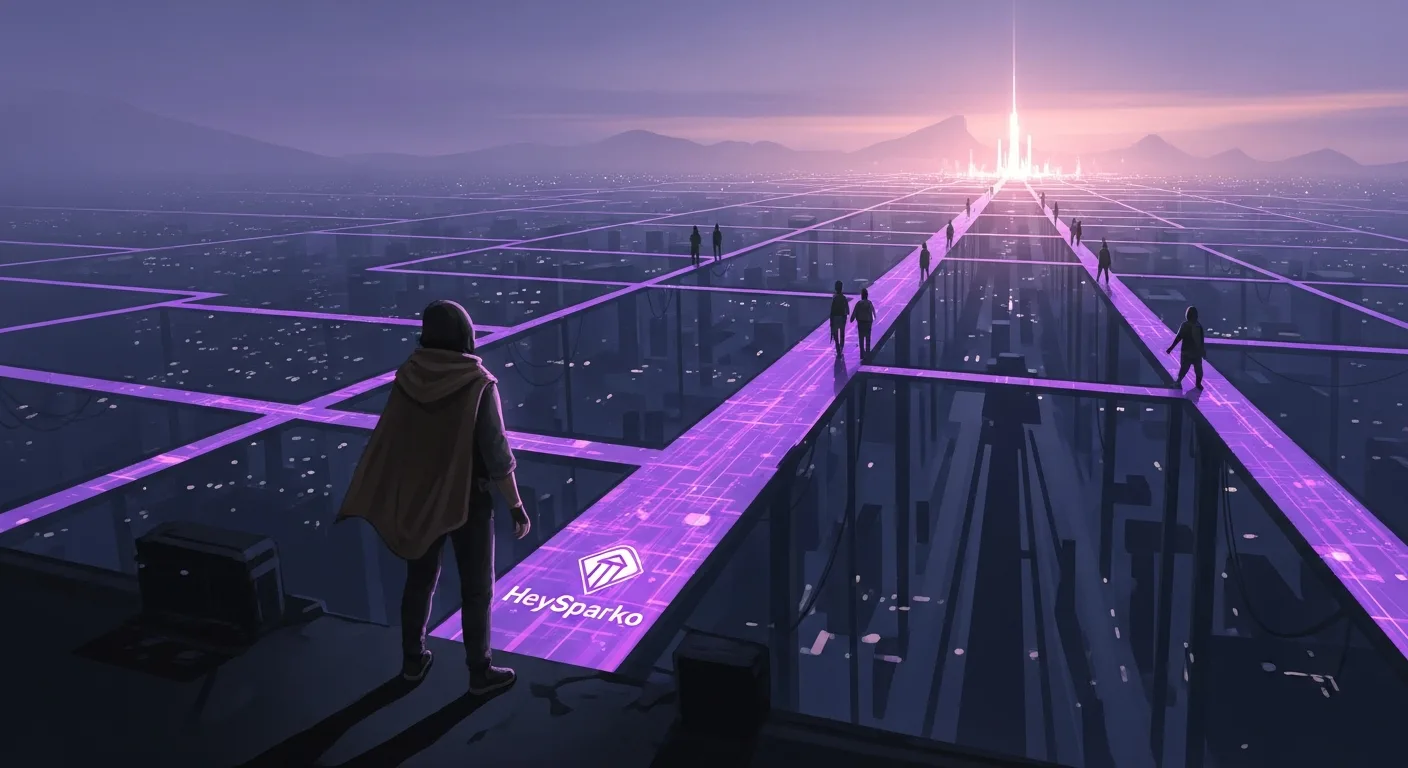
Pull on the word and it splits into four adjacent asks that show up in different combinations depending on the team. There's the desire for genuinely novel content, or at least content the specific team hasn't run in its current form. There's the ask for real mechanical variety beyond the last quarter's trivia round: puzzles that reward observation, deduction, negotiation, or synthesis, so no single dominant thinker owns the leaderboard alone. There's identity, meaning the event feels like it belongs to the company that booked it and not to some stock template with a client logo dropped in the corner. And there's the memory question: whether the moment survives three weeks past the calendar hold as something worth referencing in Slack unprompted.
In our work with an HR director at a 380-person martech firm, the "new" brief arrived after two consecutive holiday parties that had defaulted to a general-knowledge quiz. The engineering team had stopped joining halfway through both events. By the third round the People Ops lead wasn't asking for novelty for its own sake. She'd priced the cost of losing another 190 people's attention against the price of trying a different format, and the different format won on the spreadsheet before it won on preference. When we ran an atmospheric adventure like Book of Awakened Nightmares with light Story-tier customization for that team, completion landed above 90% and the CTO started using the game's character names in the following Monday's town hall. The word "new" in that brief was a proxy for "the last format left too many people out."
The other pattern we see: teams that use "new" to mean "please don't propose the same six trivia packs the last three vendors led with." Trivia has its moments. A low-cognitive-load closer at the end of a company all-hands is a legitimate use case, and Pop Culture Trivia is the pack most consistently booked for that exact slot. But when a brief opens with "new," trivia usually isn't what the People Ops lead is asking for. They're asking for narrative, coordination, and a reason for the engineering side of the room to lean in.
Eight ideas worth naming this year
Each of the eight below has narrative to sit inside, mechanics that reward more than one thinking style, and enough texture that a team can return to the same catalog for a second booking six months later without landing on a repeat. Seven are adventures or mysteries. The eighth is a trivia pack, because the mixed-audience holiday closer is still a real slot.
1. Bureau of Magical Affairs — the year-round flagship
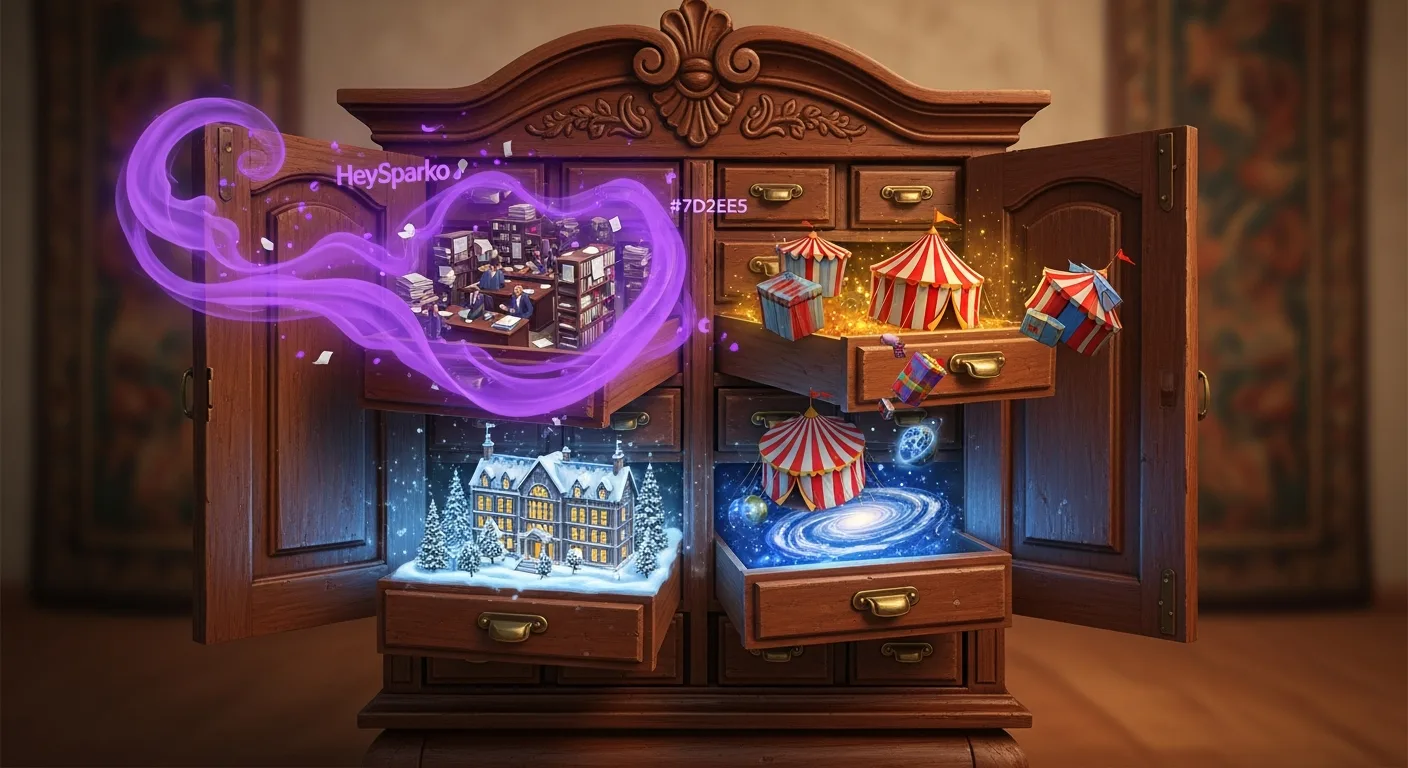
Bureau of Magical Affairs is the game we book most often when the brief is "new to our team, safe for mixed cultural fit, low bar for genre engagement." The premise is whimsical bureaucratic chaos, closer to The Office by way of Men in Black than to any Tolkien framing, spread across four magical case files with four distinct puzzle styles: negotiation, time logic, stealth observation, and final synthesis. Onboarding cohorts book it more than any other game in the catalog because the setup ("everything is on fire and there's paperwork") maps onto the new-hire experience with unusual precision. Year-round means it: the tone holds in Q1 as cleanly as it does in Q4.
2. Apocalypse — urgency without the cringe
Apocalypse is the highest-energy game we run and the Halloween booking we field most often. An overnight outbreak, four locations between the team and a working vaccine, a clock running the whole 80 minutes. Engineering, fintech, and startup teams re-book it because the time-pressure mechanic surfaces coordination patterns that don't come out in a planning meeting. The quiet analyst who never volunteers on a Zoom call ends up running the Stage 2 routing decisions by minute forty. Not gory, not scary, not exhausting: stylized 2D throughout, closer to the movie World War Z than to any horror comp. Teams that finish it want an immediate replay.
3. Wintervald Hotel Mystery — the December enterprise pick
Wintervald Hotel Mystery is the grown-up whodunit. An isolated luxury hotel in a snowstorm, a private dinner, a body before sunrise, one night to name the killer before the road reopens. December is the peak booking window for enterprise legal, finance, and executive teams that want a mystery without office-parody humor. Closer to Knives Out than to Clue, and the most enterprise-appropriate game in the catalog when a formal culture wants to enjoy itself without stepping out of character. The murder is stylized and off-screen; comfort feedback has been consistent across the 12+ countries we've run it in.
4. Adventure Through the Ages — for milestones
Adventure Through the Ages is the surprise hit for anniversary events. Four historical eras, four sets of pioneers, the team thinking with the constraints each era's figures had rather than the tools we have today. A hidden fifth-era stinger tied to a company's own founding story is the Story-tier customization we've built more than once for milestone celebrations. Pan-civilizational by design, with women leaders written explicitly into every era. When BGaming ran their multi-year anniversary using all three customization tiers on this game, participation landed at 89% against a 75% target, and the engineering half of the roster referenced the NPC dialogue most in the post-event pulse.
5. Book of Awakened Nightmares — atmospheric Halloween without horror
Book of Awakened Nightmares is the atmospheric Halloween booking for teams that want mood, not menace. A cabin, a leather-bound book missing pages, three folklore worlds pulled from many traditions. Pacing is slower than Apocalypse, and the storytelling carries the social weight. Cameras-off is a valid mode, which international rosters appreciate. We keep it in the recommendation set for global teams because no single culture's mythology dominates the material, and we've tested it across 15+ countries without a single comfort complaint. Q1 retrospectives and culture-week bookings pick it up outside October more often than most vendors would guess.
6. Under the Big Top — the summer mystery companion
Under the Big Top is the warm-weather companion to Wintervald Hotel Mystery. Same three-stage deduction mechanic, completely different aesthetic. A traveling circus, a vanishing headliner, a cast of intentionally quirky suspects each carrying a memorable hook. The whimsy is melancholic rather than goofy, closer to Big Fish than to slapstick. Anniversary events use it well because the traveling-troupe metaphor lands cleanly on "we've been on the road together." Marathon format is where this one really breathes: the multi-day investigation rhythm suits async without losing the deduction thread, and international rosters can walk the case at their own local hours.
7. Stolen Hours — genre-bending December
Stolen Hours is the December booking for teams whose culture leans into genre fiction. Santa's clock hands have been stolen and scattered across four worlds: postapocalypse, cyberpunk, steampunk, and biopunk. Ninety minutes, four world-shifts, each demanding a different thinking mode. It surfaces different player strengths across the arc; some people shine in the gritty postapocalypse stage, others in the neon-cyber decode round. Different energy from the office-parody workshop games that dominate most December catalogs, which is precisely why teams that found that framing off-tone book Stolen Hours instead. Pixar-adjacent art keeps the darker genres warm rather than edgy.
8. Pop Culture Trivia — the mixed-audience closer
Pop Culture Trivia is the trivia pack we book most often when a team wants a lighter closer after a longer main event, or when the room is genuinely mixed on interests and no niche theme will land for all sides. Three rounds: a mainstream mix, a visual iconography round drawing on album covers and viral photos, and a "cultural crossroads" round connecting moments across categories. It doesn't try to be the deep narrative experience the other seven are. It's the option worth naming when the brief is "we want something new but familiar and short," the tension a lot of holiday events sit inside.
Big Game or Marathon — the format decision above the game choice
Format sits upstream of game selection. When the same eight games above land differently for different teams, the reason is almost always the format, not the game.
Big Game is a single 60-90 minute live event. Everyone joins the same call at the same time, watching the same leaderboard shift, hosted end-to-end by a HeySparko Game Host. The energy of shared presence, a whole team reacting to a plot beat at the same second, is not something async can reproduce. When the calendar can hold one window without asking Singapore to take an 11pm session, Big Game is the format that delivers the strongest payoff per minute. Kickoffs, holiday parties, milestone anniversaries, launch celebrations. Those tend to land here.
Marathon is the format built for teams whose calendars don't share the same clock. One to five days of async daily episodes, leaderboard-driven pull instead of scheduled-attendance push, no live host required. In our work with distributed rosters spread across six-plus time zones, Marathon reaches about 35% more of the team than a forced-synchronous live event does. The people who wouldn't have signed onto a 10am mandatory call opt in when their own day allows it. Completion rates run 78-92% across the 500+ companies we've tracked on Marathon. For any culture where "please respect focus time" is a stated value rather than a slide-deck aspiration, Marathon is the more honest answer than a live event pretending to be optional.
Customization sits on top of the format decision. Three tiers are sold separately, each a flat add-on, and most bookings run stock. NPC rewrites the game's character dialogue in your company's voice, weaving in internal language where it fits and, with permission, sometimes writing a real internal figure in as a cameo. Logo integrates your brand visually across the game UI, the leaderboard, and the take-home materials the team keeps after. Story is the one that rewrites the whole narrative arc to sit inside a real company moment: a launch, a milestone, a chapter closing. The most ambitious bookings stack two or three of these. When a "new" brief occasionally means "make the game feel like it belongs to us rather than to the vendor," Logo plus Story is the usual answer, sometimes with NPC on top.
Customize for your team
TYPE 1
Your team as in-game characters
Real team members, mascots, or characters from your games as NPCs.
TYPE 2
Your brand integrated natively
Logo and brand elements native to game environments — locations, items, UI.
TYPE 3
Your story woven into the game
Company milestones, products, and inside references woven into puzzles, dialogues, and tasks.
What the research says about spending on this
The strongest external argument for keeping engagement events on the calendar in 2026 comes from Quantum Workplace's 2024 Workplace Trends Report. Quantum's database covers a combined workforce of 700,000+ US employees across 8,000+ organizations, and the 2024 slice interviewed the executive tier at those companies rather than the general employee sample. Ninety-two percent of those executives said they had seen increased performance from their engagement efforts. That distinction matters. This isn't People Ops answering the survey; it's the group approving the budget. When the executives who write the checks report they can see performance lift from the engagement work their teams are running, the internal defensibility question ("why are we still paying for this?") answers itself with a data point Finance can pull straight from a public report.
The academic version of the argument sits in Anog et al. (SSRN, 2023), a systematic review of more than 60 studies of structured team-building interventions. The review found that these activities increase satisfaction and reduce turnover, with the effect amplifying when the events are integrated into a broader development strategy rather than run as one-offs. The "we booked one fun day this year" pattern shows up in the review as underperforming the same activity done on a quarterly cadence with connective work between events. That's the design signal for People Ops teams weighing one large memorable event a year against three or four smaller ones. The evidence favors the cadence, and the eight games above are the ones we typically slot into that cadence.
Deloitte's 2024 Human Capital Trends report, drawn from 14,000 leaders across 95 countries, sharpens where to spend the effort. Organizations embracing microcultures, the rhythms and rituals of a specific team or workgroup rather than a company-wide monoculture, are 1.8 times more likely to achieve positive human outcomes and 1.6 times more likely to achieve desired business outcomes. Seventy-one percent of business and HR leaders in the survey said focusing on individual teams and workgroups is the best place to cultivate culture, agility, and fluidity. That's the frame that turns a customized "new" event, tuned to one team's texture, into a microculture intervention rather than a company-wide morale line item. It's also why customization tiers matter more the smaller and more particular the audience is.
The workload signal is worth naming alongside all of that. Microsoft's 2024 Work Trend Index, drawn from 31,000+ workers across 31 countries, found that 64% of workers say they're struggling with the pace and volume of work. That's the operational reality any "new" event lands inside. A game that demands another 90 minutes of the same energy a team is already running short on will land badly, no matter how novel the format. The eight games above range from 60 to 90 minutes for Big Game and 30 to 45 minutes per day for Marathon episodes: designed to sit inside a working week rather than compound the fatigue signal Microsoft's data captured.
The retention math runs underneath. Per SHRM's 2024 cost-per-hire calculation, replacing a single non-executive departure runs $15-21 thousand in recruiting plus ramp time. Even a modest reduction in voluntary attrition, the kind Anog et al.'s review says structured team-building interventions produce when integrated into a broader strategy, will clear the CFO's line-item bar without invoking "morale" as the metric. The math sits well above what a single event or a quarterly cadence costs.
The proprietary layer sits at the bottom of the stack. Marathon completion rates hold at 78-92% across our tracked engagements. Big Game participation runs above 85% at cross-team events when the format matches the calendar. Those numbers only hold when the specific game clears the bar the "new" brief was pointing at in the first place, which brings the decision back to the eight games worth naming.
Frequently asked questions
How do we pick which of the eight games fits our team?
Start with the format decision. Does the calendar hold one live 60-90 minute window without penalizing a time zone, or does the roster need async? Then match the culture. Engineering-heavy or fintech teams tend to lean toward Apocalypse or Bureau of Magical Affairs; buttoned-up enterprise December bookings usually land on Wintervald Hotel Mystery; anniversary rosters pick Adventure Through the Ages. We walk through the decision on a 20-minute call rather than guessing from a form.
How long does a booking take to set up from first inquiry to the event date?
Standard stock bookings need about 10-14 days of lead time, enough for the format decision, the participant list, and the pre-event comms to reach the roster in an unhurried sequence. With customization, Logo, NPC (character-brief and rewrite), and Story (a narrative rewrite with a briefing call and internal review) each need 10 business days. For high-stakes anniversary or launch bookings, 4-6 weeks of runway is the range we recommend.
How many people can join a virtual team building event on this list?
Each of the eight scales from 5 players to 10,000 in a single session, with volume-tiered pricing that drops the per-player cost meaningfully at larger sizes. The sweet spot for a single Big Game session is 50-500 players, where breakout dynamics stay lively without going impersonal; above 500 the game splits into competing squads on a shared leaderboard, which works cleanly to 10,000. Marathon handles distributed rosters of the same range with even less operational overhead than a live event.
Do participants need to install software before the event starts?
No installs, no accounts, no app downloads. Players join through a browser link on the day of the event. The player app runs on corporate-locked laptops, including machines with restrictive endpoint tooling: Crowdstrike enforcement, Cisco lockdowns, standard MDM policies. We've tested it against the setups People Ops teams most commonly worry about before booking. IT tickets in the week before an event are essentially nil, which is the whole point of the browser-only design.
How do we know afterward whether the event actually worked?
The built-in analytics dashboard covers what a People Ops lead needs for the leadership readout: participation rate, team scores by breakout, chat heat as a coordination signal, and a post-event NPS pulse. Marathon adds by-day engagement and a completion cohort split by team. Numbers arrive within 24 hours of the event, not the following week, so the debrief and any follow-up planning happen while the memory is still fresh and the team's post-event Slack thread is still alive.