
People Ops managers have quietly moved from booking events to owning engagement programs. The shift happened gradually after 2020, but by 2024 it was complete: virtual team building is now a line item with executive visibility, a KPI attachment, and a renewal conversation coming every year. Since 2020, we've delivered virtual team events to 700+ companies across 50+ countries — 2,000+ events in the portfolio so far. The People Ops teams who get the best outcomes treat every event as a staged operation, not a single vendor call followed by a Zoom link.
The difference between a team event that gets screen-captured into a Slack channel and one that moves the needle on your next engagement survey is almost never the game itself. It's the brief, the format decision, the pre-event communications, and what happens with the analytics afterward.
How do people operations managers run virtual team building events that improve engagement scores?
Stage 1: Start with the Brief, Not the Booking
Before choosing a game or approaching a vendor, effective People Ops leads spend 30-60 minutes with a short event brief. Not a 12-page requirements document. Just five fields that force the decisions everything else flows from.
Group size and structure. How many people? Are they organized as one team or cross-functional pods? Group size determines which format is physically possible. Both Big Game and Marathon handle the 50-500 sweet spot well, but their logistics differ considerably. Size also determines how many breakout teams you'll have during gameplay. Our standard is 5-8 players per breakout, and anything above 8 consistently pulls down engagement as people start observing rather than participating.
Time zone spread. If your team fits within a 6-hour spread, a single live event window is realistic. If you're spanning 8+ time zones, that window doesn't exist without forcing someone onto a 6am or 11pm call. This isn't a preference. It's a constraint that makes the format decision for you before you've looked at a single vendor's pricing page.
Culture and tone. The difference between an engineering-led startup and a legal or finance function matters more at game selection than anywhere else in the planning process. Matching the wrong game to the wrong culture is the most expensive mistake in our catalog, not in dollars but in post-event survey comments that you'll still be reading at renewal time.
Occasion and calendar. An anniversary, a Q1 kickoff, a culture week, and a holiday party have different energy requirements and different lead-time realities. This field anchors the game choice before you open the catalog.
Budget range and sign-off path. Not an itemized quote. A rough range plus the number of approval signatures required. Knowing whether this needs one sign-off or two determines whether you're working toward a 2-week or a 6-week booking timeline. These are genuinely different planning realities.
In our experience, People Ops leads who skip the brief and go straight to vendor browsing spend 2-3× longer in evaluation than those who spend 45 minutes on it upfront. The brief isn't overhead. It's a decision accelerator.
Timing: 4-6 weeks before the event date. Story customization (full narrative rewrite) needs 10 business days. Responsibility: People Ops lead, with a 20-minute check-in with the HR Director or VP of People to align on budget range and whether executive attendance is a design requirement.
Stage 2: The Format Decision — Big Game or Marathon
Once the brief exists, the format decision is largely mechanical. Big Game and Marathon are built for different situations, and the mistake is trying to identify the "better" format rather than the right one for this specific team and moment.
Big Game is a single live 60-90 minute synchronous event. Everyone is on the same Zoom at the same time, hosted entirely by a HeySparko Game Host, so your team participates as players, not coordinators. The energy is high, the leaderboard shifts in real time, and the shared live experience is the point. It works best for groups contained within a 6-hour time-zone spread: single-site teams, regional offices, companies where most of the workforce shares a continent.
BGaming ran their multi-year company anniversary as a Big Game with full NPC, Logo, and Story customization for approximately 400 employees. Participation came in at 89% against a target of 75%. The primary reason it worked: everyone could make the event window. That sounds obvious until you've run a live event for a team that couldn't.
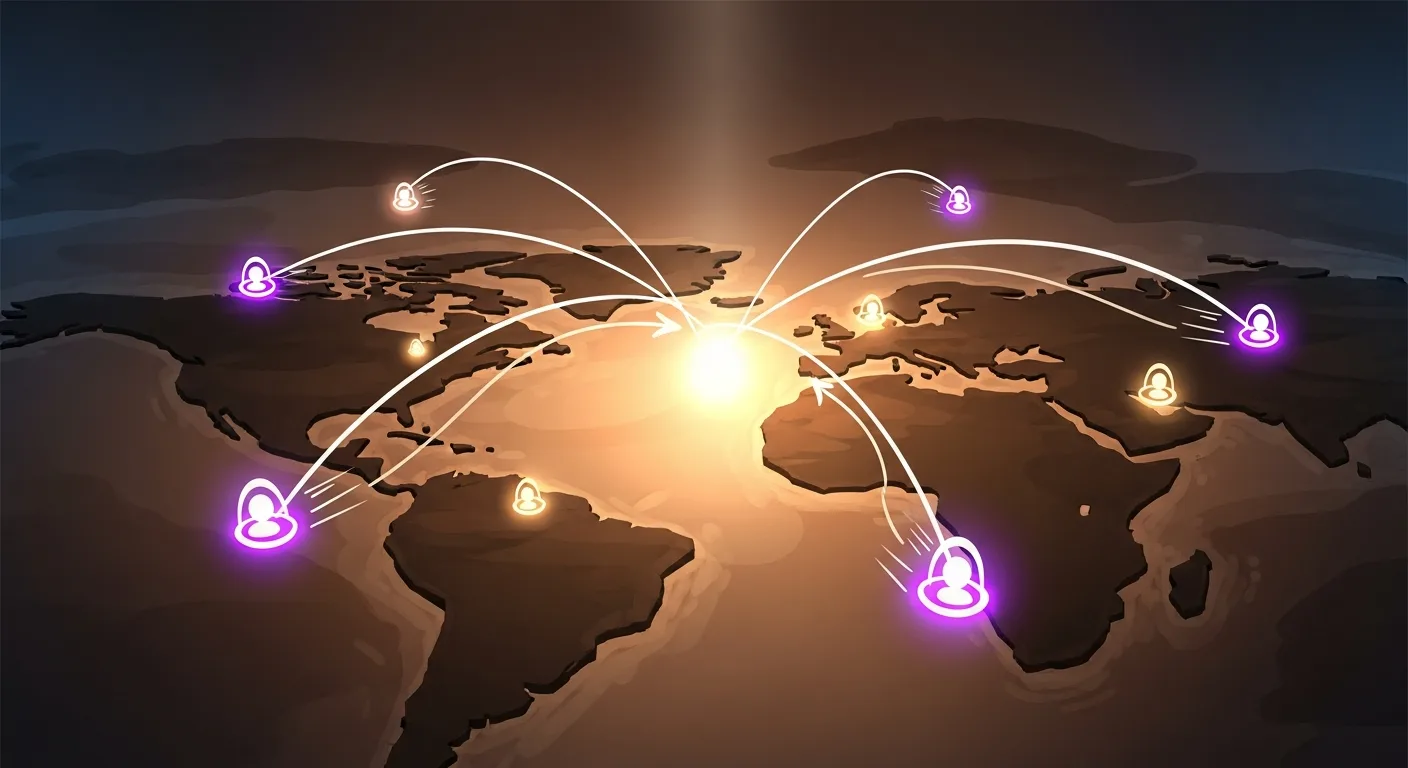
Marathon is a 1-5 day asynchronous format with daily content episodes. Players engage on their own schedule within each day; a shared leaderboard creates pull and competition across the days without requiring anyone to coordinate around a single Zoom slot. Across 500+ companies in our data, Marathon completion rates run 78-92%, and Marathon reaches approximately 35% more participants than forced-synchronous alternatives, because that 35% represents the segment of your team who won't show up to mandatory live events but will engage on their own terms.
The crossover cases follow a simple rule: group under 200 in one region → Big Game almost always. Group over 300 spanning EMEA, APAC, and the Americas → Marathon almost always. For 150-300 people across 4-5 time zones, the culture field in your brief determines it. Async-preference culture with calendar pushback → Marathon. "We actually love a shared live moment" culture where leadership will be visibly present → Big Game with 2-3 regional windows.
Both Stolen Hours and Bureau of Magical Affairs run in either format. The game mechanics translate naturally across Big Game and Marathon. Most of the catalog does. What doesn't adapt is your team's actual time-zone reality.
Microsoft's 2024 Work Trend Index found that 57% of distributed workers prefer asynchronous engagement options over live ones. We see that preference reflected in our own booking data, but we also see teams where the live-event energy is exactly what makes an event worth running. The question is never which format is better in the abstract. It's which format fits the team you're planning for.
Timing: Format decision locked before approaching vendors. It affects pricing structure, lead time, and game selection. Responsibility: People Ops lead makes the initial call; HR Director weighs in if executive attendance is a core design requirement.
Stage 3: Game Selection — Matching Narrative to Culture
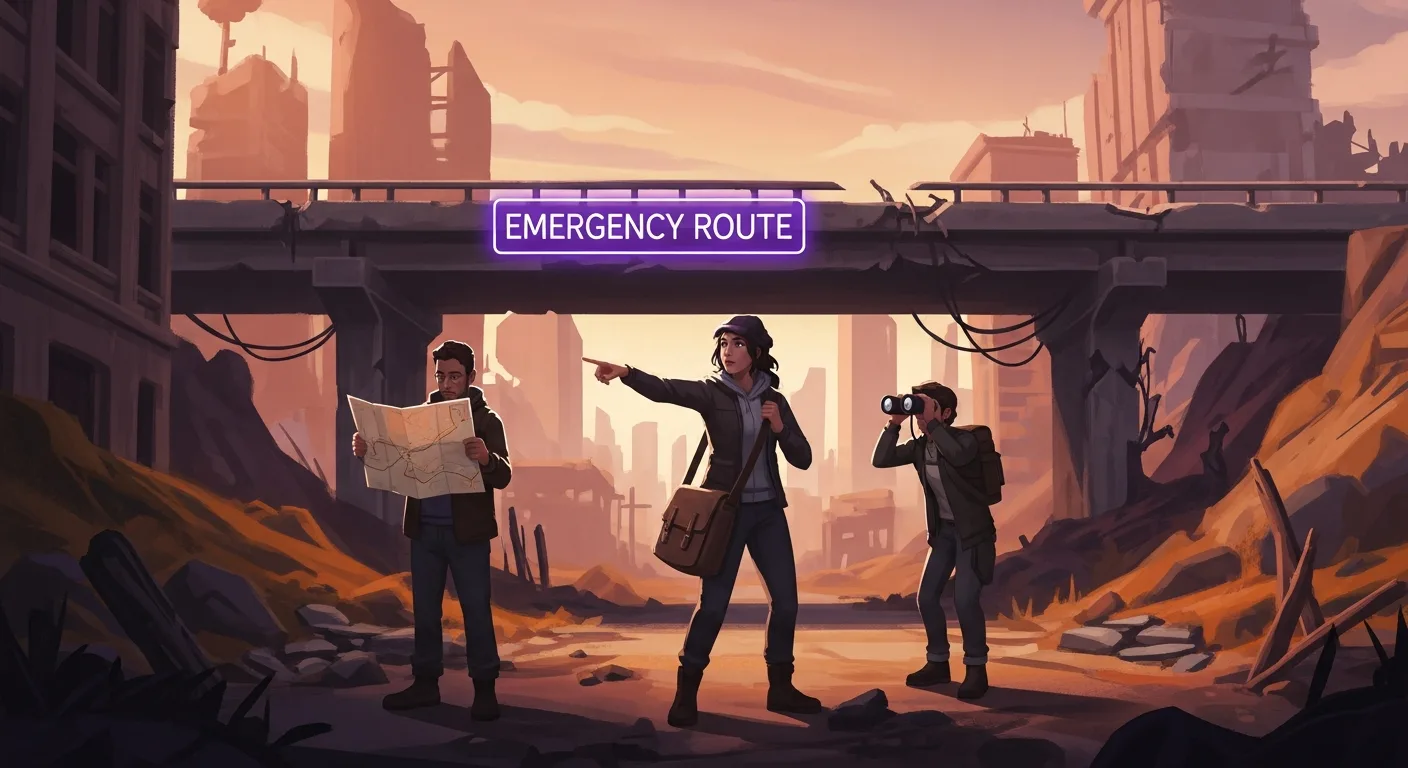
With format decided and a brief in hand, game selection is usually a 20-minute conversation, not a 3-week research project. The catalog works on two axes: adventure vs. mystery and energy level. Those two dimensions resolve most decisions.
High-urgency adventure games work for tech, engineering, and product teams who want coordination pressure baked into the experience. Apocalypse (the post-apocalyptic vaccine race across four collapsing city locations) is the game where teams self-organize into specialists by Stage 2. Engineering managers who care about how their people coordinate under time pressure book this one specifically for that dynamic. The stylized 2D art keeps it energizing rather than stressful (no body horror, no jump scares), but the time pressure is genuine and the analytics that come out afterward are uniquely informative.
Mission 8-Bit runs a different energy: retro-tech nostalgia, a three-act structure (escape the office → rebuild the 1980s machine → ship the patch), and 8-bit avatars the team takes home as Slack icons and stickers. We book it most often for Q1 kickoffs because the three-stage structure maps directly onto quarterly project rhythm. Engineering managers who have run it twice cite the lasting artifact (their team's sprites living on in #general) as something that extends engagement well past the 90-minute event.
Mysteries shift the mechanic from urgency to deduction. Wintervald Hotel Mystery is the most enterprise-safe game in the catalog: a snow-bound whodunit with a tone closer to Knives Out than to anything that would make a buttoned-up finance function uncomfortable. It's the December game we recommend for legal and compliance teams, C-suite audiences, and anywhere that office-comedy parody would land wrong. Under the Big Top runs the same deduction mechanic in a vintage circus setting (warm whimsy rather than sophisticated elegance) and performs particularly well in summer events and for creative teams where the hotel setting feels a bit formal.
Bureau of Magical Affairs occupies a category of its own. Four bureaucratic magical emergencies, 90 minutes, newly-deputized Bureau agents working through chaos that mirrors actual first-week onboarding. We've had clients run it for 100+ consecutive new-hire orientation cohorts, and it holds up because the premise is a genuine workplace comedy about too many things being on fire at once, a feeling most new employees recognize immediately.
A note on customization. When the event needs to feel like yours rather than a vendor product, three add-on tiers do the work: NPC puts your team's voices into the characters; Logo integrates your brand across the game environment; Story rewrites the game's entire narrative around your company's actual situation. All three run as flat-rate add-ons regardless of player count or format. See HeySparko's pricing page for current details. About 15% of our events use at least one customization tier, and the ones with full NPC + Logo + Story customization consistently produce the highest post-event NPS.
Timing: Game finalized at least 3 weeks before event. (10 business days for any customization.) Responsibility: People Ops lead selects, referencing the cultural notes from the brief.
Stage 4: Pre-Event Communications That Drive Turnout
The most underinvested stage in the People Ops event lifecycle is the 2-week window before the event begins. Once an event starts, the Game Host handles everything — your team's job is to show up and play. What determines whether 60% or 90% of your invite list shows up is entirely on the pre-event communication sequence.
We've seen this pattern consistently across our client base: companies that send one calendar invite and expect attendance get 50-65% turnout. Companies that run a 3-touch pre-event sequence reliably hit 80-90%.
The sequence that works:
T-minus 14 days — Announcement. Name the occasion, tease the format without over-explaining it, anchor the calendar invite. Over-explaining the game before people are excited about the event works against you, since it creates homework anxiety rather than anticipation. The goal of the announcement is to create curiosity, not to brief participants.
T-minus 7 days — The hook. One asset: a 30-second teaser clip, a screenshot of the game environment, or a single puzzle clue. The goal is to make the event feel real rather than abstract. Manager reposts on Slack drive 2-3× the reach of a People Ops-only post — this is where the manager layer earns its place in the communications plan. If the manager doesn't re-share the hook, you've left significant turnout on the table.
T-minus 24 hours — Logistics and reassurance. Zoom link, format overview (team of 5-6, fully hosted, no install needed), and one crucial sentence: "You don't need to prepare anything." The anxiety of "am I going to look dumb if I don't know the answers?" is a real turnout killer for both async and live formats. Addressing it explicitly in the final message pays measurable dividends on the day.
Timing: Sequence starts 14 days before event date. Responsibility: People Ops lead writes all three messages; managers distribute the T-7 hook via Slack.
What Could Go Wrong — The Failure Modes That Repeat
Every People Ops manager who has run more than a handful of events has at least one story they tell quietly at industry gatherings. We've heard hundreds of them. The failure patterns are remarkably consistent — and almost all of them are preventable if you know to look.
Wrong game for the culture. Apocalypse's urgency mechanics are electrifying for an engineering team that wants to problem-solve under pressure. For a buttoned-up legal function running their first-ever virtual event, the same urgency reads as stressful rather than fun. Wintervald Hotel Mystery would have landed cleanly there. Game fit is not a subjective feel; it's a brief question answered by the cultural and tone notes you documented in Stage 1. Skipping the brief is where this failure originates.
Forcing a live event onto a distributed team. We've seen this end one of two ways: either 40% of the invite list "can't make it" and the event loses its leaderboard tension, or people in incompatible time zones join at 5am and produce the engagement response you'd expect from mandatory fun at 5am. The format decision is determined by the time-zone spread on your actual roster. It is not a preference about whether you like live events.
Skipping the pre-event communications. One calendar invite does not produce 90% attendance. The most common mistake among first-time clients is to send the Zoom link, then wonder why a significant portion of the company had "a conflict." The 3-touch sequence in Stage 4 is not optional; it's the mechanism that drives turnout, and turnout is what makes the leaderboard competitive enough to create real energy.
Underestimating lead time. For a stock game with no customization, 5 business days is enough. For NPC or Story customization, 10 business days. Every November we field the same question: "Can we book something for next Thursday?" The answer depends entirely on what kind of event you want to run. The earlier the brief arrives, the more options remain open.
No post-event data capture. The event ends, the analytics report lands in the HR Director's inbox, and within a week the event is a memory. Six months later, at renewal time, there's no documented evidence of what it produced. The fix is low-overhead: pair every event with a 3-question pre/post pulse survey and pull the engagement data for the week after the event versus the week before. Events are dramatically easier to renew — and to budget-defend — when they have a number attached, even an approximate one.
Treating the event as a standalone. The highest-performing People Ops programs we see aren't running a single annual team event and calling it done. They're running a quarterly cadence with different games each time, building a rhythm of shared experience that compounds. Bureau of Magical Affairs for new-hire cohorts, Mission 8-Bit for Q1 kickoffs, Adventure Through the Ages for culture or learning weeks where teams want exploratory narrative variety rather than coordination pressure, Under the Big Top during the quieter summer weeks, Wintervald Hotel Mystery in December. The leaderboard history becomes part of team culture — something people reference in 1:1s and Slack channels months later.
What the Research Says About Team Building and Engagement
The case for structured team building as an engagement intervention has moved from anecdote to evidence over the past several years. The numbers that People Ops managers use to make the budget case to Finance are now well-sourced and specific.
Owl Labs' State of Hybrid Work 2025 report found that a supportive manager remains a top workplace factor, with 89% of US employees in agreement. The methodology differs from larger meta-studies, but the conclusion converges on the same place: the direct manager is the single biggest lever on how engaged a team feels, not the company, the role, or the compensation structure. This means engagement events, when framed well, are part of the manager's toolkit — not a separate "HR program." The People Ops manager who presents events as manager-enablement rather than employee perks tends to get faster executive buy-in.
The academic evidence for structured team building has become more rigorous. A 2023 systematic review by Anog et al., published on SSRN, analyzed 60+ peer-reviewed studies on team-building interventions and found that structured activities increase satisfaction and reduce turnover across team types — with effects amplified when the events are integrated into a broader development and recognition strategy rather than run as isolated one-offs. That "integrated into broader strategy" finding maps directly onto the quarterly-cadence approach we see performing best in our own data.
Deloitte's 2024 Burnout in the Workplace report, drawn from 1,000+ US full-time workers, found that employees who attend two or more company-sponsored engagement events per quarter report 23% lower burnout symptoms than those who attend none. The report also identified "lack of recognition" as the top burnout driver in 2024, overtaking workload for the first time. Recognition and shared experience are what structured team events deliver most directly — which is why the engagement-event → burnout-reduction link is cleaner than it might initially appear.
CultureAmp's 2024-2025 State of Culture report, drawing from 5,000+ HR practitioners, found that companies with above-median engagement scores have 31% lower voluntary turnover than those with below-median scores. It also found that recognition programs running on a monthly cadence produce 2.4× higher engagement versus ad-hoc programs. This is the financial argument People Ops managers bring to leadership: the cost of running quarterly team events is a fraction of the cost of even one mid-level departure, which SHRM's 2024 calculation puts in the tens of thousands of dollars per non-executive hire when recruiting and ramp time are combined.
Our own data adds context to the third-party research. Across 2,000+ virtual events we've facilitated since 2020, Marathon format events see 78-92% completion rates at participating companies — meaningfully higher than live event attendance rates for the same distributed teams. And Marathon reaches approximately 35% more of the invite list than forced-synchronous alternatives, because that 35% represents the segment of remote employees who don't show up to mandatory Zoom events but engage actively when the format respects their schedule.
The picture from all of this is consistent: structured, cadenced, well-matched team events do move engagement numbers. The key word is "cadenced." A single event per year produces a memory. Four events per year, mapped to different games and different occasions, produce a pattern — and patterns are what show up in survey data.
Frequently asked questions
How much lead time do people operations managers need to book a virtual team building event?
For a stock game with no customization, 5 business days is technically enough — though 2-3 weeks gives you time to run a proper pre-event communication sequence, which directly affects turnout. If you want NPC customization or Story customization (a full narrative rewrite tied to your company's situation), build in 10 business days. The brief we recommend starting in Stage 1 takes 45 minutes and unlocks all your options.
How do people operations managers justify team building budgets to leadership?
The cleanest justification chain is financial: SHRM's 2024 data puts the cost of one non-executive departure in the tens of thousands of dollars when recruiting and ramp time are factored in. A quarterly team event program costs a fraction of one mid-level replacement, and CultureAmp's research shows companies with above-median engagement have 31% lower voluntary turnover. The events aren't a perk; they're attrition insurance with a favorable cost structure. Pairing each event with a pre/post pulse survey makes this argument quantifiable rather than qualitative.
What's the difference between Big Game and Marathon for people operations planning?
Big Game is a single live 60-90 minute event — everyone in the same Zoom at the same time, high shared energy, best for teams within a 6-hour time zone spread. Marathon is 1-5 days asynchronous — daily content episodes, a shared leaderboard, no mandatory Zoom slot, best for teams spanning 8+ time zones or cultures that have moved away from mandatory live events. Both formats run the same catalog of games. The decision is almost entirely determined by your team's time-zone reality, not your preference.
How many people can participate in a virtual team building event?
Both Big Game and Marathon scale from 15 to 10,000 players in a single session. The sweet spot for most People Ops teams is 50-500, where the leaderboard competition stays tight enough to be meaningful and logistics are straightforward. For events above 400 players, Marathon tends to handle the logistics more cleanly than a single Big Game Zoom — but Big Game has run successfully at enterprise scale with multiple regional windows. Group size affects per-player pricing; the Booking Calculator at HeySparko's pricing page shows exact configurations.
Do employees need to download software to participate in virtual team building?
No. All HeySparko games run browser-based — no install, no account creation, no IT ticket required. Players join via a link, which works on corporate-locked laptops including machines running Cisco or CrowdStrike endpoint management. This matters for large enterprise events where IT approval cycles can delay or block a third-party app install. The host runs the Zoom or equivalent video layer; the game itself runs in the participant's browser tab alongside it.
How do you measure the success of a virtual team building event for people operations?
Three sources give you a defensible picture. First, the event analytics dashboard HeySparko delivers within 24 hours: participation rate, team scores, by-team engagement breakdown, and an NPS pulse. Second, a pre/post 3-question pulse survey you run yourself — ideally the week before and the week after. Third, a cut of your next engagement survey filtered for event participants versus non-participants. None of these require a data team; they require planning the measurement before the event, not scrambling for evidence after. That post-event data is also what makes the renewal conversation straightforward.