
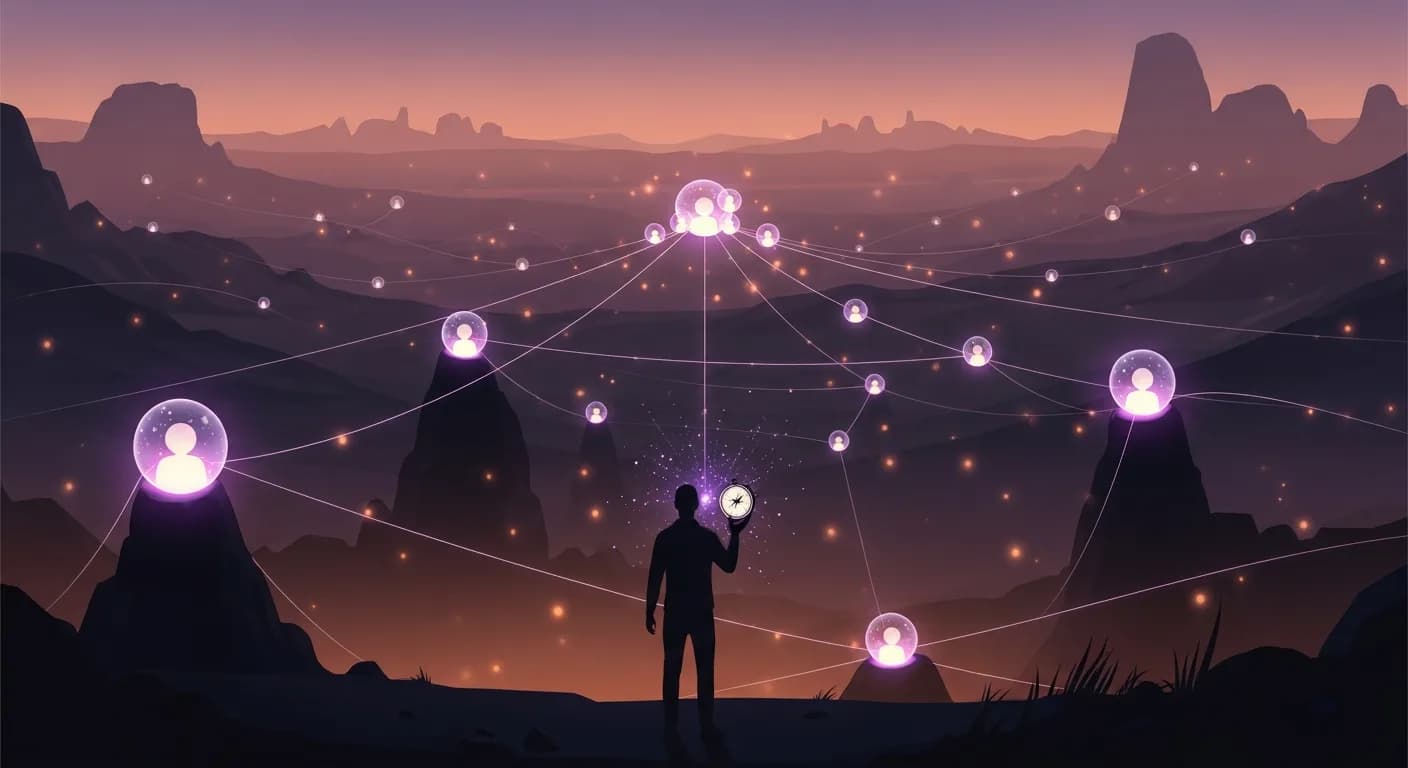

Remote teams don't have hallway conversations to fall back on. That single fact is why the phone rings on our end: a People Ops lead who inherited a fully-remote roster of 400 people across nine time zones, or a founder whose 70-person engineering team has never sat in the same room, calling to ask what works.
Since 2020, our team at HeySparko has delivered 1,500+ virtual team events to 700+ companies across 50+ countries. Five years of running events for fully-distributed rosters produces a specific kind of pattern recognition: which games hold up when the team has already sat through three quarterly Zoom happy hours, which formats respect a calendar split across eight time zones, and which activities land with the third of the roster who never shows up to anything live.
The questions HR leaders send us keep landing on the same ten. What works, how to pick the right one, what fits in fifteen minutes, what develops real skill, what sustains over quarters, what feels fresh, what types exist, what suits a new team, what scales past a hundred people, and how to keep any of it inclusive. Below is what we tell them, in the order they usually ask.
What are the best virtual team building games for remote teams, and how do you pick the format and the game when your team works across ten time zones and half the roster has never met in person?
What are the benefits of virtual team building games for remote teams?
The honest answer is that the benefits aren't the ones most vendors sell you. "Improved communication" and "boosted morale" are outcomes, not benefits — the benefits are the specific mechanisms that produce those outcomes. Understanding which mechanism you actually need is what separates a game that lands from a calendar block everyone quietly resents.
The first mechanism is weak-tie formation. Remote work culture is defined by strong async ties (the people you work with daily) and almost no weak ties (the colleagues in Legal or Design you'd never DM unless you had a formal reason). Virtual team building games create weak ties by putting five people from different functions into a breakout together for forty minutes. Those weak ties are what make cross-team collaboration feel possible six months later, when someone needs to reach outside their immediate pod.
The second mechanism is recovery from video call fatigue. Meeting-heavy remote weeks produce a specific exhaustion where camera-on feels like performance rather than presence. A well-designed game flips the frame: the camera stays on but the pressure isn't on you, it's on the puzzle. HR leaders report that the same team members who dread another all-hands turn on their cameras during a Marathon episode because the format lets them be present without being scrutinised.
Third is legitimate team bonding without forced vulnerability. The old-school ice-breaker asks people to share a personal story on demand. Games generate bonding as a byproduct of shared problem-solving under narrative pressure, which is a lower-stakes way for introverted colleagues to be part of the moment without performing for it.
Fourth is a kickoff event or quarterly anchor that people remember. When we ask clients what their team references six months out, it's the game moment (the near-miss on the leaderboard, the puzzle their pod cracked at minute 78) rather than the CEO's opening remarks. That anchor is what most remote-team quarterly rhythms are missing.
How do you choose the right virtual team building game for your remote team?
Start with three variables the booking form doesn't ask about. Time-zone spread, tenure mix, and prior-event fatigue. Those three together determine format and game more reliably than headcount or budget do.
Time-zone spread first. If your team fits inside a genuine six-hour time-zone overlap window, a live event is on the table. If it doesn't, force-scheduling one means someone takes a 5am call, and the social cost of that inequality tends to outweigh whatever shared live moment you were building toward. For teams past that six-hour threshold, Marathon (our async multi-day format with a shared leaderboard) is almost always the right default. Across 500+ opt-in Marathon events, we see 78-92% completion rates, which routinely beats forced-synchronous rates for genuinely distributed rosters.
Tenure mix next. A team where half the roster joined in the last twelve months has a different job to do at the event than a team of five-year veterans. New-heavy teams need games that surface personality without requiring shared history: narrative adventures where new hires can contribute equally on day one. Veteran-heavy teams can handle longer-arc games with more nuanced coordination mechanics and more subtle payoffs.
Prior-event fatigue third. Ask your People Ops lead how many virtual events the team has been through in the last twelve months. Three-plus in a year means the standard formats are burned. That team needs something structurally different: a Marathon instead of a live event, a mystery instead of a trivia game, a puzzle-driven story instead of a hosted quiz. Novelty of format matters more than novelty of content by year two of a remote-team program.
Once those three variables narrow the field, the last question is genre. Deduction-heavy teams (engineering, product) respond best to layered-clue mysteries. Fast-decision cultures (sales, ops) tend toward time-pressured coordination games. Mixed-personality rosters land best with hosted variety-show formats that give every archetype something to grab onto.
What are some quick virtual team building games that take under 15 minutes?
Fifteen-minute games belong at the start of a meeting, not as a standalone event. The framing matters because clients sometimes book a two-hour custom program hoping for six fifteen-minute games; that isn't a team-building event, it's a variety show that produces less connection than a single well-run thirty-minute session.
Inside the right frame, as an ice-breaker at the top of a recurring team meeting or the warmup before a longer Marathon episode, quick games do specific useful work. A well-chosen quick game gives every attendee a low-stakes speaking turn, surfaces a small personal detail that becomes a Slack in-joke, and shifts the meeting's energy from transactional to conversational without eating the agenda.
The formats that work in under fifteen minutes: two truths and a lie run in breakouts of four, this-or-that polls where the results get read aloud, guess-the-desk where three team members share a home office detail and everyone else guesses whose is whose, and would-you-rather rounds that build to a team-wide vote. These aren't games in the tournament sense. They're conversation starters that use game structure to create equal-airtime speaking turns.
One rule keeps quick games from feeling like homework: no artificial vulnerability. "Tell us your biggest fear" fails in every culture we've seen it deployed in. "What's on your desk right now that has a story" produces genuine sharing because the object is real and the story is chosen. Design the prompt to have a natural exit; introverts should be able to answer in one sentence and pass without anyone noticing.
The pattern that scales quick games into a program: pair them with asynchronous gameplay. A quick warmup at the Monday standup, then a slow-burn async Marathon episode released Wednesday. That combination generates far more sustained connection than either format standalone, and it doesn't cost the team more than twenty minutes of shared calendar time per week.
What virtual team building games develop problem-solving skills?
Problem-solving as a coachable outcome only shows up when the game demands genuine coordination under partial information. Trivia doesn't develop problem-solving. Charades doesn't either. What does: puzzle-driven narrative games where a team of five holds half the information and has to negotiate with a second team of five holding the rest.
The mechanic that produces the skill transfer is called information asymmetry, and it's the same structural device that makes escape rooms feel like they build something. When Team A has three clues and Team B has three complementary clues and neither can solve the meta-puzzle alone, the group has to do the thing that matters: distribute work by strength, communicate the partial answer clearly enough for the other side to build on it, and revise the shared model as new information arrives.
Mission 8-Bit is our most requested game for teams that want a problem-solving frame. The three-act arcade-heist structure (escape, rebuild, ship) mirrors how engineering teams think about project phases, which makes the skill transfer feel less abstract to the people playing. Software teams often report the game's coordination mechanics surfaced the same handoff friction they were dealing with in production work, with the useful difference that seeing it inside a game is a lower-stakes way to talk about it.
Deduction-heavy alternatives work through layered clue systems: four stages where information from stage one keeps mattering in stage four, and where teams have to build and maintain a shared mental model across the full arc. These games reward active listening in a way most formats don't, because a detail dropped in the first fifteen minutes is often the pivot that unlocks the final stage.
The training-transfer research on team problem-solving games is thin, but the mechanism is well-understood: shared problem-solving under narrative pressure builds the same coordination patterns the team uses in real work, and doing it once in a low-stakes setting makes it easier to reach for in the high-stakes one.
What are the best long-term or ongoing virtual team building activities?
The best long-term activities are the ones a team will keep returning to without being nudged. That standard eliminates most one-shot event formats and points toward two structural patterns: multi-episode narratives with a shared leaderboard, and low-cadence ritual formats that don't require anyone to plan a calendar block.
Multi-episode narrative first. A Marathon format that runs across four to five days with a new episode released daily generates roughly the same engagement per episode as a live event does per hour, and it accumulates. By day three, the team is checking the leaderboard between meetings. The narrative arc pulls players forward because they want to see how the story resolves; the leaderboard pulls them forward because their pod's ranking matters to them. Neither mechanism requires management to nudge participation, which is why these formats sustain past year one where live-event calendars burn out.
Low-cadence ritual formats second. Monthly async check-ins built around a rotating prompt (a room tour, a home-office object with a story, a personal user manual reveal), a virtual book club that meets once a month with a light discussion prompt, or a quarterly "guess the team member" async challenge where new hires get introduced through a game rather than a Slack post. These aren't games in the competitive sense; they're rituals that use game structure to lower the activation energy for showing up.
The pattern we see across ongoing programs that survive past their first year: they combine one quarterly high-effort event (a Marathon, a themed kickoff event, an anniversary program) with three low-effort monthly rituals in between. That rhythm gives the team a cadence without overloading anyone's calendar, and it produces the sustained sense of shared culture that isolated one-off events cannot.
Wintervald Hotel Mystery works well as the anchor event in this pattern because its four-stage structure gives new hires a low-friction way to join the team's shared reference set alongside veterans.
What are some creative or advanced virtual team building game ideas?
"Creative" and "advanced" mean different things to different clients, so it helps to separate them. Creative usually means unusual format or unexpected genre. Advanced usually means high-coordination mechanics that reward teams who've played together before.
On the creative side, the formats that surprise People Ops leaders most often are narrative escape adventures with genuine story stakes (not the puzzle-hunt version), branching-story mystery games where the team's choices change the outcome, and hosted variety-show formats that mix quiz, improv, and puzzle segments across a single ninety-minute run. What makes these creative isn't the theming; it's that the game surface is different enough from prior events that the team can't pattern-match "oh, another trivia night" in the first ten minutes.
On the advanced side, the mechanics that reward coordination-mature teams are information asymmetry (Team A has half the clues, Team B has the other half, meta-puzzle requires both), real-time constraint solving where the puzzle changes based on what other teams submit, and layered clue systems where information from stage one is required for stage four. Advanced games tend to lose casual players in the first twenty minutes, so they're the wrong pick for a team with wide variance in prior gaming experience.
Two specific ideas we get asked about often. Spreadsheet pixel art as an async team collaboration, where the whole team fills in cells of a shared spreadsheet to reveal an image over a week: surprisingly effective as a slow-burn ambient activity. And themed multi-week story arcs where each Marathon episode is a "chapter" and the game master (a HeySparko Host) reveals plot developments in Slack between episodes; this is the closest virtual analog to the sustained office-culture references that co-located teams accumulate naturally.
For teams that already ran a standard Marathon last quarter and want the pattern reset without leaving the format family, a hosted variety-show format with a rotating cast of segment leads gives them the novelty at a familiar cadence.
What types of virtual team building games are available, such as icebreakers or storytelling activities?
A useful mental map of the category has five buckets, each with a different job.
Icebreaker games. Short-form activities designed to lower the room temperature at the start of a longer event or meeting. Two truths and a lie, would-you-rather, this-or-that, guess-the-desk. Their job is to produce equal-airtime speaking turns without asking for real vulnerability. They belong at the front of a longer format, not standalone.
Storytelling activities. Games where the team collaboratively builds a narrative: improv-derived formats like "one word at a time" story-building, prompted rose-thorn-bud reflection rounds, or facilitated life-map exercises where team members share career pivots. These produce the deepest bonds when they land, but they demand a facilitator who can hold space; running them yourself is high-risk without training.
Puzzle and mystery adventures. The game category we specialize in: narrative escape rooms, layered-clue mysteries, and heist-structured problem-solving games. These do the heaviest bonding work because they combine narrative pull with coordination demand. Best for kickoff events, quarterly anchors, and any moment the team needs a shared reference point they'll cite six months later.
Trivia and quiz games. Fastest format to book, lowest coordination demand, moderate bonding output. Works well for teams with wide personality variance because trivia doesn't require anyone to be funny on camera; it just needs them to know things. Best as a monthly rhythm rather than a quarterly anchor.
Creative and craft workshops. Cooking classes, mixology demos, terrarium building, virtual dance parties. Genuine bonding when they land, but the format works best for smaller groups (under thirty) where the shared experience can be shared rather than parallel-experienced.
The mistake we see most often is booking one type when the team needs another. A team suffering from video call fatigue does not need another trivia night; it needs a Marathon that removes the live component. A team that has never met needs an ice-breaker-heavy format, not a coordination-heavy adventure that assumes prior trust.
What virtual team building games work best for new remote teams?
New remote teams have a specific problem: no shared history to draw on and no ambient office contact to build it. The games that work best for new teams solve that problem with structure: they generate the shared reference points a co-located team would accumulate passively over months.
Narrative adventure games do this well because they produce a shared experience the team can point back to. When we ran a hosted mystery for a fifty-person team that had never met in person, the debrief the following week wasn't about the game mechanics; it was about the moment their pod's game master made a specific joke that everyone still referenced weeks later. That moment became a piece of the team's shared history the way a hallway story would have in an office.
Two design rules for new-team events. First, keep breakout groups small (five to seven people) and rotate them mid-event so more team members overlap with each other. Second, choose games with a strong narrative pull so newer players have something to latch onto besides the puzzle mechanics: the story does the work of holding attention that trust-with-teammates would do for a veteran team.
Avoid coordination-heavy games in the first quarter of a new team's life. A team without shared history will struggle with information-asymmetry mechanics that assume some level of prior communication norms.
What virtual team building games are suitable for large remote groups?
Large groups (100+ people) break most virtual event formats. The failure mode is predictable: what worked for 30 becomes a passive spectator experience for 300. The fix is structural rather than cosmetic.
For live formats, the mechanic that scales is parallel breakouts feeding a shared leaderboard. Everyone plays in pods of five to seven simultaneously, competing on the same puzzles or narrative track, with pod-level scores rolling up to a global ranking. The design keeps individual engagement high (five-person pods have no place to hide) while the shared leaderboard produces the whole-group energy that makes the event feel collective.
For async, Marathon scales more naturally because there's no live coordination overhead. We've run Marathon events for teams over 500 people where the completion rate stayed above 65% because each player only needed to find thirty minutes of their own time, not a shared window with the whole company. Asynchronous gameplay is genuinely the only format that works cleanly when time-zone overlap is impossible.
Hosting decisions matter at scale. A single host on a 300-person call is a broadcast, not an event. We staff large live events with a lead host plus a game master per twenty pods, so every pod gets real attention rather than a generic voiceover.
For 100-500 person events, Apocalypse run in Marathon format is the most reliable choice we've deployed. The four-stage vaccine-race structure gives pods enough narrative to stay engaged across days without demanding a shared live window.
How can you make virtual team building inclusive for all team members?
Inclusion in virtual team building is less about intent than about the specific design choices that determine who feels invited and who feels performed at.
Time-zone inclusion first. Any live event scheduled outside a shared window silently tells the excluded region their attendance is optional. Marathon or other async formats are the honest answer for teams past a six-hour time-zone overlap. Choosing an async format is a stronger inclusion signal than any statement in the event invitation.
Personality inclusion second. Introverted team members opt out of events that demand on-camera performance. The design fix is to structure the game so every player has a meaningful role that doesn't require being loud: a puzzle solver, a note-taker, a hypothesis proposer. Narrative adventure games do this better than hosted formats where a facilitator is calling on people to speak on demand.
Accessibility third. Video-first formats exclude anyone with a bandwidth constraint, a screen-reader dependency, or an environment they can't be on camera from. Games with a chat-based fallback for the puzzle mechanics, where a player can participate fully through text if video isn't available, solve this without singling anyone out. Ask your vendor specifically about chat-only accessibility before booking.
Cultural inclusion last. Trivia formats depending heavily on regional pop-culture references disadvantage global rosters. Puzzle and mystery games with cleaner cultural surfaces (the mechanics are universal, the theming is chosen intentionally) travel better across a fifty-country roster than a trivia night rooted in one region's pop culture.
Related reads
- Virtual Team Building Games: A 2026 Guide for HR Leaders
- The Best Virtual Team Building Games for 2026: An Operator's Guide
- Virtual Team Building Games for Large Groups: The Operator's Playbook
- Virtual Team Building Games for Small Teams: 5 to 50 People
- Virtual Team Building Games for Global Teams: HR Field Guide
- Online Team Building Games: The Operator's Playbook for Remote Teams