

La planification des événements d'été pose un problème étrange. Le calendrier que les équipes People Ops ont préparé en mars semble impeccable sur le papier. Mi-juin, il est en lambeaux. Des congés échelonnés remplacent les blocs de présence nets, les statuts Slack « en vacances » dépassent en nombre les statuts actifs un mardi quelconque, et la fenêtre live qui aurait dû couvrir tout le monde s'évanouit quelque part entre la fin mai et début septembre. Le choix du jeu est la partie simple. Le format et la date — des choix de calendrier qui doivent résister à l'attrait de la saison elle-même — constituent le problème plus difficile que les outils de planification ne résoudront pas à votre place.
Plus de 1 500 événements virtuels plus tard — dans plus de 300 entreprises réparties dans plus de 50 pays depuis 2020 — les schémas se révèlent plus constants que ne le pensent la plupart des responsables People Ops. Les événements d'été échouent pour un petit nombre de raisons reconnaissables. Les fenêtres live meurent du cumul de l'étalement des fuseaux horaires et des regroupements de congés. Les jeux marqués décembre (neige, fin d'année, Père Noël) paraissent hors saison en juillet, et la salle le ressent. L'énergie s'évapore quand l'événement virtuel tente de rivaliser avec un véritable été qui exerce sa propre attraction sur l'attention de chacun. La solution passe rarement par un budget plus important. C'est une adéquation plus fine entre format et structure d'équipe, entre jeu et saison.
Quelles sont les meilleures idées d'événements d'équipe pour l'été 2026 destinées aux équipes distribuées, lorsque la moitié de l'équipe est en congés et qu'une seule fenêtre live ne suffira pas à toucher tout le monde ?
Le format vient en premier, avant le jeu
Chaque recommandation d'événement d'été que nous formulons part de la même question, et ce n'est pas « quel jeu ». La décision du format est ce qui fait ou défait un événement d'été, car la période juin-août est celle où l'étalement des fuseaux horaires et les congés se chevauchent le plus systématiquement pour détruire toute fenêtre live unique. Le choix du format conditionne les jeux qui fonctionnent ; se tromper sur ce point oblige à caser un jeu qui réclame une énergie live dans un calendrier async où il ne respirera jamais, ou un jeu qui demande un rythme async dans un appel de 75 minutes où il ne peut pas s'épanouir.
Deux formats coexistent au catalogue HeySparko. Ils ne sont pas interchangeables. Le Big Game est un événement live unique, de 60 à 90 minutes, animé de bout en bout par un HeySparko Game Host, qui peut accueillir jusqu'à 10 000 joueurs en une seule session. L'énergie tient au moment partagé — le classement qui bouge en temps réel, les acclamations et les soupirs qui retentissent dans les salles de sous-commission au même rythme. Pour des événements d'été dans des entreprises dont les équipes se situent dans une amplitude de fuseaux horaires de six heures et dont les membres viendront à une fenêtre unique, le Big Game cale le lancement comme un événement décisif dont l'équipe se souviendra à la rentrée de septembre.
Le Marathon se déroule sur 1 à 5 jours, en mode async, avec des contenus quotidiens et un classement partagé unique. Les taux de complétion que nous observons pour le Marathon sur plus de 500 entreprises se situent entre 78 % et 92 %. Environ 35 % des personnes qui terminent un Marathon sont celles qui auraient esquivé un Zoom d'été en direct. Pour les équipes étalées sur huit fuseaux horaires ou plus — la réalité par défaut du SaaS et de la fintech aujourd'hui — le Marathon cesse d'être une solution de repli. Il devient le bon choix. L'événement se transforme en une trame d'une semaine qui se déploie parallèlement au travail en cours, sans chercher à concurrencer les calendriers de congés pour un créneau unique.
Une équipe du secteur hôtelier que nous avons accompagnée en août dernier illustre clairement le propos. Environ 250 employés, répartis dans la zone EMEA. Leurs deux précédents événements d'été synchrones avaient plafonné à 49 % et 53 % de participation. La responsable People Ops a opté pour un Marathon de 5 jours. Il a atteint 71 % de complétion. Les relances sur le classement ont fait le travail de porter l'événement à travers la semaine de congés échelonnés, et le canal Slack post-événement est resté actif jusqu'en septembre.
Les six idées d'événements d'équipe pour l'été que nous réserverions cette saison
Notre catalogue compte vingt et un jeux. Nous avons passé chacun au filtre de l'été — l'esthétique correspond-elle à juin-août, le format respire-t-il à travers des congés échelonnés, le jeu tient-il la route quand la moitié de la salle se connecte depuis une location de vacances — et six en sont ressortis sans accroc. Voici l'ordre dans lequel nous les recommanderions vraiment, de haut en bas, si vous entriez en réunion demain avec un calendrier d'été vierge en nous demandant lequel réserver en premier.
1. Under the Big Top — la tête d'affiche déductive de l'été
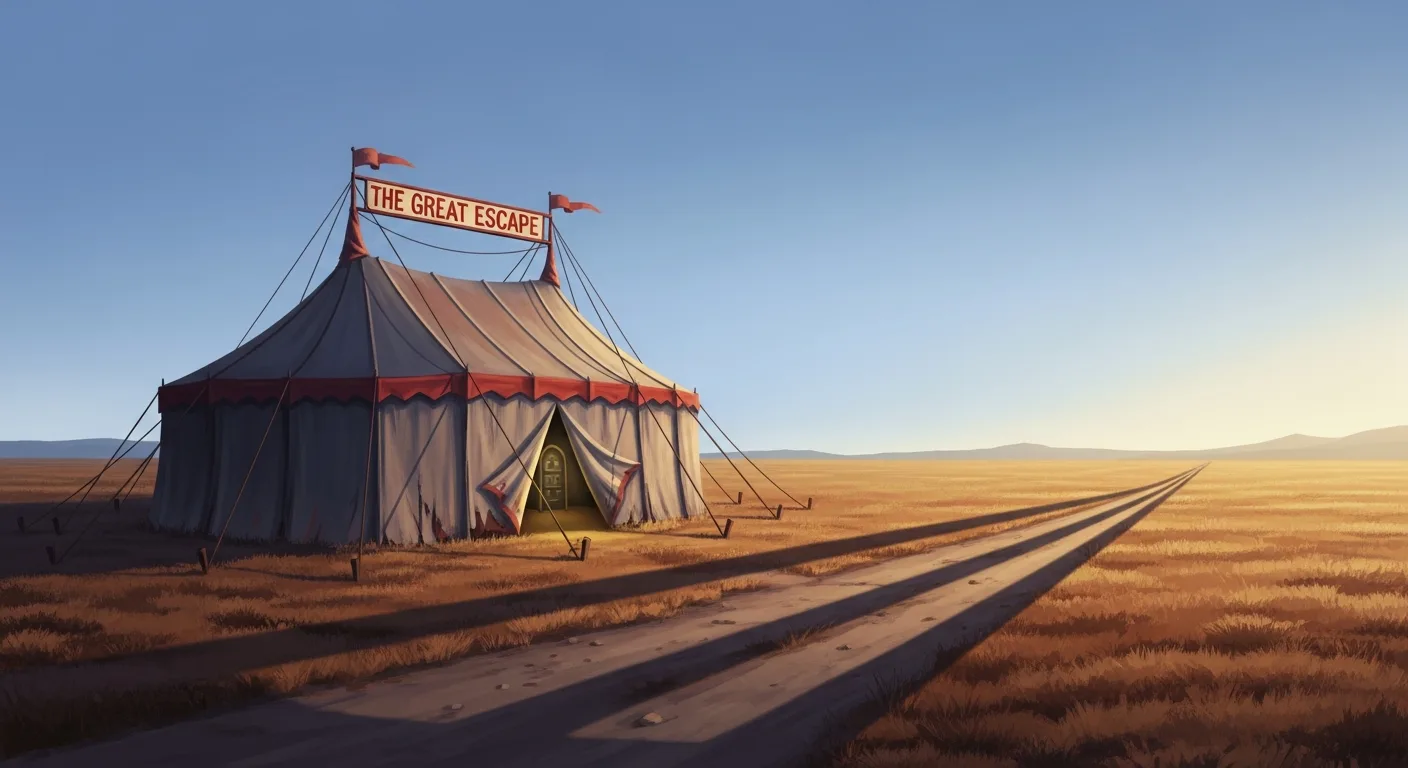
Under the Big Top est LE jeu d'été de notre catalogue. Un cirque itinérant à l'ancienne est arrivé en ville, la tête d'affiche s'est volatilisée avant le plus grand spectacle de la saison, et l'équipe incarne une troupe d'enquêteurs nomades qui mènent trois étapes de déduction pour découvrir la vérité avant que le rideau ne tombe. Le casting de suspects est volontairement étrange. L'homme fort étonnamment doux. Le couple de trapézistes qui ne se parle plus depuis un an. Le maître de cérémonie qui en sait plus qu'il ne le dit. Chacun a un mobile, une opportunité et un moment de vulnérabilité que l'équipe doit lire avec attention.
L'esthétique estivale est l'avantage déloyal. Chapiteaux de cirque, lumière dorée de fin de journée, la fantaisie chaleureuse de Big Fish plutôt que les stéréotypes du clown au klaxon. Les équipes des secteurs hôtelier et de marques grand public y gravitent naturellement parce que la mise en scène reflète la façon dont les expériences clients se déroulent dans leur quotidien. En format Marathon sur une semaine d'été, la déduction qui se déploie crée une attraction que les événements live ponctuels ne peuvent pas fabriquer ; les équipes reviennent sur le classement entre deux jours de congé pour réexaminer leur théorie sur le coupable. Les groupes de taille moyenne, de 50 à 300 personnes, tirent le meilleur parti du mécanisme de débat.
2. Bureau of Magical Affairs — le choix transverse pour des cultures mixtes
Bureau of Magical Affairs est notre aventure phare toute l'année, et c'est en été que son accessibilité interfonctionnelle pèse le plus lourd. Le pitch est une fantaisie bureaucratique. Le Bureau n° 7 a quatre dossiers magiques ouverts. Du mobilier doué de conscience qui refuse de faire son travail. Des mages coincés dans les mauvaises époques. Des grenouilles-dormeuses qui hypnotisent les naturalistes en forêt. Des esprits célestes qui dérobent un observatoire céleste. L'équipe a 90 minutes pour vider les dossiers avant que le chaos ne s'aggrave. Le ton à mi-chemin entre The Office et Men in Black reste accessible sans verser dans la profondeur de la fantasy héroïque, que les cultures mixtes trouvent rebutante.
La structure en quatre dossiers permet aux escouades de travailler en parallèle, ce qui lui permet de passer la barre des 500 joueurs sans que le format ne devienne étriqué. Nous avons vu des clients intégrer leur propre chaos opérationnel dans le palier Story (« Dossier 117 : extraire les 30 ingénieurs piégés dans le purgatoire des tableurs de migration HRIS »), ce qui transforme l'événement d'été en blague interne récurrente qui ressort dans #general pendant tout le reste du trimestre. Très bon alignement avec l'onboarding également : le sentiment du nouvel arrivant que « tout brûle, et il y a aussi de la paperasse à remplir » est littéralement le pitch du jeu.
3. Apocalypse — quand l'été appelle l'urgence, pas la nonchalance
Apocalypse est l'événement d'été pour les équipes tech, fintech et engineering dont le Q3 doit livrer quelque chose d'exigeant avant la rentrée. Une épidémie nocturne. Quatre lieux entre l'équipe et un vaccin fonctionnel. Des mécaniques de pression temporelle qui récompensent la délégation rapide dès l'étape 3, où la plupart des équipes s'auto-organisent en spécialistes sans qu'on le leur dise. C'est notre aventure la plus énergique, et la case été récompense un jeu qui donne à l'équipe une décharge plutôt qu'un moment de détente. 2D stylisée d'un bout à l'autre, sans gore, sans jump scare, plus World War Z que The Last of Us. L'esthétique fonctionne en été parce que l'urgence est fictive et contenue ; rien dans le jeu ne demande à la salle de l'interpréter comme de l'horreur.
Nous avons vu des équipes d'ingénierie de 25 personnes désigner leurs incident commanders et chefs de projet naturels quelque part au cours de l'étape 2. Le jeu fait remonter des schémas de prise de décision dont l'équipe ignorait l'existence, et c'est exactement le type d'enseignement qu'un événement d'été peut restituer à un responsable People Ops cherchant un véritable artefact à ramener de la journée. Pour les équipes en mode lancement estival, le cadrage « nous avons bâti la mémoire musculaire avant d'en avoir besoin » se traduit directement dans la communication stratégique qui accompagne l'événement.
4. Wintervald Hotel Mystery — le mystère à contre-saison
Wintervald Hotel Mystery est le choix délibéré de contre-programmation pour la case été. Un hôtel de luxe isolé, une tempête de neige qui bloque la seule route d'accès, un invité retrouvé mort après un dîner privé, trois étapes d'interrogatoires de suspects, de recoupements d'alibis et de reconstitution de scène de crime. Le ton d'Agatha Christie, l'esthétique de Knives Out, aucune image de corps nulle part. Le décor hivernal n'est pas un défaut en juillet — c'est tout l'enjeu.
Pour les équipes finance, juridique et de services professionnels, où l'événement d'août doit dégager un ton sérieux et réfléchi, l'élégance neigeuse du jeu se lit comme intentionnelle et non comme un décalage saisonnier. La structure déductive récompense le débat minutieux, ce qui éloigne un événement d'été de la chaleur de la compétition pour le rapprocher d'une coordination réfléchie. Le retournement final génère le moment Slack le plus régulièrement cité de notre catalogue. Les groupes de taille moyenne, de 50 à 300 personnes, tirent le meilleur parti du mécanisme déductif ; les groupes plus importants se divisent en équipes de détectives concurrentes sur un classement partagé.
5. Travel & Geography Trivia — pour les équipes globales qui partagent leurs photos de vacances
Travel & Geography Trivia mérite la case été pour une raison différente de celle des aventures et mystères ci-dessus. Trois manches (Postes frontières, Manche cartes postales et Légendes locales) à travers pays, villes, monuments et anecdotes régionales étranges-mais-vraies pour lesquelles la ville natale de chacun est célèbre, animées par un HeySparko Game Host formé. L'alignement avec la saison fait sa pertinence estivale : les coéquipiers postent déjà des photos de vacances dans #general, le trivia greffe cette conversation sur l'événement, et la manche Légendes locales fait surgir le moment où quelqu'un dit « attends, tu veux dire que MA ville est célèbre pour ça ? »
Pour les équipes globalement distribuées qui font tourner un Marathon d'été, le format trivia produit du contenu propre à chaque région pour chaque journée, ce qui fait de l'événement lui-même un moteur de découverte sur l'endroit où vivent les collègues. La manche de reconnaissance visuelle est rééquilibrée pour éviter la domination des grands voyageurs, et le classement reste donc serré. Très bon ajustement pour les organisations tech et de conseil globales dont les canaux Slack d'été sont déjà à moitié remplis de photos de voyages.
6. Food & Drink Trivia — s'accorde avec le barbecue d'été
Food & Drink Trivia est le pack trivia pour les événements d'été où l'équipe recherche le genre de ton chaleureux de fin de soirée qui s'accorde aux plats que l'on mangerait en août. Trois manches (Mise en Place, Cuisine Camera et Bar Soundtrack) qui balaient cuisines du monde, cocktails, spécialités régionales et le vocabulaire de cuisine que la plupart des gens se rappellent à moitié d'un blog de recettes. Nous l'associons en option à des kits de dégustation livrés à domicile quand le budget de l'événement le permet, ce qui ajoute 30 à 45 minutes et transforme le trivia en soirée dégustation virtuelle.
Le trivia fait remonter le passé culinaire de l'équipe d'une façon qu'aucun autre pack ne réussit. Quelqu'un dans le chat se met à partager la recette de sa grand-mère à mi-chemin de la manche 2, et le reste de l'événement repose sur cette conversation. Pour les secteurs de l'hôtellerie, de la food-tech et des métiers liés à la restauration, l'évidence saute aux yeux ; la surprise, c'est à quel point cela fonctionne dans les équipes d'ingénierie dont le Slack possède déjà un canal #recipes. Nous l'avons fait tourner pour des équipes globales sur des semaines de Marathon d'été où la journée de chaque région mettait en avant la cuisine locale, ce qui s'avère être une victoire discrète pour la cohésion internationale.
Comment la personnalisation transforme un événement d'été
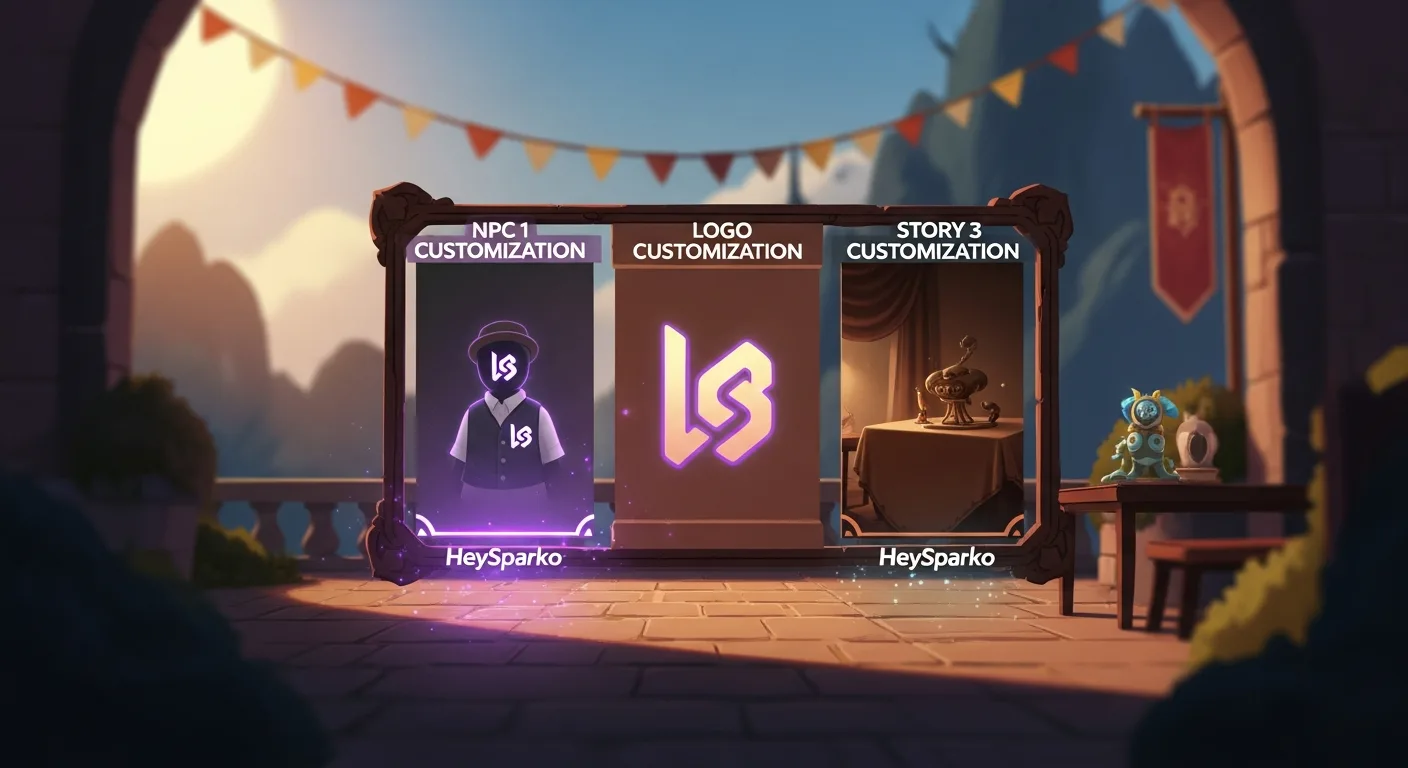
Les événements d'été tiennent ou tombent selon la façon dont l'équipe les perçoit : soit comme un moment volontaire venu de la direction, soit comme du contenu standard d'un prestataire largué dans leur calendrier. Les paliers de personnalisation HeySparko — NPC, Logo et Story — modifient ce calcul à la marge, et ils fonctionnent différemment en été qu'en fin d'année. Le palier NPC met la voix de votre équipe dans les personnages du jeu, ce qui pèse particulièrement dans les cultures où les références internes et les private jokes constituent la monnaie quotidienne. Le palier Logo applique votre marque sur tout l'environnement du jeu, utile quand l'événement d'été s'accompagne d'une vague de communication stratégique de mi-année. Le palier Story réécrit le récit autour de votre situation ; un dossier Bureau of Magical Affairs qui reflète votre véritable chaos opérationnel estival transforme l'événement en commentaire de ce que l'équipe vit déjà.
Personnalisez pour votre équipe
TYPE 1
Votre équipe en personnages du jeu
Membres réels de l'équipe, mascottes ou personnages issus de vos jeux, intégrés en NPCs.
TYPE 2
Votre marque intégrée naturellement
Logo et éléments de marque intégrés nativement aux décors du jeu — lieux, objets, interface.
TYPE 3
Votre histoire tissée dans le jeu
Étapes clés de l'entreprise, produits et références internes tissés aux énigmes, dialogues et missions.
Une note opérationnelle à propos de l'échelle estivale : chaque palier de personnalisation s'applique au forfait, indépendamment de la taille du groupe ; le coût par participant baisse donc fortement quand l'événement dépasse 100 joueurs. Les briefs avec lesquels nous travaillons le mieux sont courts. Un brief narratif d'une page et un appel de 30 minutes valent mieux qu'un document de charte graphique de 12 pages, à chaque fois. Toute personnalisation (NPC, Story ou Logo) demande 10 jours ouvrés, ce qui veut dire que la conversation doit démarrer début juin pour un événement de juillet, et début juillet pour un événement d'août.
Ce que les données disent sur la participation aux événements d'été
L'étude Buffer State of Remote Work 2023, menée auprès de plus de 3 000 travailleurs à distance dans plus de 90 pays, a constaté que parmi les travailleurs à distance qui se sentent connectés, 46 % attribuent cette connexion au fait de s'être rencontrés en personne ; parmi ceux qui ne se sentent PAS connectés, 56 % invoquent le manque d'occasions de tisser des liens sociaux. Le sous-échantillon compte : ces 56 % concernent spécifiquement les travailleurs déconnectés, et l'affirmation porteuse concerne ce que ces travailleurs déclarent manquer, à savoir l'occasion de créer du lien social. L'implication pour les événements d'été est directe. Les équipes distribuées dont la connexion s'est érodée pendant une longue période de travail estival la tête dans le guidon indiquent à Buffer que l'écart porte sur l'opportunité, pas sur l'affection. Un événement d'été virtuel est l'une des rares interventions capables de créer cette opportunité à grande échelle sans exiger un budget voyage qui n'existe pas pour tout le monde, et il fait ce travail durant la saison même où la déconnexion s'installe le plus probablement.
L'édition 2024 du Work Trend Index de Microsoft, qui a interrogé plus de 31 000 travailleurs dans 31 pays, a établi que 64 % des employés déclarent éprouver des difficultés face au rythme et au volume de travail. L'été se lit sur le calendrier comme la saison calme. Sur le terrain, c'est la saison où les employés en milieu de carrière ressentent ce rythme de manière cumulée. Ils prennent des appels de recruteurs entre deux jours de congé. Ils s'arrêtent sur la question de savoir si le second semestre vaut la peine d'être passé dans l'entreprise. Le budget événement d'été se justifie rarement au titre du « moral des troupes ». Il fonctionne plutôt comme un investissement de rétention. Les recherches sectorielles de la SHRM situent le coût de remplacement d'un employé non-cadre dans la fourchette des dizaines de milliers de dollars, une fois comptés le recrutement, l'onboarding et le temps de montée en compétences. Le budget d'événement d'été se compare avantageusement à ce chiffre, même s'il n'infléchit la trajectoire que d'un ou deux départs.
Une revue systématique d'Anog et al. (SSRN, 2023) portant sur plus de 60 études publiées a établi que les activités structurées de team building augmentent la satisfaction et réduisent le turnover, avec des effets amplifiés lorsqu'elles sont intégrées à une stratégie de développement plus large plutôt que traitées comme des interventions ponctuelles. Cette conclusion académique rejoint ce que nous observons dans notre portefeuille. Les événements d'été qui font bouger les chiffres de rétention sont ceux qui s'intègrent dans une cadence trimestrielle d'engagement — un point d'étape mi-année au Q2, un événement d'été, un kickoff Q3, une clôture Q4 — plutôt qu'un seul appel Zoom d'août censé accomplir son travail en 75 minutes avant de disparaître.
Les chiffres de notre propre portefeuille corroborent le même récit. Sur plus de 1 500 événements virtuels, les taux de complétion du Marathon vont de 78 % à 92 % ; le Big Game peut accueillir jusqu'à 10 000 joueurs en une seule session ; le format async touche environ 35 % de participants en plus que ne le fait l'alternative imposée en synchrone. Ce sont les leviers opérationnels qu'un événement d'été doit actionner pour fonctionner avec une équipe dont le calendrier de congés constitue la vraie contrainte. Associez un événement au format Marathon à la cadence longitudinale de type Anog (case été plus kickoff pré-Q3 plus clôture Q4) et l'impact mesuré de l'événement sur les scores de l'enquête d'engagement de l'équipe grimpe dans une fourchette qu'un directeur financier trouve facile à justifier.
Questions fréquentes
À quelle avance faut-il réserver un événement d'équipe estival ?
Cinq à sept semaines, c'est le délai confortable pour un Big Game d'été en juillet ou août, et trois à quatre semaines reste praticable si votre équipe a déjà fait tourner des événements HeySparko. Pour les paliers de personnalisation (NPC, Logo ou Story), prévoyez 10 jours ouvrés entre la réservation et l'événement pour que nous puissions caler le brief et préparer les assets. Under the Big Top fait partie des jeux que nous pouvons mettre en place rapidement sans sacrifier son esthétique estivale, ce qui en fait une option solide pour les réservations tardives de juillet.
Big Game ou Marathon pour un événement d'été quand la moitié de l'équipe est en congés ?
Le Marathon est le choix le plus fiable quand les congés échelonnés constituent la contrainte forte. Les taux de complétion de 78-92 % que nous observons pour le Marathon sur plus de 500 entreprises dépassent les taux de présence en direct que nous constatons pour les événements d'été synchrones dans ces mêmes entreprises, parce que la complétion n'exige pas une fenêtre partagée unique. Si les congés de votre équipe sont concentrés sur une période étroite et que le reste de l'été tourne à pleine participation, un Big Game début juillet ou fin août fonctionne encore très bien. Bureau of Magical Affairs est une option solide dans l'un comme dans l'autre format pour les cultures mixtes.
Quel est le meilleur événement d'été pour une équipe distribuée à l'échelle mondiale sur plus de 8 fuseaux horaires ?
Le Marathon, presque à chaque fois. Huit fuseaux horaires, cela veut dire qu'aucune fenêtre live unique ne couvre tout le monde sans imposer à quelqu'un un appel à 6 h du matin ou à 23 h, ce qui n'est pas la bonne façon de célébrer. Un Marathon de 4 ou 5 jours étale l'engagement sur la semaine, avec des épisodes quotidiens que chacun peut finir selon son emploi du temps local. Travel & Geography Trivia marque ici des points supplémentaires, parce que la manche Légendes locales peut faire émerger un contenu propre à chaque région tout au long des journées de l'équipe globale, transformant l'événement en moment de découverte sur l'endroit où vivent les collègues.
Faut-il installer un logiciel, ou nos ordinateurs portables verrouillés par l'IT pourront-ils rejoindre l'événement ?
Tous les jeux HeySparko tournent dans le navigateur. Rien à installer. Pas de plugin, pas d'étape de création de compte. Nous avons testé l'interface joueur sur des ordinateurs portables d'entreprise verrouillés par Cisco et Crowdstrike dans la finance, la santé et les secteurs proches de la défense ; l'expérience se charge proprement. Les exigences strictes sont un navigateur moderne et la plateforme de visioconférence que votre équipe utilise déjà quotidiennement pour les daily ; le canal vocal d'équipe pendant une session de Big Game ajoute en plus le besoin d'un microphone.
Comment mesurer si l'événement d'été a réellement porté ses fruits ?
Chaque événement HeySparko livre un tableau de bord analytics dans les 24 heures, couvrant le taux de participation, la ventilation équipe par équipe, le pouls NPS, les scores de coordination et la courbe du taux d'engagement tout au long de l'événement. Pour un événement d'été, le signal de suivi le plus utile est la prochaine enquête d'engagement : les personnes ayant complété un événement au format Marathon affichent presque toujours une hausse mesurable des scores de connexion et d'appartenance dans l'enquête lancée quatre à six semaines après la clôture de l'événement, particulièrement dans les équipes distribuées.
Peut-on associer un événement d'été à un coffret livré, comme de la nourriture ou des cocktails ?
Nous le faisons régulièrement. Des kits de dégustation brandés ou des coffrets cocktails sont expédiés pour arriver le matin de l'événement, ce qui transforme une session de Food & Drink Trivia en soirée dégustation virtuelle ou associe une aventure comme Apocalypse à une boîte de snacks sur le thème de la survie. La logistique de livraison ajoute 30 à 45 minutes à la fenêtre de l'événement et un surcoût modeste par joueur au budget. La configuration fonctionne mieux pour des équipes de moins de 300 personnes réparties sur deux ou trois régions où le réseau d'expédition est déjà familier à l'équipe People Ops.