
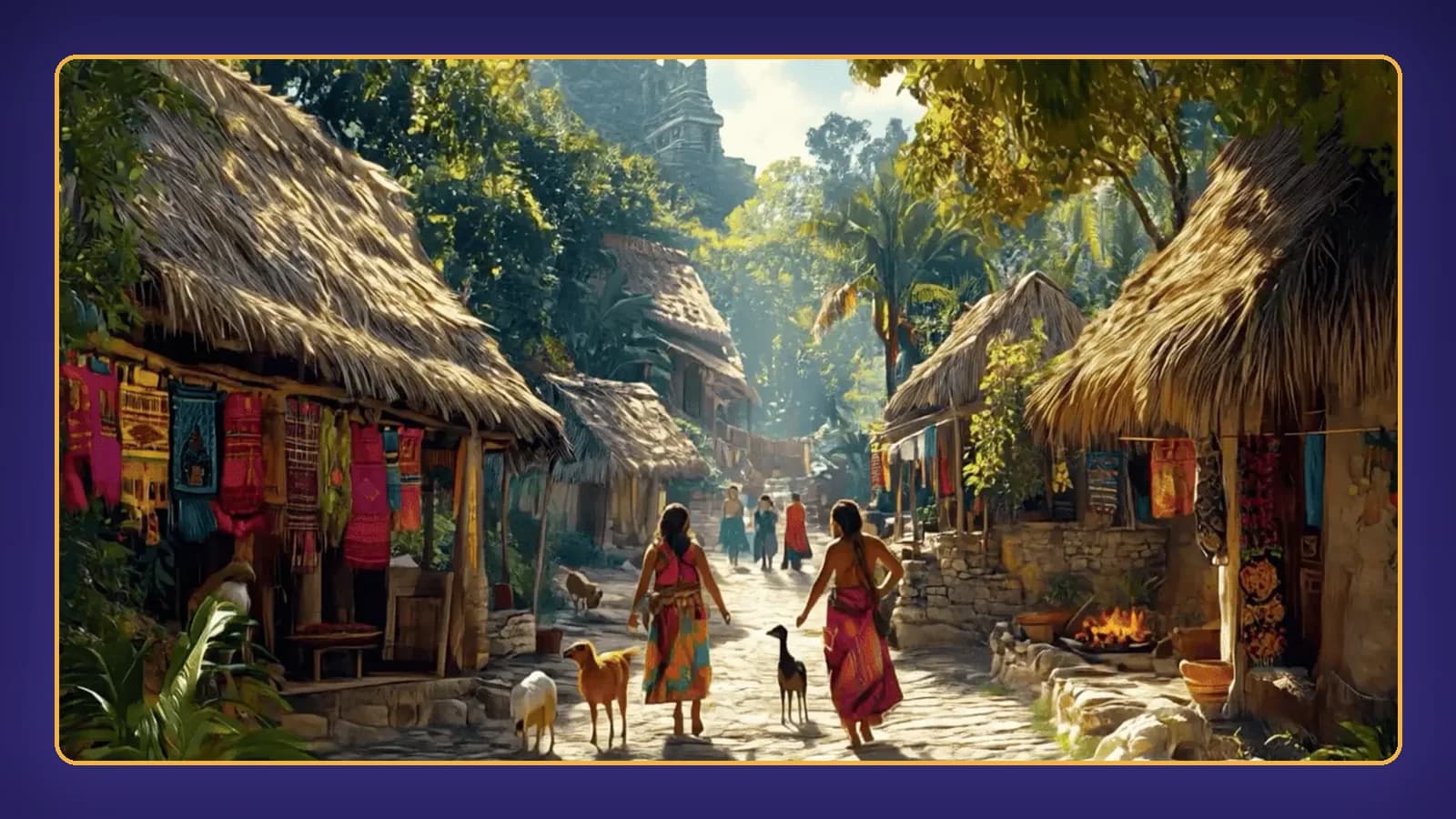

When employees work shifts, the only team event that reaches all of them is one they can play when their shift allows. Citibank's European banking operation ran exactly that: a self-paced, branded game open for one day, about ten minutes per person, with a single leaderboard across the whole company. 800 people completed it in one day, attendance was 86%, 93% would recommend it, and the organiser received one support request in total.
- Client: Citibank, a European banking operation
- Audience: 800 employees on shifts and across branches
- Format: self-paced game, open for one day (an Async Marathon)
- Game: Last Temple Mystery, branded
- Customization: branding
- Result: 800 completed in one day, 86% attendance, 93% would recommend, 1 support request
Why can't a live event reach shift and branch staff?
Because there is no hour when everyone is free. A bank's branches open on their own schedule, back-office teams work in shifts, and pulling a branch off the counter for ninety minutes is not an option. Every live format the team had looked at ran into the same wall.
The usual fallback is worse than it sounds: run something for head office and tell everyone else about it afterwards. That turns a team event into a reminder of who counts. The brief was the opposite: one event that branch staff and head office take part in on equal terms.
What did we run?
A self-paced game, open for a single day, branded for the client. Each person needed about ten minutes and played whenever their shift allowed: before opening, between customers, at the end of a late shift. The entry was a link that opened in a browser, on a work computer or a phone, with no install and no account.
| Design choice | Why |
|---|---|
| Self-paced, open all day | No shared hour existed, so the event could not depend on one |
| About ten minutes per person | Short enough to fit in a break without leaving a post |
| One leaderboard for the whole day | Branches and head office competed in the same table, not in separate events |
| Branded | It read as the bank's own event, not a vendor's |
| Browser link, no install | Locked-down bank devices, no IT ticket |
The game was built on Last Temple Mystery, our jungle-temple adventure, in its short self-paced form.
What were the results?
| Metric | Result |
|---|---|
| Completed the game in one day | 800 |
| Attendance rate | 86% |
| Would recommend | 93% |
| Support requests, in total | 1 |
Which number matters most?
The fourth one. One support request across 800 people means the person who organised the event spent that day doing their own job instead of answering "I can't get in" messages. That, more than the turnout, is what makes a company-wide event repeatable. An event that costs the organiser a day of firefighting does not get approved a second time, however well it scored.
The 86% matters for the same reason. A self-paced event has no one at the door. People took part because the game was short, open when they were free, and visibly the same event for every branch.
When is a self-paced one-day game the right format, and when is it not?
Choose it when your people cannot all be online at once: shifts, branches, stores, warehouses, field teams, or a spread of time zones wider than about six hours. Choose it when the organiser has no capacity to run a live session, and when the point is that everyone takes part, not that everyone is in one room.
It is the wrong format when the goal is a shared live moment, a year-end celebration with a host, a reveal, people reacting together. For that, a live hosted game in one time slot does what an all-day game cannot. Many companies run both: a self-paced day for the whole company, and a live event for teams that can meet at one hour.
More client stories: all case studies.
Frequently Asked Questions
How do you run team building for shift workers?
Make it self-paced and short. Citibank's European banking operation ran a branded game open for a single day, about ten minutes per person, played whenever each shift allowed, with one leaderboard across the company. 800 employees completed it, attendance was 86%, and 93% would recommend it.
What is an async team building event?
An event people take part in on their own schedule instead of at one shared time. The game stays open for a set period, from one day to several, and everyone plays when they are free, while a shared leaderboard keeps it one competition. It suits shift work, branch networks and teams across time zones.
Does the game work on locked-down bank computers?
Yes. It runs in a standard browser from a link, with no plugin, no install and no account, so it needs no IT approval on managed devices. It also opens on a phone. Across the 800 players in this event there was one support request.
Can branch staff and head office compete in the same event?
Yes, and that was the point here. One leaderboard ran across the whole day, so every branch and head office were in the same table rather than in separate events. A self-paced format is what makes that possible when people work different hours.